

If a commercial truck hurt you or someone you love, the company behind that truck likely started building its defense before you left the scene. Within hours, its insurer often has an investigator at the crash site, a lawyer reviewing the file, and one goal: pay you as little as possible, or nothing at all.
That’s not a fair fight unless you understand how the other side plays it. Howard Injury Law was founded by attorney Glen Howard, who spent years on the insurance defense side before switching to represent injured people. He knows the trucking playbook because he used to run it. Below are the exact tactics trucking companies and their insurers use to avoid liability after a Nevada crash — and what actually beats each one.
Why trucking companies fight liability so hard
A truck crash is not a fender bender with a bigger bill. A loaded semi can weigh 20 to 30 times what your car weighs, so the injuries are often severe and the potential payout is high. Las Vegas sees thousands of commercial trucks a day on I-15, the 215 Beltway, and US-95, plus the delivery rigs feeding warehouses in North Las Vegas and the resorts on the Strip. When one of them causes a serious wreck, a lot of money is on the line — and large carriers protect their money aggressively.
The company usually isn’t one defendant, either. A single crash can involve the driver, the motor carrier, a separate truck owner, a broker, a shipper, a loading company, and a maintenance shop. Every one of them has an incentive to point at someone else. Knowing who’s really responsible is a core part of any motor vehicle accident claim involving a commercial truck.
Tactic 1: Blaming the driver to cut the company loose
The most common move is to separate the company from the driver, so the deep-pocketed carrier walks away and you’re left chasing one person.
The “independent contractor” defense — and why the label often fails
Many trucking companies classify drivers as independent contractors instead of employees. The idea is that if the driver isn’t an employee, the company isn’t on the hook for what the driver does. It sounds airtight. It usually isn’t.
Federal trucking rules (from the FMCSA) don’t let a carrier off that easily. When a company runs freight under its own operating authority using a leased truck or driver, federal regulations require that company to keep control of and take responsibility for the operation of that equipment while the lease is active. In plain terms: a paperwork label that says “independent contractor” does not automatically erase the company’s responsibility. What matters is who controlled the work — who set the route, the schedule, the load, and the rules. That’s a fact question, and it’s often answered in the injured person’s favor.
Cutting ties fast to call the driver “unauthorized”
Some companies distance themselves the moment they smell a lawsuit — suddenly the driver was “off route,” “on a personal errand,” or “not authorized” to be where the crash happened. It’s a way to frame the wreck as the driver’s private act, not company business. Dispatch records, GPS data, load assignments, and text messages usually tell the real story, which is why getting to that evidence early matters so much.
Hiding the delivery quotas that pushed the driver
Driver fatigue causes a lot of truck crashes, and fatigue rarely happens by accident. Unrealistic delivery windows and pay-by-the-mile pressure can push a driver to keep going past safe limits. Companies don’t advertise those quotas — but pay records, dispatch logs, and the driver’s own schedule can expose the pressure that put a dangerous truck next to you on the highway.
Tactic 2: Making the evidence disappear
The strongest evidence in a truck case often lives inside the truck and the company’s own files. That’s exactly why some carriers try to get rid of it before anyone can look.
Erasing the “black box” before anyone reads it
Most commercial trucks carry an electronic control module — the truck’s black box — that records speed, braking, throttle, and more in the seconds around a crash. That data can prove a driver was speeding or never hit the brakes. It can also be overwritten or wiped if no one moves quickly to preserve it. If you want to understand how powerful this evidence is, see what a truck’s black box is and how it helps your case.
Repairing or scrapping the truck
A damaged truck is physical proof. Bald tires, worn brakes, or a mechanical defect can show the company put an unsafe vehicle on the road. Once that truck is repaired, sold, or scrapped, the proof is gone. Quick repairs after a serious crash are a red flag, not a coincidence.
“Adjusting” the hours-of-service logs
Federal law limits how long a driver can be behind the wheel, and most trucks now use electronic logging devices that sync to the engine and record drive time automatically. They’re harder to fake than the old paper logs — but falsifying and tampering with these records is still one of the most-cited violations in the industry. When the logs are edited to hide a driver who was over hours, the edits often leave a trail.
Why acting fast is the real defense
Nevada courts do not look kindly on a company that destroys evidence after a crash. Once a lawsuit is reasonably foreseeable, a party has a duty to preserve relevant evidence — and if it wipes that evidence anyway, a judge can allow the jury to assume the missing data would have hurt the company’s side. Willful destruction can trigger an even stronger presumption against them.
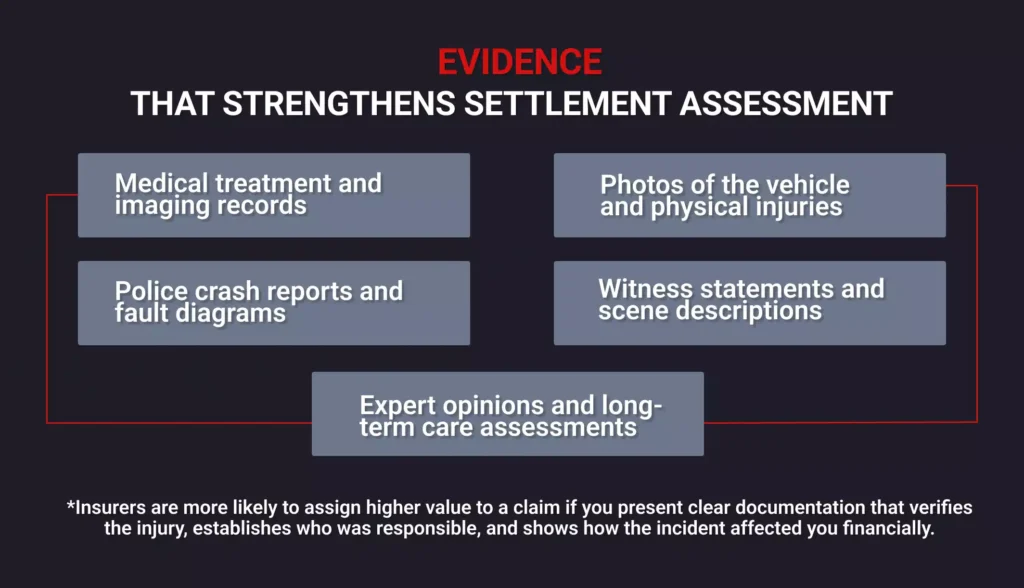
But that protection only helps if someone acts before the evidence is gone. A lawyer can send a formal preservation (spoliation) letter within days, demanding the company hold the black box data, logs, dashcam footage, and the truck itself. That single step is one of the biggest reasons to call early rather than “wait and see.” The immediate moves that protect your claim are covered in what to do after a Nevada truck accident.
Tactic 3: Passing the blame to a third party
When the company can’t pin everything on its driver, it spreads the blame outward.
- “The mechanic did it.” The carrier blames an outside repair shop for the brake or tire failure — while quietly ignoring its own duty to inspect and maintain the truck.
- “The loader did it.” If the trailer was overloaded or the cargo shifted, the company points at a third-party loading or shipping company.
- “The leaseholder was responsible.” When equipment is leased, the carrier argues someone else was solely bound to keep it safe.
Sometimes those third parties really do share fault — a bad brake job or a dangerously loaded trailer is a legitimate part of the story. The company’s mistake is assuming that helps them. It usually doesn’t.
What this means if you were the innocent one
Here’s the part the defense hopes you never learn. If you didn’t cause the crash — you were the passenger, the driver who was lawfully stopped, the family who lost someone — having several at-fault parties works in your favor, not theirs.
Nevada follows a comparative negligence rule, and a common defense tactic is to shift a slice of blame onto you to shrink your recovery. But when you carry no fault and more than one party caused your injuries, you generally aren’t stuck collecting a small percentage from each one. You can pursue the full amount of your damages from any one of the responsible parties. So when a trucking company, a broker, and a loader all try to hand you off to each other, that finger-pointing can actually become a wider net of insurance to recover from.
That’s also why the “who’s really liable” question in a truck case is rarely simple, and why general information isn’t the same as advice about your specific crash. Every case turns on its own facts. A Las Vegas truck accident lawyer can map out every party that shares blame and go after each one.
Frequently Asked Questions
Are truck drivers liable for accidents, or is the trucking company?
Often both. The driver can be personally liable for negligent driving — speeding, distraction, driving over hours. The trucking company can be liable too, either for its driver’s actions or for its own failures, like negligent hiring, poor maintenance, or pushing unrealistic schedules. Companies frequently try to isolate the driver so the business escapes, but an “independent contractor” label doesn’t automatically shield the carrier when it controlled the work and ran freight under its own authority. In serious Nevada truck crashes, there are usually multiple responsible parties, and identifying all of them is central to recovering the full value of a claim.
Can a trucking company legally destroy the black box data?
No — not once a claim is on the horizon. After a serious crash, the company has a duty to preserve relevant evidence, including the electronic control module data, driver logs, and the truck itself. If it wipes or “loses” that evidence anyway, a Nevada court can instruct the jury to assume the missing data would have been unfavorable to the company, and deliberate destruction can carry an even stronger presumption. The catch is timing: black box data can be overwritten and trucks can be repaired within days. That’s why an attorney sends a formal preservation demand early, before the evidence has a chance to disappear.
How do I win if the truck driver was an “independent contractor”?
The label is a starting point, not the finish line. Courts look at who actually controlled the work — who assigned the route, set the schedule, chose the load, and dictated the rules. Federal trucking regulations also require a carrier operating under its own authority to take responsibility for the equipment it leases while that lease is active. So the real questions are whose authority the truck ran under, who controlled the driver, and what the paperwork and dispatch records show. An experienced attorney digs into the lease agreements, the operating authority, and the day-to-day control to keep the company in the case, not just the individual driver.
How can I find out a trucking company’s safety record?
Federal regulators track carrier safety through the FMCSA’s public data systems, which log inspections, violations, and crash history for interstate trucking companies. A pattern of hours-of-service violations, maintenance failures, or prior crashes can support your case by showing the company knew about problems and kept operating anyway. Pulling and interpreting that history is part of a thorough investigation. You don’t have to research it alone — a truck accident attorney can request the company’s safety data, its internal records, and the crash-specific evidence, then connect any pattern of violations to what happened to you.

Talk to a truck accident lawyer before they finish building their case
The hardest part of a truck case isn’t the law — it’s the clock. The company’s team starts protecting the company the day of the crash, and some of the evidence that proves your claim can be gone within days. You deserve someone doing the same for you, that fast.
At Howard Injury Law, attorney Glen Howard uses his insurance-defense background to anticipate these tactics and get ahead of them — sending preservation demands, tracking down every liable party, and building your case before the other side can bury it. Consultations are free, and you pay no attorney fees unless we win.
If a commercial truck has upended your life, don’t wait for the trucking company’s insurer to define what your claim is worth. Talk to a truck accident attorney in Las Vegas about what happened, or reach out for a free case review to find out where you stand. Two useful things to know before you call: you’re not required to give the trucking company’s insurer a recorded statement, so read what to do when the trucking company calls you first, and if the crash involved a driver or carrier from another state, here’s what happens when the truck driver was from out of state. Curious how long the process takes? See how long a truck accident lawsuit takes.