I had a great experience with Howard Injury Law. Anytime I had questions, they were always there with an answer ready to help. They were super attentive towards me. I'm very grateful I went to them after my car accident.
Car Accident
Las Vegas Personal Injury Lawyer
Hurt at an apartment complex, in a parking lot, on an elevator, or by negligent security? The owner, tenant, manager, or contractor in control owed you a duty of care under Nevada law. You pay nothing unless we win.






In Nevada, the person or company that controls a property is liable when an unsafe condition there injures you, and that is not always the owner. Control can sit with the owner, a tenant business, a property management company, or a contractor, and more than one of them can share fault. A Las Vegas premises liability lawyer starts by finding out who had the power to fix the hazard, because that is who owed you a duty of reasonable care.
| Who | What They Usually Control | When They Can Be Liable |
|---|---|---|
| Property owner | The building, the land, and anything not handed to someone else by contract | A hazard in an area the owner kept responsibility for, or a known defect the owner never repaired |
| Tenant or business operator | The space it leases and runs day to day | An unsafe condition inside the store, office, bar, or unit it operates |
| Property manager or HOA | Common areas: stairwells, hallways, parking lots, gates, lighting, pools | Missed maintenance, broken lighting or locks, or security it agreed to provide and didn't |
| Contractor or maintenance company | The equipment or work it was hired for: elevators, escalators, security patrols, repairs, cleaning | Faulty repairs, skipped inspections, or a hazard its own work created |
Each party will point at the others. The owner blames the tenant, the tenant blames the management company, and the management company blames its contractor. Leases, management agreements, and service contracts show who was actually responsible, and those documents are not public. Under Nevada's comparative negligence law (NRS 41.141), each defendant generally pays only its own share of fault, so a party left out of the claim can mean part of your compensation is never recovered.
The type of hazard usually tells you who was in control. Here is how that works for the most common unsafe property injuries in Las Vegas.
$80M+
Recovered for Nevada injury victims
20+
Years handling Nevada accident cases
1,000+
Clients represented across Las Vegas
$0
No Win, No Fee zero upfront cost to you
Liability follows the hazard. A broken gate, a stalled escalator, and an unlit parking lot are each someone's specific job, and that party is usually the one who pays. These are the five unsafe property claims we see most across Las Vegas, Henderson, and North Las Vegas, and who is typically responsible for each.
Assaulted, robbed, or shot on a property that ignored a known crime problem? The property can be liable if the violence was foreseeable: prior incidents, broken gates, dead cameras, or missing guards. Common at apartment complexes, bars, and shopping centers from Fremont Street to Boulder Highway.
Usually liableThe owner, the property manager, and any contracted security company.
Nevada landlords must keep common areas reasonably safe, and NRS Chapter 118A sets their repair duties. Typical claims: collapsing stairs, broken lighting, failed locks and gates, and ignored repair requests, from Maryland Parkway near UNLV to Summerlin and Henderson.
Usually liableThe landlord, the management company, and sometimes the tenant inside a unit.
Sudden stops, mis-leveled floors, and jerking escalators are mechanical failures. Nevada requires permits and inspections under NRS Chapter 455C, so maintenance records often decide the case. The Strip's pedestrian bridge escalators are Clark County property, making that a government claim.
Usually liableThe building owner, the elevator maintenance contractor, and sometimes the manufacturer.
Burned-out lighting, potholes, broken wheel stops, and attacks in unmonitored garages trace back to whoever maintains the lot. In retail centers along Sahara, Charleston, and Eastern, that is usually the landlord or manager, not the store you visited.
Usually liableThe landlord or property manager, a lot operator, or a security contractor.
Non-fatal drownings, drain entrapment, diving injuries, and broken gates or fencing are the main pool claims. The Southern Nevada Health District inspects apartment, HOA, and public pools, and those inspection records are evidence.
Usually liableThe HOA or apartment owner, the management company, and the pool service contractor.
Hurt inside a hotel or casino? See our Las Vegas casino injury page. For falls and proving the property knew about the hazard, see slip and fall accidents.
Property insurers fight these claims in five predictable ways: deny control, call the hazard obvious, blame you, call the harm unforeseeable, and pay a small check to close the file. Glen Howard spent years on the insurance defense side before founding Howard Injury Law, so we know each move before it's made.
What they sayThe owner points to the tenant, the tenant to the manager, the manager to a contractor.
Our answerLeases, management agreements, and service contracts show who had the duty. We name every party with control so no one's share goes unpaid.
What they sayYou should have seen it, so they owe nothing.
Our answerIn Nevada, an obvious hazard does not automatically end a claim. The Nevada Supreme Court held in Foster v. Costco (2012) that a property can still be liable if it should have expected the harm.
What they sayYou were on your phone, had been drinking, or were somewhere you shouldn't have been.
Our answerUnder NRS 41.141, you recover as long as you are not more than 50% at fault, with your award reduced by your share. Every point they add to your side cuts what they pay, so we contest each one.
What they sayA criminal attacked you, and the property isn't responsible for a stranger.
Our answerPrior incidents, police calls to the address, and ignored security complaints show the property saw it coming. This is the core of a Las Vegas negligent security claim.
What they sayThe adjuster offers quick payment under the property's medical payments coverage and asks you to sign a release.
Our answerThat coverage is usually a small no-fault benefit, separate from the liability claim. Signing a release for it can end your right to full compensation, so have a lawyer read it first.
Talk to a Las Vegas premises liability attorney before you give a recorded statement or sign anything.
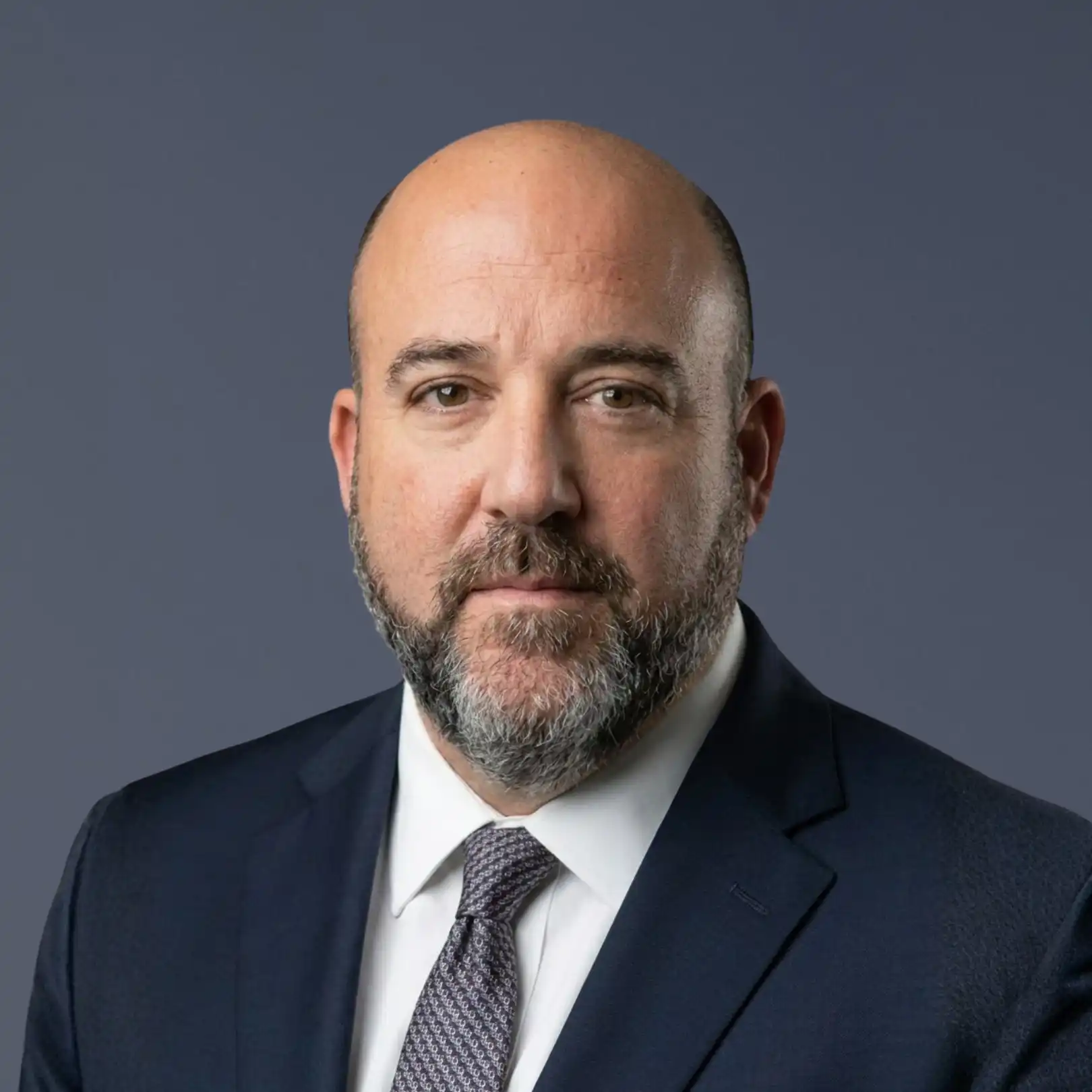
“I spent years on the insurance defense side, so here’s what most people never hear: the first question isn’t how you got hurt. It’s who controlled the property. The insurer counts on you naming the wrong party while the footage and records disappear.
You focus on healing. Finding everyone responsible and holding them to what they owe is our job.”
A premises liability lawyer proves four things: who controlled the property, that they failed to use reasonable care, that the failure caused your injury, and what it cost you. Most of that proof sits in the property's own files, so we send evidence preservation letters before anything can be lost or erased.
| Evidence | What It Proves | Why It's Urgent |
|---|---|---|
| Leases, management and service contracts | Who controlled the area and owed the duty | Not public. The property only hands them over when forced to |
| Surveillance footage | What happened and what the hazard looked like | Often recorded over within days or weeks |
| Maintenance, repair and inspection records | Whether the responsible party did its job | Logs can be incomplete or filled in later |
| Prior incidents and complaints | That the danger was known or foreseeable | Police calls, tenant complaints, and past claims take time to collect |
| Repairs made after your injury | Who had the power to fix it | The hazard may be gone before anyone photographs it |
| Photos, witnesses and medical records | The condition, the injury, and the link between them | Scenes change and witnesses move on |
One rule surprises most people. Under NRS 48.095, a repair made after you were hurt cannot be used to prove the property was negligent, but it can be used to prove who controlled it. When an owner says "that's not our responsibility" and then fixes the hazard, the repair answers the question.
The sooner a Las Vegas premises liability attorney is involved, the more of this evidence still exists.
Some property injuries follow their own rules. If one of these fits what happened to you, start there.
Falling isn't enough. You have to prove the property knew about the hazard. Stores, restaurants, apartments, and sidewalks.
Las Vegas slip and fall lawyerThe resort has the footage, the incident report, and a claims team. You have days to act.
Las Vegas casino injury lawyerProving which meal made you sick takes lab confirmation, health district reports, and outbreak tracing.
Las Vegas food poisoning lawyer
After an injury on someone else's property, get medical care, report it in writing, and document the hazard before it is repaired. These six steps protect your health and your claim.
See a doctor the same day and say exactly where and how you were hurt. That record ties the injury to the property.
Tell the owner, manager, or landlord in writing and ask for a copy of any incident report. Keep it to the facts.
Capture the hazard, the lighting, and the surrounding area before anything is repaired. Get names and numbers for witnesses.
Note the business name, management company signs, security company, and any inspection tags or contractor names. This is how we trace who had control.
Save your shoes, clothing, receipts, and medical bills. Do not post about the injury online.
Decline recorded statements and do not sign a release or accept a check until a lawyer has reviewed it.
Most Nevada premises liability claims must be filed within two years of the injury under NRS 11.190(4)(e), and footage and records can disappear in weeks. Our Las Vegas personal injury lawyers can send preservation letters the day you call.
Premises liability is the area of Nevada law that holds whoever controls a property responsible when an unsafe condition there injures someone. The owner, a tenant, a property manager, or a contractor can each be liable if they failed to use reasonable care.
The landlord or management company is usually liable for common areas, and the tenant for conditions inside the leased space. The lease and management agreement decide who was responsible for repairs and maintenance.
Yes, as long as you were not more than 50% at fault. Under NRS 41.141, your compensation is reduced by your percentage of fault.
You have two years from the date of the injury in most cases, under NRS 11.190(4)(e). Evidence such as surveillance footage can be gone much sooner, so do not wait on the deadline.
Yes, if the attack was foreseeable and the property failed to provide reasonable security. This is a negligent security claim, and prior crimes on the property, broken locks or lighting, and ignored complaints are the usual proof.
Yes, you can bring a claim, but hotel and casino cases work differently because the resort controls the footage and the incident report. See our Las Vegas casino injury page for how those claims work.
You have to prove the property knew, or should have known, about the hazard and did not fix it or warn you. See our slip and fall accidents page for how that proof is built.
Yes, if you can show the restaurant's food made you sick. That usually takes a lab-confirmed diagnosis and a link to the meal, such as a health district report or other people who got sick. See our foodborne illness page for how those claims are proven.
Nothing up front. Howard Injury Law works on a contingency fee, so you pay no attorney fee unless we recover compensation for you, and the case review is free.
Tell us what happened and we'll identify who controlled the property and what your claim may be worth. The case review is free.
No fee unless we win · Answered 24/7 · Se Habla Español · 中文
I had a great experience with Howard Injury Law. Anytime I had questions, they were always there with an answer ready to help. They were super attentive towards me. I'm very grateful I went to them after my car accident.
Car AccidentHighly recommend. I worked with James and Vanessa. They both are very nice and patient if or when you have a million and one questions. They make sure you are updated and not wondering where you stand.
Personal InjuryI can't say enough great things about Howard Injury Law. From start to finish, Glenn Howard and his amazing team James and Natalie were there every step of the way. They made a stressful situation feel manageable ... read more
Injury CaseI would like to thank Glen Howard and James for taking such great care of me during my case. They're knowledgeable, professional, and genuinely caring. My family and I are truly grateful for the outcome they achieved.
Injury CaseThis team was amazing. They took care of everything I needed with my personal injury and made it so easy for me. I never felt alone during the process. I would highly recommend Howard Injury Law to anyone.
Personal InjuryI had a really bad accident in March 2023 and was referred to this amazing team. This being a new experience, Howard Injury Law walked me through every single step. They truly fought for me and got me more than I expected.
Car AccidentStraight answers to what you're facing after an injury on someone else's property in Las Vegas, so you understand your options before you decide anything.
Founding attorney Glen Howard has spent his career standing beside injured Las Vegas residents and families after serious injuries turned their lives upside down — and that's shaped the compassion he brings to every case. He and his team understand that an injury on unsafe property isn't a case file; it's a life-changing event for you and the people who love you, and it's treated that way here. He has recovered more than $80 million for injury victims and their families, and you'll work directly with Glen and a dedicated case manager who handle you with care and respect — not a rotating cast of paralegals.
Read Glen's full storyYou never expected to be here. No one is supposed to know how to fight an insurance company, preserve evidence, or navigate Nevada injury law while recovering from a serious injury.
That's what we do.
Howard Injury Law is available 24/7. The consultation is free and confidential. You pay nothing unless we recover for you. And because Nevada sets a deadline to act, reaching out sooner keeps more of your options open. However you found us — searching for a premises liability lawyer in Las Vegas, or referred by someone who trusted us with their case — we're ready when you are, and there's no pressure to decide anything today.
If you're unsure what to do after an accident — or want to help protect the people you love — HIL Helps is our free 24/7 community resource, open to everyone, not just clients.
#HILHelps — A Free Vegas Community Resource
Howard Injury Law
6330 Spring Mountain Rd Ste D, Las Vegas, NV 89146