Visual
Eyes off the road — reading a text, glancing at GPS, or looking at a billboard.

Las Vegas Personal Injury Lawyer
Drivers almost never admit they were texting while driving — so we pull the phone records, event data, and witness accounts that prove the distraction. Get a free case review before the insurance company builds their denial.







The insurance adjuster is not on your side
Their job is to protect their bottom line, not yours. Every question is designed to reduce your payout.
Early calls are part of their strategy
What you say can be used to reduce or deny your claim. Don't speak to them without us present.
Quick settlements cost you more
They offer fast payouts knowing you're desperate. Once you sign, you can never go back for more.
We step in immediately and take over.
$0M+
Recoveredfor Nevada injury victims
0+
Yearshandling Nevada car accident cases
0+
Clientsrepresented across Las Vegas
$0
No Fee Unless We Winzero upfront cost to you
In most distracted driving crashes, the distracted driver is at fault — because a driver who takes their eyes, hands, or attention off the road has failed the basic duty every Nevada motorist owes to everyone else on it. When that failure causes a crash, the law treats it as negligence.
Distraction cases have a feature that works in your favor: Nevada law already prohibits many of the behaviors that cause them. When a driver breaks a traffic-safety law — like using a handheld phone behind the wheel — that violation itself can help establish fault, instead of leaving you to argue about who was careless.
That's a stronger liability position than a typical fender-bender, where fault is a judgment call. The catch is proof. A distracted driver almost never admits what they were doing — so fault in these cases is won with evidence like phone records, vehicle data, camera footage, and witnesses, not with the driver's word. We cover exactly how we build that below.
If the other driver's insurer is trying to pin part of the crash on you, that's a tactic, not a verdict — and it's the most common move they make in distracted driving claims. Because Nevada uses a comparative fault system, every percentage of blame they shift onto you is money they don't have to pay.
So they look for any angle: you were speeding, you braked late, you could have "avoided it." Here's what they're counting on — that you'll accept their version before anyone pulls the evidence that shows their driver was on a phone. Once the distraction is documented, the blame-shifting collapses, because a driver looking at a screen was not watching the road no matter what you were doing.
Do not give a recorded statement or accept a fault split before you've talked to a lawyer. Adjusters are trained to ask questions that sound routine and quote your answers back as admissions. What you say in the first phone call can follow your claim to the end.
Yes. Nevada bans handheld cell phone use while driving, including texting — it's a primary offense, meaning an officer can pull a driver over for it alone. That matters for your case: a driver who was texting was breaking the law when they hit you, which strengthens the argument that they were at fault.
Distraction is proven with evidence, not accusation. The main sources are the at-fault driver's cell phone records (which can show a call or text at the moment of impact), the vehicle's event data recorder, nearby traffic or business camera footage, and witness statements. Combined, these can place the driver's attention on a phone, a dashboard, or food instead of the road.
It doesn't end your case — most distracted drivers deny it. Phone records and vehicle data don't rely on the driver's account, and they're often the very thing that contradicts it. Acting quickly matters, because some of this evidence can be lost or overwritten if it isn't preserved early.
Yes. Distraction isn't limited to phones. Eating, drinking, adjusting the stereo or climate controls, programming GPS, and turning to talk to passengers are all forms of distracted driving. Any of them can support a negligence claim if it took the driver's focus off the road and caused your crash.
Nevada gives you a limited window to file — and it's shorter than most people assume. Waiting also risks losing the phone and vehicle evidence that proves distraction. The safest move is to talk to a lawyer soon after the crash so nothing important expires or disappears.
If you were injured, yes — because the evidence that proves distraction usually has to be requested and preserved fast, and the insurance company will not do it for you. A lawyer can move to secure phone records and vehicle data before they're gone, and handle the adjuster so your own words aren't used against you.
It depends on your injuries, your treatment, and how the crash has affected your life — no honest lawyer quotes a number before reviewing those. What your claim is actually worth, and how insurers lowball that figure, is covered in depth on our Las Vegas car accident page. Start with a free case review and we'll walk you through it.
Have a different question? Browse our full Q&A library →
“Many people don’t realize they should contact a personal injury law firm immediately after an injury or significant property damage claim. Relying on insurance adjusters can be a costly mistake.
Despite appearing impartial, adjusters work for the insurance company and aim to minimize payouts or deny claims.”
Remember, the insurance company is not on your side, but a dedicated personal injury lawyer is! We fight for you!
Distracted driving crashes tend to cause serious injuries because the distracted driver never brakes. A driver looking at a phone doesn't see the stopped car, the red light, or the crosswalk — so they hit at full speed, with no reaction. That full-force impact is what makes these collisions so damaging.
Because there's no braking, the forces involved often match those of a much higher-speed crash — which is why "minor-looking" distracted driving wrecks can still leave lasting damage. Some of the most serious injuries don't announce themselves right away. Brain injuries and soft-tissue damage can take hours or days to surface, which is why getting checked out matters even if you feel okay. We break down the warning signs to watch for below.
Every distraction falls into one of three categories, and the most dangerous behaviors hit more than one at a time. Understanding which type was in play helps show exactly how the other driver failed to watch the road.
Eyes off the road — reading a text, glancing at GPS, or looking at a billboard.
Hands off the wheel — eating, drinking, or reaching for a dropped item.
Mind off driving — a heavy conversation, stress, or zoning out.
Texting is the most dangerous of all because it's all three at once: eyes off the road, a hand off the wheel, and mind off driving. These are the causes we see most often behind Las Vegas distracted driving crashes:
Nevada treats distracted driving as one of the key behaviors it targets in its Strategic Highway Safety Plan, and national data links distraction to roughly one in eight police-reported crashes — a figure widely considered an undercount, because drivers rarely admit what they were doing. That gap between what happened and what gets reported is the exact problem this page exists to solve.
Distracted driving crashes cluster where drivers feel comfortable looking away — long, familiar stretches and heavy stop-and-go, where a glance at a phone feels harmless. In Las Vegas, that means the busiest corridors carry the most risk.
Along Las Vegas Boulevard and the Strip, drivers are watching everything but the road ahead. And stop-and-go traffic is deceptively dangerous — drivers assume a slow crawl is a safe time to check a message, right up until traffic stops and they don't.
These corridors and intersections are drawn from Nevada Department of Transportation crash data and the Las Vegas Metropolitan Police Department's published list of top crash locations. They rank high for overall crash volume, and distraction is a known contributing factor in these congested, high-turnover zones.
I had a great experience with Howard Injury Law. Anytime I had questions, they were always there with an answer ready to help. They were super attentive towards me. I'm very grateful I went to them after my car accident.
Car AccidentWas rear-ended November 2024. Never been in an accident before, let alone one where my car was totaled and I was injured. Howard Injury Law was amazing! The team walked me through everything, what to do and what to expect ... read more
Rear-End CollisionHighly recommend. I worked with James and Vanessa. They both are very nice and patient if or when you have a million and one questions. They make sure you are updated and not wondering where you stand.
Personal InjuryI can't say enough great things about Howard Injury Law. From start to finish, Glenn Howard and his amazing team James and Natalie were there every step of the way. They made a stressful situation feel manageable ... read more
Injury CaseI had a really bad accident in March 2023 and was referred to this amazing team. This being a new experience, Howard Injury Law walked me through every single step. They truly fought for me and got me more than I expected.
Car AccidentThis team was amazing. They took care of everything I needed with my personal injury and made it so easy for me. I never felt alone during the process. I would highly recommend Howard Injury Law to anyone.
Personal InjuryI would like to thank Glen Howard and James for taking such great care of me during my case. They're knowledgeable, professional, and genuinely caring. My family and I are truly grateful for the outcome they achieved.
Injury CaseThe first 72 hours decide how much of the distraction evidence survives — so what you do now directly affects whether you can prove the other driver wasn't watching the road.
Even if you feel fine. It protects your health and creates the record that ties your injuries to the crash.
If you're able — photos of both vehicles, the road, anything suggesting distraction, plus the other driver's information.
Someone who saw the other driver looking down at a phone is powerful evidence, and witnesses are hard to track down later.
Don't give a recorded statement before you've spoken to a lawyer — it's the moment claims are quietly weakened.
Phone records and vehicle data can be preserved — but only if someone moves before they're overwritten or routinely deleted.
That last point is the one people miss. The evidence that proves distraction has a shelf life. The sooner it's locked down, the stronger your case.
We prove distraction by pulling the evidence the driver can't argue with. A distracted driver's denial means nothing against records that show exactly what they were doing — so we go straight to the sources that document it:
The reason speed matters so much: phone carriers and businesses don't hold records forever, and vehicle data can be overwritten. We move to preserve this evidence early, so the proof is still there when your claim needs it.
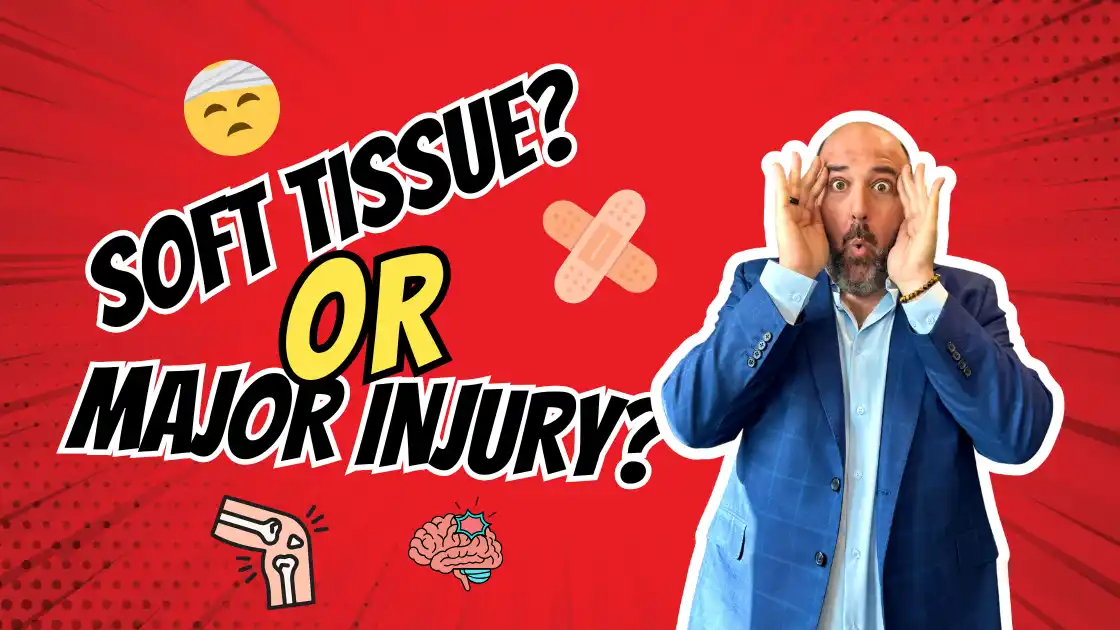
Some of the most serious crash injuries don't show up right away — so watch your body closely for days after, not just at the scene. Adrenaline can mask pain for hours, and a few injuries genuinely take time to develop.
Any of these can signal something serious — a concussion, a spinal injury, or internal bleeding — that needs a doctor now, not next week.
Beyond your health, prompt treatment protects your claim. A gap between the crash and your first doctor's visit is the first thing an insurance company uses to argue you weren't really hurt. Getting seen early closes that door.
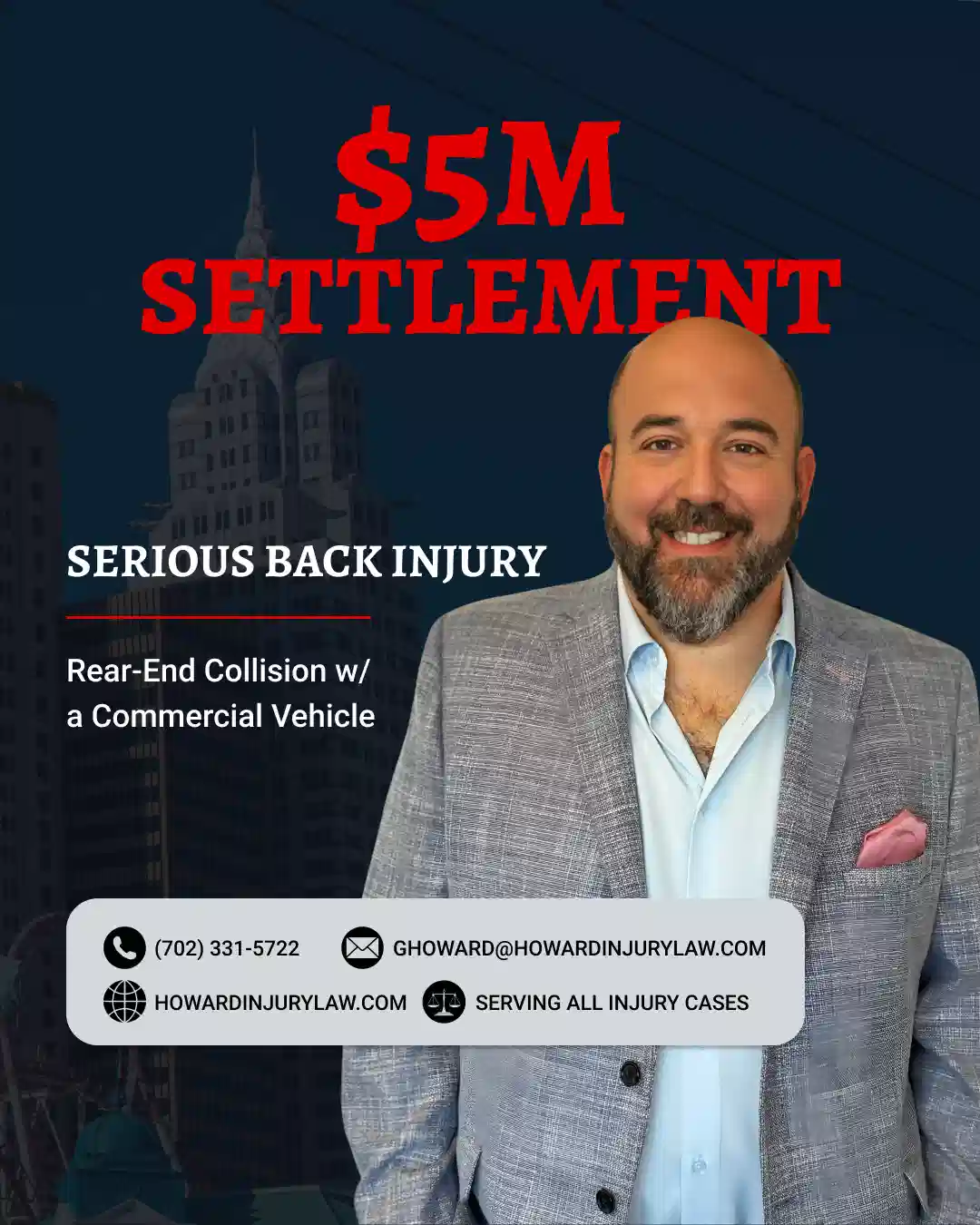
$5 Million
Auto Accident
$3.2 Million
Auto Accident
$3.9 Million
Personal Injury
$1 Million
Wrongful Death
$1 Million
Auto Accident
$1.35 Million
Casino Injury
Insurance companies know which law firms fight and which ones fold.
That reputation affects every negotiation. When adjusters know your attorney doesn't settle cheap, they open differently. First offers are higher. Timelines move faster. Cases resolve better.
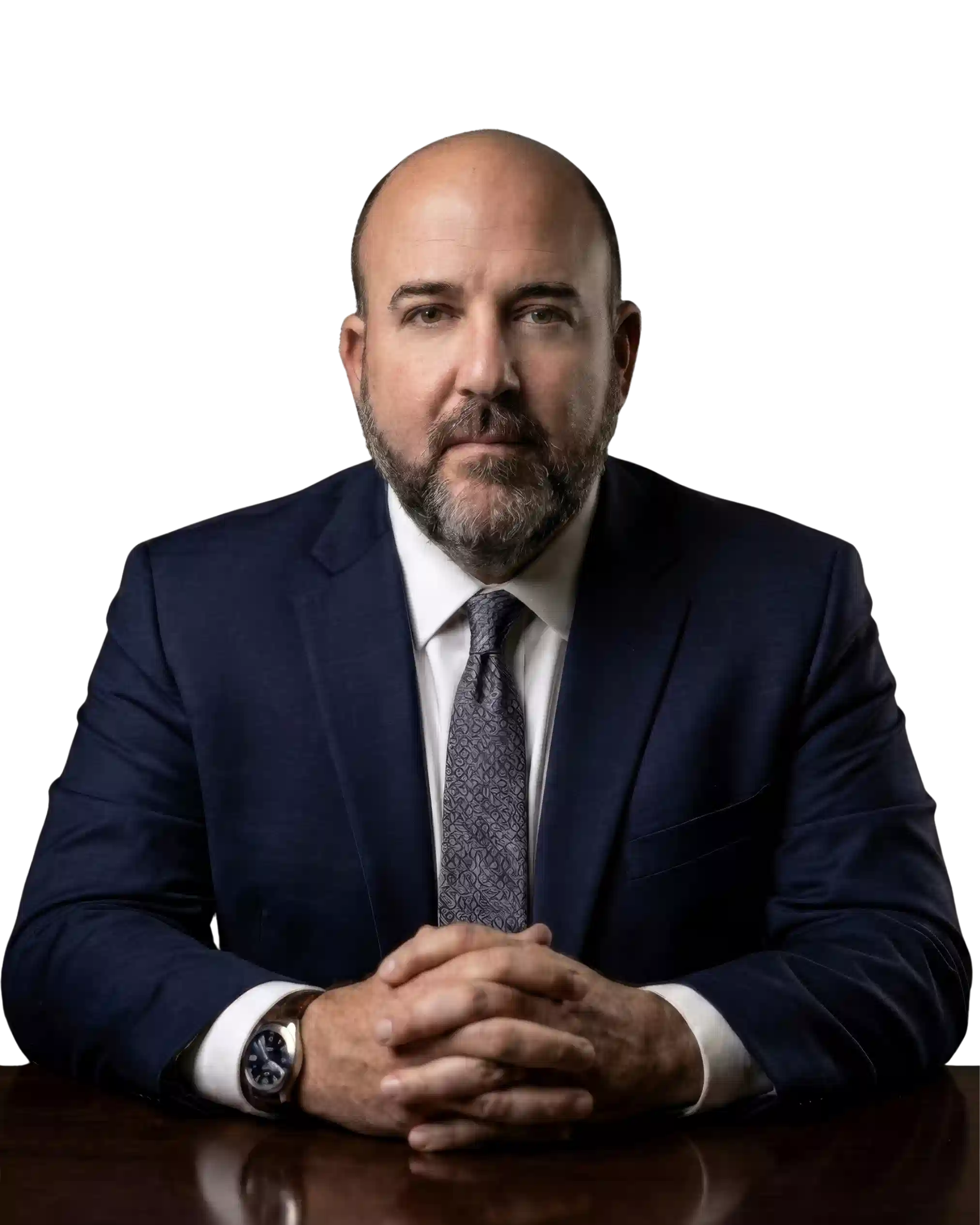
Glen Howard is an experienced Las Vegas distracted driving accident attorney trusted by local families across Clark County. He and his team handle every file personally. You'll speak directly with your attorney — not be passed to a paralegal who has to look up your case number to know your name. That's a commitment the largest Las Vegas PI firms simply can't make.
And the financial risk to you is zero. Howard Injury Law works on contingency: you pay nothing unless we recover for you. No hourly fees. No upfront costs. No surprises.
Get a free no-obligation case review
Founding attorney Glen Howard built his practice after watching his own family navigate a serious motor vehicle crash — an experience that shaped how he fights for clients today. He's recovered more than $80 million for injured clients, and you'll work directly with him and a dedicated case manager on every file, not a rotating cast of paralegals.
Read Glen's full storyIf you're unsure what to do after an accident — or want to help prevent one — HIL Helps is our free 24/7 community resource, open to everyone, not just clients.
#HILHelps — A Free Vegas Community Resource
You didn't ask for this. You're not supposed to know how to fight an insurance company, preserve evidence, or navigate Nevada personal injury law while you're in pain and trying to put your life back together.
That's what we do.
Howard Injury Law is available 24/7. The consultation is free. You pay nothing unless we win. And the sooner you call, the stronger position your case is in. However you found us — searching for a car accident lawyer in Las Vegas, or referred by someone who trusted us with their case — we're ready when you are. The free consultation will tell you exactly where you stand.
Howard Injury Law
6330 Spring Mountain Rd Ste D, Las Vegas, NV 89146