Neck & Shoulder
The lateral jolt strains the neck and shoulder — the most common sideswipe injury.

Las Vegas Personal Injury Lawyer
Who made the unsafe lane change or improper merge? When both drivers deny drifting out of their lane, insurers use the confusion to lowball or deny your claim — we prove exactly who left their lane before you give either adjuster a statement.







The insurance adjuster is not on your side
Their job is to protect their bottom line, not yours. Every question is designed to reduce your payout.
Early calls are part of their strategy
What you say can be used to reduce or deny your claim. Don't speak to them without us present.
Quick settlements cost you more
They offer fast payouts knowing you're desperate. Once you sign, you can never go back for more.
We step in immediately and take over.
$80M+
Recoveredfor Nevada injury victims
20+
Yearshandling Nevada car accident cases
1,000+
Clientsrepresented across Las Vegas
$0
No Fee Unless We Winzero upfront cost to you
In most sideswipe accidents, the driver who drifted or changed lanes is at fault — not the driver who was traveling straight in their own lane.
Nevada law is direct about this. Under NRS 484B.223, a driver has to stay as nearly as practicable within a single lane and can't move out of it until they've signaled and confirmed the move is safe. When someone sideswipes you, they almost always broke that rule: an unsafe lane change, an improper merge, or a slow drift because they weren't watching.
That's the good news in a bad situation. Fault in a lane-change crash tends to be clearer than fault in an intersection or rear-end case — the car that left its lane is the car that caused the contact. The hard part isn't the law. It's proving which car drifted when both drivers insist it was the other one. That's the fight, and it's the fight we win.
Expect it. In a lane-change crash, the other driver's insurer will often argue you were the one who drifted — because if they pin part of the blame on you, they pay you less.
Nevada uses modified comparative negligence under NRS 41.141: if you're found more than 50% at fault, you recover nothing, and any share of fault assigned to you cuts your recovery. Shifting blame isn't personal — it's the math the adjuster is paid to do.
Here's why sideswipes are the easiest crash type to muddy: two moving cars, side-by-side damage, and often no clear point of impact. Without evidence locking down who left their lane, it becomes your word against theirs — and "your word" is exactly what an adjuster is trained to discount. The move is not to argue with them. It's to stop talking to them and let us put the proof on the table before you say anything that gets twisted.
A sideswipe accident is a crash where the sides of two vehicles traveling in the same or opposite direction make contact, almost always because one driver drifted out of their lane, changed lanes unsafely, or made an improper merge. They're common on multi-lane roads and freeways where cars run parallel for long stretches.
The driver who left their lane is usually at fault. Nevada law (NRS 484B.223) requires drivers to stay within a single lane and only move over after signaling and confirming it's safe, so the driver who drifted or merged into an occupied lane typically bears the blame. That violation can also count as negligence per se in your injury claim.
This is the most common sideswipe dispute, and it's why evidence matters more here than in almost any other crash. Damage angle, paint transfer, road position, camera footage, and witness accounts can establish which vehicle crossed the line, even when both drivers tell opposite stories.
If you were injured, yes, even when fault looks obvious. Even in a clear unsafe-lane-change case, the at-fault driver's insurer will look for any angle to shift fault onto you and shrink what they pay. An experienced car accident lawyer keeps that from working.
Light vehicle damage does not mean a light injury. A sideswipe can jerk your body sideways violently even at low speed, and insurers routinely use minor visible damage to argue you couldn't be seriously hurt. Don't let a photo of your car decide the value of your health.
It depends on your injuries, treatment, and how fault shakes out, so there's no flat number. Our Las Vegas car accident page breaks down how claim value is actually calculated and how insurers lowball it.
In Nevada you generally have two years from the date of your injury to file a car accident lawsuit (NRS 11.190(4)(e)). Negotiating with the insurance company does not pause that clock, only filing in court does. Evidence in a lane-change case disappears fast, so it's best to act well before the deadline.
Have a different question? Browse our full Q&A library →
“Many people don’t realize they should contact a personal injury law firm immediately after an injury or significant property damage claim. Relying on insurance adjusters can be a costly mistake.
Despite appearing impartial, adjusters work for the insurance company and aim to minimize payouts or deny claims.”
Remember, the insurance company is not on your side, but a dedicated personal injury lawyer is! We fight for you!
Sideswipe crashes throw your body sideways — a direction it's not braced for — which produces a specific injury pattern.
The lateral jolt strains the neck and shoulder — the most common sideswipe injury.
Gripping the wheel through the impact drives injury into the wrists and hands.
On the impact side, the door slams force into the hip and rib cage.
When a sideswipe pushes you into a barrier or off the road, the second hit often does the real damage.
Sprains, strains, and deep bruising that adrenaline hides at the scene for hours or days.
A hard sideways jolt can rattle the brain even without a direct blow to the head.
Timing is the trap. Adrenaline masks soft-tissue damage for hours or days, so drivers walk away feeling "fine," skip the ER — then wake up unable to turn their head. Get checked out even if you feel okay: the medical record you create in the first days is the backbone of your claim.
The proof that the other driver drifted into you is the most perishable evidence in any crash — and in the first hour, you're often the only person who can capture it. Cleared scenes, moved cars, and overwritten footage all work against you, so what you do now decides how strong your case will be.
In the First Hour · Before Anything Moves
Before anyone moves them. Get close-ups of the damage on both vehicles and the paint marks along the panels.
One frame showing the lane lines, both cars' position, and any debris on the road — that's what shows who was where.
Scan for traffic cameras, nearby business or doorbell cameras, and other drivers' dashcams. Note who might have footage.
Anyone who saw the drift. Independent witnesses fade fast and are almost impossible to track down later.
If it's safe to leave everything as it landed, leave it until it's documented — moving anything erases the picture.
In the First 72 Hours
Even if you feel fine. Sideswipe injuries hide behind adrenaline and can surface days later — the record starts your claim.
So there's an official record of what happened and when.
Surveillance and dashcam footage overwrites within days. The sooner we're on it, the more can be preserved.
One more thing — don't talk to their adjuster first. They call early, friendly, and fast because they want you on record before you understand your own injuries or who's actually at fault. Everything you need to say, we can say for you. Get everything you captured to us quickly — cleared scenes, overwritten footage, and fading memories all work against you, and the sooner you hand it off, the more we can lock down before it's gone.
I had a great experience with Howard Injury Law. Anytime I had questions, they were always there with an answer ready to help. They were super attentive towards me. I'm very grateful I went to them after my car accident.
Car AccidentWas rear-ended November 2024. Never been in an accident before, let alone one where my car was totaled and I was injured. Howard Injury Law was amazing! The team walked me through everything, what to do and what to expect ... read more
Rear-End CollisionHighly recommend. I worked with James and Vanessa. They both are very nice and patient if or when you have a million and one questions. They make sure you are updated and not wondering where you stand.
Personal InjuryI can't say enough great things about Howard Injury Law. From start to finish, Glenn Howard and his amazing team James and Natalie were there every step of the way. They made a stressful situation feel manageable ... read more
Injury CaseI had a really bad accident in March 2023 and was referred to this amazing team. This being a new experience, Howard Injury Law walked me through every single step. They truly fought for me and got me more than I expected.
Car AccidentThis team was amazing. They took care of everything I needed with my personal injury and made it so easy for me. I never felt alone during the process. I would highly recommend Howard Injury Law to anyone.
Personal InjuryI would like to thank Glen Howard and James for taking such great care of me during my case. They're knowledgeable, professional, and genuinely caring. My family and I are truly grateful for the outcome they achieved.
Injury CaseWe prove fault by reconstructing the physical evidence — because in a "he said, she said" lane-change crash, the cars tell the truth even when the drivers don't.
Shows which vehicle moved laterally into the other — the clearest fingerprint of a drift.
Where the scrape starts and debris falls pinpoints where the contact actually began.
We pull traffic and business camera video before it's overwritten — often the whole case in one clip.
Independent accounts of who drifted, captured before memories fade and stories change.
Then the law does the rest. A driver who left their lane without signaling or checking their blind spot violated NRS 484B.223 and Nevada's signaling requirement under NRS 484B.413 — and a traffic-law violation that causes a crash can establish negligence per se, meaning the other driver's own conduct proves your case. We build the file so the insurer's blame-shifting has nowhere to go.
Some of the most serious sideswipe injuries don't show up at the scene — they surface hours or days later, once the adrenaline fades.
Any of these after a crash warrants a doctor — even a mild one. Delayed symptoms are often signs of soft-tissue or nerve damage that get worse untreated. And every day you wait to get checked is a day the insurance company will use to argue your injury didn't come from the crash. Documenting symptoms early protects both your recovery and your claim.
Nearly every sideswipe accident comes down to one driver leaving their lane when it wasn't safe. These are the failures behind most lane-change crashes on Las Vegas roads.
The most common cause. A driver moves over without checking their mirrors or blind spot and clips a car they never saw.
Swerving into an occupied lane, cutting across multiple lanes at once, or changing lanes without signaling — all violations of Nevada law.
Merging onto I-15 or the 215 Beltway without matching traffic speed or yielding forces a side-to-side collision at high speed.
A driver looking at a phone instead of the road drifts sideways without realizing it — one of the fastest-growing causes of lane-change crashes.
A tired driver slowly drifts out of their lane on long stretches like Summerlin Parkway — no signal, no warning, straight into the next lane.
At dual turn lanes across the Valley, two drivers turn into the same lane at once and sideswipe mid-turn — a classic fault dispute.
Sideswipes cluster where cars run fast and parallel for long stretches — merges, lane drops, and multi-lane arterials across the Las Vegas Valley.
Short merge lanes and heavy lane-weaving at the I-15/US-95 interchange make it one of the worst spots in the state for lane-change collisions.
Drivers merging onto the 215 at speed without yielding force side-to-side contact — a frequent sideswipe pattern around Henderson and the northwest.
Sudden lane drops near resort driveways on Las Vegas Boulevard push drivers into occupied lanes as they scramble to stay in the flow.
Fast, multi-lane, and low-friction — the exact conditions where a distracted or drowsy driver drifts out of their lane and sideswipes another.
Not every side-impact crash is treated the same way. How the collision happened decides who's on the hook — and it's why naming the crash type matters.
| Crash Type | What Happens | Who's Usually Liable |
|---|---|---|
| Drift Sideswipe | One driver drifts out of their lane and scrapes a car traveling straight alongside them. | The driver who left their lane. |
| Unsafe Lane Change | A driver changes lanes into a space that's already occupied, without signaling or checking their blind spot. | The driver who changed lanes. |
| Improper Merge | A merging driver enters the highway without yielding or matching speed and forces contact. | The merging driver. |
| Dual Turn Lanes | Two cars turn side-by-side and one drifts into the other's lane mid-turn. | The driver who left their turn lane — often disputed. |
Nevada requires drivers to stay within a single lane and only move over after signaling and confirming it's safe. When two drivers blame each other, the physical evidence decides it — and that's the fight we handle for you.
$5 Million
Auto Accident
$3.2 Million
Auto Accident
$3.9 Million
Personal Injury
$1 Million
Wrongful Death
$1 Million
Auto Accident
$1.35 Million
Casino Injury
Insurance companies know which law firms fight and which ones fold.
That reputation affects every negotiation. When adjusters know your attorney doesn't settle cheap, they open differently. First offers are higher. Timelines move faster. Cases resolve better.
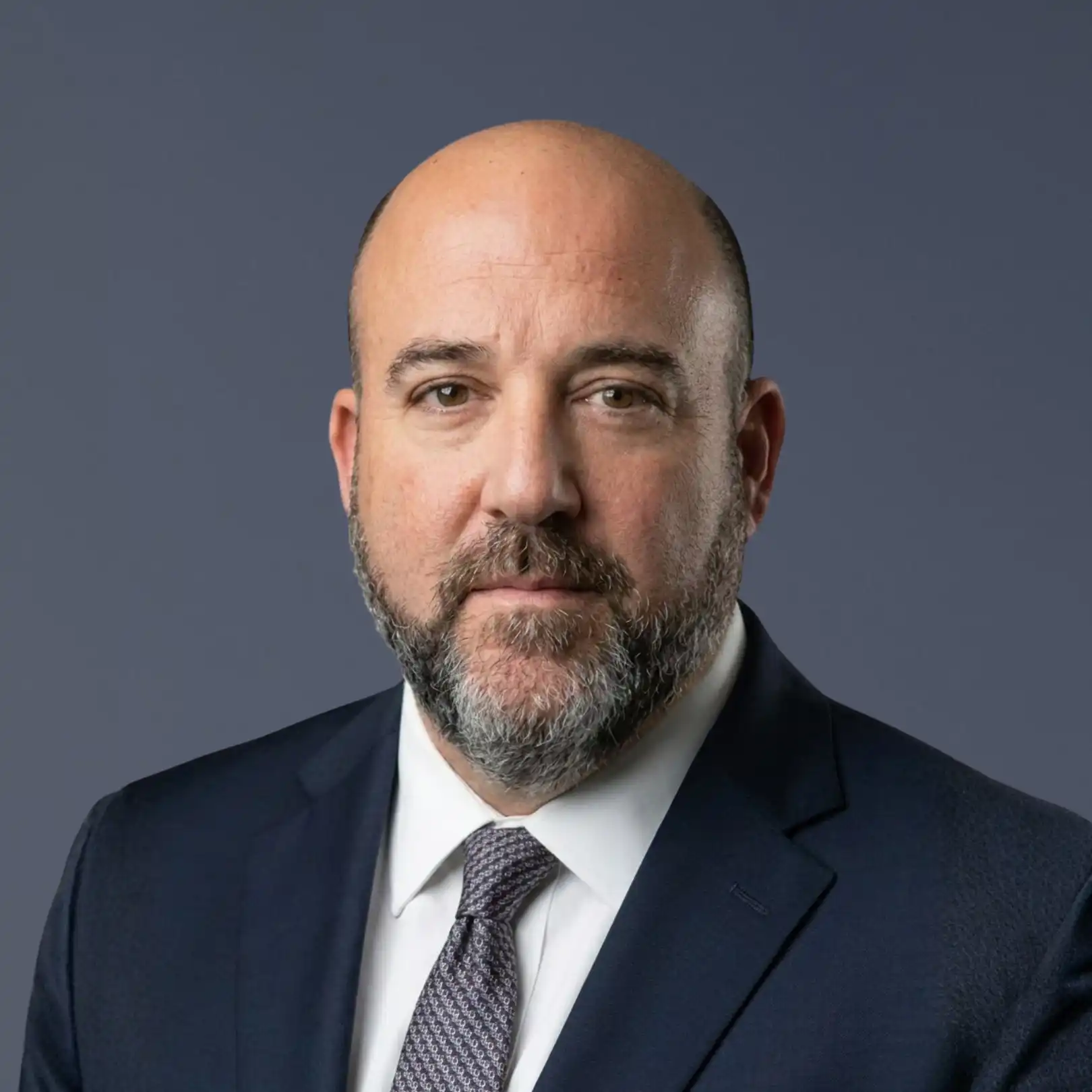
Glen Howard is an experienced Las Vegas sideswipe accident attorney trusted by local families across Clark County. He and his team handle every file personally. You'll speak directly with your attorney — not be passed to a paralegal who has to look up your case number to know your name. That's a commitment the largest Las Vegas PI firms simply can't make.
And the financial risk to you is zero. Howard Injury Law works on contingency: you pay nothing unless we recover for you. No hourly fees. No upfront costs. No surprises.
Get a free no-obligation case review
Founding attorney Glen Howard built his practice after watching his own family navigate a serious motor vehicle crash — an experience that shaped how he fights for clients today. He's recovered more than $80 million for injured clients, and you'll work directly with him and a dedicated case manager on every file, not a rotating cast of paralegals.
Read Glen's full storyIf you're unsure what to do after an accident — or want to help prevent one — HIL Helps is our free 24/7 community resource, open to everyone, not just clients.
#HILHelps — A Free Vegas Community Resource
You didn't ask for this. You're not supposed to know how to fight an insurance company, preserve evidence, or navigate Nevada personal injury law while you're in pain and trying to put your life back together.
That's what we do.
Howard Injury Law is available 24/7. The consultation is free. You pay nothing unless we win. And the sooner you call, the stronger position your case is in. However you found us — searching for a car accident lawyer in Las Vegas, or referred by someone who trusted us with their case — we're ready when you are. The free consultation will tell you exactly where you stand.
Howard Injury Law
6330 Spring Mountain Rd Ste D, Las Vegas, NV 89146