Injured in a Hit-and-Run in Las Vegas?The Driver Ran.Your Claim Didn't.
Even if the driver is never found, your own uninsured motorist (UM) coverage can still pay for your injuries. We lock down surveillance footage before it's overwritten, push back on your insurer's lowball tactics, and you pay nothing unless we win.
Can You Still Get Compensated After a Hit-and-Run in Las Vegas?
Yes. Under Nevada law, a hit-and-run driver who is never identified is treated as an uninsured motorist. That means your own uninsured motorist (UM) coverage can pay for your medical bills, lost income, and pain and suffering, the same way it would if the driver had stopped and had no insurance.
That is the path most hit-and-run injury claims take. But it is not automatic. Nevada's UM statute, NRS 690B.020, attaches two conditions to claims against an unknown driver, and your UM insurer will test both before it pays. If police later identify the driver, the claim can expand into a full liability claim against that driver and their insurance company.
What decides the outcome is how quickly the claim is built. Surveillance footage along the Strip and major corridors gets overwritten, witnesses leave town, and your insurer starts evaluating your claim the day you report it. Below, we break down exactly who pays, what Nevada requires, and how to protect your claim from the start.
Who Pays When the Hit-and-Run Driver Is Never Found?
Your own auto policy pays, primarily through uninsured motorist (UM) coverage, backed up by MedPay, health insurance, and collision coverage for your vehicle. This is the coverage you have been paying premiums on, and a hit-and-run is exactly the situation it was built for. The challenge is that your own insurer now controls the payout.
The Two Conditions Nevada Places on Unknown-Driver UM Claims
Under NRS 690B.020(3)(f), a vehicle whose driver is unknown, or cannot be found after reasonable diligence, counts as uninsured only when both of these conditions are met:
Condition 1Physical Contact
The hit-and-run vehicle actually struck you or the vehicle you were in. The Nevada Supreme Court enforced this rule in Kern v. Nevada Insurance Guaranty Association (1993): without contact, there is no statutory UM coverage against an unknown driver.
A driver who ran you off the road without touching you is not a dead end. If that driver is identified, or your policy is broader than the statute, the claim can still be recoverable. That is why we read your policy word for word.
Condition 2Prompt Police Report
The crash must be reported to police within the time frame set by Nevada's crash-reporting statutes, which in practice means right away. A late report hands your insurer a reason to deny.
In Las Vegas and unincorporated Clark County, including the Strip, that is LVMPD. In Henderson or North Las Vegas, it is that city's police department. Freeway crashes are typically handled by the Nevada Highway Patrol. See how hit-and-run reporting works in Las Vegas.
Insurers treat these two conditions as their first line of denial. Photos of the impact damage, paint transfer, medical records consistent with a vehicle strike, the police report number, and camera or witness evidence are what close that door, which is why the claim has to be built from the first day.
Who UM Coverage Protects, Even If You Weren't Driving
UM coverage follows the people insured under the policy, not just the car. Depending on how your policy defines an insured, it can cover you as a driver, a passenger, a pedestrian in a crosswalk, or a cyclist, and it may extend to family members who live in your household.
If you were a passenger in someone else's vehicle, that vehicle's UM coverage may apply first, with your own policy potentially adding coverage on top of it.
How Much UM Coverage Do You Actually Have?
Nevada requires every auto insurer to offer UM/UIM coverage in an amount equal to your bodily injury liability limits under NRS 687B.145(2). Drivers can decline it, so the first thing we check is your declarations page. Two details often increase what is available:
Stacking. If you insure more than one vehicle, you may be able to combine UM limits. Under NRS 687B.145(1), an anti-stacking clause is enforceable only if it is prominently displayed, clearly written, and you were not charged a full premium for duplicate coverage on the same risk.
Household policies. A policy held by a relative you live with may provide additional UM coverage, depending on its terms.
If you declined UM coverage, you are not out of options. MedPay, health insurance, and a claim against the driver if police identify them can all still apply.
Every Coverage Source in a Nevada Hit-and-Run
Swipe to see what to know
Coverage
What It Pays
What to Know
Uninsured Motorist (UM)
Medical bills, lost income, and pain and suffering, up to your UM limits
The main recovery source when the driver is never found. Unknown-driver claims require physical contact and a prompt police report under NRS 690B.020(3)(f).
Medical Payments (MedPay)
Reasonable and necessary medical expenses, regardless of who was at fault
Optional coverage. Nevada insurers must offer at least $1,000 in MedPay under NRS 687B.145(3). Often the fastest money in the claim.
Health Insurance
Medical treatment under your plan's terms
Your health plan may have a right to be repaid from your settlement, which affects your net recovery.
Collision Coverage
Repair or replacement of your vehicle, minus your deductible
Covers property damage only. It does not pay for your injuries.
Underinsured Motorist (UIM)
The gap between an identified driver's limits and your actual damages
Applies if police identify the driver and their policy is too small. Nevada's minimum is $25,000 per person under NRS 485.185.
The claim changes shape. Once the driver is identified, you can pursue a bodily injury claim against them and their insurer, and the physical-contact rule for unknown drivers no longer controls. If the driver turns out to be uninsured, your UM coverage still applies. If they carry only Nevada's minimum limits of $25,000 per person, your underinsured motorist (UIM) coverage can cover the gap, up to your limits.
Timing matters. Settling your UM claim and signing a release before the driver is found can affect what you recover later, so have an attorney review any release before you sign it. Criminal charges against the driver do not control your civil claim. The two cases run on separate tracks.
Who Can Be Held Liable for a Las Vegas Hit-and-Run?
Once the driver is identified, the driver is liable for your injuries. Depending on whose car it was, why they were driving, and who supplied the alcohol, a vehicle owner, an employer, or in narrow cases a social host can share that responsibility. Every additional liable party can mean another insurance policy behind your recovery.
The Hit-and-Run Driver
Once identified, the driver is personally liable for your injuries, and their auto insurance pays first. Leaving the scene of an injury crash is also a felony under NRS 484E.010.
Your civil claim does not depend on that criminal case or on a conviction.
NRS 484E.010
The Vehicle Owner
The person who fled is not always the owner. Under NRS 41.440, an owner who lets an immediate family member drive shares liability for that driver's negligence.
Lending the car to someone known to be unlicensed or impaired can create a negligent entrustment claim. If the car was stolen, your UM coverage usually applies instead.
NRS 41.440
The Driver's Employer
If the driver was on the job, in a company vehicle, making deliveries, or working as a valet, the employer can be held responsible for the crash.
Commercial policies usually carry higher limits, and fleet GPS records can help prove who was behind the wheel.
Employer Liability
Whoever Supplied the Alcohol
Under NRS 41.1305, Nevada bars, casinos, and restaurants generally cannot be held liable for over-serving an adult driver.
The narrow exception: anyone who knowingly served a driver under 21 can be liable, usually a social host.
Narrow in Nevada: NRS 41.1305
Where the Crash Happened Can Change Who Pays
In Las Vegas, the location of a hit-and-run often points to the type of driver involved, and the type of driver determines which policies are in play.
Las Vegas Boulevard
Tourists in rental cars, heavy pedestrian crossings, and constant rideshare traffic. A driver who flees on the Strip is often in a rental or working a rideshare shift, which changes which policy applies. The density of resort cameras also gives us more ways to identify them.
Koval Lane
The corridor behind the east-side resorts, crowded with rideshare pickups, delivery vans, and shuttle traffic. Once identified, a commercial driver here often brings an employer and a commercial policy into the claim.
Flamingo Road
A major east-west artery that crosses both the Strip and I-15, where a fleeing driver can be on the freeway within minutes. Fast requests for business and traffic footage along the route matter most here.
Resort Driveways and Valet Lanes
Porte-cocheres and parking garages mix pedestrians, valets, and arriving guests. If a valet or shuttle driver caused the crash, the resort or valet company can be liable as the employer, and resort security footage is often the strongest evidence available.
If the driver is never identified, there is no one on this list to name, and that is exactly when your UM claim carries the case. But identifying the driver is worth fighting for, because every name added can mean more coverage for your recovery.
“I spent years on the insurance defense side, so here’s what most drivers never hear: when someone hits you and drives away, the policy that protects you is your own. Uninsured motorist coverage is what steps in when the other driver vanishes. In Nevada, insurers have to offer it, but you can turn it down, and too many people learn they declined it on the day they need it most.
If you carry UM/UIM, that coverage isn’t a favor from your insurer. You paid for it, and you’re entitled to its full value. Adjusters know how to question the crash and shrink an injury on paper. You focus on healing. Making your own insurance company pay what it owes is our job.”
The evidence that can identify the driver and prove your claim starts disappearing within hours. Camera footage gets recorded over, witnesses leave town, and damaged vehicles get repaired. In a hit-and-run, that evidence is doing two jobs at once: finding the driver and proving the physical contact your UM claim depends on.
First Hours
The Police Report
Nevada's UM statute requires a prompt report to police for an unknown-driver claim. A report made from the scene, or as soon as you are able, protects the claim before anything else can.
First Days
Surveillance Footage
Casino, hotel, gas station, and doorbell cameras record over themselves on rolling cycles, sometimes within days. Once footage is overwritten, it is gone for good.
First Week
Witnesses
In a city built on visitors, the person who saw the driver flee may already be flying home. Names, phone numbers, and statements need to be secured while people can still be found.
Before Repairs
Vehicle Damage
Paint transfer, impact height, and debris can point to the type of vehicle that fled, and they prove the physical contact Nevada requires. Document everything before any repair.
How Insurers Fight a Hit-and-Run Claim, Including Your Own
In most hit-and-run cases, the insurance company you are up against is your own. Your UM carrier owes you good faith as its policyholder, but every dollar it does not pay stays on its books. These are the arguments it uses to close unknown-driver claims, and what Nevada law actually says.
What the Insurer Says
“We can't verify another vehicle was involved.”
What Actually Applies
This is the most common denial in unknown-driver claims. Nevada requires physical contact under NRS 690B.020(3)(f), and it is proven with impact damage, paint transfer, medical records consistent with a vehicle strike, the police report, and camera or witness evidence.
What the Insurer Says
“You didn't report the crash in time.”
What Actually Applies
An unknown-driver UM claim does require a prompt police report. If you reported it, the report number and timestamp answer this. If there was a delay, the reason for it matters, and that is a fight worth having with a lawyer.
What the Insurer Says
“You were partly at fault.”
What Actually Applies
With no other driver present to tell their side, insurers try to shift the blame onto you. Under NRS 41.141, you can still recover as long as you were not more than 50% at fault, with your damages reduced by your share. Every point of fault they assign costs you money.
What the Insurer Says
“We just need a recorded statement.”
What Actually Applies
Your policy may require you to cooperate with your own insurer, but a recorded statement is also where adjusters look for inconsistencies to use later. Talk to a lawyer before you give one.
Nevada's unfair claims practices law, NRS 686A.310, requires insurers to investigate promptly and handle claims fairly, and that duty applies to their own policyholders. When a UM carrier stalls or lowballs a claim it should pay, that conduct can become part of the case.
How We Prove a Hit-and-Run Claimin Las Vegas
Every hit-and-run case runs on two tracks at once: finding the driver, and building a UM claim strong enough to pay even if they are never found. We work both from day one, so the case moves forward no matter how the search turns out.
Track 1
Identifying the Driver
Canvassing resort, business, and home cameras along the crash route and sending preservation requests
Using paint transfer, debris, and damage height to narrow the make and model that fled
Sharing every lead, including partial plates and vehicle descriptions, with the police investigation
Following commercial leads through rideshare, delivery, and fleet records
Track 2
Building the UM Claim
Proving physical contact through vehicle damage, reconstruction, and medical records
Securing the police report that satisfies Nevada's prompt-reporting requirement
Reviewing every policy that may apply, including stacked and household UM coverage
Documenting your full damages before your insurer puts a number on them
Do You Have a Hit-and-Run Claimin Nevada?
In most cases, yes. How the claim works depends on what happened and whether the driver is ever found. Here are the four situations we see most.
Yes: Strong Claim
“I was walking or riding a bike when a car hit me and drove off.”
Being struck directly satisfies Nevada's physical-contact rule. Depending on how your auto policy defines an insured, your own UM coverage can pay even though you were not in a car, and a household member's policy may also apply.
Yes: Property Claim
“My parked car was hit while I wasn't in it.”
It is still a hit-and-run under Nevada law. Your collision coverage is usually the fastest path to repairs, and if the driver is identified, their property damage coverage pays. File a police report either way.
Yes: Claim Expands
“Police identified the driver after the crash.”
You can now pursue the driver and their insurer directly, and the physical-contact rule for unknown drivers no longer controls. If their limits are too low, your UIM coverage can cover the gap.
Yes: Through UM
“The driver was never found.”
Your uninsured motorist coverage steps in as long as there was physical contact and the crash was promptly reported to police under NRS 690B.020(3)(f).
Hit and the Driver Fled? Here's What to Do Now.
In a hit-and-run, the first few steps do more than protect your health. They satisfy the conditions your UM claim depends on. Here is what matters most, and the deadlines that run faster than most people expect.
1Report It to Police Right AwayCall 911 from the scene, or report the crash as soon as you are able. Nevada's UM statute requires a prompt police report for an unknown-driver claim. Get the report number.
2Get Medical Care and Document EverythingSee a doctor even if you feel fine. Photograph your injuries and the vehicle damage before any repair, and write down every witness name and nearby camera you can remember.
3Call a Hit-and-Run Lawyer Before Any StatementYour policy likely requires you to notify your insurer, but talk to us before you give a recorded statement. One call and we take over the evidence, the police follow-up, and your insurer.
The deadlines that matter most: Nevada gives you two years from the date of the crash to file a personal injury claim under NRS 11.190(4)(e). But in a hit-and-run, the clocks that end claims run much faster. Your UM claim depends on a prompt police report under NRS 690B.020(3)(f), your policy likely requires prompt notice of the claim, and the footage that could identify the driver can be overwritten within days. Don't let the two-year clock convince you there is time to wait.
A hit-and-run is one of many vehicle accident types we handle across the city. To see how your case fits the bigger picture, including citywide crash-hotspot data and every crash type under one roof, visit our Las Vegas Motor Vehicle Accident Lawyerhub.
Hit-and-Run Accident Questions, Answered
How long do I have to file a hit-and-run claim in Nevada?
Nevada gives you two years from the date of the crash to file a personal injury claim, under NRS 11.190(4)(e). In a hit-and-run, the practical deadline is much shorter: an unknown-driver UM claim requires a prompt police report under NRS 690B.020(3)(f), and most policies require prompt notice of the claim. Report the crash and have your case reviewed right away.
What if the hit-and-run driver is never found?
You can still recover through your own uninsured motorist (UM) coverage. Under NRS 690B.020(3)(f), an unknown driver is treated as uninsured if their vehicle made physical contact with you or the vehicle you were in, and the crash was promptly reported to police. If your insurer denies the claim, that denial can be challenged.
Can I file a civil claim if the driver is never charged with a crime?
Yes. Your civil claim is completely separate from any criminal case. Leaving the scene of a crash that injures someone is a category B felony under NRS 484E.010, punishable by 2 to 20 years in prison, but a criminal case punishes the driver and does not compensate you. A civil claim only has to show the driver was more likely than not responsible, and it can move forward whether or not charges are ever filed.
What if a driver ran me off the road but never hit my car?
Nevada's UM statute requires physical contact when the driver is unknown, and the Nevada Supreme Court enforced that rule in Kern v. Nevada Insurance Guaranty Association (1993). If the driver is identified, however, you can pursue a normal claim against them without any contact requirement, and some policies are broader than the statute. Have your policy reviewed before assuming you have no claim.
Does my UM coverage apply if I was walking or riding a bike?
Often, yes. UM coverage follows the people insured under the policy, not just the car, so depending on how your policy defines an insured, it can cover you as a pedestrian or cyclist. A policy held by a relative you live with may also apply.
What if I don't have uninsured motorist coverage?
You may still have options. MedPay, health insurance, and collision coverage can pay for medical bills and vehicle damage, a household member's policy may provide UM coverage, and if police identify the driver, you can pursue them and their insurer directly.
What if the insurance company says I was partly at fault?
You can still recover as long as you were 50% or less at fault. Under Nevada's modified comparative negligence rule (NRS 41.141), your compensation is reduced by your share of fault but not eliminated, and only a finding of 51% or more bars recovery entirely. The percentage an insurer assigns you is a negotiating position, not a final ruling.
How much does a hit-and-run accident lawyer in Las Vegas cost?
Nothing upfront. Howard Injury Law works on contingency, which means no retainer, no hourly fees, and no cost at all unless we win your case. The consultation is free, and if we do not recover for you, you owe us nothing.
I had a great experience with Howard Injury Law. Anytime I had questions, they were always there with an answer ready to help. They were super attentive towards me. I'm very grateful I went to them after my car accident.
Car Accident
J
Jessica CastroFebruary 2026
Highly recommend. I worked with James and Vanessa. They both are very nice and patient if or when you have a million and one questions. They make sure you are updated and not wondering where you stand.
Personal Injury
E
Eduardo GonzalezJuly 2025
I can't say enough great things about Howard Injury Law. From start to finish, Glenn Howard and his amazing team James and Natalie were there every step of the way. They made a stressful situation feel manageable ... read more
Injury Case
T
Tafari TariqMay 2024
I would like to thank Glen Howard and James for taking such great care of me during my case. They're knowledgeable, professional, and genuinely caring. My family and I are truly grateful for the outcome they achieved.
Injury Case
C
Crystal JacksonJune 2024
This team was amazing. They took care of everything I needed with my personal injury and made it so easy for me. I never felt alone during the process. I would highly recommend Howard Injury Law to anyone.
Personal Injury
K
Kiara M.June 2024
I had a really bad accident in March 2023 and was referred to this amazing team. This being a new experience, Howard Injury Law walked me through every single step. They truly fought for me and got me more than I expected.
Car Accident
What Hit-and-Run Victims Need to Know
Straight answers to the questions that come up after a Las Vegas hit-and-run, so you understand your options before you decide anything.
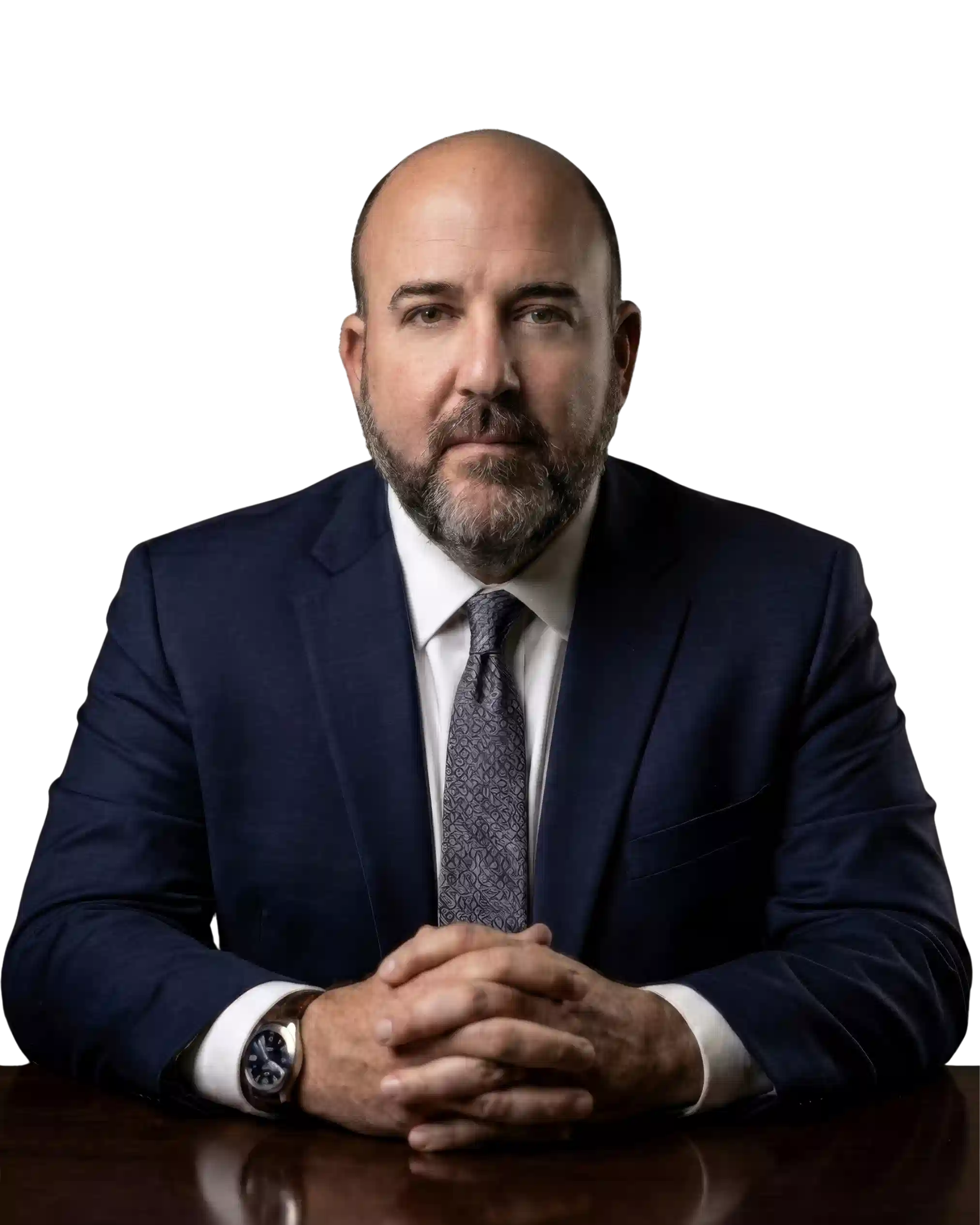
Founding attorney Glen Howard has spent his career standing beside Las Vegas crash victims and families after serious collisions turned their lives upside down — and that's shaped the compassion he brings to every case. He and his team understand that a hit-and-run isn't a case file; it's a life-changing event for you and the people who love you, and it's treated that way here. He has recovered more than $80 million for injury victims and their families, and you'll work directly with Glen and a dedicated case manager who handle you with care and respect — not a rotating cast of paralegals.
You Deserve to Focus on Healing. We'll Handle Everything Else.
You never expected to be here. No one is supposed to know how to fight an insurance company, preserve evidence, or navigate Nevada injury law while recovering from a serious crash.
That's what we do.
Howard Injury Law is available 24/7. The consultation is free and confidential. You pay nothing unless we recover for you. And because Nevada sets a deadline to act, reaching out sooner keeps more of your options open. However you found us — searching for a hit-and-run accident lawyer in Las Vegas, or referred by someone who trusted us with their case — we're ready when you are, and there's no pressure to decide anything today.
Las Vegas Community Resource
If you're unsure what to do after a crash — or want to help protect the people you love — HIL Helps is our free 24/7 community resource, open to everyone, not just clients.
We represent injury victims and grieving families across Las Vegas, Nevada with elite trial experience and courtroom strength. When your family’s future is at stake, you deserve a lawyer who prepares every case as if it’s going to trial.