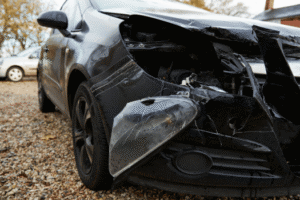


It happened in seconds. The impact, the other car speeding off, and by the time you looked up, the plate was gone. If you’re replaying that moment and thinking you have no case, take a breath. A hit and run without a license plate can still be reported to police, and in most cases you can still file an injury claim in Nevada.
The plate helps police find the driver. It is not what your claim depends on. This guide covers what counts in its place, what to do over the next 72 hours, and how your insurance pays if the driver is never found.
Can You File a Claim for a Hit and Run Without a License Plate?
Yes. When a driver flees and can’t be identified, Nevada law treats that driver as uninsured. That means your own uninsured motorist (UM) coverage can pay for your injuries, much as the other driver’s insurance would have.
Under Nevada’s UM statute, two conditions apply to an unknown-driver claim. The license plate isn’t one of them:
- Physical contact. The fleeing vehicle has to have actually struck you, or struck the vehicle you were in.
- A prompt police report. The crash has to be reported to police right away, under Nevada’s crash-reporting rules.
Glen Howard spent years as an insurance defense attorney before founding Howard Injury Law. He knows what the adjuster looks at first on a no-plate claim, and it isn’t the plate. It’s the police report: when it was made, whether it describes contact, and whether your account matches the damage. Get those two conditions right, and a missing plate is a gap in the investigation, not a hole in your claim.
What to Do When You Didn’t Get the Plate: The First 72 Hours
The general checklist in what to do after a hit-and-run accident still applies: get to safety, get medical care, photograph everything. The steps below are the ones that matter most when you have no plate.
Call Police From the Scene and Tell Them You Have No Plate
Don’t skip the call because you “have nothing to give them.” You do. A report with no plate still records the time, the location, the contact and your injuries, and those are what your UM claim needs.
Which agency responds depends on where the crash happened:
- Las Vegas Metro (LVMPD): the City of Las Vegas and unincorporated Clark County, including the Strip.
- Nevada Highway Patrol: freeways such as I-15, US-95 and the 215 Beltway.
- Henderson or North Las Vegas police: crashes within those city limits.
Before you leave, ask for the report or event number. For more detail on filing, see our guide to hit-and-run reporting in Las Vegas. If you were taken to the ER first, don’t assume it’s too late. Our guide to the reporting deadline that protects your UM claim explains what “right away” means in practice.
Write Down Everything You Remember Before It Fades
Memory degrades fast after a traumatic event. Within the hour, write or voice-record everything you can recall, even the details you’re unsure of:
- Vehicle: color, body style (sedan, SUV, pickup, van), and make or model if you noticed
- Plate fragments: any letters or numbers, the plate color, and whether it looked like a Nevada plate or an out-of-state one
- Damage and details: dents, a broken headlight, roof racks, stickers, tint, a rideshare decal
- Driver: anything you saw, even “one person, dark hoodie”
- Direction: which way the car went, and whether it got on the freeway or turned onto a side street
Label your guesses as guesses. An honest “I think it was gray, maybe silver” is better than false certainty that an adjuster can later pick apart.
Ask for Footage Before It’s Overwritten
In Las Vegas, the camera is often the plate you didn’t get. Casinos, gas stations, convenience stores, apartment complexes and home doorbell cameras record constantly. Many of those systems also record over themselves, often within days.
Go back to the scene, or send someone you trust, and ask each business within sight of the crash to save its footage from that time window. Give them your report number. If a manager won’t release footage to you, a written request to preserve it still matters, and an attorney can follow up formally.
Find Witnesses and Keep What the Car Left Behind
Another driver may have caught the plate you missed, or may have dashcam video. Get names and phone numbers, not just “they saw it.” Keep any debris from the other car, such as a mirror piece, a light fragment or trim, and photograph any paint transfer on your vehicle before repairs erase it.
Notify Your Own Insurance Company Promptly
Your policy almost certainly requires prompt notice of a crash, whether or not you know who hit you. Report the facts: the date, the location, that the other driver fled, and your police report number. Keep it factual. Don’t guess about your injuries or give a recorded statement before you understand your coverage.
A Partial Plate or Rough Description Still Matters
Three characters and a color can narrow a search. Police can run partial plate combinations against vehicle descriptions, and a damaged front end or missing mirror can connect your crash to a car that turns up at a body shop or in another report.
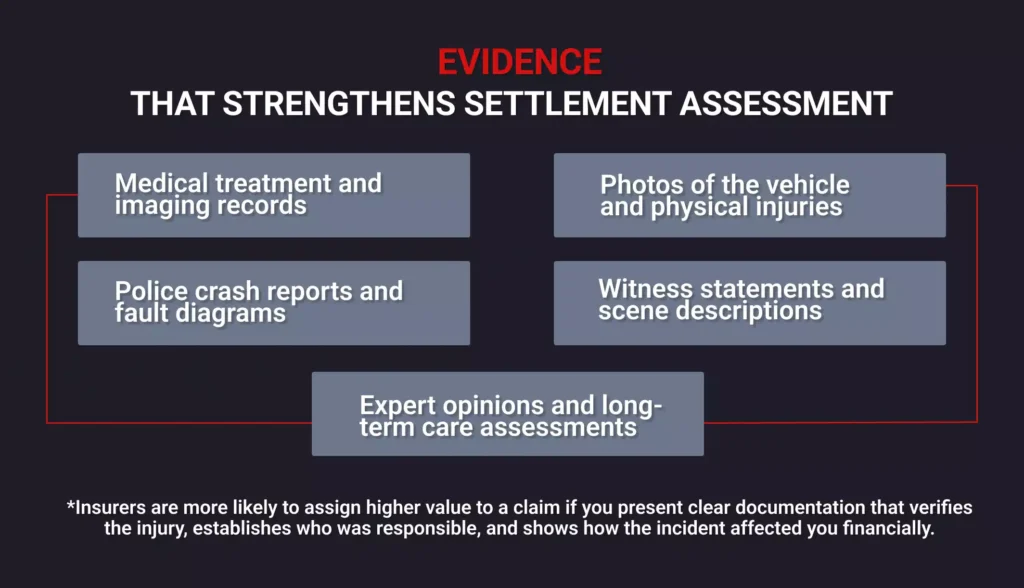
Even if the partial plate never leads anywhere, it strengthens your claim. A detailed, consistent description shows your insurer that the fleeing vehicle was real, and that it was a specific car that struck you and drove away.
Do Police Follow Up on a Hit-and-Run With No Plate?
Sometimes, but it depends on how serious the crash was. Leaving the scene of a crash that injures someone is a felony in Nevada, and those cases generally get more investigative attention. A property-damage-only hit-and-run with no plate and no footage may never go beyond the initial report.
Either way, the report still does its job for you. Your UM claim doesn’t depend on police solving the case. It depends on the report existing and being made promptly. For how the criminal side works, including penalties, see Nevada hit-and-run laws explained.
How Your Insurance Pays When the Driver Is Never Identified
When the driver is never found, your recovery usually comes from your own policy, plus any other policy that covers you. Here’s how the main coverages work. Every policy is different, so check your declarations page or have an attorney review it.
Uninsured Motorist Bodily Injury
This is the core of a no-plate injury claim. UM bodily injury can cover medical bills, lost wages and pain and suffering, up to your policy limits. For the step-by-step claim process, read how UM/UIM coverage pays after a hit-and-run.
Collision vs. UM Property Damage
Your collision coverage can repair your car after a hit-and-run, but you’ll pay your deductible first. Uninsured motorist property damage coverage, if you carry it, may help. Many policies, however, limit or exclude it when the other driver is never identified.
MedPay and Health Insurance
Medical payments coverage (MedPay) and your health insurance can pay bills now, while the larger claim develops. Keep every medical record, receipt and appointment summary.
If you declined UM coverage, don’t assume you’re out of options. A household member’s policy, the car you were riding in or a work vehicle may still provide coverage. See what happens if you don’t have UM coverage.

What Happens If the Driver Turns Up Later
Sometimes footage, a tip or a body-shop report identifies the driver weeks later. If that happens, your claim can shift to that driver’s liability insurer. If their coverage is too low, your underinsured motorist coverage may make up the difference.
If the driver is identified, a Nevada injury lawsuit against them generally has to be filed within two years of the crash. That’s one more reason to have a lawyer tracking the case while police do their part.
Why a Former Insurance Defense Attorney Matters When There’s No Plate
Here’s the uncomfortable part. Your own insurance company is not on your side in a UM claim. Once you file, it steps into the fleeing driver’s shoes and evaluates your claim the way the other driver’s insurer would have. No-plate claims give adjusters more to question: was there really contact, was the report timely, do the injuries match the damage?
Glen Howard built those arguments for insurers before he started representing injured people. As a Las Vegas hit-and-run lawyer, he uses that experience to close those gaps before the adjuster finds them. That means locking down the report, preserving footage, documenting contact and valuing the claim on the evidence. Our team handles every crash type across Southern Nevada; learn more about our motor vehicle accident lawyers in Las Vegas.
Frequently Asked Questions
Can police find a hit-and-run driver without a license plate?
Yes, it happens, though it’s harder. Investigators can use surveillance and traffic-area footage, witness accounts, partial plate searches, paint transfer and debris to narrow down a vehicle. Las Vegas has an unusually dense network of private cameras, especially along the Strip and at major intersections, which improves the odds when footage is requested quickly. Some cases are never solved. That’s why your claim is built to work either way: your uninsured motorist coverage doesn’t require police to find the driver, only that the crash involved contact and was promptly reported.
Will insurance cover a hit and run without a license plate?
In most cases, yes, if you carry uninsured motorist coverage. Nevada treats an unidentified hit-and-run driver as uninsured, so UM bodily injury coverage can pay for medical bills, lost wages and pain and suffering up to your limits. The two conditions are physical contact with the fleeing vehicle and a prompt police report. Collision coverage can fix your car after your deductible, and MedPay or health insurance can help with bills in the meantime. Every policy has its own terms, so a coverage review is worth doing early.
What if I only got part of the license plate?
Report it, including any letters or numbers you’re unsure of, and say you’re unsure. Police can search partial combinations against vehicle make, model and color, and a partial plate paired with footage or a damage description can be enough to identify a car. Even if it doesn’t lead to the driver, a partial plate adds detail and consistency to your account, which helps your UM claim hold up when your own insurer reviews it.
What if the fleeing car never actually hit me?
This is the hardest version of a hit-and-run claim. Nevada’s UM statute requires physical contact between the fleeing vehicle and you or the vehicle you were in for an unknown-driver claim. A “miss-and-run,” where a driver forces you off the road and never touches your car, usually doesn’t qualify on that basis alone. That doesn’t automatically mean there’s no path forward. Other coverage or a later-identified driver can change the picture, and every case is different, so have a Nevada attorney look at the facts before you give up.

No Plate Doesn’t Mean No Case
You did the hardest part by getting through the crash. What happens in the next few days, including the report, the footage and the first conversation with your insurer, shapes what your claim is worth.
Wondering whether you have a case without the plate? Talk to a Nevada attorney who used to sit on the insurance side of these claims. Glen Howard and our team will review your report, your policy and your options in a free consultation, and there’s no fee unless we win. Start your free case review or call (702) 331-5722. We’ll tell you plainly whether you have a hit-and-run injury claim worth pursuing.