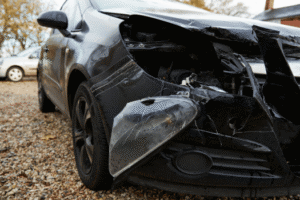


A driver hit you and disappeared. Police may never find them, and it’s easy to assume nobody is going to pay for your medical bills, your missed paychecks, or the pain you’re still living with. In most cases that isn’t true. In Nevada, UM/UIM coverage after a hit-and-run is built for exactly this: your own uninsured motorist coverage treats the fleeing driver as an uninsured driver and pays what that driver should have paid, up to your policy limits.
What it pays, and how fast, depends on the details. Which parts of your policy apply, whether you met two Nevada requirements, and how the claim is handled once your own insurer starts evaluating it all matter. Below is how the money actually moves.
Who Pays for a Hit-and-Run When the Driver Is Never Found?
When the at-fault driver can’t be identified, recovery usually comes from your side of the insurance picture:
- Your uninsured motorist (UM) coverage is the main source for injury damages, including pain and suffering.
- MedPay and health insurance cover early medical bills while the injury claim develops.
- Collision coverage typically pays to repair or replace your car.
- A household member’s policy may add coverage in some situations.
If you want a refresher on what these coverages are, our guide to what uninsured motorist coverage is covers the basics. This post is about how they pay out after a hit-and-run.
What Each Part of Your Policy Pays After a Hit-and-Run
| Coverage | What It Pays | The Hit-and-Run Catch |
|---|---|---|
| UM bodily injury | Medical bills, future care, lost wages, pain and suffering | Nevada requires physical contact and a prompt police report when the driver is unknown |
| Collision | Vehicle repair or replacement | You’ll usually pay your deductible |
| UM property damage | Vehicle damage, if your policy includes it | Many policies limit or exclude it when the driver is never identified |
| MedPay | Medical bills, regardless of fault | Limits are often small, so it covers early bills, not the whole claim |
| Health insurance | Treatment costs | May seek reimbursement from your settlement |
| UIM | The gap above the other driver’s limits | Only applies if the driver is found and underinsured |
Uninsured Motorist Bodily Injury: The Core of Your Claim
UM bodily injury coverage pays the damages you would have been legally entitled to recover from the driver who fled. That includes ER and hospital bills, follow-up treatment, physical therapy, future medical care, lost wages, reduced earning capacity, and pain and suffering. It typically carries no deductible. The ceiling is the UM limit on your declarations page.
Your Car: Collision vs. UM Property Damage
Nevada’s UM law is written around bodily injury. For vehicle damage after a hit-and-run, most drivers go through collision coverage and pay their deductible. Some policies include UM property damage, but many limit it or exclude it when the other driver is never identified. Your declarations page and policy wording decide which one applies. If the driver is found later, your insurer may pursue them and your deductible may be recovered.
MedPay and Health Insurance: Paying the Bills Now
Injury claims take time, and medical bills arrive right away. MedPay pays regardless of fault and helps with early expenses. Health insurance picks up treatment, though it may ask to be reimbursed from your recovery later. Our breakdown of who pays your medical bills after an accident explains how liens and reimbursements work.
UIM: Only If the Driver Turns Up
Underinsured motorist (UIM) coverage only comes into play if the fleeing driver is later identified and their liability limits are too low to cover your losses. More on that below.
Two Nevada Requirements Before UM Pays on an Unknown Driver
Nevada law allows a UM claim against an unidentified driver, but only if two conditions are met:
- Physical contact. The fleeing vehicle must have actually struck you or the vehicle you were in. The Nevada Supreme Court has enforced this strictly, so a “near miss” that ran you off the road, or debris on I-15, usually doesn’t qualify on its own.
- A prompt police report. The crash must be reported to police as Nevada’s reporting statute requires, which means right away and not days later. Here’s how to report a hit-and-run in Las Vegas to LVMPD, Henderson, North Las Vegas police, or the Nevada Highway Patrol.
Your policy adds a third layer: its own notice deadline for telling your insurer about the crash. Miss it and the insurer has an argument to deny. For a full picture of eligibility and who pays when a hit-and-run driver is never found, including who else might be liable, talk with an attorney early.
How a Hit-and-Run Uninsured Motorist Claim Moves, Step by Step
Once you open a hit-and-run uninsured motorist claim in Nevada, your own insurer steps into the fleeing driver’s shoes. That changes the relationship. The company you’ve paid premiums to is now the party deciding how much to pay you.
1. Notice and claim setup. You notify your insurer and open a UM claim. They’ll ask for the police report number, photos, and a description of the crash. If you haven’t handled the first 24 hours yet, start with what to do after a hit-and-run accident.
2. Your duty to cooperate. Unlike a claim against someone else’s insurer, your policy requires you to cooperate. Expect requests for a recorded statement, medical record authorizations, and sometimes a sworn examination under oath or an exam by a doctor they choose. You generally can’t refuse outright without risking coverage. You can prepare with a lawyer, and push back on authorizations that reach far beyond the injuries at issue.
3. Treatment until you’re stable. Your claim’s value depends on the full medical picture. Most claims aren’t valued until you reach maximum medical improvement, meaning your doctors know what recovery looks like and what future care you’ll need.
4. The demand. Your medical records, bills, wage loss proof, and an account of how the injury has affected your life are packaged into a demand for payment.
5. Evaluation and negotiation. The adjuster values the claim and makes an offer. Negotiation usually follows.
Glen Howard spent years as an insurance defense attorney before representing injured people. He’s seen from the inside how adjusters evaluate a UM claim: they look for treatment gaps, prior injuries, low visible vehicle damage, a late police report, and any opening to argue there was no contact at all. Knowing those playbook moves ahead of time is how you build a claim that holds up against them.
Does UM/UIM Cover Pain and Suffering?
Yes. UM coverage pays what you’d be legally entitled to recover from the at-fault driver, and in Nevada that includes non-economic damages such as pain, suffering, emotional distress, and loss of enjoyment of life. These are often the largest part of a serious injury claim.
They’re also the part adjusters fight hardest. Consistent treatment, clear medical documentation, and a record of how the injury changed your daily life all support the value. A two-month gap in care, or a quick “I’m fine” in a recorded statement, will be used to drive the number down.
How Long Does It Take to Settle an Uninsured Motorist Claim?
There’s no standard timeline, and anyone who promises one is guessing. The biggest factors are:
- How long you treat. Settling before you know your full medical picture usually means leaving money behind.
- How quickly records and bills come in. Providers can be slow.
- Whether the insurer disputes contact, causation, or fault.
- Whether the claim settles in negotiation or goes to arbitration or litigation.
Nevada law requires insurers to handle claims fairly and promptly and to act in good faith toward their own policyholders. Stalling with no reasonable basis is a problem for the insurer, not just an inconvenience for you.
When Your Own Insurer Lowballs or Denies the Claim
A low offer isn’t the final word. Depending on your policy and the dispute, the options include:
- Continued negotiation with better documentation.
- Arbitration, if your policy provides for it or both sides agree.
- A lawsuit against your own insurer for breach of the insurance contract.
- A bad faith claim. As a policyholder, you have rights under Nevada’s unfair claims practices law and common-law bad faith principles. An insurer that denies or delays without a reasonable basis can face liability beyond the policy limits.
Every case is different, and whether a denial crosses into bad faith depends on the facts. That’s a question for a Nevada attorney who handles these claims, not something to guess at.
What Changes If Police Find the Driver Later
Sometimes camera footage from a Strip property or a witness plate number leads police to the driver weeks later. When that happens:
- The claim shifts toward the driver and their liability insurer.
- UIM may apply if their limits are too low. Nevada’s minimum is only $25,000 per person, which rarely covers a serious injury.
- Your insurer may pursue the driver to recover what it paid you.
- Tell your UIM insurer before you settle. Many policies require notice or consent before you accept the at-fault driver’s limits or sign a release. Skipping that step can put your UIM claim at risk.
The two-year Nevada injury deadline also matters once there’s an identified driver to sue.
Household Policies, Passengers and Pedestrians
UM coverage often follows people, not just vehicles. Depending on the policy wording, you may be covered as a passenger in someone else’s car, as a pedestrian crossing Flamingo, or on a bike in Spring Valley. You may also be covered under a policy owned by a relative you live with.
Don’t assume multiple policies simply add together. Nevada allows insurers to include language limiting recovery to the highest single limit and splitting payment between policies. Whether that language applies turns on the exact policy terms. If you were on foot, our guide for a pedestrian hit by a fleeing driver in Las Vegas covers the pedestrian side.
Frequently Asked Questions
Will my insurance go up if I file a UM claim after a hit-and-run?
Nevada law protects you here. Under NRS 687B.385, an insurer can’t cancel your policy, refuse to renew it, or raise your renewal premium because of a claim where you weren’t at fault. A hit-and-run where another driver struck you and fled is the kind of claim this protection was written for. Rates can still change for reasons unrelated to your claim, such as company-wide increases or other driving history. If your premium jumps right after a not-at-fault UM claim, ask the insurer in writing to explain the basis. Many people avoid using coverage they’ve paid for because they fear a rate hike. In Nevada, that fear usually isn’t a reason to leave money on the table.
Do I have to pay a deductible for a hit-and-run in Nevada?
It depends on which coverage pays. UM bodily injury coverage for your medical bills, lost wages, and pain and suffering typically has no deductible. Vehicle damage is different. If it runs through collision coverage, you’ll usually pay your collision deductible. If your policy includes UM property damage coverage, that may carry its own deductible, and many policies limit it when the driver is never identified. If the fleeing driver is found later, your insurer may recover what it paid from that driver, and your deductible may be reimbursed. Check your declarations page to see exactly which coverages and deductibles you have.
What if I don’t have uninsured motorist coverage?
Nevada requires insurers to offer UM coverage, but drivers can reject it in writing. If you did, recovery gets harder, but you may still have options: MedPay, health insurance, collision coverage for your car, a household member’s policy that covers you, or a direct claim if the driver is identified. Don’t assume you have no UM coverage until someone has reviewed your policy, since the paperwork doesn’t always match what people remember signing. We cover the full set of options in what to do if the other driver doesn’t have insurance.
Can I sue my own insurance company over a UM claim?
Yes. A UM claim is a claim under your insurance contract. If your insurer refuses to pay what the claim is worth, you can pursue it through arbitration (if your policy provides for it) or through a lawsuit for breach of contract. If the insurer acted unreasonably, for example by denying a valid claim without a reasonable basis or dragging out the investigation, Nevada law may also allow a bad faith claim. That can open the door to damages beyond your policy limits. These cases turn on the insurer’s conduct and the policy language, so talk with a Las Vegas lawyer before assuming a low offer is the end of the road.
Is there a deadline to file a UM claim after a hit-and-run?
There are several, and the earliest ones matter most. The crash must be reported to police right away to preserve a UM claim against an unknown driver. Your policy will also require prompt notice to your insurer and may set its own deadlines for submitting proof of your claim. If the driver is identified, Nevada’s two-year personal injury deadline applies to a lawsuit against them. Claims against your own insurer follow separate contract rules, but counting on that longer window is risky, because missing a policy notice requirement can sink the claim first. The safest move is to report immediately, notify your insurer quickly, and get advice before deadlines start to overlap.

Talk to a Las Vegas Hit-and-Run Lawyer Who Knows the Insurance Side
You didn’t cause this crash, and you shouldn’t have to fight your own insurance company alone to get what your policy promises. Glen Howard spent years defending insurance companies before he started representing injured people. He knows how a UM adjuster values a hit-and-run claim, where they’ll push back, and what it takes to get a fair number.
If you’re not sure whether you qualify, or you’ve already received an offer that feels too low, a short conversation will tell you where you stand. There’s no fee unless we win. Talk to a Las Vegas hit-and-run lawyer at Howard Injury Law, or request your free case review to find out whether you have a claim. For other types of crashes, our Las Vegas motor vehicle accident lawyer team handles every type of crash under one roof.