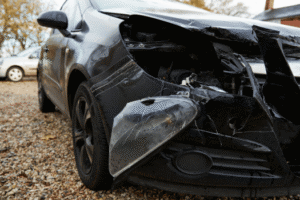


A pedestrian hit-and-run in Las Vegas leaves you hurt, shaken, and asking a question nobody should have to ask: if the driver is gone, who pays for this? The short answer is that you probably have more options than you think. Nevada law gives pedestrians real paths to compensation even when the driver is never found. Most of them depend on what you do in the first few days.
We’ll help guide you on steps, who pays when the driver disappears, and how a Las Vegas attorney builds a case with no driver at the table.
Pedestrian Hit-and-Run in Las Vegas: What to Do in the First 72 Hours
Evidence in a hit-and-run disappears fast, faster than in almost any other crash. These steps protect your health first and your claim second.
Get Out of Traffic and Call 911
If you can move safely, get to the sidewalk or shoulder. Then call 911 and ask for both police and medical help. A police report is required for the insurance claims described below, so make it even if your injuries feel minor. For what happens after you file, see our guide to hit-and-run reporting in Las Vegas.
Write Down the Car Before Your Memory Fades
Adrenaline wipes details out within hours. As soon as you can, write down or voice-record everything you remember:
- Color, make, model, and body style (sedan, SUV, pickup)
- Any part of the license plate, even one or two characters
- Damage, stickers, roof racks, or anything unusual
- The direction the driver went and the street they turned onto
- The time and exact location, such as the crosswalk at Flamingo and Paradise or the resort driveway on Las Vegas Boulevard
A partial plate plus a color and make is often enough for police to narrow down the list.
Get Checked Even If You Walked Away
A car hitting an unprotected body can cause concussions, internal bleeding, and spinal injuries that don’t show symptoms for hours or days. Go to the ER or urgent care the same day. That visit protects your health and creates the medical record that ties your injuries to the crash. Insurers look hard at any gap between the crash and your first treatment.
Keep Your Clothes and Shoes, and Don’t Wash Them
This step only applies to pedestrians, and most people miss it. Paint transfer, glass, and tire marks on your clothing can help identify the vehicle and prove contact. Put everything you were wearing in a paper bag and set it aside.
Witnesses and Cameras: You Have Days, Not Weeks
Ask anyone who stopped for their name and phone number. Then think about cameras. In Las Vegas, a crash near the Strip, Downtown, or a busy corridor like Tropicana or Sahara was probably recorded somewhere: casino and resort surveillance, gas stations, convenience stores, bus stops, apartment complexes, and home doorbell cameras.
Much of that video is overwritten automatically within days. A lawyer can send preservation letters right away asking businesses to save footage before it’s gone. That letter is often the difference between identifying the driver and never knowing who it was.
Who Pays When the Driver Who Hit You Is Never Found?
This is the question that keeps most people from calling. You weren’t in a car, so it feels like car insurance has nothing to do with you. Often it does.
Your Own Auto Policy Can Cover You on Foot
If you have car insurance with uninsured motorist (UM) coverage, that coverage generally protects you as a person, not just your car. In many Nevada policies, UM pays for injuries caused by an unidentified hit-and-run driver even when you were walking. Nevada insurers must offer UM coverage, and it stays on the policy unless the policyholder rejected it in writing.
If your policy includes medical payments (MedPay) coverage, that can help pay medical bills right away, whoever was at fault. Our primer on what uninsured motorist coverage is explains how the two coverages work together.
Don’t Own a Car? A Family Member’s Policy May Still Cover You
Many pedestrians hit in Las Vegas don’t drive. That doesn’t end the conversation. Many auto policies extend UM coverage to relatives who live in the policyholder’s household. If you live with a spouse, parent, or adult child who carries auto insurance, their policy may cover you. It depends on the exact policy wording, so get it reviewed before you assume you have no coverage.
Visiting Las Vegas? Your Home Policy May Travel With You
A large share of people hurt on foot near the Strip are visitors. If you have auto insurance in your home state, its UM coverage often applies to a crash in Nevada. Out-of-state policies have their own terms and deadlines, so notify your insurer quickly even after you’ve flown home.
The Two Conditions Nevada Puts on Unknown-Driver Claims
Under Nevada law, a hit-and-run vehicle counts as “uninsured” for UM purposes when two things are true:
- There was physical contact. The driver’s vehicle actually struck you or your vehicle. For a pedestrian who was hit, this condition is usually met automatically.
- The crash was reported to police. This is the one people lose claims over. Report promptly, keep the report number, and get a copy.
For the full breakdown of unknown-driver claims, including how insurers challenge them, see our Las Vegas hit-and-run accident lawyer page.
If Police Find the Driver
If the driver is identified, you can bring a claim against their liability insurance. Nevada’s minimum is only $25,000 per injured person, and a serious pedestrian injury can go far past that quickly. If the driver was uninsured or underinsured, your own UM/UIM coverage can make up some or all of the difference, up to your policy limits.
What a Pedestrian Hit-and-Run Claim Can Include
Depending on the facts, a claim can seek:
- Emergency care, surgery, therapy, and future medical treatment
- Lost wages and reduced ability to earn
- Pain, suffering, and loss of enjoyment of life
- Scarring, disfigurement, or permanent limitations
What a specific claim is worth depends on injury severity and available coverage. Our breakdown of pedestrian accident compensation in Las Vegas walks through the factors that drive the number.
Why Your Own Insurance Company May Fight Your Claim
In a hit-and-run UM claim, the insurance company across the table is usually yours. Many people are caught off guard when their own carrier starts acting like the opposition. From the carrier’s side, every dollar paid on a UM claim comes out of its own pocket, and that shapes how the claim gets handled.
Glen Howard spent years as an insurance defense attorney before founding Howard Injury Law, so he knows how these claims are handled from the inside. The usual pushback in a pedestrian hit-and-run includes:
- “There’s no proof a car hit you.” Adjusters question contact when there are no witnesses. Your medical records, clothing, scene photos, and the police report answer this.
- “You were jaywalking.” Insurers try to shift fault to reduce the payout.
- Recorded statements. An early recorded call can be used to minimize your injuries or pin down details before you’ve been fully diagnosed.
- Low early offers made before the full cost of your injuries is known.
You have a duty to cooperate with your insurer, but cooperating doesn’t mean accepting its valuation. Talk with an attorney before giving a recorded statement.
What Happens to the Driver Who Fled?
In Nevada, a driver involved in a crash that injures or kills someone must stop, stay at the scene, give their information, and help the injured person. Leaving is a category B felony carrying 2 to 20 years in prison and a fine of $2,000 to $5,000, and the sentence can’t be reduced to probation.
The criminal case and your injury claim are separate tracks. Police decide whether to charge the driver. You decide whether to pursue compensation. Your claim doesn’t depend on an arrest or a conviction, and it doesn’t have to wait for one. If the driver is caught and convicted, a criminal court can also order restitution, but restitution rarely covers the full cost of a serious injury.
Deadlines That Can Quietly End a Pedestrian Hit-and-Run Claim
Hit-and-run claims come with several clocks running at once:
- Camera footage: often overwritten within days
- Police report: as soon as possible, since the UM claim depends on it
- Notice to your insurer: policies require prompt notice, and some set specific windows
- Lawsuit deadline: generally two years from the date of injury under Nevada law
Most people focus on the two-year deadline and miss the shorter ones. For what to expect once the claim is underway, see how long a pedestrian accident claim takes to settle in Nevada.
How a Las Vegas Pedestrian Accident Lawyer Builds a Case Without the Driver
A missing driver changes the strategy, not the outcome you’re entitled to pursue. An experienced Las Vegas pedestrian accident lawyer will typically:
- Send preservation letters for surveillance and traffic footage right away
- Get the police report and stay in contact with investigators
- Find every policy that may apply to you: your own, your household’s, or your home state’s
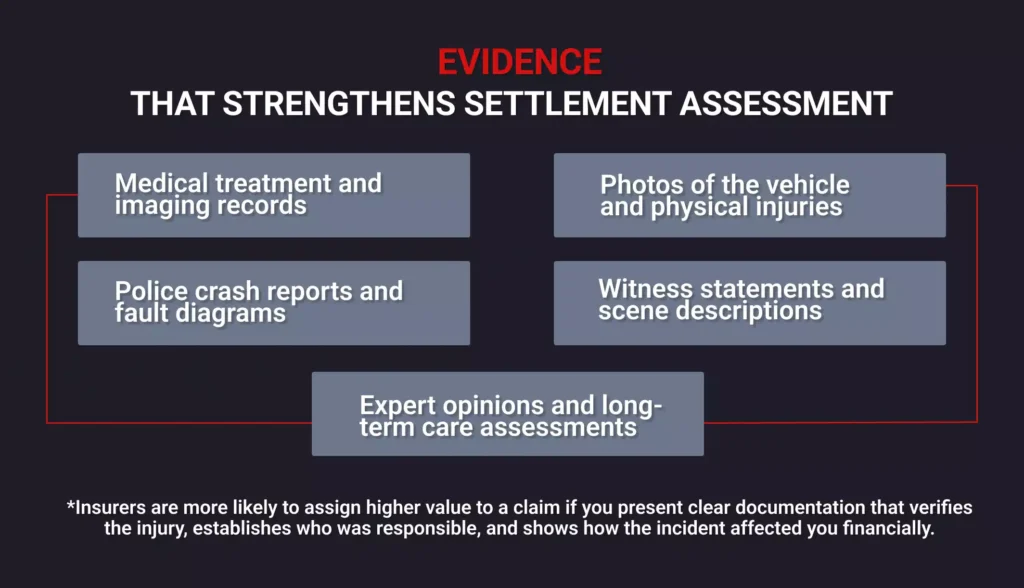
- Document your injuries and future care needs before any settlement talks
- Handle the UM claim, including pushback from your own carrier
- Pursue the driver and their insurer directly if the driver is identified
Every case is different, and a short conversation with a Nevada-licensed attorney is the fastest way to learn which of these paths fits yours. Howard Injury Law handles pedestrian and motor vehicle accident claims across Las Vegas on contingency, so there’s no fee unless we win.

Frequently Asked Questions
Do police follow up on hit-and-runs in Las Vegas?
Yes. The Las Vegas Metropolitan Police Department investigates hit-and-run crashes, and injury cases get more attention than property-damage-only cases. How far an investigation goes depends heavily on the leads available: a partial plate, a vehicle description, witnesses, and camera footage. Many hit-and-run drivers are never identified, which is why the steps you take in the first few days matter. Keep your report number, send any new details to the investigating officer, and don’t hold off on your own insurance claim while you wait for an arrest. Your UM claim can move forward whether or not the driver is ever found.
Is a hit-and-run a felony in Las Vegas?
When someone is injured or killed, yes. Nevada law requires a driver involved in an injury crash to stop, stay at the scene, exchange information, and give reasonable help to anyone hurt. A driver who flees an injury or fatal crash commits a category B felony punishable by 2 to 20 years in prison and a fine of $2,000 to $5,000, and the court can’t grant probation. Leaving a crash that caused only property damage is a lesser offense. The criminal penalty is separate from your right to compensation, and your injury claim doesn’t depend on a conviction.
Is it always the driver’s fault if they hit a pedestrian?
Not always, but often. Nevada drivers must use due care to avoid hitting pedestrians and must yield to people in crosswalks, marked or unmarked. Pedestrians crossing outside a crosswalk generally have to yield to traffic. Nevada uses modified comparative negligence: if you’re found partly at fault, your compensation is reduced by your share, and you can still recover as long as your share isn’t greater than the driver’s. Insurers regularly argue “jaywalking” to cut a claim, even when the driver was speeding or distracted. A pedestrian accident attorney in Las Vegas can push back on those arguments with evidence.
Does my car insurance cover me if I was hit while walking?
Often, yes. Uninsured motorist (UM) coverage in many auto policies protects the policyholder and household family members as people, not only while they’re in the car. That means it may pay for injuries from a hit-and-run driver while you were on foot. Medical payments coverage, if you have it, may also pay early medical bills whoever was at fault. For an unidentified driver, Nevada requires physical contact and a police report before the vehicle counts as uninsured. Policy wording varies, so have your declarations page reviewed.
What if I don’t have car insurance at all?
You may still have options. A spouse, parent, or other relative you live with may have a policy whose UM coverage extends to you. If the driver is later identified, you can pursue their insurance and their personal assets. Sometimes another party shares responsibility, such as an employer if the vehicle was a work truck. Health insurance can cover treatment in the meantime, though it may seek repayment out of a later settlement. An attorney can check every possible source of coverage before you conclude there’s nothing to claim.
How long do I have to file a pedestrian hit-and-run claim in Nevada?
Nevada generally allows two years from the date of injury to file a personal injury lawsuit. The deadlines that matter most in a hit-and-run are usually much shorter. Surveillance footage can disappear within days, the police report should be made right away, and your insurance policy likely requires prompt notice of a UM claim. Out-of-state policies can have their own notice rules. Waiting until the two-year deadline approaches often means the evidence that would have identified the driver or proved contact is already gone.

The Driver Ran. You Still Have Options.
You were doing nothing wrong. You were walking, and someone hit you and chose to leave. You shouldn’t also be left sorting out insurance policies and deadlines on your own while you heal.
If you’re wondering “Do I even have a case if they never find the driver?”, that’s the exact question to bring to a free case review. We’ll look at what coverage applies to you, what evidence can still be preserved, and what your next step should be. There’s no upfront cost and no fee unless we win.