

Yes, in many cases a lawyer can find a hit-and-run driver, even after the police investigation has gone quiet. An experienced Las Vegas hit-and-run lawyer runs a separate investigation with tools you don’t have on your own: legal demands to preserve video, licensed investigators, and, once a case is filed, the power to subpoena records.
If you filed a report and haven’t heard anything back, that silence doesn’t mean the trail is dead. Here’s what a lawyer does to track down the driver, and how your claim keeps moving whether they’re found or not.
Why Police Investigations Stall in Las Vegas
Las Vegas Metro and the Nevada Highway Patrol handle a large volume of hit-and-run crashes. Detectives have to prioritize. Cases with serious injuries, a plate number, or clear video usually move first. A crash with a vague description and no footage can sit untouched until a new lead comes in.
That isn’t a reflection of how badly you were hurt. It’s triage. You can read more about how that process works in our guide on how hit-and-run drivers get found in Las Vegas.
The problem is timing. While a case waits for a detective, the evidence that could identify the driver is disappearing. Business cameras overwrite themselves, witnesses forget details, and the damaged car gets repaired.
Police Investigate a Crime. Your Lawyer Builds Your Claim.
A police hit-and-run investigation and your injury claim run on two separate tracks with different goals.
Police are working a criminal case. Their job is to identify, charge, and prosecute a driver who broke Nevada’s duty-to-stop laws. They don’t handle your medical bills, lost wages, or insurance claim, and they don’t work on your timeline.
Your attorney is working your case. The goal is to identify everyone who may owe you compensation, preserve the evidence that proves it, and protect your deadlines. When a lawyer’s investigation turns up a solid lead, it can also restart a stalled police case. The two tracks help each other, but only one of them is working for you.
How a Lawyer Can Find a Hit-and-Run Driver
There’s no single trick. Finding a driver who fled usually comes from working several sources at once, fast.
Same-Day Preservation Demands
Most private surveillance footage in Las Vegas is recorded over within days. A lawyer can send formal preservation demands to casinos, gas stations, apartment complexes, HOAs, and businesses along the crash route. Those demands put them on notice to save the footage before it’s gone.
A request from an injured driver is easy to ignore. A written demand from a law firm, tied to a potential lawsuit, gets taken more seriously. Our guide to hit-and-run surveillance footage in Las Vegas breaks down which camera networks matter and how long each one keeps video.
Licensed Private Investigators
Nevada licenses private investigators, and many personal injury firms work with them on hit-and-run cases. An investigator can:
- Walk the scene and map every camera with a sightline to the crash
- Knock on doors for doorbell and home security footage
- Track down witnesses who left before police arrived
- Retrace the fleeing car’s likely route to find more cameras
This is legwork most victims physically can’t do while they’re injured, and legwork that police often don’t have the staff for on lower-priority cases.
Body Shops, Parts Counters, and Salvage Yards
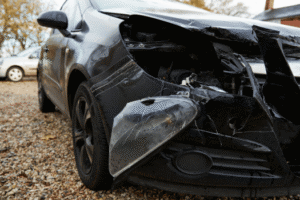
A car that hit you usually carries the damage. A broken headlight, a cracked bumper, or a missing mirror has to be fixed or hidden somewhere. Investigators can check repair shops, parts suppliers, and salvage yards for vehicles that match the make, color, and damage pattern.
Debris left at the scene helps narrow the search. If you’re working from a partial description, our guide on what to do if you didn’t get the license plate covers what details still help.
Social Media and Marketplace Monitoring
People who flee a crash sometimes give themselves away. A damaged car suddenly listed for sale, a post about “needing a new bumper,” or a comment in a neighborhood group can point straight to the driver. Monitoring local marketplaces and community pages in the days after a crash near Tropicana and I-15, along Boulder Highway, or in Spring Valley is slow work, but it produces real leads.
Feeding Leads Back to Detectives
Some tools are available only to law enforcement, including license plate reader networks and DMV registration searches. A lawyer can’t run those directly. What a lawyer can do is hand detectives a concrete lead: a partial plate from newly preserved footage, a matching car at a body shop, or a witness who saw the driver’s face.
A new lead can move a stalled case back onto a detective’s desk.
Can You Sue a Hit-and-Run Driver You Can’t Identify?
Yes. Nevada court rules allow a personal injury lawsuit against a defendant whose name isn’t known yet, often listed as a “Doe” defendant. When the driver is identified, the lawsuit is amended to name them, and the claim can be treated as if it were filed against them from the start.
This matters for two reasons:
- It protects your deadline. Nevada generally gives injury victims two years to file a personal injury lawsuit. A properly filed case against an unidentified driver can keep that deadline from running out while the search continues.
- It opens subpoena power. Once a case is filed, your attorney can subpoena footage, records, and documents from third parties who might otherwise refuse to hand them over.
There’s a catch. Nevada courts expect you to keep actively searching for the driver’s real identity and to update the lawsuit promptly once you find it. A case filed and then left alone can lose that protection. This is one of the clearest reasons to have an attorney running the investigation instead of hoping it resolves on its own. Every case is different, so talk with a lawyer about whether this step makes sense for yours.
If the Driver Is Never Found, You Still Have a Path
Some drivers are never identified. That’s hard to accept, but it doesn’t have to end your recovery.
In Nevada, your own uninsured motorist (UM) coverage can step in when the at-fault driver is unknown. Learn how UM/UIM coverage pays after a hit-and-run. Unknown-driver UM claims come with conditions, including prompt reporting, so don’t miss the reporting deadline that protects your UM claim.
The investigation still matters here. The same footage, witnesses, and physical evidence used to hunt for the driver also prove to your insurer that another vehicle caused the crash.
Why a Former Insurance Defense Attorney Investigates Differently
Glen Howard spent years on the insurance side before representing injured people. He knows exactly how adjusters challenge hit-and-run claims: questioning whether another car was involved, pointing to gaps in the evidence, or arguing that the report came too late.
That shapes how Howard Injury Law investigates. Every step of the search for the driver is also built to close off the arguments an insurer will make later. If the driver is found, you have a case against them. If not, you have a UM claim that’s already documented and ready to push.
As part of our Las Vegas motor vehicle accident practice, we handle hit-and-run cases across Las Vegas, Henderson, North Las Vegas, and the surrounding valley.

Frequently Asked Questions
Can I hire a private investigator to find a hit-and-run driver myself?
You can. Nevada allows licensed private investigators to work for individuals, and some victims hire one on their own. The downside is that an investigator working alone can’t subpoena records or force a business to preserve footage, and evidence gathered informally can be harder to use later. Working through a lawyer puts the investigator’s findings inside a strategy that protects chain of custody and your deadlines, and ties everything to your injury claim. If you’ve already hired an investigator, bring what they’ve found to your attorney so none of it goes to waste.
What if police stopped investigating my hit-and-run?
Detectives often set a case aside when they run out of leads, and that can feel like the case has been dropped. In many situations it can be picked back up when new evidence surfaces, such as fresh footage, a witness, or a matching damaged vehicle. A lawyer’s private investigation is often where that new evidence comes from. Meanwhile, your injury claim doesn’t depend on the police case being active. Your attorney can keep building it, including a UM claim, while the criminal side is on hold.
Can I sue a hit-and-run driver if I don’t know who they are?
Yes. Nevada allows a lawsuit to be filed against an unidentified defendant, commonly called a “Doe” defendant, and then amended once the driver’s name is known. Filing can help protect Nevada’s two-year injury filing deadline and gives your attorney subpoena power to dig for the driver’s identity. Courts expect ongoing, diligent effort to find the driver, though, so a case can’t be filed and left alone. Whether filing makes sense depends on your facts, your insurance, and the evidence available, so talk it through with an attorney.
Does it cost extra for a lawyer to investigate a hit-and-run?
At Howard Injury Law, you don’t pay anything up front for us to start working your case. We handle personal injury cases on a contingency fee basis, which means no fee unless we win. The investigation, including preservation demands, investigators, and evidence work, is part of building your case. Before you sign anything, we’ll explain how fees and case costs work so there are no surprises later.

The Driver Left. The Evidence Is Still Out There, For Now.
Every day after a hit-and-run, another camera overwrites its footage and another witness forgets what they saw. You shouldn’t have to chase the driver while you’re trying to heal, and you shouldn’t have to wait on a stalled police case to protect your claim.
If you’re wondering whether you have a case, especially if the driver still hasn’t been identified, talk to a hit-and-run accident attorney who knows how insurers think. Request your free consultation and we’ll tell you what can still be found, what your coverage looks like, and what to do next. No fee unless we win.