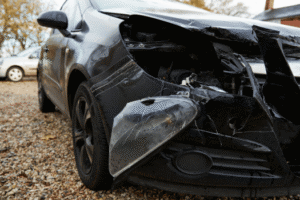


The driver who hit you is gone, and there’s a real chance police never find them. Your own uninsured motorist (UM) coverage can still pay your medical bills, lost income and pain and suffering. But in Nevada, a hit-and-run police report for a UM claim is not a formality. It is one of two conditions the law places on the claim, and it runs on a much shorter clock than most people expect.
This guide explains what that reporting deadline actually is, which reports count, what happens if you reported late, and how to protect your hit-and-run injury claim in Las Vegas before your own insurer decides it’s worth nothing.
Why the Police Report Decides Whether UM Pays
Nevada requires auto insurers to offer uninsured motorist coverage, and the statute that creates it (NRS 690B.020) specifically covers hit-and-run drivers. When the driver can’t be identified, the law treats their car as “uninsured,” but only if two things are true:
- The fleeing vehicle physically hit you or the vehicle you were in. The Nevada Supreme Court enforces this strictly. We cover it in detail in our guide on how UM/UIM coverage pays after a hit-and-run.
- The crash was reported to police within the time Nevada’s crash-reporting laws require.
The reason for the second condition is simple. With no driver, no plate and no other insurance company, the police report is the insurer’s proof that a fleeing car existed at all. Without it, your claim is your word against an adjuster whose job is to question it.
How Long Do You Have to Report a Hit-and-Run in Nevada?
Far less time than most people think. The UM statute ties the report to Nevada’s crash-reporting duties in NRS Chapter 484E, and those use words like “immediately” and “forthwith.” There is no grace period measured in days. In practice, that means calling police from the scene, or as soon as you physically can.
You may have heard that you have “24 hours.” That number doesn’t come from Nevada law. Some auto policies set their own reporting window for hit-and-run claims, and some of those windows are short. Your policy’s terms sit on top of the statute, so the safest assumption is that the clock started the moment you were hit.
If you were taken away by ambulance, the law has an answer for that too: the report can be made by you or someone on your behalf. A spouse, a family member or a passenger can call it in while you’re being treated.
Four Clocks Start the Moment You’re Hit
A hit-and-run starts several deadlines at once. People often mix them up, and a claim can be lost because one of them passed while the person was focused on another.
| Deadline | Timing | What it protects |
|---|---|---|
| Police report | Immediately / as soon as possible | Your UM claim against an unknown driver (NRS 690B.020) |
| Notice to your own insurer | Promptly, on your policy’s terms | Your right to have the claim considered at all |
| DMV crash report (SR-1) | Within 10 days, unless police investigated at the scene | Compliance with NRS 484E.070. It does not replace the police report |
| Lawsuit against a driver found later | Generally 2 years (NRS 11.190(4)(e)) | Your injury claim against the identified driver |
The police report is the one that protects the UM claim, and it runs out first. Your policy may also set its own limits on how long you have to pursue the UM claim itself. That’s a separate question, and it’s worth having a lawyer read the policy language.
Which Report Counts, and Which Doesn’t
The statute says the crash must be reported to the police department of the city where it happened. If it happened in an unincorporated area, the report goes to the county sheriff or the Nevada Highway Patrol. In the Las Vegas valley, that generally looks like this:
- Las Vegas Metropolitan Police (Metro): the City of Las Vegas and unincorporated Clark County, including the Strip, Paradise, Spring Valley and Enterprise
- Henderson Police: crashes inside Henderson
- North Las Vegas Police: crashes inside North Las Vegas
- Nevada Highway Patrol: typically crashes on the freeways, such as I-15, US-95 and the 215
Just as important is what doesn’t count as a police report:
- Telling your insurance company. That’s the notice requirement, a separate obligation.
- Filing an SR-1 with the DMV. It’s a state administrative form, not a report to police.
- A 911 call with no report or event number. If officers don’t respond, follow up until you have a number that proves a report exists.
For step-by-step instructions on filing, including Metro’s non-emergency options, see our guide to hit-and-run reporting in Las Vegas.
Can You Report a Hit-and-Run the Next Day?
You can, and you should. A late report is far better than none. But expect the insurer to treat the delay as its strongest argument. Whether a delay is fatal depends on why it happened and what else backs up your account. These are the three situations we see most often.
You Didn’t Realize You Were Hurt
Adrenaline hides injuries. Neck and back pain often shows up hours or a day later. If you reported as soon as you realized you were injured, your medical records and the timeline become your explanation.
You Went Straight to the ER
If you were being treated rather than talking to police, the hospital records establish where you were. Even so, have someone report on your behalf as soon as possible. The law allows it, and every hour of delay gives the insurer more room to argue.
Police Didn’t Come to the Scene
Metro does not always send an officer to crashes, especially minor ones or ones where the other car is already gone. People assume that because they called 911, a report exists. Often it doesn’t. If no officer arrived and nobody gave you a report number, you still need to make a report yourself.
In all three situations, the evidence of contact matters more when the report is late: paint transfer, the damage pattern, photos, surveillance video, and witnesses who saw the other car. Collect that evidence quickly, because Strip and intersection cameras often record over footage within days.
How Your Own Insurer Reads That Report
In a hit-and-run UM claim, you aren’t dealing with a stranger’s insurance company. You’re making a claim against your own policy. That doesn’t make the adjuster your advocate.
Attorney Glen Howard spent years as an insurance defense attorney before founding Howard Injury Law, and he knows the first things an adjuster checks on these claims:
- The report’s timestamp against the crash time. Any gap becomes a question about whether the crash happened the way you say.
- The report’s narrative against your recorded statement. Small differences get framed as inconsistencies.
- Evidence of physical contact. No paint transfer, no matching damage and no witness gives them a reason to argue a phantom car.
- Whether you actually have UM coverage. Many people are covered without realizing it. See what happens if you don’t have UM coverage for places to look before assuming you’re out of options.
Knowing where the insurer will push is how a claim gets built to hold up. If you need a refresher on how the coverage itself works, start with our explainer on uninsured motorist coverage in Nevada.
Protect the Claim: A First-24-Hours Checklist
- Call 911 from the scene, or have someone call for you
- Get the report or event number before leaving, or follow up until you have one
- Photograph your vehicle, the paint transfer, debris and the location
- Get names and numbers of anyone who saw the other car
- Note nearby businesses and intersections with cameras
- Get medical care the same day, even if you feel “fine”
- Notify your insurer that a claim exists, but don’t give a recorded statement yet
- File the DMV SR-1 within 10 days if police didn’t investigate at the scene
For the full after-the-crash sequence, see what to do after a hit-and-run accident. If you want to understand the driver’s legal duties and what the criminal side means for your case, read Nevada hit-and-run laws explained.

Frequently Asked Questions
Do you need a police report for a hit-and-run insurance claim?
For a UM claim against a driver who is never identified, yes. Nevada’s UM statute makes a timely police report one of two conditions for coverage, along with physical contact. Collision coverage for vehicle damage and MedPay for medical bills may have their own requirements under your policy, but the report is still your strongest proof that another car was involved. Without it, an adjuster can argue the damage came from something else entirely. If you were hit and no report exists yet, make one now. A late report is better than no report, and an attorney can help explain the delay.
Does filing an SR-1 with the DMV count as a police report?
No. The SR-1 is a crash report you file with the Nevada DMV, generally within 10 days, when police didn’t investigate at the scene and the crash caused injury or at least $750 in damage. It satisfies your duty to the DMV. It is not a report to a police department, sheriff or the Nevada Highway Patrol, which is what the UM statute requires. Many people file the SR-1 and assume they’ve “reported” the crash. For a hit-and-run UM claim, you need both, and the police report comes first.
Does telling my insurance company count as reporting the hit-and-run?
No. Notifying your insurer and reporting to police are two separate obligations. Your policy requires prompt notice that a claim exists, and missing that can create its own problems. But that notice doesn’t satisfy Nevada’s police-report requirement for unknown-driver UM claims. When you notify your insurer, keep it to the basics: date, location, and that a claim is coming. Talk to a lawyer before agreeing to a recorded statement, since adjusters often use those statements to question the timing and details of the crash.
What if the police won’t come to the scene of a hit-and-run in Las Vegas?
It happens often. Metro doesn’t always respond to crashes, especially when injuries seem minor or the other car is already gone. If no officer arrives, the responsibility to create a report shifts to you. Follow up with the agency for that area (Metro, Henderson PD, North Las Vegas PD or NHP) and get a report or event number. Write down who you spoke with and when. Then file your DMV SR-1 within 10 days. A report you made yourself, promptly, is far stronger than assuming the 911 call covered it.

Talk to a Las Vegas Hit-and-Run Attorney Before Your Insurer Decides
If you’re reading this, you may already be wondering whether you reported in time, whether your policy’s window has closed, or whether the adjuster’s first answer is final. Those are the exact questions we answer in a free review.
Every case is different, and a short conversation with a lawyer who has worked on the insurance side can tell you where your claim stands. We’ll look at when the report was made, what your policy says, and what evidence of contact exists. We handle hit-and-run cases across the Las Vegas motor vehicle accident spectrum on a contingency fee: no fee unless we win.
If the driver fled and you’re worried you’ve already hurt your claim, talk to a Las Vegas hit-and-run attorney at Howard Injury Law or request your free case review. Tell us when it happened and when police were called. We’ll tell you what that means.