


Getting hit by an 80,000-pound truck is not the same as a fender-bender, and the hours that follow matter more than most people realize. Knowing what to do after a truck accident in Las Vegas can protect your health, your evidence, and your right to be paid for what happened to you. This guide walks you through the steps that count, why truck cases move on a different clock than regular car crashes, and how a Las Vegas truck accident lawyer keeps a trucking company’s insurer from getting ahead of you.
If you’re reading this while you’re still sore, still shaken, and still unsure whether you did the right things at the scene — take a breath. You almost certainly have more time and more options than you think.
Why a Truck Crash Isn’t Like a Regular Car Accident
A crash with a commercial truck brings problems a two-car collision never does. You’re not dealing with one driver and one insurance policy. You may be facing the driver, the trucking company that employed them, a separate maintenance contractor, the company that loaded the cargo, and more than one commercial insurer — each with its own lawyers and its own reason to point the finger elsewhere.
Those companies also move fast. Larger carriers keep “rapid response” teams that can have an investigator at the scene of an I-15 or Spaghetti Bowl wreck before your car is even towed. Their job is to start building the defense while you’re still at the hospital.
That’s the imbalance you’re up against. It’s also exactly why the early steps below matter — and why acting sooner rather than later works in your favor.
What to Do Right After a Truck Accident in Nevada
If you’re still at or near the scene, focus on these first:
- Call 911 and get a police report. Nevada law requires reporting crashes that cause injury or serious property damage, and the officer’s report becomes a foundational record for your claim. Don’t downplay your pain to the responding officer.
- Move to safety, but don’t leave. Get out of live lanes if you can — freight corridors like I-15 and the 215 Beltway are dangerous places to stand — but stay at the scene until police release you.
- Photograph everything you safely can. The truck, its trailer, both vehicles, the road, skid marks, debris, and your visible injuries.
- Get names and numbers of witnesses. Independent witnesses fade fast, and a trucking company’s version of events is rarely the same as yours.
- Say little to the other side. Be polite, but don’t admit fault or guess about what happened.
Get medical care, even if you feel “fine”
Adrenaline hides injuries. Plenty of truck-crash victims walk away feeling shaky but “okay,” then wake up two days later barely able to move. Some of the most serious harm — concussions, soft-tissue damage, internal injuries — shows up days later, not at the scene.
See a doctor the same day if you can. It protects your health first, and it creates the medical record that ties your injuries to the crash. A gap between the collision and your first treatment is one of the first things an insurer will use to argue you weren’t really hurt.
Capture the truck details most people miss
If you’re able, write down or photograph the details that identify the truck and its operator:
- The company name on the door or trailer
- The USDOT number (a federal ID number, usually stenciled on the cab)
- The license plate and any trailer or unit numbers
- The name of the driver and their employer, if different
These small details tell your attorney exactly which company — and which insurer — you’re dealing with. That head start matters, because of the next problem.
Why Truck Accident Evidence Disappears Fast
Here’s what most injured people don’t know: the strongest evidence in a truck case belongs to the trucking company, and they aren’t required to keep it forever.
Federal rules require carriers to hold certain records — driver hours-of-service logs and electronic logging device (ELD) data — for as little as six months. Many keep them longer, but you can’t count on it. The truck’s “black box” (its engine control module) can capture speed, braking, and throttle data from the seconds before impact — and that unit can be repaired, wiped, or scrapped once the truck goes back in service.
Once that data is gone, it’s gone. That’s why one of the first things a truck accident lawyer does is send a spoliation letter — a formal demand that the company preserve the logs, ELD data, black-box download, maintenance records, and dashcam footage. Sent early, it locks down the proof that a case like a truck accident spinal cord injury claim often depends on. Sent late, it can arrive after the evidence has already vanished.
You don’t need to understand any of this yourself. You just need to know that waiting quietly has a real cost — and calling early is how you stop the clock on disappearing evidence.
“The Trucking Company Already Called Me — What Do I Say?”
If a claims adjuster or “investigator” has already reached out, that’s not a coincidence, and it’s not them being helpful. They’re trained to get you talking, on the record, before you’ve spoken to a lawyer — because early recorded statements are one of the easiest ways to shrink or deny a claim.
You are not required to give the trucking company’s insurer a recorded statement. You can be polite and decline: tell them your attorney will be in touch, and leave it there. Anything you say — even an offhand “I’m feeling better” or “I didn’t see them coming” — can be twisted into an admission later.
This is where HIL’s background changes the math. Attorney Glen Howard spent years as an insurance defense attorney before he started representing injured people. He knows how these adjusters are coached, what they’re fishing for, and how to shut it down. When the other side calls, that experience is on your side of the table.
How Long Do You Have to File a Truck Accident Claim in Nevada?
For most Nevada injury claims, you have two years from the date of the crash to file a lawsuit (NRS 11.190). Miss that window and a court will almost certainly refuse to hear your case, no matter how strong it is.
Two things are worth understanding about that deadline. First, it’s the deadline to file in court — not the deadline to notify an insurance company. Those are separate steps, and confusing them is a common mistake. Second, two years is shorter than it feels once you factor in months of treatment, negotiation, and recovery.
There are also wrinkles that can shorten your timeline. If a government vehicle was involved — a city dump truck, an RTC bus, a county garbage truck — special notice rules apply and you generally need to act much sooner. Because the deadline that applies to your situation depends on the specific facts, it’s worth confirming your exact window early. You can read more about Nevada’s filing deadlines, but the safest move is a quick conversation with an attorney so you know for certain.
The bottom line: you likely have time — but the evidence doesn’t. Those two clocks run at very different speeds.
How a Las Vegas Truck Accident Lawyer Levels the Field
By the time you’ve read this far, you can probably see the pattern: the trucking company has a head start, and closing that gap is a job for someone who does it every day. A Las Vegas truck accident lawyer steps in to:
- Send preservation demands before logs and black-box data disappear
- Identify every party that may share fault — not just the driver
- Deal with the commercial insurers so you don’t have to
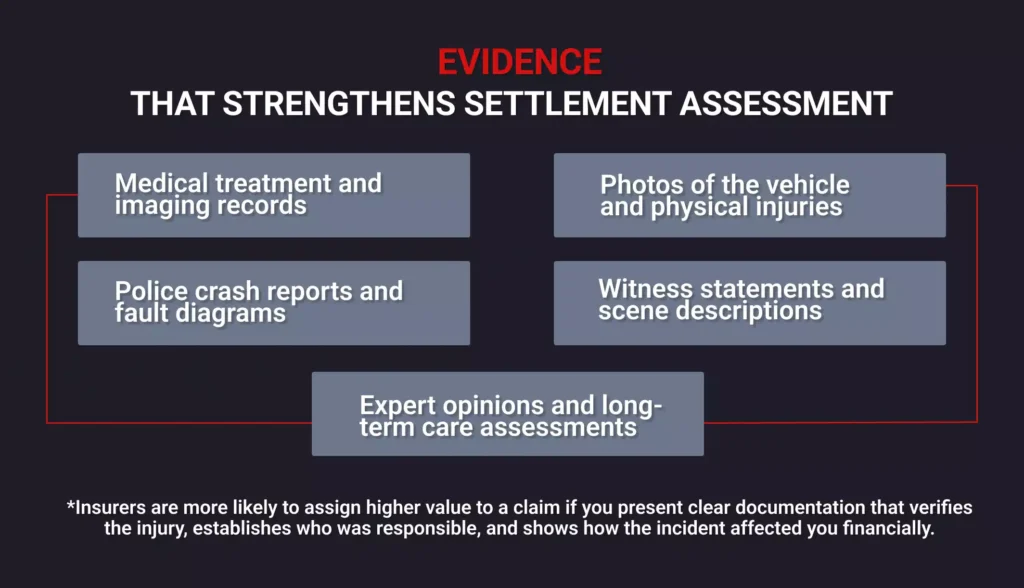
- Build the medical and financial picture of what this crash actually cost you
Truck cases sit inside the firm’s broader motor vehicle accident practice, and they’re handled on a contingency fee — no fee unless we win your case. That means the investigation starts now, not after you’ve scraped together a retainer.
Every case is different, and nothing here is legal advice about your specific situation. But if you’re unsure whether you have a case, that’s exactly the question a free consultation is meant to answer.

Frequently Asked Questions
How long after a truck accident do I have to file a claim in Nevada?
For most Nevada injury claims, the deadline is two years from the date of the crash to file a lawsuit (NRS 11.190). That’s the deadline to file in court — not to open an insurance claim, which you should do much sooner. Some situations shorten the window: if a government vehicle like a city or RTC truck was involved, special and earlier notice rules apply. Because the exact deadline depends on your facts, confirm it with an attorney early rather than assuming you have the full two years. Waiting also lets key evidence disappear, so acting quickly protects both your deadline and your proof.
How long does it take to settle a truck accident case in Nevada?
It depends on the severity of your injuries, how many parties are involved, and whether the insurers fight liability. Truck cases often take longer than ordinary car crashes because there’s more evidence to gather and more than one company defending itself. A straightforward claim may resolve in months; a serious-injury case with disputed fault can take longer. One rule holds across all of them: you generally shouldn’t settle until your medical treatment has stabilized, so you know the full cost. Here’s a fuller look at how long a vehicle accident claim takes in Nevada.
Should I give the trucking company’s insurance a statement?
You’re not required to, and it’s usually best not to before speaking with a lawyer. Adjusters often request a recorded statement early, while you’re still rattled and don’t yet know the extent of your injuries. Casual comments — “I feel okay,” “it happened so fast” — can be used later to reduce or deny your claim. You can decline politely and say your attorney will handle communication. This is one area where having someone who has worked inside the insurance side, like Glen Howard, makes a real difference: he knows what these questions are designed to get, and how to keep you from walking into them.
What if the truck driver was from out of state?
You can still pursue your claim in Nevada. Most commercial trucks on I-15 and US-95 are passing through, and their drivers and companies are often based elsewhere — that doesn’t put them out of reach. A crash that happens in Nevada is generally handled under Nevada law and in Nevada courts, and an out-of-state trucking company can still be held accountable here. Your attorney tracks down the carrier, its insurer, and any other responsible parties wherever they’re located. The driver’s home state changes some logistics behind the scenes, but it doesn’t change your right to seek compensation for a crash that happened on Nevada roads.

Talk to a Las Vegas Truck Accident Lawyer — Free
If a truck crash has left you hurting, worried about bills, and unsure what your next move is, don’t let the trucking company’s timeline become yours. The sooner someone starts preserving evidence and dealing with the insurers, the stronger your position.
Schedule a free, no-pressure consultation with the truck accident team at Howard Injury Law. You’ll get straight answers about whether you have a case, what it may be worth, and what to do next — from a Nevada attorney who has seen how the other side builds its defense. There’s no fee unless we win, so the only thing it costs you to find out where you stand is a phone call.