


You don’t have to prove the other driver was drunk — that’s your attorney’s job. But the evidence that proves it is already disappearing, and after a Las Vegas DUI crash, the strongest proof can be gone within days of the collision that hurt you.
That single fact decides more DUI injury claims than anything that happens in a courtroom. Here’s what the evidence is, how fast each piece vanishes, and the warning signs that a case is quietly slipping away — plus what actually protects it.
You Don’t Have to Prove They Were Drunk — Your Evidence Does
Right after a drunk driving crash, the fear that grips most victims isn’t the injury. It’s the sinking feeling that it will come down to your word against theirs, and that the person who did this will walk because you can’t prove what really happened.
Here’s what changes that. You are not the one who has to prove the other driver was impaired. In a Nevada DUI injury claim, that burden sits with your legal team, and they carry it with evidence — official records, footage, and physical proof — not with your memory of a terrifying few seconds.
When a driver breaks Nevada’s DUI laws and causes a crash, that violation can establish their fault almost automatically, which is one reason a DUI injury claim is often stronger than a standard car accident claim. A Las Vegas drunk driving accident lawyer builds your case on that foundation. But the foundation is made of evidence — and evidence doesn’t wait.
The DUI Evidence Clock: What Disappears, and How Fast
The proof that wins a DUI accident case is strongest in the hours right after the crash and weaker every day after that. Nobody preserves it for you. Cameras record over themselves, cars get repaired, and people move on. Knowing what’s on the clock is the first step to protecting it.
Hours to Days: Surveillance and Traffic Camera Footage
Some of the most powerful DUI evidence never comes from the crash itself — it comes from before it. A casino, bar, or restaurant camera can show the driver drinking and stumbling toward their car. Business and traffic cameras along the route can capture the weaving, the speed, the red light they blew through.
The problem is retention. Many private surveillance systems overwrite their footage on a loop, sometimes within a few days and occasionally in as little as 24 to 72 hours. Once a system records over that night, it’s gone for good, and no subpoena can recover what no longer exists. This is the most time-sensitive evidence in most Las Vegas DUI claims, and the reason waiting even a week can quietly cost you your case.
Days to Weeks: The Vehicles and the Scene
Modern vehicles carry an event data recorder — a “black box” that captures speed, braking, throttle, and other inputs in the seconds before impact. That data can confirm the drunk driver never even hit the brakes. But once their car is repaired, sold, or sent to a salvage yard, the recorder usually goes with it.
The crash scene fades just as fast. Skid marks get driven over, debris gets swept away, and a damaged guardrail on a stretch of the I-15 or US-95 gets repaired. A scene that told a clear story in the first days becomes a set of guesses within weeks.
Right Away and Ongoing: Witnesses and Records
Las Vegas draws around 40 million visitors a year. The bystander who saw the driver stumble out of a bar off the Strip, or the patron who watched them get served one more round, may be on a flight home the next morning — untraceable unless someone gets a name and number quickly.
Official records last longer, but they don’t release themselves. The driver’s blood or breath alcohol results, the arrest report, bodycam footage, and toxicology records all have to be formally requested and, often, fought for. Your own medical records start building the moment you get care — which is exactly why a gap in treatment becomes something the other side uses against you later.
How a Lawyer Locks the Evidence Down Before It’s Gone
This is where the race is won or lost, and it’s the part a victim can’t run alone from a hospital bed. The moves that preserve DUI evidence are legal ones, and they have to happen fast.
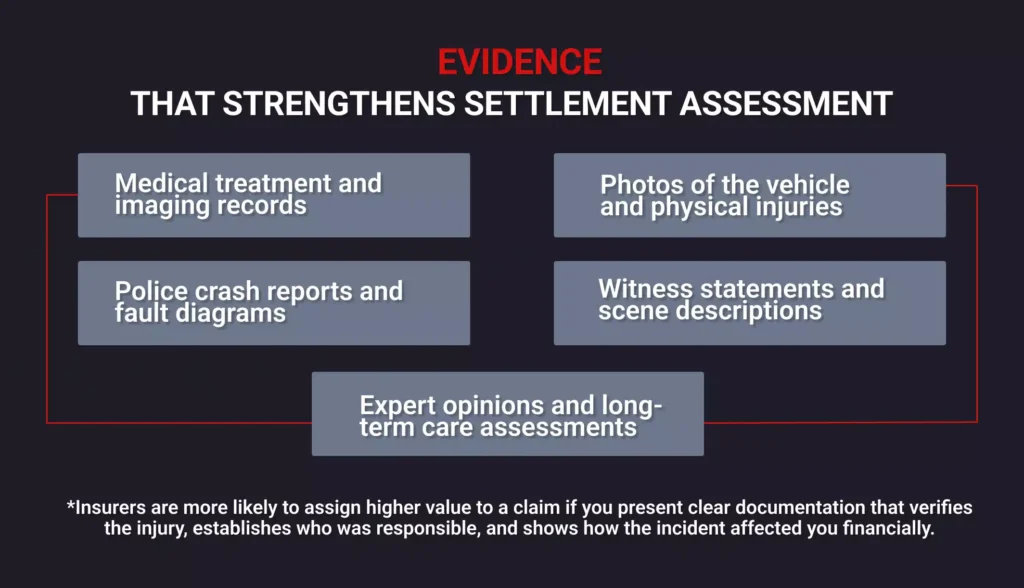
A drunk driving accident attorney in Las Vegas can send a spoliation letter — a formal legal demand that a business, a driver, or an insurer preserve footage and records rather than destroy them. Your attorney can subpoena surveillance video before the loop erases it, arrange to inspect and download the vehicle’s event data recorder before the car is repaired, and file the requests that pry loose the police, toxicology, and arrest reports.
There’s a reason this matters at Howard Injury Law specifically. Glen Howard spent years on the insurance-defense side before he switched to representing the people getting hurt. He knows which pieces of evidence the other side attacks first, and which ones they quietly hope you never think to preserve. Having a former insurance-defense attorney building your case from day one is the difference between reacting to the insurer’s playbook and getting ahead of it.
Strong evidence of a conscious choice to drive drunk can also open the door to punitive damages — money beyond your medical bills. That’s its own subject, and you can read how punitive damages work in a Nevada DUI case separately. Here, the point is simpler: none of it happens without evidence, and the evidence is on a clock.
Signs a DUI Injury Case Is Getting Weak
Not every DUI claim is a sure thing, and the honest truth is that some get harder to win over time. Almost always, it isn’t because the driver wasn’t at fault — it’s because the proof of it slipped away, or because the victim unknowingly handed the insurance company something to use. These are the warning signs, and most of them trace straight back to the clock.
- The footage was never preserved. If the surveillance video from the bar or the traffic camera already recorded over before anyone requested it, you’ve lost the evidence that often shows impairment most clearly. The earlier a lawyer sends a preservation demand, the less likely this is to happen.
- The at-fault car was already repaired or scrapped. Once the other driver’s vehicle is fixed or crushed, the black-box crash data usually goes with it — and a key piece of physical proof about speed and braking disappears.
- There are gaps or delays in your medical treatment. Every stretch of time between your crash and your care becomes the insurer’s argument that you weren’t really hurt. Consistent, documented treatment from the start closes that door; a two-week gap props it open.
- You gave the insurance company a recorded statement. Adjusters call early, friendly, and casual, asking you to “just confirm a few details.” Anything you say can be trimmed and replayed to shrink your claim or shift blame onto you — and in Nevada you are not required to give one.
- You waited for the criminal case to finish first. This is the most common and costly mistake. Your civil claim is separate from the state’s DUI prosecution and can move now. Waiting for the criminal case to resolve is often exactly how the time-sensitive evidence disappears.
- The only proof of drinking is your word. If no camera, witness, or chemical test has been secured, the case leans on your account alone — which a defense lawyer is trained to pick apart. Independent evidence, locked down early, is what takes it out of he-said-she-said.
- The insurer is building a shared-fault argument. Under Nevada’s comparative negligence rule, your compensation drops by your share of blame and is barred entirely if you’re found more than 50% at fault. Insurers work to pin some of it on you, and a claim that goes unanswered only gets stronger for them by the week.
The pattern underneath all of these is the same: a weak DUI case is usually a strong case that lost its evidence. Which means the opposite is true, too.
Can a Weak DUI Case Still Be Saved?
Often, yes — if you move before more evidence is gone. Even a claim that looks thin can be rebuilt when someone requests the right footage in time, tracks down witnesses, secures the vehicle data, and gets your treatment properly documented. What a case can’t survive is another few weeks of nobody doing those things. If you’re worried your claim is slipping, that worry is a reason to act today, not a reason to give up.
Why the First Days Decide Your Case
Nevada gives you two years from the date of a crash to file a personal injury lawsuit. That deadline is real, but it’s the outer wall, not the finish line — and treating it like you have two years to think it over is how strong claims quietly turn weak. The real deadline is set by the evidence: footage that erases within days, a car that gets repaired, witnesses who leave town.
If you do nothing else soon, do this: get medical care and keep your appointments, decline to give the insurance company a recorded statement, write down everything you remember while it’s fresh, and talk to a lawyer while the evidence still exists. Every DUI case is different, and general information isn’t a substitute for advice about your specific crash — but the one thing true across nearly all of them is that acting early protects your options. You can start by checking whether you have a valid injury claim, and our step-by-step guidance for the days after a crash walks through what to protect right now.
Frequently Asked Questions
How do I prove the other driver was drunk if I didn’t see them drinking?
You don’t have to. Proving impairment is your attorney’s job, and it’s built on evidence you were never expected to gather yourself — the driver’s official blood or breath alcohol results, the arrest and bodycam records, surveillance footage from where they were drinking or driving, and witness accounts. Much of this is strongest right after the crash and fades quickly, so the sooner a Las Vegas DUI lawyer starts requesting and preserving it, the more of it survives to prove the case. Your account of the crash matters, but it’s the independent evidence that carries the claim.
How long is surveillance or traffic camera footage kept after a crash?
It varies, and that’s the danger. Many private business and casino camera systems record over their footage on a loop within days, and some overwrite in as little as 24 to 72 hours. Traffic-camera and government footage may last longer but often requires a formal request to obtain. Because there’s no way to know a given system’s retention window in advance, the safe assumption is that the footage is on the shortest possible clock. Preserving it usually takes a legal demand or subpoena sent quickly — one of the first moves an attorney makes on a DUI case.
What happens to my case if I wait a few weeks to call a lawyer?
The claim doesn’t vanish — Nevada gives you two years to file — but its strength can. In those weeks, surveillance footage can record over, the at-fault vehicle can be repaired and its crash data lost, the scene can be cleared, and witnesses can scatter. You may still have a valid case, but you could be left proving it with far less than was available in the first days. Waiting rarely helps a DUI claim and frequently weakens it, which is why acting early is the single most protective thing a victim can do.
What are the signs that a DUI case is weak?
The most common signs are lost or overwritten surveillance footage, an at-fault vehicle repaired before its crash data could be pulled, gaps in the victim’s medical treatment, a recorded statement given to the insurance company, and a long wait for the criminal case before starting the civil claim. Another red flag is an impairment case that rests only on the victim’s word, with no camera, witness, or chemical test secured. Nearly all of these trace back to evidence lost to time — which means a weak-looking case can often be strengthened by acting quickly to preserve what’s left.
Can I still win if the drunk driver wasn’t convicted?
Yes. Your civil injury claim is entirely separate from the criminal DUI case, and it uses a lower standard of proof. A criminal conviction requires proof beyond a reasonable doubt; your civil claim only requires showing it’s more likely than not that the driver was impaired and caused your injuries. A driver can beat the criminal charge and still be fully liable to you in civil court — so there’s no reason to wait for the prosecution to finish before protecting your claim.

The Driver Made a Choice. Now the Clock Is Running on Yours.
The person who got behind the wheel drunk already decided how your day would go. What you decide now is whether the proof of what they did gets preserved — or quietly disappears while you wait.
At Howard Injury Law, we start protecting evidence from the first call: sending preservation demands, tracking down footage and witnesses, and building the case the way a former insurance-defense attorney knows the other side will try to tear it apart. As Las Vegas motor vehicle accident lawyers, we treat that evidence race the same way in every serious crash, and you can see the results we’ve won for injured Nevada clients. The consultation is free, we’re available 24/7, and you pay nothing unless we win. Talk to us now — before the evidence is gone.