


If a commercial truck hit you in Las Vegas, there’s a silent witness inside that rig: a truck black box that recorded exactly how fast it was moving, when the driver hit the brakes, and how long they’d been behind the wheel. That data can make or break your claim — and here’s the hard part. The trucking company controls it right now, and some of it can disappear within days.
You don’t need to become a data expert to protect your case. You just need to understand what’s in that black box, why it matters, and why the smartest move you can make this week is getting someone to legally lock it down before it’s gone.
What Is a Truck Black Box? (EDR, ECM, and ELD)
“Truck black box” is everyday shorthand for the onboard computers that quietly record how a commercial truck was driven. On most big rigs, that’s really three systems working together:
- Engine Control Module (ECM) — the truck’s main computer. It continuously tracks speed, braking, throttle, and engine fault codes.
- Event Data Recorder (EDR) — captures a snapshot of the seconds right around a hard-braking event or crash.
- Electronic Logging Device (ELD) — federally required equipment that logs the driver’s hours of service, location, and drive time automatically.
Together, these systems create an objective, hard-to-argue-with record of what the truck and driver were actually doing. Unlike a witness who’s fuzzy on details, the black box doesn’t get nervous and doesn’t take the trucking company’s side.
What Data Does a Truck Black Box Record?
The specifics vary by truck and system, but black box data typically captures:
- Speed — how fast the truck was traveling in the seconds before impact.
- Braking — whether the driver braked at all, and exactly when.
- Steering and throttle — how the driver turned the wheel and whether they were still on the gas.
- Hours of service — how long the driver had been working, and whether they blew past federal rest limits.
- Mechanical fault codes — warnings the truck’s own systems logged before the crash, which can point to brakes or parts the company ignored.
Each of these is a puzzle piece. Put them together and you often get a minute-by-minute account of a crash the driver may remember very differently.
How Black Box Data Helps Prove Your Truck Accident Case
Truck cases are not just bigger car cases. They involve federal safety rules, corporate defendants, and insurers who investigate fast. Black box data is one of the most powerful tools for cutting through all of that. Here’s how a Las Vegas truck accident lawyer puts it to work:
- It proves driver negligence. Recorded speed and braking can show the driver was speeding, distracted, or never slowed down — no “he said, she said” required.
- It exposes fatigued driving. ELD data tracks hours-of-service compliance. If the driver drove past federal limits without rest, the logs can show it.
- It reconstructs the crash. Accident reconstruction experts use the numbers to map the exact timeline leading to impact, second by second.
- It counters false claims. When a driver or company tells a story that doesn’t match the data, the objective record exposes the gap. If the trucking company later calls you for a statement, this is one big reason to talk to a lawyer first — the data, not your recorded words, should be doing the talking.
For a plain-English look at why commercial truck cases work differently — blind spots, multiple at-fault parties, and corporate playbooks — the differences are worth understanding before you deal with the insurer.
Why the Data Disappears — and Why You Have to Act Fast
This is the part most injured people don’t hear until it’s too late. The evidence that helps you most has the shortest shelf life, and the company that hit you is the one holding it.
Here’s the honest timeline:
- ELD (hours) data carries a federal floor of six months — carriers generally must keep it that long. After that, it can be lawfully overwritten.
- ECM and EDR (speed, braking, crash-snapshot) data has no guaranteed federal retention period for heavy trucks. It often sits on a rolling loop that can overwrite itself within weeks on a high-mileage truck — or vanish entirely the moment the truck is repaired and the module is reset.
- Dashcam footage is frequently the first to go, sometimes looping and erasing in a matter of days.
Meanwhile, many trucking companies dispatch a rapid-response team to the scene almost immediately, gathering their evidence while yours quietly decays. Waiting to “see how you feel” is the single most common way strong cases lose their best proof. The clock, not the lawsuit, is the emergency here.
The Preservation Letter: How a Lawyer Locks the Evidence Down
The fix is direct, and it’s fast. It’s called a spoliation letter — also known as an evidence preservation letter or litigation hold.
It’s a formal written demand your attorney sends to the trucking company, its insurer, and often the broker or others who may be responsible. It orders them to preserve all relevant electronic data — ECM, EDR, ELD, dashcam, maintenance records — and not delete, overwrite, or alter any of it. Once that letter lands, the company can no longer claim the data just “cycled out” in the ordinary course.
Nevada law gives that demand teeth. Once a claim is reasonably foreseeable, a party has a duty to preserve evidence it knows is relevant. If a company destroys that evidence anyway, courts can allow the jury to assume the missing data would have hurt the company’s side — and when destruction is willful, Nevada law can presume it outright. Nevada’s own courts have applied these principles in trucking litigation. (Every case is different, so how this plays out depends on the facts — that’s a conversation to have with an attorney.)
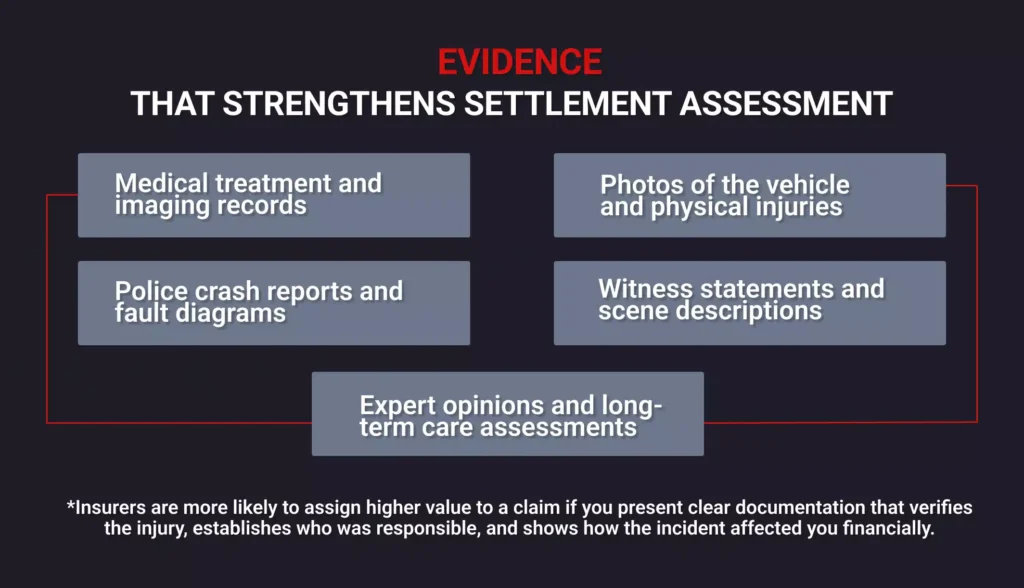
This is where experience matters. HIL founder Glen Howard spent the early part of his career as an insurance defense attorney, working the other side of exactly these cases. He knows how quickly trucking insurers move to control the narrative and the evidence — and he uses that knowledge to get a preservation letter out before the data is gone. Getting our truck accident attorneys involved early is often the difference between having the proof and wishing you did. It also fits alongside the everyday evidence that strengthens your claim — photos, medical records, and witness details you can start gathering today.
What This Looks Like After a Las Vegas Truck Crash
Las Vegas moves thousands of commercial trucks daily through I-15, the 215 Beltway, US-95, and the Spaghetti Bowl interchange, plus the surface streets that feed the Strip and the warehouse corridors out toward North Las Vegas. When one of those trucks causes a crash, the company’s insurer and safety team can be working the file within hours.
That speed is exactly why a local approach to motor vehicle accident cases matters — knowing the corridors, the carriers that run them, and how fast Nevada evidence rules require you to act. The sooner the black box data is locked down, the stronger your footing when the negotiating starts.
Frequently Asked Questions
Can a black box prove who is at fault?
It can be some of the strongest evidence in your case, though it’s rarely the whole story on its own. Black box data shows objective facts — speed, braking, throttle, and hours driven — that either match or contradict the driver’s version of events. When the numbers show a truck was speeding or that a driver never braked, that’s powerful proof of negligence. Fault in Nevada also depends on the crash scene, witness accounts, and the rules of the road, so the data usually works alongside other evidence. A truck accident attorney combines the black box with reconstruction, the police report, and medical records to build the full picture.
How long does a black box record before a crash?
It depends on the system. An Event Data Recorder typically captures only a short snapshot — often just seconds — around a hard-braking or crash event. The Engine Control Module continuously logs performance data, but many systems keep only a rolling window that overwrites itself over time. Hours-of-service logs on the ELD reach back much further, since carriers must retain that data for at least six months. The practical takeaway is that the most crash-specific data is also the most fragile. Waiting weeks to pursue it can mean the exact moments you need most are already gone.
Is it illegal to remove or delete a truck’s black box?
Removing a module isn’t automatically a crime, but destroying or altering that data after a crash is legally dangerous for the trucking company. Once a claim is reasonably foreseeable, Nevada law imposes a duty to preserve relevant evidence. A company that wipes or “loses” black box data anyway can face serious consequences — a court may let the jury infer the missing data would have hurt the company, and willful destruction can trigger an even stronger presumption against it. That’s why a preservation letter matters so much: it removes any excuse and puts the company on formal notice that the data must be kept intact.
What are the downsides of a black box — can it hurt my case?
It’s fair to ask, since the data is objective and cuts both ways. In theory, if you contributed to the crash, the numbers could reflect that. In practice, black box data far more often helps injured people, because it exposes what commercial drivers and their companies would rather keep quiet — speeding, hard driving, and hours-of-service violations. Nevada follows a comparative negligence rule, so even partial fault doesn’t necessarily end your claim. A lawyer reviews the data early precisely so there are no surprises, and so the full context — not a cherry-picked number — shapes how your case is presented.
How do I get the black box data after a truck accident?
You usually can’t get it yourself, because the trucking company controls the truck and its systems. That’s the core reason to involve a lawyer quickly. An attorney sends a preservation letter demanding the company retain everything, then uses the legal process to obtain and download the data properly, with the chain of custody documented so it holds up later. Trying to request it informally often gets ignored, and every day that passes risks the data cycling out or getting wiped during repairs. The move that actually works is getting formal legal pressure on the company before the evidence disappears.

Do You Have a Truck Accident Case? Talk to a Las Vegas Truck Accident Lawyer
If a commercial truck hurt you or someone you love, the most valuable proof in your case may be quietly overwriting itself right now. You don’t have to figure out the black box, the federal rules, or the deadlines on your own — that’s the job of a Nevada truck accident attorney who has seen how the other side operates.
Reach out for a free consultation and we’ll tell you honestly whether you have a case worth pursuing. Howard Injury Law works on contingency — no fee unless we win — so getting answers costs you nothing. The one thing that does cost you is waiting, because every day makes the black box data harder to recover. Get the preservation letter moving, and let the truck’s own data help prove what really happened.