


Driving in Las Vegas isn’t just about dodging tourists and traffic lights—it’s about sharing the road with some of the largest vehicles you’ll ever encounter.
Commercial trucks, 18-wheelers, delivery rigs—whatever you want to call them—are everywhere. And when something goes wrong, it’s rarely a minor situation. With Las Vegas being a logistics hub, there are a high number of truck drivers due to its role in high demand for goods transport, and a severe, ongoing industry shortage that has created high-paying job opportunities, as of 2026.
Over 90% of Nevada’s freight moves by truck, making it a critical hub connecting California, Arizona, and Utah.
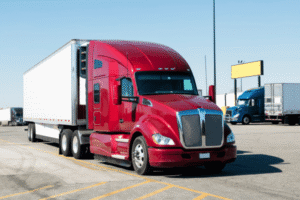
Why Commercial Truck Awareness Matters More Than You Think
An average passenger car weighs around 3,000–4,000 pounds.
A fully loaded 18 wheeler can weigh up to 80,000 pounds.
That’s not a fair fight. In truck-related accidents:
- The smaller vehicle almost always takes the worst damage
- Injuries tend to be more severe
- Recovery—physically and financially—is often much harder
And in a city like Las Vegas, where highways connect multiple states and freight routes, truck traffic is constant.
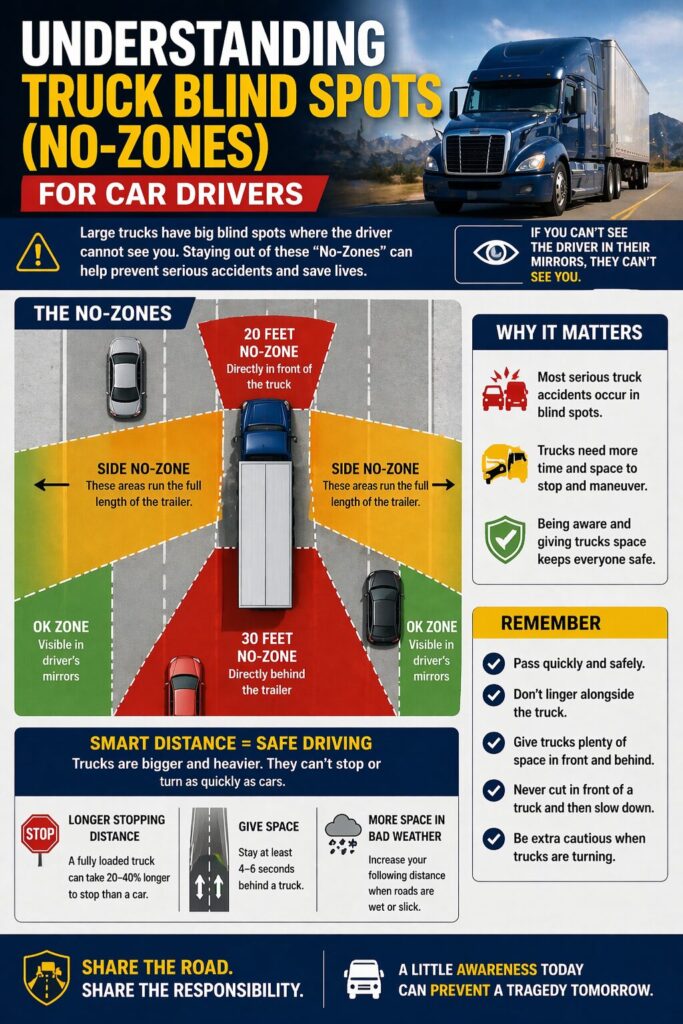
Understanding Truck Blind Spots (No-Zones)
One of the biggest risks around commercial trucks is something most drivers underestimate:
👉 Blind spots—also called “No-Zones”
Where Are These Blind Spots?
- Directly in front of the truck
- Directly behind the trailer
- Along both sides (especially the right side)
If you can’t see the truck driver in their mirror…
👉 They probably can’t see you either.
The Most Dangerous Position
That right-side blind spot?
That’s the danger zone.
If a truck merges or turns and you’re sitting there, you’re basically invisible.
What You Should Do Instead
- Pass quickly and safely
- Avoid lingering next to trucks
- Stay out of blind spots as much as possible
Hanging out beside a semi like it’s just another car is how people get sideswiped.
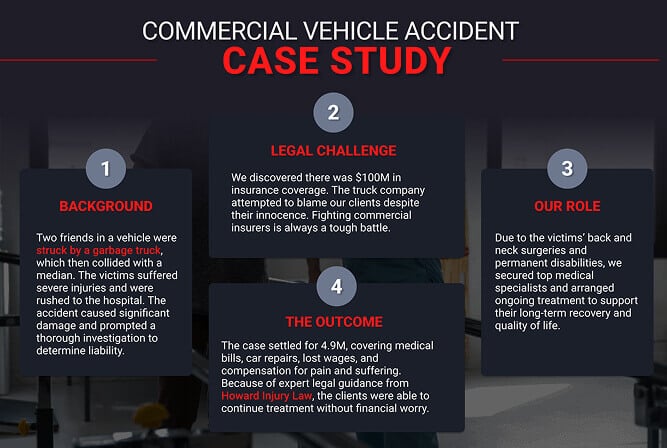
Following Distance: Why Tailgating a Truck Is a Bad Idea
Let’s talk about something people do all the time:
👉 Driving too close behind a truck
Bad move.
Why?
- Trucks block your visibility
- Debris can fly off
- If they stop suddenly, you don’t have time to react
The Real Difference in Stopping Distance
A fully loaded truck:
- Takes 20–40% longer to stop than a car
- Needs significantly more space at highway speeds
That means: Even if the truck driver reacts quickly… physics may not cooperate.
Safe Following Rule
Give trucks:
👉 At least 4–6 seconds of space
More if:
- You’re on the highway
- It’s raining
- Traffic is heavy
Merging Safely Around Commercial Trucks
Highway merging in Las Vegas can already feel chaotic. Add a semi-truck into the mix, and things get real.
Common Mistake
Cutting in front of a truck too closely after merging.
That’s one of the fastest ways to cause a crash.
What You Should Do
- Merge smoothly and predictably
- Make sure you can see the entire front of the truck in your rearview mirror before merging ahead
- Avoid forcing trucks to brake suddenly
Because again—They can’t stop like you can.
Truck Turning and Wide Turns
Ever seen a truck swing wide before turning?
That’s not bad driving—it’s necessary.
The Danger
If you try to squeeze between:
- The truck
- The curb
You can get trapped.
This is how serious side-impact accidents happen.
Smart Move
If a truck is turning:
👉 Give it space
👉 Don’t try to “beat it”
You’re not winning that race.
What Truck Drivers Are Supposed to Follow
Commercial drivers don’t just hop in a truck and go.
They’re regulated by the Federal Motor Carrier Safety Administration (FMCSA). Key rules truckers must follow:
Hours-of-Service (HOS)
Limits how long drivers can be on the road:
- Prevents fatigue
- Requires rest breaks
Electronic Logging Devices (ELDs)
Track driving hours electronically:
- Prevent falsifying logs
- Improve accountability
Vehicle Inspections & Maintenance
Drivers must:
- Inspect brakes, tires, lights
- Ensure equipment is safe before driving
Driver Training Standards
Commercial drivers need:
- Special licensing (CDL)
- Training and certification

What Happens When These Rules Are Violated?
This is where things shift from safety… to legal territory. If a truck driver or company ignores regulations:
- They may be held liable in an accident
- Violations can strengthen injury claims
A skilled Las Vegas attorney will often investigate:
- Driving logs
- Maintenance records
- Company safety history
Because negligence isn’t always obvious at first glance.
Checking Trucking Company Safety Records
Most people don’t realize this—but you can actually look up trucking companies. The FMCSA provides a system that shows:
- Crash history
- Safety violations
- Inspection results
This matters if:
- You’ve been in an accident
- You suspect unsafe practices
Because sometimes the issue isn’t just the driver—it’s the company behind them.

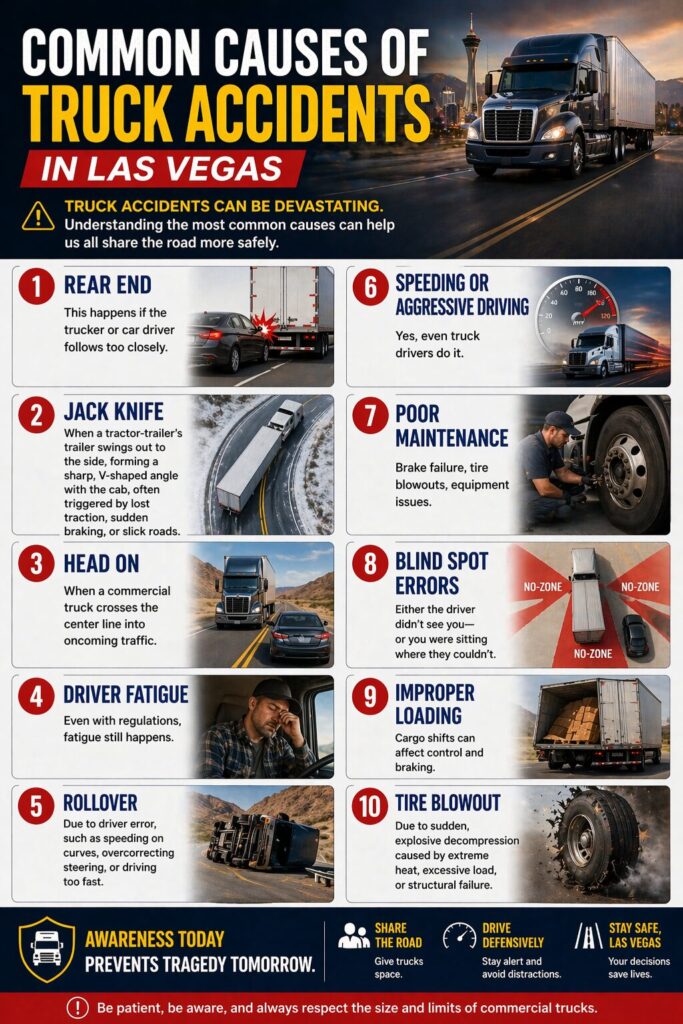
Common Causes of Truck Accidents in Las Vegas
Let’s break down what actually leads to crashes:
Rear End
This happens if the trucker or car driver follows too closely.
Jack Knife
When a tractor-trailer’s trailer swings out to the side, forming a sharp, V-shaped angle with the cab, often triggered by lost traction, sudden braking, or slick roads.
Head On
When a commercial truck crosses the center line into oncoming traffic
Driver Fatigue
Even with regulations, fatigue still happens.
Rollover
Due to driver error, such as speeding on curves, overcorrecting steering, or driving too fast.
Tire Blowout
Due to sudden, explosive decompression caused by extreme heat, excessive load, or structural failure.
Speeding or Aggressive Driving
Yes, even truck drivers do it.
Poor Maintenance
Brake failure, tire blowouts, equipment issues.
Blind Spot Errors
Either the driver didn’t see you—or you were sitting where they couldn’t.
Improper Loading
Cargo shifts can affect control and braking.
What to Do If You’re Involved in a Truck Accident
This isn’t like a regular fender bender.
Truck accidents are more complex—and more serious.
Immediate Steps
- Call 911
- Seek medical attention
- Document everything (photos, videos, damage)
- Get witness information
What Happens Next
There may be multiple parties involved:
- The driver
- The trucking company
- Maintenance providers
- Cargo loaders
This is why having an experienced lawyer in Las Vegas, Nevada matters.
Why Truck Accident Cases Are More Complex
Unlike standard car accidents, truck cases involve:
- Federal regulations
- Corporate liability
- Insurance layers
- Technical investigations
And insurance companies?
They move fast to protect themselves.
How an Attorney Helps After a Truck Accident
A strong Las Vegas attorney can:
- Investigate the accident thoroughly
- Secure critical evidence before it disappears
- Handle insurance negotiations
- Maximize compensation
Because the reality is 👉 Trucking companies have legal teams ready.
You should too.
Practical Safety Tips You Can Actually Use Today
Let’s keep this simple and actionable.
Do This:
- Stay out of truck blind spots
- Give extra following distance
- Pass quickly—don’t linger
- Be patient during turns
- Merge carefully
Avoid This:
- Cutting off trucks
- Tailgating
- Driving distracted near large vehicles
- Assuming they can stop quickly
Truck Awareness Prevents Accidents
Commercial truck awareness isn’t about memorizing rules.
It’s about understanding how these vehicles actually operate.
They:
- Move slower
- Stop slower
- Turn wider
- Have limited visibility
Once you respect that, your driving changes—and your risk drops. Injured in Las Vegas? Speak Directly with an Attorney.
At Howard Injury Law, we represent all injury victims across Las Vegas, Nevada with elite trial experience and real courtroom strength. When your health, income, and future are at stake, you deserve a lawyer who prepares every case as if it’s going to trial.
📞 Free Consultation: (702) 331-5722
–Se habla español
-我们说普通话和粤语
Learn More About:
-Our Las Vegas car accident attorneys
-How to choose the right personal injury lawyer in Las Vegas
–Helpful resources before and after an accident
Learn about Attorney Glen Howard and the team behind Howard Injury Law.
Find us on Google, Yelp, or follow us on Instagram for community news, legal updates, and safety tips.