


How long a motor vehicle accident claim takes in Las Vegas depends on one thing more than any other: how badly you were hurt. A simple property-damage claim can wrap up in days or a couple of weeks, while a serious injury claim usually runs several months — and if it becomes a lawsuit, sometimes a year or more.
That range frustrates people, and it should. You have bills arriving, maybe missed paychecks, and an adjuster who seems in no hurry. So here’s the more useful question: not how fast can this settle, but how fast can it settle for what it’s actually worth. Those are two very different timelines, and the gap between them is where most people lose money.

How long does a motor vehicle accident claim take in Nevada?
For a claim involving only vehicle or property damage, you’re often looking at a few days to a few weeks once liability is clear. Injury claims take longer — commonly a few months, and longer still when injuries are serious, liability is disputed, or the case has to be filed in court.
This holds whether you were in a car, on a motorcycle, hit by a truck, riding in a Las Vegas motor vehicle accident as a rideshare passenger, or struck as a pedestrian. The vehicle changes the details of the claim, but the underlying process — and what stretches it out — is largely the same. Every case is different, so treat these as realistic ranges, not promises.
The motor vehicle insurance claim process, step by step
Your timeline is really the insurance claim process moving through stages. Understanding what each stage takes tells you where the time goes — and where it can be shortened without shortchanging you.
Reporting the crash and opening the claim (days to a couple of weeks)
Everything starts with documentation. A police report anchors the facts, but in Las Vegas, Metro does not always respond to minor, non-injury crashes. When officers don’t investigate, the duty shifts to you: Nevada requires drivers to file an SR-1 report with the DMV within 10 days when a crash causes injury, death, or property damage of $750 or more.
A clean, prompt report speeds everything downstream. A missing, delayed, or disputed report does the opposite — it stalls the liability phase while the insurer decides who it’s willing to blame. If you’re still early, what to do after a motor vehicle accident walks through the steps that protect your claim from day one.
Medical treatment and reaching maximum recovery (weeks to many months)
This is the single biggest driver of your timeline, and the one people rush at their own expense. Your claim can’t be valued accurately until doctors know how far you’ll recover — the point often called maximum medical improvement. Settle before then, and you’re guessing at the cost of an injury you don’t yet understand.
Two things matter here. First, get evaluated early; delaying care makes injuries harder to prove. When you should seek medical care after a vehicle accident explains why timing counts. Second, stay consistent — insurers pounce on gaps in treatment as evidence you weren’t really hurt. A gap in treatment can hurt your Nevada injury claim more than most people realize.
The demand and negotiation stage (a few weeks to a few months)
Once you’ve recovered or reached a stable point, your side assembles a demand — records, bills, lost wages, and the full picture of what the crash cost you. The adjuster reviews it, responds, and the back-and-forth begins. How insurance works in a motor vehicle accident shapes how long this takes and how hard the fight gets.
This is where an attorney who has worked inside the insurance industry changes the pace. HIL founder Glen Howard spent years as an insurance defense attorney — he knows the internal timelines, the stall tactics, and exactly what a file needs to look like before a carrier stops delaying and starts negotiating in good faith.
When a claim becomes a lawsuit (several months to over a year)
If liability is genuinely disputed or the offer stays unreasonably low, filing suit becomes the leverage that moves it. Most Las Vegas motor vehicle cases are handled in Clark County’s Eighth Judicial District Court, and litigation adds structure — discovery, depositions, often mediation. The large majority still settle before trial, but the calendar stretches.
One hard limit governs all of this: in Nevada, you generally have two years from the date of an injury crash to file a lawsuit. That deadline to sue is not the deadline to start — waiting until the clock is nearly out shrinks your options and your leverage.
Where the timeline changes by vehicle type
The claim process forks depending on what you were hit by, and each fork tends to add time:
- Trucks and commercial vehicles bring bigger policies, a company and its insurer, and sometimes federal safety rules — more parties means more investigation.
- Rideshare crashes turn on which app period was active, which decides whose coverage applies before anyone pays.
- Motorcycle, pedestrian, and hit-and-run cases often lean on uninsured or underinsured motorist coverage. What happens if the other driver doesn’t have vehicle insurance explains how that adds a step.
- Government vehicles, like an RTC bus, carry their own shorter notice requirements that are easy to miss — a reason to talk to an attorney quickly.
If your crash was specifically a car accident, how long a car accident settlement takes in Nevada drills into that scenario in more detail.
What makes a motor vehicle accident claim take longer
Beyond vehicle type, a handful of case factors decide whether you’re closer to weeks or closer to a year:
- How serious your injuries are. Longer treatment means a longer wait to value the claim correctly — and rushing it costs you.
- Disputed liability. When the insurer contests fault, the claim slows while both sides gather proof.
- Multiple vehicles or parties. Every additional insurer adds coordination and delay.
- Policy limits. If damages exceed the at-fault driver’s coverage, pursuing other sources of recovery takes time.
- Insurer delay tactics. Some carriers stall on purpose, betting you’ll take less to end the wait.
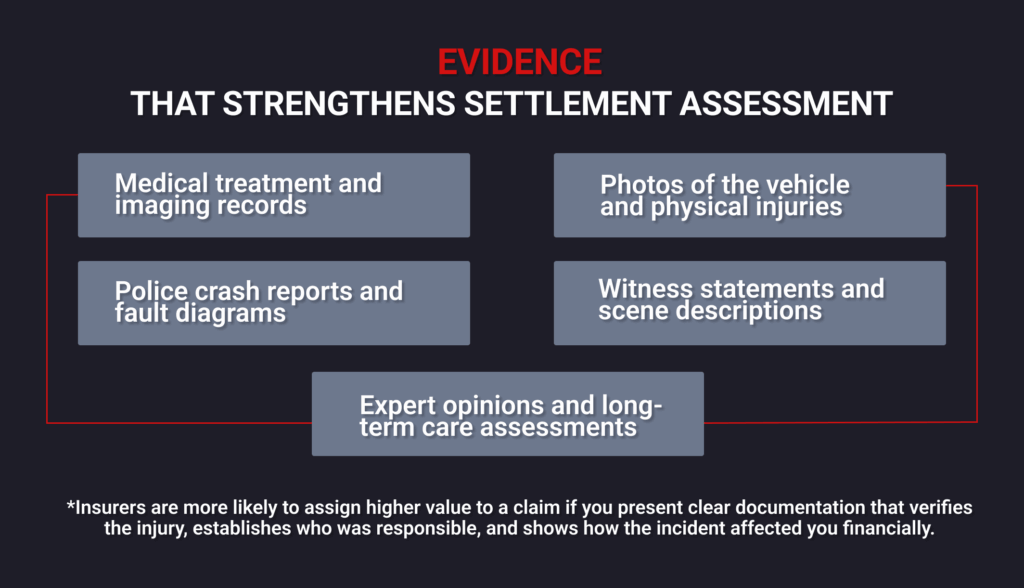
The flip side of a slower timeline is usually a bigger recovery. What compensation you can get after a motor vehicle accident shows what that extra patience is protecting.
The biggest mistake that drags claims out — and costs you money
The most expensive error people make is grabbing the first offer. Insurers often extend a quick, low number within days of a crash, before you know the full extent of your injuries. It feels like speed. It’s usually a discount.
Once you sign a release, the claim is closed — even if surgery or ongoing pain shows up next month. The fast check almost never accounts for future care, lost earning power, or the real value of what you’re living with. Glen Howard saw this from the defense side for years: the early lowball is a strategy, not a courtesy. Recognizing it for what it is protects both your timeline and your recovery.
How a Las Vegas motor vehicle accident attorney speeds things up — without leaving money behind
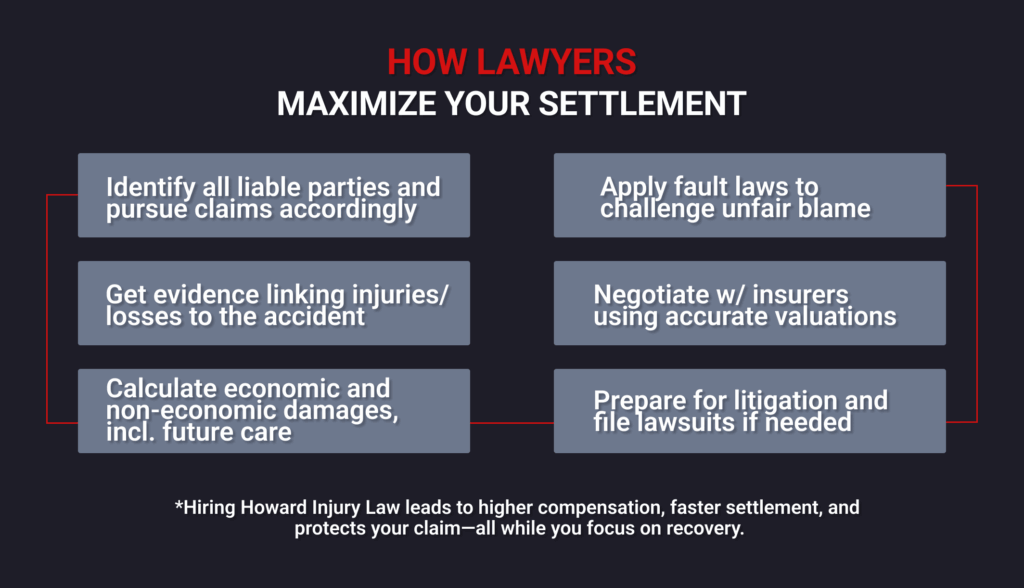
A good attorney doesn’t just make your claim bigger; they make the right parts faster. They build the demand correctly the first time so it doesn’t bounce back for missing documentation. They shut down the stall excuses adjusters use on unrepresented claimants. And they know when filing suit is the move that finally forces a fair number.
If you’re unsure whether your situation even needs a lawyer, do I need a lawyer for a traffic accident is an honest place to start. HIL works on contingency — no fee unless we win — so getting your claim moving costs you nothing up front.
Frequently Asked Questions
How long does it usually take to settle an auto accident claim?
A property-damage-only claim often settles in a few weeks once fault is clear. An injury claim typically takes a few months, and longer when injuries are serious or liability is disputed. The biggest variable is your medical treatment — a fair settlement can’t be calculated until your doctors know how well you’ll recover. Trying to shortcut that step is how people end up settling for far less than their case is worth. A Las Vegas attorney can move the parts of the process that are within reach while making sure you don’t sign away money you’ll need later.
How long does it take for insurance to pay out after a crash?
For vehicle damage, payment often comes within days to a couple of weeks after the insurer accepts the claim. For an injury claim, payout comes after you settle — and once you sign the settlement and release, the check usually follows within a few weeks. The long part isn’t the payout itself; it’s everything that has to happen before you settle: treatment, the demand, and negotiation. Understanding how insurance handles a motor vehicle claim helps you see where the real waiting happens — and it’s rarely the final check.
How long before an insurance company offers a settlement?
Sometimes within days — but be careful, because a fast offer is often a warning sign, not good service. Early offers usually land before you’ve finished treatment, which means they can’t reflect the true cost of your injuries. A fair offer generally comes later, after your side sends a complete demand backed by records and bills. If an adjuster is pushing money at you quickly, they’re often trying to close the file cheaply before you understand what your claim is worth. That’s the moment to slow down and get advice, not speed up.
Does hiring a lawyer make my claim take longer?
Usually not on the parts that matter — and often the opposite. A lawyer removes the delays insurers rely on with unrepresented people: incomplete demands, ignored calls, and open-ended “we’re reviewing it” responses. Where representation can add time is when your attorney refuses a lowball and pushes for the full value of your claim. That extra stretch isn’t wasted; it’s the difference between a quick discount and a fair recovery. For most people, the trade — a bit more patience for meaningfully more money — is exactly why they hire a lawyer in the first place.
How long do I have to file a motor vehicle accident claim in Nevada?
In Nevada, you generally have two years from the date of an injury crash to file a lawsuit, and three years for vehicle or property damage. But the deadline to sue is not the deadline to start — waiting until it’s close weakens your position and can push evidence out of reach. Claims involving a government vehicle can carry shorter notice requirements, so those need attention right away. The safest move is to talk to a Nevada attorney early, while the facts are fresh and every option is still open.

Talk to a Las Vegas motor vehicle accident attorney
You shouldn’t have to guess whether your claim is moving at a normal pace or being quietly stalled. If an adjuster is dangling a fast check, dragging their feet, or telling you you don’t need a lawyer, those are the moments a former insurance defense attorney sees straight through.
Glen Howard knows the other side’s playbook because he used to run it. Speak with a Nevada motor vehicle accident attorney in a free consultation, and get a straight answer to the real question: do I have a case, and what’s it actually worth? There’s no fee unless we win. Request your free case review and stop wondering where your claim stands.