


A straightforward property-damage claim in Las Vegas can settle in a few weeks. A serious injury claim usually takes several months to a year or more. The gap between those two comes down to a handful of things you can actually understand and, in some cases, influence — so let’s break down what really sets the clock on a Nevada car accident settlement.
If you’re watching bills stack up while an adjuster goes quiet, you’re not imagining the wait. But “slow” and “stalled” aren’t the same thing, and knowing the difference is how you protect both your timeline and your payout.
The short answer: it depends on your injuries, not a calendar
No Nevada law sets a fixed deadline for when a car accident claim has to settle. The single biggest factor is your medical picture. A claim usually can’t be valued fairly until your treatment stabilizes and your doctors know how you’ll heal — a point often called maximum medical improvement, or MMI.
Settle before you reach it and you’re guessing at the cost of injuries that may still be developing. That’s why a rushed settlement can quietly cost you far more than a patient one. The timeline serves the value, not the other way around.
The typical timeline, stage by stage
Most Nevada car accident claims move through the same phases, and each one takes as long as the facts demand:
- Report and investigation (days to weeks). The crash is documented — LVMPD or Nevada Highway Patrol report, photos, witness information. Fault gets sorted out here.
- Medical treatment to MMI (weeks to many months). You treat until you recover or plateau. This is usually the longest stage, and rushing it is where people lose money.
- Demand package (a few weeks to prepare). Once your damages are known, your attorney assembles medical records, bills, wage loss, and a demand to the insurer.
- Negotiation (weeks to a few months). Offers go back and forth. Simple, clear-liability cases resolve faster; disputed ones drag.
- Settlement or lawsuit. If negotiation produces a fair number, you settle. If it stalls, filing a lawsuit keeps the case alive — and can push a serious offer.
A minor fender-bender on Spring Valley streets with light injuries might close in a couple of months. A high-speed crash on I-15 with surgery and lasting damage can run well past a year.
How long does an insurance company have to settle a claim in Nevada?
There’s no law forcing an insurer to pay your injury claim by a set date, but Nevada does put real deadlines on how promptly they must handle it. Under Nevada’s insurance regulations, an insurer generally must:
- Acknowledge your claim within 20 working days of receiving notice and provide the forms and instructions you need;
- Accept or deny the claim within 30 working days after you submit a properly completed proof of loss — or tell you why they need more time, then update you every 30 days; and
- Pay an accepted claim within 30 days, or owe interest on what’s late.
On top of that, Nevada’s unfair claims practices law (NRS 686A.310) requires insurers to act reasonably promptly and to settle fairly once liability is reasonably clear. It also bars them from lowballing you into a lawsuit just to force a smaller number.
Here’s the catch worth understanding: these deadlines run off a completed claim. In an injury case, your claim isn’t complete until your damages are known — which is exactly why treatment length drives the timeline. If an adjuster is genuinely dragging their feet past these standards, that’s a different problem, and it’s one a lawyer can press.
Why does a car accident settlement take so long?
When a claim crawls, it’s usually one of these:
- You’re still treating. Settling before MMI means undervaluing your case. Good patience here, not delay.
- Liability is disputed. Nevada uses modified comparative negligence — your recovery drops by your share of fault, and disappears if you’re more than 50% at fault. Insurers fight over those percentages, and that fight takes time.
- Multiple parties or policies. A chain-reaction crash on the 215 Beltway with several drivers and insurers is slower than a two-car claim.
- Adjuster tactics. Silence, repeated document requests, and low first offers are sometimes just how the other side tries to wear you down. Knowing an insurer’s own playbook is half of countering it.
The one deadline you can’t miss: Nevada’s 2-year filing limit
While the insurer’s clock is flexible, yours is not. In Nevada, you generally have two years from the date of the crash to file a bodily-injury lawsuit (NRS 11.190(4)(e)). Miss it and a court can throw out even a strong case, no matter how badly you were hurt.
This is a different clock from settlement negotiations, and confusing the two is a costly mistake. Negotiating with an adjuster does not pause the deadline. If talks are still going as the two-year mark approaches, filing suit stops that clock and keeps your claim alive — the case can then continue toward settlement from a stronger position. We cover the filing deadline in depth in how long after a car accident you can sue in Nevada.
Should you settle fast? Why quicker isn’t always better
The first offer usually lands early and low, often before you know the full cost of your injuries. Taking it feels like relief. It’s also how people end up paying out of pocket for treatment they didn’t see coming.
A settlement is final. Once you sign the release, you can’t reopen the claim if your back injury turns out to need surgery six months later. That’s the real reason to let the process breathe — not to drag it out, but to make sure the number reflects everything you’re actually owed. What your claim is worth and how to protect that value is its own subject; start with how much your car accident case is worth in Las Vegas if that’s your main question.
Does hiring a lawyer speed things up?
Often, yes — and more importantly, it protects the value while it does. A car accident attorney builds a documented demand instead of a scattered one, holds the insurer to the deadlines Nevada actually imposes, and makes a lawsuit a credible threat rather than a bluff. Adjusters move differently when the file is organized and the other side is clearly ready to litigate.
That’s the edge at Howard Injury Law. Founder Glen Howard spent years as an insurance defense attorney, so he knows the timelines the other side works to and the stall tactics they lean on. Our Las Vegas car accident team works on contingency — no fee unless we win — so getting your timeline moving costs you nothing up front.

Frequently Asked Questions
How long does an insurance company have to settle a claim in Nevada?
Nevada doesn’t set a hard deadline to pay an injury settlement, but it does require prompt handling. An insurer generally must acknowledge your claim within 20 working days, and accept or deny it within 30 working days after you submit a completed proof of loss — or explain in writing why more time is needed and update you every 30 days. An accepted claim must be paid within 30 days or the insurer owes interest. Nevada law (NRS 686A.310) also requires fair, prompt settlement once liability is reasonably clear. These clocks run off a completed claim, which in an injury case means after your damages are known.
What is the average settlement for a car accident in Nevada?
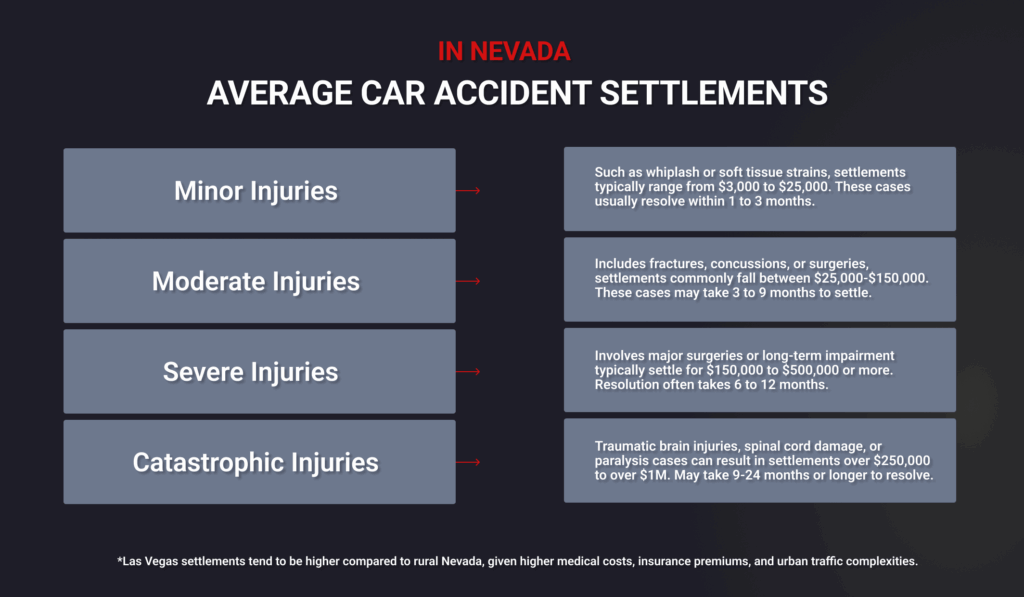
There’s no reliable “average,” because settlements track the specific facts — injury severity, medical costs, lost income, liability, and available insurance. A minor soft-tissue claim and a crash involving surgery are worlds apart, so any single number would mislead more than help. What matters for your case is how your particular damages add up and how clear the other driver’s fault is. For a fuller breakdown of the ranges and what moves them, see our guide to the average car accident settlement in Las Vegas.
How much of a $25,000 or $50,000 settlement will I actually get?
Your take-home is the gross settlement minus a few deductions: your attorney’s contingency fee, any unpaid medical bills or liens from providers who treated you, and case costs like records and expert fees. What’s left is yours, and it isn’t a fixed percentage — it depends on how much medical debt is tied to the case and how it’s negotiated down. A good attorney often works to reduce those liens so you keep more. On the tax side, most Nevada car accident settlement money for physical injuries isn’t taxed; we explain the details in are car accident settlements taxable in Nevada.
Can I speed up my settlement?
To a point. You can’t safely rush past your own medical treatment, but you can keep the case moving: treat consistently, keep every bill and record, stay off social media about the crash, and respond quickly to your attorney’s requests. The biggest accelerant is an organized claim backed by a lawyer who holds the insurer to Nevada’s handling deadlines. What you shouldn’t do is grab the first offer to end the wait — that’s usually the most expensive way to save time.

Get a realistic timeline for your Las Vegas car accident
Waiting on a settlement while the bills don’t wait is its own kind of stress, and a vague “it takes as long as it takes” doesn’t help you plan. What helps is knowing where your specific case sits — how far you are from MMI, whether liability is clean, and what a fair number looks like.
That’s what a free consultation gives you. Bring your police report, medical records, and any offer you’ve received, and our car accident attorneys will walk you through a realistic timeline and what’s driving it — no fee unless we win. Call (702) 331-5722 or request your free consultation and stop guessing at your own case.
This article explains Nevada law in general terms and isn’t legal advice. Every crash is different, and your timeline depends on your specific facts — talk with a licensed Nevada attorney about your situation.