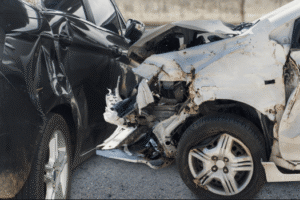


Compensation is available after a motor vehicle accident in Nevada and it helps you recognize the full value of your claim before you accept anything. Bills start before you leave the hospital, and it can include a rental car, follow-up appointments, and the physical therapy your doctor says you’ll need for months. And somewhere underneath all of it, the question that keeps surfacing: is any of this going to be covered?
If another driver’s negligence caused your crash, Nevada law gives you the right to pursue compensation for every financial and personal loss that resulted. Not just the emergency room visit. Not just the car repairs. Every documented loss — and some that don’t come with receipts at all — has a place in a properly built personal injury claim.
Howard Injury Law represents injured people throughout Las Vegas and Nevada. Glen Howard spent years on the insurance defense side before representing injured people. He knows how claim values are constructed and where insurers look to reduce them. Available 24/7. No fees unless we win.

Economic Damages: The Documented Financial Losses
Economic damages are the measurable, verifiable financial losses caused by the crash. They have receipts, records, bills, and documentation. They’re calculated from real numbers — not estimates — and they form the foundation of every motor vehicle accident claim.
Medical Expenses — Past and Future
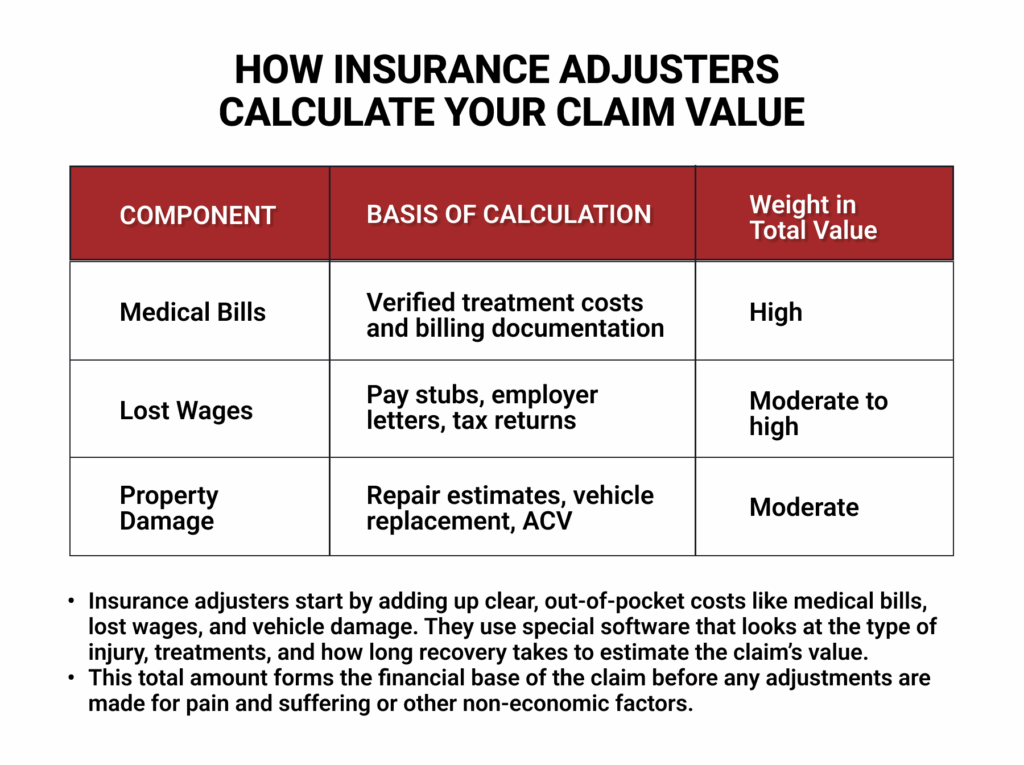
Medical costs are typically the largest component of economic damages in a serious injury claim. Every expense related to treating injuries caused by the crash is recoverable: emergency room treatment, ambulance transportation, hospitalization, surgery, imaging studies such as MRI and CT scans, specialist consultations, prescription medications, physical therapy, chiropractic care, and any medical equipment required for recovery.
What many people don’t realize is that future medical costs are also recoverable — not just the bills you’ve already received. If your injuries will require ongoing treatment, future surgeries, long-term physical therapy, or permanent medical management, the projected cost of that care is part of your claim. Establishing future medical costs requires medical expert testimony about your prognosis and treatment needs. An attorney builds that documentation before any settlement is reached.
Settling before your treatment is complete is one of the most costly mistakes injured people make. Once you sign a release, future medical costs are on you regardless of how your condition develops. Understanding when you should seek medical care after a vehicle accident and continuing treatment until you reach maximum medical improvement protects both your health and the full value of your claim.
Lost Wages and Earning Capacity
If your injuries kept you from working — for days, weeks, or months — the income you lost during that period is recoverable as lost wages. This is documented through employment records, pay stubs, tax returns, and a letter from your employer confirming your absence and compensation rate.
The more significant and often underestimated component is diminished earning capacity. If your injuries permanently affect your ability to perform your job or limit your career options going forward, that long-term reduction in earning potential is a separate and often substantial element of your damages. Calculating diminished earning capacity requires economic expert analysis based on your age, career trajectory, injury severity, and the labor market you work in.
Self-employed people, gig workers, and those with variable income face additional complexity in documenting lost wages — but those losses are no less real and no less recoverable. An attorney experienced in Nevada motor vehicle accident cases knows how to build this documentation for non-traditional employment situations.
Property Damage
Vehicle repair or replacement costs are recoverable economic damages. So are towing and storage fees, rental car costs during the repair period, and any personal property inside the vehicle that was damaged or destroyed in the crash. These are typically handled through property damage claims that run parallel to the injury claim, but they belong in the full picture of what you’re owed.
If your vehicle was totaled, you’re entitled to its fair market value — not the depreciated value the insurer’s algorithm produces, and not what it would cost to replace it with a lesser vehicle. If the insurer’s valuation doesn’t reflect the actual market value of your vehicle, that number is negotiable.
Out-of-Pocket Expenses
Every expense you’ve incurred because of the crash and your injuries is potentially recoverable: transportation to medical appointments, home care assistance if your injuries limited your mobility, modifications to your home or vehicle required by your injuries, and any other costs directly traceable to what happened. Document everything. Keep receipts for anything crash-related regardless of how minor it seems.
Non-Economic Damages: The Losses That Don’t Have a Receipt
Non-economic damages compensate for the real, significant harms that don’t appear on a bill but affect your life profoundly. Nevada law recognizes these losses as legitimate and compensable — and critically, Nevada does not cap non-economic damages for most motor vehicle accident cases. That absence of a cap matters significantly in serious injury claims.
Pain and Suffering
Pain and suffering encompasses both the physical pain caused by your injuries and the mental and emotional distress that accompanies them. Chronic pain from a spinal injury. The anxiety that comes with returning to driving after a serious crash. The depression of a prolonged recovery that takes you away from your work, your family, and your life. These experiences have real value in a Nevada personal injury claim.
Pain and suffering is not calculated from a receipt — it’s argued. Insurance companies typically use multiplier methods or per diem calculations as starting frameworks, but those frameworks are negotiating positions, not formulas. The actual value depends on the severity and duration of your physical pain, the nature of your emotional distress, and how effectively your attorney presents that evidence.
Understanding how the multiplier method works in personal injury claims gives you insight into one of the primary approaches used to calculate pain and suffering and why the multiplier applied to your claim matters so much.
Loss of Enjoyment of Life
If your injuries prevent you from participating in activities that were important to you before the crash — sports, hobbies, family activities, travel — that loss is compensable. Loss of enjoyment of life is distinct from pain and suffering. It addresses the specific reduction in quality of life caused by your injuries rather than the pain itself.
Documenting this loss involves connecting your pre-injury activities and lifestyle to the specific limitations your injuries now impose. Photographs, testimony from family and friends, and your own account of what you can no longer do all contribute to this element of your claim.
Emotional Distress
Serious vehicle accidents produce psychological consequences that are medically recognized and legally compensable. Post-traumatic stress, anxiety, sleep disruption, difficulty concentrating, and the fear of driving or riding in vehicles are documented responses to crash trauma. When these conditions are severe enough to affect your daily functioning, they support a separate emotional distress claim alongside physical pain and suffering.
Documentation through a mental health professional who treats you after the crash creates the record that supports this element of your claim.
Loss of Consortium
If your injuries have affected your relationship with your spouse — your ability to maintain the partnership, companionship, and intimacy that existed before the crash — your spouse may have a separate claim for loss of consortium. This is a distinct legal claim that belongs to the spouse, not to the injured person, and it runs alongside the primary injury claim.

What Affects How Much You Actually Recover
Knowing what categories of compensation exist is one piece of the picture. Understanding what factors determine the actual amount recovered helps set realistic expectations.
Liability Clarity
Cases with clear, undisputed liability — where the other driver’s fault is unambiguous — produce stronger recoveries than cases where fault is contested. When liability is disputed, the insurer has more room to negotiate down. An attorney who can build an airtight liability case removes that negotiating leverage.
Injury Severity and Documentation
The severity of your injuries is the primary driver of non-economic damage value. More serious injuries, longer recovery periods, permanent impairment, and documented impact on daily life all increase the non-economic component of your claim. Complete, consistent medical documentation from the date of the crash through maximum medical improvement tells the story that supports full value.
Understanding what maximum medical improvement means for your claim and why timing matters for settlement helps you avoid settling before the full value is established.
Policy Limits
The at-fault driver’s insurance coverage sets a ceiling on what their policy will pay. Nevada’s minimum liability coverage is $25,000 per person — inadequate for any serious injury claim. When your damages exceed the at-fault driver’s policy limits, other sources may be available: umbrella coverage, employer liability if a commercial vehicle was involved, or your own underinsured motorist coverage.
Identifying every available coverage source is part of what an attorney does to maximize recovery. A claim that appears limited by a low-limit policy sometimes has additional sources that an unrepresented claimant never finds. Learning how much your personal injury case may be worth in Nevada starts with understanding every policy that may apply.
Comparative Fault
If you’re found partially at fault for the crash, your recovery is reduced by your percentage of fault under Nevada’s modified comparative negligence rules. Insurance companies will look for any basis to assign you a share of blame. An attorney’s job includes ensuring that attribution is accurate — not inflated to reduce the insurer’s payout. Learn more about how comparative negligence works in Nevada and why every percentage point matters.
Medical Liens
When medical providers treat you on a lien basis — providing care now to be paid from your settlement — those liens are satisfied from your recovery before you receive the net amount. An attorney negotiates medical liens alongside the injury claim, often reducing lien amounts to increase your net recovery. Understanding how medical liens work in personal injury cases helps you understand the full financial picture of your settlement.
How Insurance Companies Evaluate and Minimize Your Claim
Understanding that insurance adjusters are evaluating your claim with the goal of minimizing it — not fairly compensating you — is essential context for every interaction after a crash.
Adjusters use internal valuation software, comparable settlement databases, and specific tactics designed to reduce claim value: disputing the necessity of treatment, attributing injuries to pre-existing conditions, arguing that your recovery was complete earlier than documented, and making early offers designed to close your claim before its full value is apparent.
An attorney who spent time on the defense side — as Glen Howard did — understands exactly how that valuation process works. That knowledge shapes how evidence is built, how damages are documented, and how negotiations are conducted. What the insurance adjuster actually does with your claim is not a mystery — but most injured people don’t know what’s happening on the other side of the table.
Frequently Asked Questions
Is there a cap on damages for motor vehicle accidents in Nevada?
Nevada does not cap non-economic damages such as pain and suffering for most motor vehicle accident cases. Economic damages are calculated from actual documented losses with no cap. This distinguishes Nevada from states with statutory damage caps and makes the full presentation of non-economic losses particularly important in serious injury claims.
How long do I have to file a claim in Nevada?
Two years from the date of the crash for personal injury claims under Nevada’s statute of limitations. Three years for property damage claims. Missing the deadline forfeits your right to recover regardless of how strong your case is. Review Nevada’s statute of limitations for personal injury for how the clock runs and when exceptions apply.
What happens if the at-fault driver’s insurance isn’t enough to cover my damages?
Your own underinsured motorist coverage can bridge the gap between the at-fault driver’s policy limits and your actual damages. Additional liable parties — employers, vehicle owners, manufacturers — may also be available as recovery sources. An attorney identifies every coverage layer that applies to your specific situation.
Should I accept the first settlement offer?
Almost never. First offers are made before your treatment is complete and reflect what the insurer thinks you’ll accept without legal representation — not the actual value of your claim. Once you accept and sign a release, that’s the end. Read whether to accept the first settlement offer from insurance in Las Vegas before you respond to any offer.

Know What You’re Owed Before You Settle for Less
Compensation after a motor vehicle accident in Nevada covers far more than most people realize when they’re standing in the aftermath of a crash. Medical costs, lost income, property losses, pain and suffering, emotional distress, lost enjoyment — every element has value, and every element deserves to be fully documented and pursued before any settlement is accepted.
The motor vehicle accident attorneys at Howard Injury Law represent injured people throughout Las Vegas and Nevada. We build claims that reflect the full value of what you’ve lost — not the insurer’s preferred floor. Glen Howard and our team are available around the clock. Start with a free case review — no obligation, no fees unless we recover for you.
You deserve to know what your case is actually worth.