


What insurance companies don’t want you to know after an accident in Las Vegas could fill a manual. Adjusters are trained professionals working a process they’ve run thousands of times. Most accident victims are going through it for the first time, under stress, often in pain, and without legal guidance. That imbalance is not accidental.
The adjuster who called can sound reasonable and sorry about your accident, they want to get things resolved quickly, and they just need a few things from you to move the claim forward.
What they don’t tell you is that every part of that conversation is designed to protect their bottom line — not yours. At Howard Injury Law, we’ll help you understand what the claims process looks like from the other side of the table.
You Don’t Have to Give a Recorded Statement
This Is One of the First Things They’ll Ask For
Shortly after your accident, the at-fault driver’s insurance company will likely contact you and request a recorded statement. They’ll frame it as routine — something they need to process your claim. It isn’t routine. It’s a risk.
You are not legally required to give a recorded statement to the other driver’s insurance company. Nevada law does not obligate you to sit for a recorded interview with an insurer who is actively working against your interests.
Adjusters use recorded statements to look for inconsistencies. They ask open-ended questions about your injuries, your movements before the crash, and how you’re feeling now. If you say you’re “doing okay” — because that’s just what people say — that phrase becomes part of your file. If your account of the sequence of events differs even slightly from what you said at the scene, they use that discrepancy to question your credibility.
What to Say Instead
You can decline politely, or you’ll say you’ll be in touch once you’ve had a chance to speak with an attorney. You don’t need to explain yourself further than that.
If you’ve already given a recorded statement, all is not lost. But going forward, any communication with the other driver’s insurer should happen through your attorney — not directly through you.
The First Settlement Offer Is Not the Real Number
Adjusters Don’t Calculate What Your Claim Is Worth — They Calculate What They Hope You’ll Accept
There’s a significant difference between those two things. Insurance companies have internal formulas and software that generates initial offers based on your documented medical bills. What those formulas routinely exclude: future medical treatment, lost earning capacity, the long-term impact of your injuries, and in many cases, a meaningful amount for pain and suffering.
The first offer is designed to be accepted by someone who doesn’t know better. It closes your file at the lowest possible cost. Once you sign the release that comes with it, that number is permanent — regardless of what your medical situation looks like six months from now.
They’re Also Betting You Haven’t Finished Treatment Yet
This is worth repeating because it matters so much: many significant injuries — disc herniations, nerve damage, soft tissue injuries — don’t show their full picture in the first few weeks. If you’re still in treatment when the offer arrives, you cannot possibly know what your total medical costs will be.
A fair settlement covers everything. Past bills, future care, time missed from work, and the non-economic impact of being injured. An offer made before your treatment is complete almost never does that. Read our blog on why insurance companies make quick settlement offers for a full breakdown of the financial strategy behind that early call.
Signing a Blanket Medical Authorization Is a Trap
They’re Not Looking for Accident Records — They’re Looking for Anything They Can Use
When an insurance company sends you a medical authorization form to sign, it often isn’t limited to records related to your accident. A broad, blanket release gives them access to your full medical history — years of records across multiple providers.
What they’re looking for is a pre-existing condition. If they can point to a prior back injury, a previous car accident, or any prior complaint related to the area of your body now injured, they will use that to argue your current injuries were pre-existing rather than caused by the crash. This reduces — or eliminates — what they have to pay.
What You’re Actually Entitled to Do
You can request a narrowly scoped medical release that covers only records related to your injuries from this specific accident. You are not required to open your entire medical history to an insurer whose goal is to find reasons to pay you less.
An attorney reviews and limits the scope of these releases before anything gets signed. That alone can protect your claim significantly.
Delay Is Also a Strategy
The Longer Your Claim Sits, the More Pressure You’re Under
Insurance companies are not always slow because of administrative backlog. Sometimes claims drag on deliberately. Repeated documentation requests, weeks without updates, questions that seem to loop back on themselves — these can be tactics designed to wear you down.
When medical bills are accumulating and you’re not working, financial pressure builds. At some point, a lower offer starts to look more reasonable than it should — not because it’s fair, but because you’re exhausted and need resolution. Insurers understand this dynamic and some use it consciously.
Nevada’s statute of limitations gives most personal injury victims two years to file a claim. That does not mean the insurance company gets to stall indefinitely without consequence. An attorney can apply pressure on timelines, formally document delays, and make clear that litigation is a real option — which tends to accelerate the process considerably.
“I’m Fine” and “I’m Sorry” Can Be Used Against You
Words Said at the Scene Become Part of Your Claim
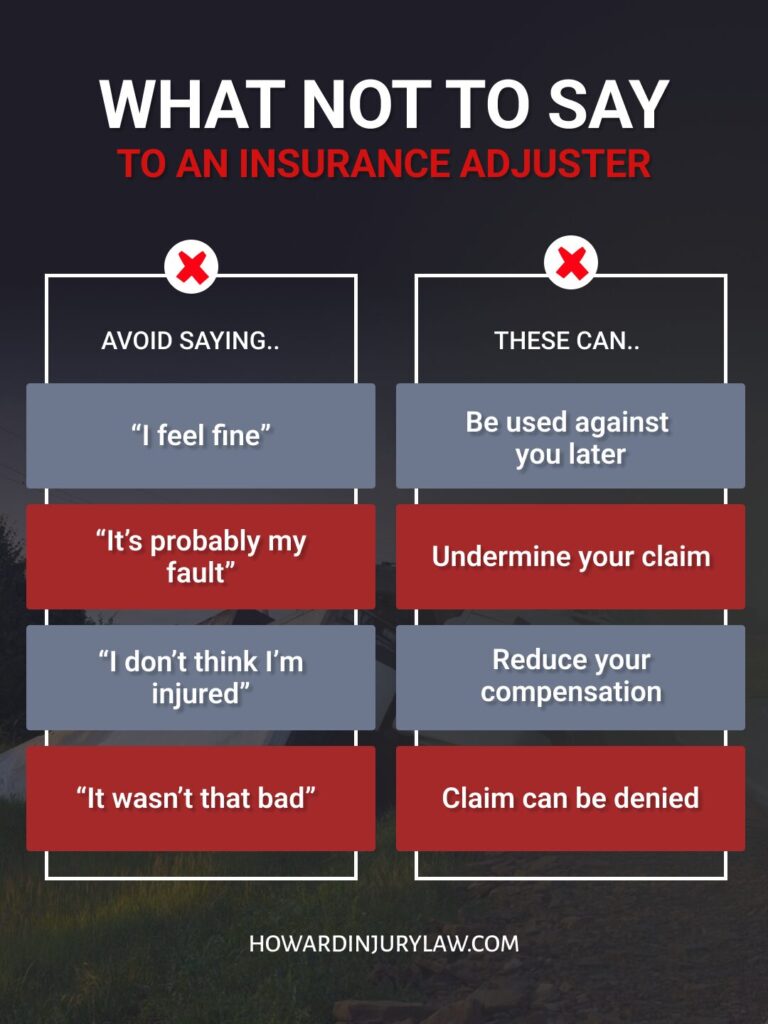
Right after an accident, adrenaline is high and most people default to social niceties. You tell the other driver you’re okay. You apologize, even if the crash wasn’t your fault, because that’s just what people do in stressful moments. None of that feels significant at the time.
Insurance adjusters are trained to treat it as significant. An “I’m sorry” at the scene can be characterized as an admission of fault. “I’m fine” can be used to argue your injuries were minor or pre-existing. These are not hypothetical scenarios — they are routine parts of claims disputes.
Nevada’s Comparative Negligence Rules Make This Especially Important
Under Nevada’s comparative negligence law, your compensation is reduced in proportion to any fault assigned to you. If an insurer can successfully argue you were even partially responsible for the crash — because of something you said, something in your statement, or how the scene was documented — your recovery goes down.
The at-fault driver’s insurer is not neutral. Every interaction you have with them is being evaluated for how it can be used to shift liability or reduce the payout. That’s not cynicism — it’s how the process works.
They’re Counting on You Not Knowing Your Claim’s Full Value
Pain and Suffering Is Real Compensation — and They’ll Minimize It
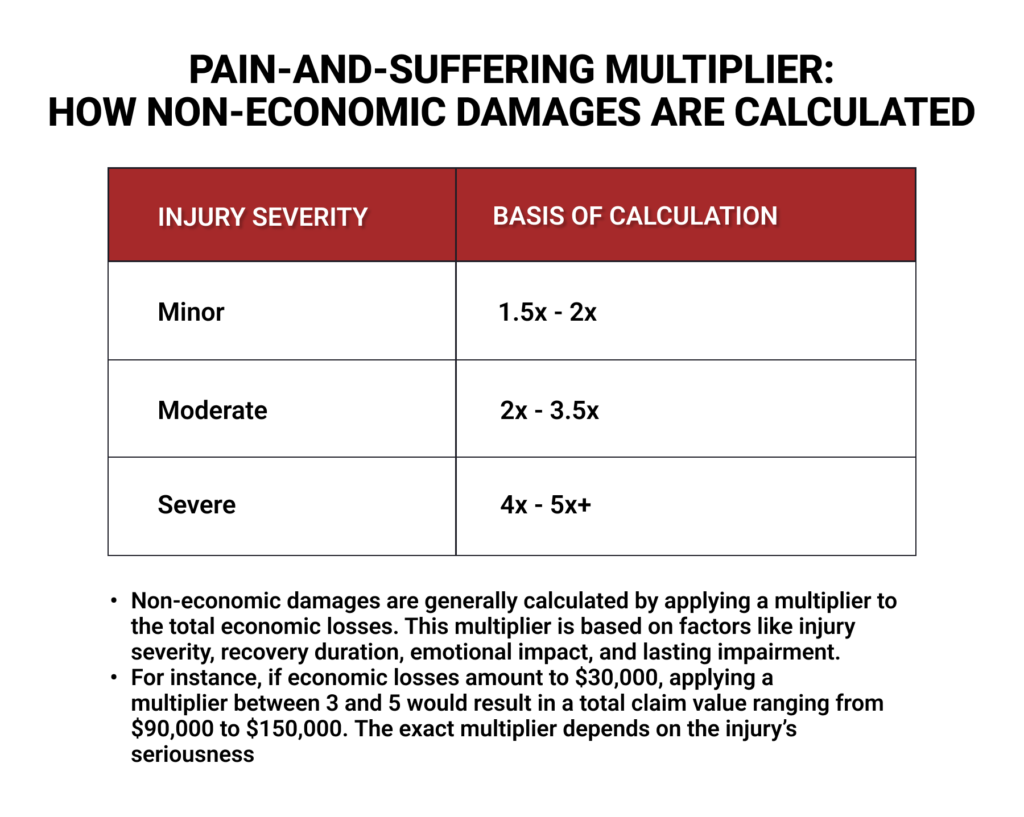
Non-economic damages — pain and suffering, emotional distress, loss of enjoyment of life — are legitimate, recoverable damages under Nevada law. Insurance companies would prefer you don’t fully understand this, because these damages can represent a substantial portion of a fair settlement.
Adjusters will sometimes act as though non-economic damages are a bonus, or something victims are lucky to receive. They’re not. They’re part of what you’re owed when someone else’s negligence causes you real harm.
Lost Earning Capacity Goes Beyond Missed Paychecks
If your injuries affect your ability to work long-term — whether that means taking a lower-paying position, working fewer hours, or being unable to perform the same job at the same level — that lost earning capacity is compensable. It’s a calculation that requires documentation and expert input. It’s also something that early, fast settlements almost never account for.
Glen Howard spent years on the insurance defense side before representing injured people. That background means he knows exactly what adjusters are looking for, how they build their arguments, and where claims are typically undervalued. When Howard Injury Law reviews a case, it’s with that internal knowledge of how the other side operates.
Frequently Asked Questions
Do I have to give a recorded statement to the insurance company after an accident in Las Vegas?
No. You are not legally required to give a recorded statement to the at-fault driver’s insurance company in Nevada. Your own insurer may have different requirements depending on your policy, but for the opposing insurer, you can decline. Before you speak with any adjuster — on or off the record — it’s worth understanding what they’re actually doing in that conversation. Our post on what the insurance adjuster actually does with your claim breaks this down in detail.
What if I already talked to the insurance company before hiring a lawyer?
It happens more often than you’d think, and it doesn’t necessarily damage your case. What you said matters, but it’s not always fatal. An attorney can review what was communicated, assess whether it creates exposure, and advise on how to proceed. The important thing is to stop communicating directly with the insurer from that point forward and let your attorney handle it.
Can I negotiate a settlement offer on my own?
You can, but unrepresented claimants consistently recover less than those with legal representation — even after attorney fees. The insurer knows you don’t have an attorney reviewing their offer, requesting documentation, or threatening litigation. That imbalance shows up in the numbers they put forward. A free case evaluation doesn’t require you to commit to anything. It just gives you a basis for comparison.
How do I know if an insurance company is stalling my claim?
Reasonable timelines exist for each stage of the claims process. If weeks are passing without substantive updates, if documentation requests keep expanding, or if you’re being asked to re-submit things you’ve already provided — those are signals worth paying attention to. An attorney can formalize the communication, put the insurer on notice, and make clear that delays have consequences.
What They’re Counting On Is That You Don’t Make This Call
The entire claims process is structured around one fundamental assumption: that you don’t know what they know. You don’t know what your claim is worth, what you’re required to provide, when to push back or what a delay really means.
That information gap is their advantage. Closing it is yours.
A client we worked with came to Howard Injury Law after spending weeks going back and forth with an adjuster on her own. She’d already given a recorded statement, signed a medical release she didn’t fully understand, and was about to accept an offer that didn’t account for the ongoing treatment she still needed. Once we reviewed everything, we identified the gaps, limited further disclosure, and restarted negotiations from an informed position. The outcome looked very different from where she started.
That’s not an unusual story. It’s a common one.
If you’ve been in an accident and you’re already in contact with an insurance company, request a free case review at Howard Injury Law. Glen Howard is available 24/7 — no forms, no pressure, no obligation. Just a direct conversation about where you stand and what your options are.
And before your next interaction with an adjuster, read our post on why you shouldn’t talk to the insurance company without a lawyer. What you say next matters.