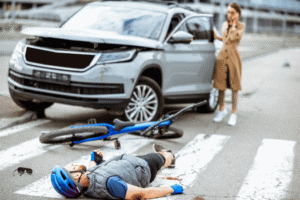


The most dangerous roads for cyclists in Las Vegas share a few traits. They’re wide main streets with posted speeds around 45 mph. Their bike lanes appear and disappear. Driveways line both sides, and turning traffic cuts across the rider’s path at almost every block. Much of the valley’s busiest road network was built to move cars fast, and people on bikes pay for that design.
If you were hit on one of these roads, you may be wondering whether the road itself played a part, and whether anyone besides the driver should be held responsible. This guide covers what makes a road dangerous for a bike, which Las Vegas corridors fit that profile, and what Nevada law says when road conditions contributed to a crash.
What Makes a Road Dangerous for Cyclists (Not Just Drivers)
A road can feel fine from behind the wheel and still be dangerous on two wheels. Cyclists face a different set of risks:
- Speed. A driver going 45 mph covers more than 60 feet per second. That leaves almost no time to react to a rider, and much less room for the rider to survive a crash.
- Many lanes. Six or more lanes mean more lane changes, more drivers merging toward the curb to turn, and longer crossings at intersections.
- Bike lanes that drop out. Painted lanes often end just before an intersection, right where turning cars and bikes collide.
- Right-turn slip lanes and freeway ramps. These let drivers turn at speed across a bike’s path, often while looking the other way for car traffic.
- Driveway density. Shopping centers, gas stations, and casino garages send cars across the bike lane every few hundred feet.
- Poor lighting and debris. Dark stretches, gravel, glass, and potholes collect at the road’s edge, which is exactly where cyclists are expected to ride.
These risks cluster. According to the City of Las Vegas Vision Zero Action Plan, about 77% of the city’s serious-injury and fatal crashes happen on just 11% of its streets. Those corridors are overwhelmingly the wide, fast main roads described above. For a broader look at how road design raises crash risk for everyone, see our guide to what makes Las Vegas roads more dangerous.
High-Risk Road Types and Corridors in the Las Vegas Valley
No government agency publishes an official ranking of the most dangerous roads for cyclists in Las Vegas. What the crash data and road design do show is which kinds of roads put riders at the most risk, and the valley has many of each.
Six-Lane, 45-mph Main Roads
Tropicana Avenue, Flamingo Road, Rainbow Boulevard, and Eastern Avenue are classic examples. Along much of their length they carry heavy traffic at high speeds across multiple lanes in each direction. A rider has to share the edge of the road with drivers who are passing fast, merging right, and turning into businesses.
These are the roads where overtaking crashes happen, when a driver comes up from behind and either misjudges the gap or never sees the rider at all. Nevada requires drivers passing a cyclist to move into another lane when possible or leave at least three feet of space. On a crowded six-lane road, many drivers do neither.
Where Bike Lanes Drop Out at Intersections
On corridors like Charleston Boulevard and Sahara Avenue, a cyclist can ride a painted bike lane for blocks, then lose it right before a major intersection. At that point the rider is sharing space with drivers moving right to turn. That’s the setup for a right-hook crash, where a driver passes a cyclist and then turns across the rider’s path.
Regional safety planners have flagged this problem directly. The Southern Nevada Transportation Safety Plan lists reducing bicycle crashes involving right-turning vehicles as a focus area.
Corridors With a History of Fatal Bicycle Crashes
LVMPD has reported fatal bicycle crashes along major corridors such as Lake Mead Boulevard and Rancho Drive, as well as on east valley and south valley main roads. The locations differ, but the pattern is the same: high speeds, wide crossings, and limited protection for riders.
Boulder Highway and Older East Valley Roads
Boulder Highway and parts of the older east valley road grid combine high speeds, frequent driveways, uneven road edges, and long stretches between signals. For cyclists, that means fast traffic, surprise turns in and out of businesses, and a riding surface that isn’t always maintained.
The Strip and Resort Corridor
Las Vegas Boulevard through the resort corridor poses different risks. Traffic may move slower, but riders deal with distracted visitors driving unfamiliar rental cars, rideshare drivers stopping and pulling out, and heavy turning traffic into casino entrances and garages. Many drivers there are paying attention to signs, GPS, and pickups, not to cyclists.
Many of these corridors also appear in our city-wide look at Las Vegas crash hotspots. For riders, what matters is less how many crashes a road has and how little margin for error it leaves a person on a bike.
Is Las Vegas Safe for Cycling?
Honestly, Las Vegas is one of the tougher large cities in the country for everyday cycling. Its bike network scores well below the national average, and we break down exactly why Las Vegas ranks among the least bike-friendly cities and where that network falls apart.
Things are starting to change. Clark County is building its first protected bike lane, on Starr Avenue between Las Vegas Boulevard and Bermuda Road, and local agencies are testing safety designs like protected lanes and speed tables. For now, though, most riders still share wide, fast main roads with traffic and have little physical separation.
Lower-Stress Ways to Get Around the Valley by Bike
You can lower your risk by choosing routes that keep you off the fastest main roads when possible:
- Use off-street trails. The roughly 34-mile River Mountains Loop, the Las Vegas Wash Trail, and multi-use paths along parts of the 215 Beltway offer long stretches without car traffic.
- Pick parallel residential streets. A route one or two blocks off a main road is often slower but much calmer.
- Cross main roads at signals. Crossing mid-block over six lanes of 45-mph traffic is one of the riskiest moves a cyclist can make.
- Know Nevada’s rules of the road. Our overview of Nevada bicycle laws explains where you can ride, what lights you need at night, and what drivers owe you.
A safer route never shifts legal responsibility onto you. Drivers must watch for and yield to cyclists on every road, including the dangerous ones.
When the Road Itself Contributed to Your Crash
The Driver Is Still Responsible
A badly designed road doesn’t excuse a careless driver. Speeding, unsafe passing, distraction, and failing to yield are still the driver’s choices, and they’re usually what turns a risky road into a crash.
Insurers will try to use the road against you anyway: “The cyclist shouldn’t have been riding on Tropicana,” or “There was no bike lane.” Nevada uses modified comparative negligence. Your compensation can be reduced by any share of fault assigned to you, and you recover nothing if you’re found 51% or more responsible. Attorney Glen Howard spent years as an insurance defense lawyer, and he knows that “you chose a dangerous road” is an argument meant to shift blame. Riding legally on a public road isn’t negligence.
Potholes, Debris, and Bike Lanes That End Into Traffic
Sometimes the road really is part of the cause. A deep pothole in the bike lane, loose gravel from a work zone, a missing or confusing sign, or a bike lane that dumps riders into fast traffic can all contribute to a crash.
When that happens, more than one party may share responsibility:
- A city or county responsible for maintaining the road
- A construction company that left debris, uneven pavement, or an unsafe work zone
- A property owner whose driveway or landscaping created a hazard
An experienced Las Vegas bicycle accident lawyer looks at the road as well as the driver, because finding every responsible party can matter a great deal when injuries are serious.
Claims Against the Government in Nevada
Claims against a public agency are possible, but they’re harder than a claim against a driver, and they follow their own rules:
- Strict deadlines. Nevada generally requires a claim against a state or local government entity to be brought within two years.
- A damages cap. Nevada law generally limits damages against a government entity to $200,000 per claimant and bars punitive damages.
- Immunity for design decisions. Government agencies are often protected when a claim targets a policy or design choice, such as how wide to make a road or where to paint a bike lane. Failing to fix a known hazard, like a pothole that was reported and never repaired, can be treated differently.
Because these rules are technical, and because evidence of road conditions disappears quickly when a road is repaved or patched, it’s worth having a lawyer review a road-defect claim early. Every case is different.

Frequently Asked Questions
What is the most dangerous road for cyclists in Las Vegas?
No agency publishes an official cyclist-specific ranking. The data points to a clear type of road: wide main streets with speeds around 45 mph, several lanes in each direction, frequent driveways, and bike lanes that come and go. In the Las Vegas valley that includes corridors like Tropicana Avenue, Flamingo Road, Charleston Boulevard, Sahara Avenue, Rainbow Boulevard, Eastern Avenue, Boulder Highway, and Las Vegas Boulevard. The City of Las Vegas’s own Vision Zero analysis found that about 77% of serious and fatal crashes happen on just 11% of its streets, and those streets are overwhelmingly this kind of main road.
Is Las Vegas safe for cycling?
It’s harder than in most large U.S. cities. Las Vegas’s bike network scores well below the national average in independent ratings, largely because bike lanes don’t connect riders to jobs, transit, and services, and because many main roads carry fast traffic with little separation for riders. Safety depends heavily on route. Off-street trails and quieter residential streets are far lower-stress than six-lane main roads. Clark County has also started building protected bike lanes, beginning with Starr Avenue, so conditions may improve over time.
Where is it safe to ride a bike in Las Vegas?
The lowest-stress options are off-street trails such as the River Mountains Loop, the Las Vegas Wash Trail, and multi-use paths along parts of the 215 Beltway. For everyday trips, residential streets that run parallel to busy main roads are usually calmer than the main roads themselves. When you do have to cross or ride a major road, crossing at a signal and using good front and rear lights, especially around dusk, meaningfully lowers risk. No route is risk-free, though, and drivers must yield to cyclists wherever they ride legally.
Are bike lanes safe in Las Vegas?
Bike lanes help, but most in the valley are painted lines, not physical barriers. That means drivers can drift into them, park in them, or turn across them. The biggest problem is at intersections, where many lanes end or get crossed by right-turning traffic, which is one of the most common crash setups for cyclists. Protected lanes with a physical buffer are much safer, and Clark County’s first one, on Starr Avenue, is being built now. Riding in a bike lane doesn’t protect you from a careless driver, and riding outside one doesn’t make a crash your fault.
Can I sue the city for a dangerous road or bike lane?
Sometimes. If a road defect such as a pothole, debris, missing signage, or an unsafe work zone contributed to your crash, a city, county, or contractor may share responsibility. Claims against government entities in Nevada face special rules, though: strict deadlines, a damages cap of $200,000 per claimant, no punitive damages, and immunity for many road-design decisions. Failing to repair a known hazard is often treated differently than a design choice. These cases depend heavily on evidence, so talk to a Nevada attorney before the road gets repaired and the proof disappears.

Hit on One of These Roads? Talk to Glen First
If a driver hit you on one of Las Vegas’s wide, fast main roads, the insurance company is probably already asking why you were riding there. Glen Howard used to work for insurers. He knows how they use road choice, missing bike lanes, and “the cyclist came out of nowhere” to shrink claims, and he knows how to push back with evidence about the driver and about the road itself.
Your consultation is free, and you pay no fee unless we win. We’ll look at how the crash happened, whether the road contributed, who may be responsible, and what evidence needs to be preserved right away.
Speak with a cyclist injury attorney about your crash → or request your free case review.
Still in the first days after a crash? Start with our checklist on what to do after being hit as a cyclist. If more than one vehicle was involved, our Las Vegas motor vehicle accident attorney team handles every kind of traffic crash across the valley.
This article is general information about Nevada law and road safety, not legal advice for your situation. Every case is different. Speak with a licensed Nevada attorney about your specific facts.