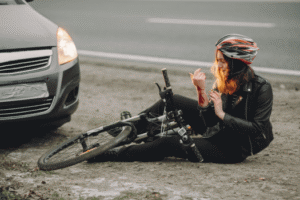


One second you’re riding past a row of parked cars. The next, a door swings open and there’s nowhere to go. A dooring accident in Las Vegas can throw a cyclist into the pavement or into traffic, and it happens so fast most riders never see it coming.
If this just happened to you, here’s the key point: Nevada law puts the duty on the person who opened the door, not on the rider who hit it. Below we cover why these crashes happen, where they’re most common around Las Vegas, and who pays when a car door ends your ride.
What Is a Dooring Accident?
A dooring accident happens when someone in a vehicle opens a door into the path of an oncoming cyclist, motorcyclist, e-bike or scooter rider, or pedestrian. Most involve a parked car, but they also happen in traffic when a passenger hops out at a red light or a rideshare stop.
There are two kinds of dooring crash:
- Direct impact: you hit the door itself. Riders are often thrown over the handlebars or slammed into the door’s edge.
- Swerve-into-traffic: you jerk left to miss the door and get hit by a passing car. You never touched the door, but opening it still caused the crash.
Both count. A doored cyclist in Nevada doesn’t need to have hit the door to have a claim against the person who opened it.
Why Dooring Accidents Happen
Nearly every dooring crash comes down to one mistake: someone opened a door without looking. The situations that set it up are predictable, though.
Drivers Who Don’t Check Mirrors
A driver parks, grabs their phone and keys, and pushes the door open out of habit. Side mirrors show cyclists coming from behind, but only if the driver looks. Tinted windows, tall SUVs and bike racks make the blind spot worse.
Passengers Jumping Out
Passengers cause a big share of dooring crashes, especially rideshare and taxi passengers. They’re focused on their destination, not the bike lane, and they often exit on the traffic side because that’s closest to the door they’re sitting beside.
Parking Right Next to a Bike Lane
Where curbside parking runs beside a bike lane, the lane sits inside what cyclists call the door zone, roughly the width of an open car door. A rider using the lane exactly as intended can be three feet from a door that’s about to open.
Delivery, Valet, and Quick-Stop Vehicles
Delivery vans, food-delivery drivers, and anyone “just running in for a second” often double-park or stop in bike lanes. Nevada law bars leaving a traffic-side door open longer than needed to load or unload, but a door propped open during a delivery is a common hazard.
Low Light and Desert Glare
At dusk, at night, or with low sun glaring off windshields, drivers are less likely to spot an approaching bike, and riders are less likely to see someone moving inside a parked car.
Where Dooring Happens Most in Las Vegas
Dooring crashes aren’t spread evenly across the valley. They cluster where on-street parking, bike traffic, and people getting in and out of cars overlap:
- Downtown Las Vegas, Fremont East, and the Arts District: dense curbside parking, bars and restaurants, and steady rideshare drop-offs at night.
- Side streets and resort entrances off the Strip: rideshare and taxi drivers pull over wherever they can, and passengers pop doors open into whatever’s passing.
- Neighborhoods around UNLV: students bike to class and park on the street.
- Older central neighborhoods: streets lined with parked cars and few driveways mean a long run of doors on one side of the rider.
- Retail strips with curbside parking: short-stop shoppers are the most likely to open a door without looking.
Dooring is only one piece of a bigger picture. Our breakdown of Las Vegas crash hotspots shows where collisions of all types concentrate. Gaps in the bike network, like lanes that end suddenly or run right beside parked cars, are a big part of why Las Vegas ranks among the least bike-friendly cities.
Who Is at Fault If You Hit a Car Door in Nevada?
In most dooring accidents, the person who opened the door is at fault. Nevada law (NRS 484B.153) says a person may not open a vehicle door on the traffic side “in such a manner as to interfere with moving vehicular traffic.” The same law bars leaving a traffic-side door open longer than needed to load or unload.
Note the word “person.” The duty isn’t limited to drivers. Anyone in the vehicle who opens the door owes it.
When the Driver Is Liable
If the driver opened the door, the claim usually runs against the driver and their auto liability insurance. Breaking a traffic safety law is strong evidence of negligence, and that makes dooring claims more clear-cut than many bike cases.
When a Passenger Is Liable
Passengers can be held responsible for their own carelessness. In practice, the vehicle’s auto policy often covers the claim, since getting out of a car is generally treated as part of “using” the vehicle. The exact policy language matters, so the paper trail here needs a close look.
Rideshare and Taxi Doorings
When an Uber or Lyft passenger doors you, which insurance pays can depend on whether a trip was active at that moment. Commercial taxis carry their own coverage. These cases often involve several insurers pointing at each other, which is why rideshare and taxi crash claims need early, careful handling.
The “You Were Too Close” Defense
Expect the insurer to argue you were riding too close to parked cars. Nevada law has an answer. Cyclists generally ride as near the right side as practicable, but the statute (NRS 484B.777) makes an exception when that “would not be safe.” Riding outside the door zone is legal. And if the car that doored you was parked in a bike lane, that’s another violation on the driver’s side, since Nevada bars stopping, standing, or parking in a bike lane except in narrow situations.
Insurers may still try to blame part of it on you. Nevada uses modified comparative fault: you can recover as long as you’re not more at fault than the other side, and any share of blame placed on you lowers the amount. A rider who did nothing wrong is in the strongest position of all. That’s why pushing back early matters.
If you’re up against that argument right now, a Las Vegas bicycle accident lawyer can take the fight over fault off your plate. For the full set of rules drivers and riders owe each other, see our guide to Nevada’s bicycle laws.
How Insurance Companies Decide Fault in a Dooring Crash
Adjusters don’t take anyone’s word for it. They build a file, and in a dooring case they usually look at:
- The police report: who opened the door, where the car was parked, and whether anyone was cited.
- Statements: from you, the driver, passengers, and witnesses. Early statements get picked apart for anything that shifts blame.
- The door itself: damage to the edge or hinge, and how far the door was open.
- Video: business cameras, doorbell cameras, dashcams, and footage from nearby Downtown and Strip properties. Much of it gets overwritten within days.
- Your bike and gear: the damage pattern shows speed and point of impact.
- Your injuries: whether they match the crash as you describe it.
Attorney Glen Howard spent years as an insurance defense attorney, evaluating claims like these for the other side. He knows the playbook: frame the cyclist as reckless, lean on the idea that bikes “don’t belong” on busy streets, and point to studies on how often cyclists break traffic laws as if that proves anything about your crash. It doesn’t. Your case turns on what happened at that door.
How to Protect Yourself From Dooring
Prevention goes both ways. A few habits sharply cut the risk.
For riders:
- Ride outside the door zone when it’s safe. Nevada law allows it.
- Watch for occupied parked cars: brake lights, heads through the rear window, a car that just pulled in.
- Use a front light and a rear light or reflector at night, and bright clothing in the daytime.
- Slow down along long rows of parked cars, especially near bars, restaurants, and rideshare zones.
For drivers and passengers:
- Use the Dutch Reach: open the door with your far hand. It swivels your body so you naturally look back for bikes.
- Check your mirror and over your shoulder before every exit.
- Exit on the curb side whenever you can, especially in a rideshare.
Doored in Las Vegas? What to Do Next
If you were just doored, what you do in the next few days can protect both your health and your claim:
- Get medical care right away. Shoulder, wrist, and head injuries don’t always show up at the scene.
- Call the police so there’s an official report of who opened the door.
- Find out who opened it: driver or passenger. If it was a rideshare, note the company and screenshot anything that shows a trip was underway.
- Photograph everything: the door, the car’s position against any bike lane, your bike, your injuries, and nearby cameras.
- Get witness names and numbers before people leave.
- Don’t give the insurer a recorded statement until you’ve gotten advice.
For a full checklist, read our guide on what to do when you’re hit by a car on your bike.

Frequently Asked Questions
Who is at fault if you hit a car door?
In Nevada, usually the person who opened it. NRS 484B.153 bars opening a vehicle door on the traffic side in a way that interferes with moving traffic, and that duty applies to drivers and passengers alike. The insurer may argue you were riding too close or too fast, and if they prove you share some fault, your recovery can be reduced. But in most dooring crashes, the evidence points squarely at the person who swung the door open without looking. Every case is different, so it helps to have an attorney look at the specific facts and the evidence before you speak with the insurance company.
Who pays if a bicycle hits your car?
If you’re the cyclist and you hit an opened door, the person who opened it is typically responsible, and their auto insurance usually pays your medical bills, lost wages, bike damage, and pain and suffering. If a passenger opened the door, the vehicle’s policy often still applies. If the car was a rideshare, a commercial policy may come into play depending on trip status. The one who pays in a dooring case is usually not the rider. It’s the insurance behind the car whose door caused the crash.
Can a passenger be sued for opening a door on a cyclist?
Yes. Nevada’s dooring law applies to “a person,” not just the driver, so a passenger who carelessly opens a door into traffic can be held responsible. In practice, the claim usually goes through the vehicle’s auto insurance rather than the passenger’s own pocket, because exiting a car is generally treated as using the vehicle. When a rideshare is involved, the rideshare company’s coverage may apply instead. The facts decide which policy responds, which is why pinning down who opened the door, and whether a trip was active, matters from day one.
Does my own car insurance cover me if I’m doored on my bike?
It might. Many Nevada auto policies include uninsured/underinsured motorist (UM/UIM) coverage and medical payments (MedPay) coverage that can protect you even when you’re on a bike instead of in your car. That becomes important if the at-fault driver has no insurance or only the state minimum. Whether your policy covers you as a cyclist depends on its exact wording, so pull your declarations page and have it reviewed. It’s often money riders never realize they paid for.
How long do I have to file a claim in Nevada?
Nevada generally gives you two years from the date of the injury to file a personal injury lawsuit. That sounds like plenty of time, but the evidence in a dooring case disappears fast. Surveillance and doorbell footage is often recorded over within days, and witnesses scatter. Some claims, like those involving a government vehicle, come with notice requirements of their own. The safest move is to talk with an attorney early, even if you aren’t sure yet whether you want to file.

The Door Opened on You. The Blame Shouldn’t.
You did what cyclists are supposed to do: you rode where you belonged. Now an insurance company may be deciding whether to blame you for someone else’s carelessness.
Howard Injury Law is part of our wider practice as a motor vehicle accident lawyer in Las Vegas, and dooring cases get the same attention as any other crash. Glen Howard is a Nevada attorney who used to defend insurance companies. He knows how they build a “cyclist was at fault” story, and how to take it apart.
If you’re wondering whether you have a case, find out for free. Talk with a bike crash attorney who’s seen the other side about what happened, or send us your details for a free case review. There’s no fee unless we win, and you don’t have to figure this out alone.