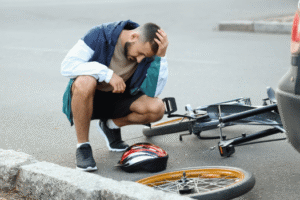


A driver in a car has a steel frame, airbags and a seatbelt between them and the crash. A cyclist has a helmet, if they’re wearing one, and whatever clothes they put on that morning. That’s why the most common bicycle accident injuries are rarely minor, even in a crash that looked “slow” to everyone watching.
If you were hit while riding in Las Vegas, you may be sore, scraped up, and wondering whether what you’re feeling is serious. This guide covers the injuries cyclists suffer most often, the ones that take days to show up, and how insurance companies try to shrink them. It’s written so you can protect your health first and your claim second.
Why Bicycle Accident Injuries Are So Severe
Most bike crashes involve two impacts, not one. The first is the vehicle hitting you or your bike. The second comes a split second later, when your body hits the hood, the windshield, the curb or the pavement. That second impact often causes the worst damage.
Las Vegas roads add to the risk. Wide arterials like Flamingo, Tropicana and Charleston carry traffic at speeds that turn a clipped handlebar into a hard fall. In summer, riders go down on pavement that has baked all day, which makes skin injuries worse. And a driver who “didn’t see you” rarely brakes before impact.
Cyclists also instinctively throw their hands out to break a fall. That reflex protects the head but explains why so many riders end up with wrist, hand, elbow and shoulder injuries.
The Most Common Bicycle Accident Injuries
Every crash is different, but the same injury patterns come up again and again in cyclist claims. Here’s what they are, and why each one matters for your case.
Head Injuries, Concussions and TBI
Head injuries are among the most serious cyclist injuries. According to the CDC, U.S. emergency departments treated an estimated 597,000 bicycle-related traumatic brain injuries between 2009 and 2018. A concussion can happen even when your helmet stays intact and you never lose consciousness.
Brain injuries matter for your claim because the symptoms are easy to dismiss: headaches, fogginess, irritability, trouble sleeping, light sensitivity. Insurers often treat them as unrelated to the crash unless a doctor documents them early.
Broken Bones
Fractures are one of the most frequent injuries in car-versus-bike crashes. The collarbone, wrist, hand, elbow, hip, ribs and facial bones take the brunt of a fall. Some breaks heal in weeks. Others need surgery, hardware, and months of physical therapy before you’re back on the bike, or back at work.
Road Rash and Skin Injuries
Road rash is what happens when skin slides across asphalt. Adjusters love to call it “just a scrape.” Deep road rash can be closer to a burn: it can get infected, may need wound care or skin grafts, and can leave permanent scarring. Photos taken in the first few days are some of the most persuasive evidence in a bike case.
Soft Tissue Injuries
Sprains, strains, torn ligaments, and neck and back injuries from the sudden jolt of impact are common and often underestimated. They don’t show up on an X-ray, which is exactly why insurance companies push back on them. Consistent treatment and clear medical records make the difference.
Dental and Facial Injuries
A rider thrown forward over the handlebars can land face-first. Broken teeth, jaw fractures and facial cuts are painful and expensive to repair. They can also affect how you eat, speak and feel about your appearance long after the crash.
Spinal Cord and Internal Injuries
The most severe cyclist injuries involve the spine, internal organs or internal bleeding. These can change a person’s life permanently, with long-term care, lost earning ability and major lifestyle limits. Cases with injuries at this level often call for the kind of full lifetime damages analysis a catastrophic injury lawyer in Las Vegas handles.
Bike Accident Injuries That Don’t Show Up Right Away
Adrenaline masks pain. Many cyclists get up after a crash, check their bike before their body, and tell the officer “I’m okay.” Days later, the headache won’t go away, the shoulder won’t lift, or the back pain wakes them at night.
Injuries that commonly appear late include:
- Concussion and TBI symptoms: confusion, memory gaps, mood changes, nausea
- Internal bleeding: abdominal pain, dizziness, deep bruising
- Soft tissue damage: stiffness and pain that build over 24 to 72 hours
- Hairline fractures: pain that seemed like a bruise at first
Get checked the same day if you can, even if you feel fine. Our guide on when to seek medical care after a vehicle accident explains what to watch for. Then keep going to your appointments: insurers routinely argue that a gap in treatment proves you weren’t really hurt.
How Insurers Downplay Cyclist Injuries
Glen Howard spent years as an insurance defense attorney before he started representing injured people. He knows the arguments adjusters use to shrink a cyclist’s claim, because he used to hear them from the inside:
- “It’s just road rash.” Skin injuries get treated as cosmetic, even when they cause scarring or infection.
- “You weren’t wearing a helmet.” Nevada doesn’t require adult cyclists to wear a helmet, and skipping one didn’t cause a driver to turn across your path. Insurers may still argue a helmet would have lessened a head injury. That argument is contested and depends on the medical evidence, so don’t accept it at face value.
- “You chose to ride in traffic.” Cyclists have a legal right to the road in Nevada. Riding isn’t negligence.
- “Your symptoms came from something else.” Delayed symptoms get blamed on old injuries or unrelated activities.
Fault questions feed directly into injury value. Nevada follows modified comparative negligence, so a claim of shared fault can cut your recovery. Learn who’s at fault in a car-vs-bicycle crash before you talk to the other driver’s insurer. And if the adjuster is already pushing one of these lines, that’s the moment to talk with a Las Vegas bicycle accident attorney.
What Is the Most Common Bicycle Accident, and When Do Crashes Happen?
Among crashes involving a car, the classic scenario is a driver who fails to yield: turning left across a cyclist, making a right turn into them, or pulling out of a driveway without looking. We break down the full list in the most common causes of bicycle accidents in Las Vegas.
Timing matters too. National crash data shows the evening hours, roughly 6 to 9 p.m., are the most dangerous window for cyclists, and more than half of cyclist deaths happen after dark. See when and where bike crashes happen most for the full picture and what it means in Las Vegas.
Safety Tips That Reduce Bicycle Injury Severity
You can’t control a distracted driver, but some habits make injuries less severe when a crash happens:
- Wear a helmet that fits snugly and replace it after any impact.
- Wear gloves. They protect your palms when you reach out to break a fall.
- Run lights front and rear, day and night. Being seen earlier gives drivers more time to brake.
- Cover up when you can. Long sleeves and durable fabric reduce road rash.
- Ride predictably and take the lane when it’s unsafe to hug the curb.
For more on lights, gear, and riding choices matched to where Las Vegas cyclists get hit, read our cyclist visibility and safety tips.

Frequently Asked Questions
What is the most common injury in a bicycle accident?
Road rash, broken bones and head injuries are among the most common injuries in bicycle accidents. Road rash happens in nearly any fall onto pavement. Fractures, especially to the collarbone, wrist and arm, come from the impact and from riders bracing with their hands. Head injuries range from mild concussions to traumatic brain injuries and are among the most serious. Many cyclists have more than one of these at once, which is why a full medical evaluation matters even when one injury seems obvious and the rest seem minor.
What part of the body is most often injured in a bike crash?
The arms, hands and shoulders are injured very often, because cyclists instinctively reach out to catch themselves. The head and face come next, especially in crashes where the rider is thrown forward over the handlebars. Legs, hips and knees take impacts from the vehicle itself, particularly in side-impact and right-hook crashes. The pattern of your injuries can also help show how the crash happened, which can matter when an insurer disputes fault.
Can I still recover compensation if I wasn’t wearing a helmet in Nevada?
In many cases, yes. Nevada does not require adult cyclists to wear a helmet, and not wearing one didn’t cause the driver’s mistake. The insurance company may still argue that a helmet would have reduced a head injury and try to use that to lower the value of your claim. Whether that argument holds up depends on the facts and the medical evidence. Injuries to your arms, legs, back or skin have nothing to do with a helmet at all. Every case is different, so talk to an attorney before accepting any reduction an adjuster proposes.
Should I see a doctor if I feel fine after a bike accident?
Yes. Adrenaline can hide pain for hours, and some of the most serious bicycle accident injuries, like concussions and internal bleeding, don’t cause obvious symptoms right away. A same-day exam protects your health and creates a medical record that ties your injuries to the crash. If you wait a week, the insurance company will argue something else caused your symptoms. If pain or new symptoms show up later, go back and get them documented.
How long do I have to file a bicycle injury claim in Nevada?
In most cases, Nevada gives you two years from the date of the injury to file a personal injury lawsuit (NRS 11.190(4)(e)). Claims for property damage, like your bike and gear, generally have a three-year deadline. Exceptions can shorten or extend these windows, including claims against a government entity and injuries to minors. Evidence such as video footage and witness memories fades much faster than the legal deadline, so it’s smart to act early rather than wait until the clock is close to running out.

Hurt on Your Bike? Find Out What Your Injury Is Really Worth
You didn’t get hurt because you rode a bike. You got hurt because someone else wasn’t paying attention. The insurance company already has a plan to make your injuries look smaller than they are, and Glen Howard knows that plan because he used to work on their side.
If you’re not sure whether you have a case, that’s exactly what a free consultation is for. Tell us what happened and what your body is telling you, and we’ll explain your options in plain language. Howard Injury Law works on contingency, so you pay no fee unless we win.
Call (702) 331-5722 or request your free case review. You can also learn more about how we handle bike accidents across Las Vegas and the full range of motor vehicle accident cases in Las Vegas we take on.