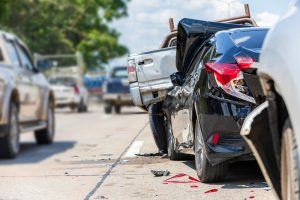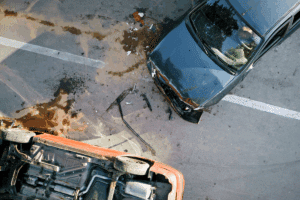


Las Vegas roads are genuinely more dangerous than those in most American cities. The reasons involve road design, driver behavior, tourism volume, and a city infrastructure that was never fully built to protect the people moving through it. If you’ve been in a crash here, understanding what makes these roads uniquely hazardous matters — both for making sense of what happened and for knowing what your legal options look like.
Most people who move to Las Vegas are surprised by how drivers are aggressive and fast, and how unforgiving the driving culture feels compared to almost anywhere else they’ve lived.
If you’ve been injured in an accident due to negligence, Howard Injury Law handles motor vehicle accident cases throughout Las Vegas and Nevada. Glen Howard’s background in insurance defense means he understands exactly how the other side evaluates these crashes — and how to push back effectively. Available 24/7. No fees unless we win.
The Road Design Itself Creates Risk
A Grid Built for Speed, Not Safety
Las Vegas was largely developed in the mid-twentieth century, when American city planners believed wider roads meant safer roads. That theory has since been disproven, but the infrastructure remains. The result is a square-mile grid of massive arterial roads — Flamingo, Sahara, Tropicana, Charleston, Decatur — each carrying four to six lanes of traffic with signals spaced roughly one mile apart.
Wide roads encourage speed. When a driver looks ahead and sees a quarter-mile of open lane, the instinct is to accelerate. By the time they reach the next major intersection, they’re traveling significantly faster than the posted limit. At that speed, a yellow light becomes a gamble, a pedestrian in the crosswalk becomes a crisis, and a car stopping suddenly ahead becomes a collision.
The mile-long signal spacing also creates a specific Las Vegas driving behavior: the sprint between lights. Drivers accelerate hard after a green, hoping to clear the next intersection before it turns. That behavior is so embedded in local driving culture that newcomers are often startled by how quickly the cars around them accelerate off the line.
Dangerous Intersections That Locals Know — and Visitors Don’t
Certain intersections in Las Vegas appear repeatedly in crash data. Sahara Avenue and Decatur Boulevard. Flamingo Road and Maryland Parkway. Boulder Highway through the eastern corridor. These aren’t random — they’re high-volume intersections where road geometry, traffic patterns, and driver behavior converge in predictably bad ways.
Boulder Highway deserves specific mention. It runs through a stretch of east Las Vegas with high pedestrian activity, older infrastructure, limited lighting in sections, and vehicles traveling at speeds inconsistent with the surrounding environment. Pedestrian fatalities on Boulder Highway have drawn repeated attention from city officials and traffic safety researchers. Locals know to be cautious there. Visitors and newcomers often don’t.
If your crash happened at a known high-risk intersection, that context is relevant to your case. Intersections with documented crash histories can support arguments about road conditions and contribute to establishing liability.
The Interstate Corridors Move Fast and Punish Mistakes
The I-15 through the resort corridor, US-95 cutting through northwest Las Vegas, and the 215 Beltway ringing the valley are not just commuter roads — they’re the arteries the entire region depends on. They carry enormous daily volumes and attract drivers who treat posted limits as minimums.
Merge zones on these corridors are particularly dangerous. Drivers entering from on-ramps often face vehicles traveling at 70 or 75 mph in the right lane with limited room to yield. Lane changes happen fast. Reaction windows are short. When something goes wrong at those speeds, the consequences are severe and the injuries are serious.
Driver Behavior in Las Vegas Is a Category of Its Own
Impaired Driving at Every Hour
In most cities, impaired driving is a late-night weekend problem. In Las Vegas, it is a 24-hour reality. Alcohol is served continuously in casinos, available in open containers in certain areas, and deeply woven into the city’s entertainment economy. That doesn’t make impaired driving acceptable — it makes it predictable.
A crash that happens at 9 a.m. on a Wednesday in Las Vegas can absolutely involve a driver who has been drinking since the night before. Our attorneys have seen it. Insurance adjusters who work this market have seen it too. If impairment was a factor in your crash, that element of the case needs to be preserved and documented from the earliest possible point.
Nevada DUI law is serious. But the criminal case against a drunk driver runs separately from your civil injury claim. You do not need to wait for a criminal conviction to pursue compensation.
Speeding Is Normalized Here
Las Vegas has a speeding problem that goes beyond individual bad actors. Speeding is normalized on the wide arterials because the roads feel like they were designed for it. Drivers who would observe a 35 mph limit on a narrow residential street routinely travel 50 or 55 on a six-lane boulevard with the same posted limit.
Aggressive driving compounds the issue. Lane changes without signaling, tailgating, running late reds — these behaviors are common enough on Las Vegas roads that many residents treat them as expected rather than exceptional. That normalization doesn’t reduce their legal significance. A driver who ran a red light or was traveling 20 mph over the limit when they hit you was negligent, regardless of how common that behavior may be locally.

Distracted Driving in a City Designed to Distract
Las Vegas is not just a city where people use their phones while driving. It is a city where the external environment itself competes for driver attention in ways that are genuinely unusual. The Sphere. The casino marquees along the Strip. The constant visual stimulation that makes Las Vegas recognizable is the same visual stimulation that pulls driver attention away from the road.
Rideshare activity intensifies this problem. Las Vegas has an extraordinarily high concentration of Uber and Lyft drivers navigating unfamiliar pickup and drop-off locations, managing the app, and making sudden stops in traffic lanes. If a rideshare driver caused your crash, the liability picture involves both the driver and potentially the platform — and that distinction matters for how your claim is structured.
Failure to Yield Is Increasingly Common
Failure to yield violations have increased significantly across the Las Vegas valley in recent years. At busy intersections and on high-speed arterials, drivers routinely fail to yield to pedestrians in crosswalks, merge without yielding to existing traffic, and run through protected turn signals. It is one of the more underreported causes of serious crashes because it often doesn’t generate obvious evidence the way a DUI or speeding citation does.
If failure to yield contributed to your crash, witness statements and intersection camera footage become critical. An attorney can move quickly to preserve that evidence before it disappears.
Tourists and Out-of-State Drivers Add Layers of Unpredictability
Las Vegas draws visitors from everywhere, and a significant number of them rent cars. Many arrive from cities with very different driving environments — smaller roads, lower speed limits, less aggressive traffic cultures. They navigate by GPS in real time, which means they brake suddenly, make late lane changes, and miss turns in ways that locals anticipate but can’t always avoid.
The Strip corridor is the most concentrated version of this problem. Las Vegas Boulevard between Mandalay Bay and the Stratosphere was not designed as a high-speed through road, but vehicles treat it that way. Tourists cross mid-block. Rideshare drivers stop without warning. Rental cars make U-turns at inconvenient moments. The combination creates an environment where even careful, experienced drivers face risks that don’t exist on most American roads.
If an out-of-state driver caused your crash, their insurance coverage and home state’s laws can complicate the claims process. Nevada law governs the accident, but dealing with an out-of-state insurer requires experience with how those companies operate. The motor vehicle accident attorneys at Howard Injury Law handle exactly these situations.
Pedestrians and Cyclists Face Disproportionate Risk
Las Vegas roads were built around vehicles. Pedestrian infrastructure has improved in some areas, but large sections of the valley still have crosswalks timed for traffic flow rather than walking speed, medians too narrow to safely wait in, and lighting that is insufficient in lower-income corridors away from the resort areas.
The result is a pedestrian fatality rate that consistently ranks among the highest in the United States. Cyclists face similar risks on roads where bike lanes are narrow, inconsistently present, and often poorly protected from vehicle traffic moving at arterial speeds.
If you were struck as a pedestrian or cyclist in Las Vegas, insurance companies will frequently attempt to assign partial fault to you — citing jaywalking, crossing outside a crosswalk, or not wearing visible clothing. An experienced Nevada attorney knows how to challenge that framing and protect your recovery under the state’s comparative negligence rules. Learn more about how comparative negligence works in Nevada and why partial fault doesn’t necessarily eliminate your claim.
What This Means for Your Case
Understanding what makes Las Vegas roads more dangerous is not just background information. It is directly relevant to how your injury case is built.
When Glen Howard reviews a crash, he’s asking: what were the road conditions, what was the driver doing, and what does the physical evidence show? The answers to those questions determine how liability is established and what your claim is actually worth. Insurance adjusters ask the same questions — but they’re looking for reasons to reduce your payout.
Knowing what your injury case may be worth before you speak with an adjuster is one of the most important steps you can take. And understanding how insurance adjusters approach your claim helps you avoid the most common mistakes that cost injured people money.

Frequently Asked Questions
What are the most dangerous roads in Las Vegas?
Boulder Highway, the I-15 resort corridor, US-95, Flamingo Road, and Sahara Avenue consistently appear in crash data as high-incident corridors. Specific intersections — including Sahara and Decatur, and Flamingo and Maryland Parkway — have documented histories of serious collisions. If your crash happened on one of these roads, the location itself may be relevant to how your case is built.
Does road design affect who is liable for my crash?
Road design can be a contributing factor in certain cases, particularly where poor signage, inadequate lighting, or dangerous intersection geometry played a role. In most vehicle-on-vehicle crashes, however, liability centers on driver conduct. An attorney can assess whether road conditions contributed to what happened and whether any government entity shares responsibility.
What should I do immediately after a crash on a Las Vegas road?
Call 911 and get a police report filed — even for crashes that seem minor at first. Get medical attention as soon as possible, since many injuries from motor vehicle accidents present symptoms days after the crash. Photograph the scene, the vehicles, the road markings, and any visible injuries. Do not give a recorded statement to any insurance company before speaking with an attorney. Review what to expect when you first call a personal injury lawyer so you know what that conversation looks like before you make it.
How long do I have to file a claim after a crash in Nevada?
Nevada’s statute of limitations for personal injury claims is generally two years from the date of the accident. That deadline is firm. Missing it means losing your right to recover, regardless of how clear the liability is. Two years feels long, but building a strong case takes time — and evidence fades. The Nevada statute of limitations for personal injury page explains how the timeline works and when rare exceptions may apply.
The Road Was Dangerous — That’s Not Your Fault
What makes Las Vegas roads more dangerous is a combination of factors no individual driver fully controls: the road design, the traffic culture, the constant flow of unfamiliar visitors, and a city that runs 24 hours a day on an economy built around distraction and alcohol. When you get hurt because of conditions like these, the responsibility belongs to the people and entities whose conduct caused the crash — not to you.
Howard Injury Law represents injured people throughout Las Vegas and Nevada. We work on contingency, which means you pay nothing unless we recover for you. Glen Howard and our team are available around the clock. If you’re wondering whether what happened to you warrants a claim, request your free case review and let’s talk through it.