


Someone hit you and drove away. Now you’re dealing with a damaged car, maybe an injury, and nobody to send the bill to. Here’s what to do after a hit and run in Las Vegas so the other driver’s choice to flee doesn’t also cost you your recovery.
A hit and run is rarely a dead end in Nevada. Your own uninsured motorist (UM) coverage can often pay for your injuries even if the driver is never found. Your collision coverage usually handles the car. What you do in the next few days decides how smoothly those claims go. (If you were on foot, start with our guide for pedestrians hit by a fleeing driver.)
What to Do After a Hit and Run, Right at the Scene
Get Safe, and Don’t Chase the Driver
If your car can move, get it out of traffic. On I-15, US-95 or the 215 Beltway, pull onto the shoulder with your hazards on. If it can’t move, stay buckled in and wait for help.
Don’t follow the driver who fled. A chase can cause a second crash, put you in the middle of a confrontation, and make an adjuster question your own driving. Leaving the scene is already a crime under Nevada’s hit-and-run laws. Let police handle the driver while you protect yourself and your claim.
Call 911 and Stay Put
Call from the scene and tell the dispatcher that the other driver left. Stay until an officer arrives or dispatch tells you how to proceed. Before you leave, get the report or event number.
That report does more than document a crime. Nevada’s UM rules for unknown drivers depend on the crash being reported to law enforcement on time. Our guide on how to report a hit and run in Las Vegas explains which agency to contact, what to tell them, and how to get a copy of the report.
Photograph Proof That the Car Hit Yours
A UM claim involving an unknown driver generally requires physical contact between the vehicles. Photograph the damage close up and from a distance, including paint transfer and any pieces of the other car on the road. Photograph visible injuries too.
Then note what you remember about the other car (color, make, any part of the plate) while it’s fresh, and write down the names and phone numbers of anyone who stopped. A witness who saw the impact can back up your account if your insurer questions it later.
See a Doctor Within a Day or Two
Adrenaline hides pain. Whiplash, concussions and back injuries often show up a day or two later. Go to urgent care, an ER or your own doctor soon after the crash, and tell them you were in a crash so it goes in your records.
Getting seen quickly protects your health first. It also protects your claim: insurers look for gaps between the crash and your first treatment and use them to argue that something else caused your injuries. Then follow through with the care your doctor recommends.
What to Tell Your Insurance Company After a Hit and Run
Your policy almost certainly requires you to report the crash promptly, so call. How you handle that first call matters, because after a hit and run your own insurer is the one deciding what your injury claim is worth.
Give them the facts:
- Date, time and location
- That the other driver hit you and fled
- Your police report number
- That you’re getting medical care
Hold off on:
- A recorded statement about how the crash happened or how you’re feeling
- Guessing about injuries (“I think I’m fine”)
- Guessing about speed, distance or who had the right of way
- Signing medical releases or settlement paperwork
If the adjuster pushes for a recorded statement, you can say: “I’d like to talk with an attorney first, and I’ll follow up.” Your policy may require you to cooperate, so don’t refuse. Just pause until you have advice.
Getting Your Car Fixed and Your Bills Paid
Different coverages pay for different losses after a hit and run. What you can recover depends on what’s on your declarations page:
- Your injuries: uninsured motorist (UM) coverage, if you carry it. Nevada insurers must offer UM, but drivers can decline it. If you don’t have it, read what happens if you don’t have UM coverage.
- Early medical bills: medical payments coverage (MedPay) if you have it, and your health insurance.
- Your car: collision coverage, minus your deductible.
- A rental while your car is in the shop: rental reimbursement, if you added it to your policy.
If police had your car towed, move quickly to get it out of the tow yard, because storage fees add up every day. Before any repairs start, make sure the damage has been photographed and inspected, since the repaired car can no longer prove contact.
For a closer look at how the injury side works, see how UM coverage pays after a hit-and-run.
Start a Claim File Today
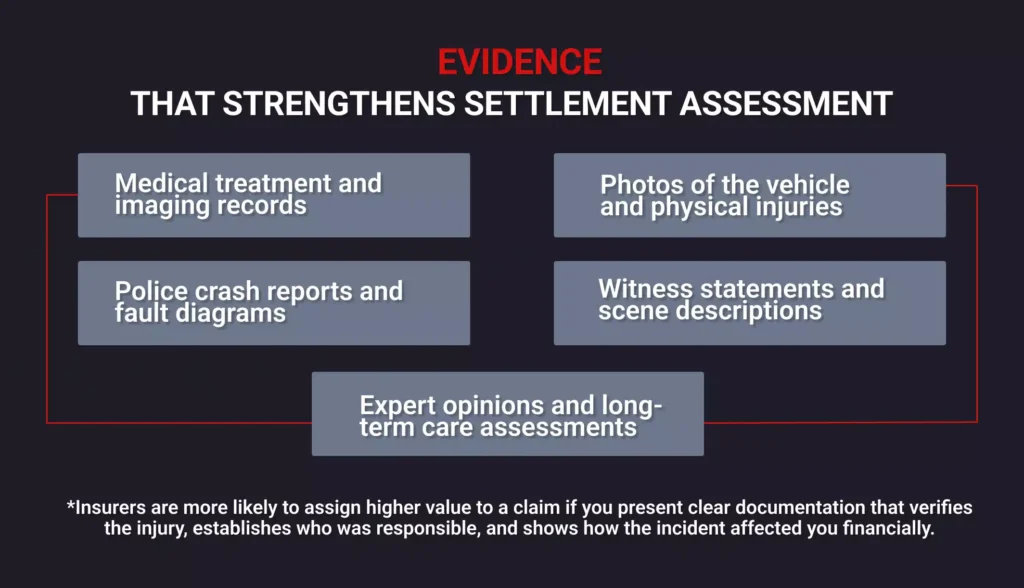
Hit-and-run claims are won on documentation. Get a folder or a note on your phone and keep adding to it:
- Police report number and the responding officer’s name
- Scene and damage photos, plus photos of your injuries as they heal
- Every medical visit, bill and receipt, including prescriptions and co-pays
- Mileage to and from appointments
- Missed work days and lost pay
- A short daily note on your pain, sleep and what you couldn’t do
- Every call and letter with an insurer: date, name and what was said
This file becomes the backbone of your claim value. It also makes it much harder for an adjuster to downplay what you’ve been through.
Why Your Own Insurer Isn’t Automatically on Your Side
With a normal crash, you file against the at-fault driver’s insurance. After a hit and run, your UM claim runs through your own policy, so your insurer is both your company and the party paying you. Its adjusters may question whether contact really happened, whether you reported in time, or whether you were partly at fault. Under Nevada’s comparative negligence rule, any share of fault assigned to you reduces your recovery.
Glen Howard spent years as an insurance defense attorney before he started representing injured people. He knows how adjusters evaluate and discount UM claims because he used to work on that side. That experience goes to work on your Las Vegas hit-and-run claim from the first call.

Frequently Asked Questions
Should I chase a hit-and-run driver?
No. Following a fleeing driver puts you, your passengers and everyone else on the road at risk, and it can lead to a second crash or a dangerous confrontation with someone who has already shown they’ll break the law to get away. A chase can also give an insurer a reason to question your own driving. The better move is to stay at the scene, call 911, and give police everything you remember about the car and the direction it went. Your photos, witnesses and police report do far more for your claim than catching the driver yourself on Tropicana or Flamingo.
Will my insurance rates go up after a hit and run that wasn’t my fault?
Nevada law protects you here. Under NRS 687B.385, an insurer can’t cancel, refuse to renew, or raise your renewal premium because of a claim for which you were not at fault. It also can’t penalize you just for calling to ask whether you have coverage. A hit and run where another driver struck you and fled usually fits that description. The catch is that fault is sometimes disputed, especially if the insurer argues you contributed to the crash. That’s one more reason to document the scene carefully and keep your statements factual. If your premium goes up after a not-at-fault claim, ask your insurer in writing for the reason.
Do I have to pay my deductible after a hit and run?
Usually, yes, for damage to your car. If your collision coverage pays for the repairs, your deductible typically applies, because there’s no identified driver’s insurer to recover it from. If police later identify the driver and that driver has insurance, your insurer may pursue them and you may get your deductible back. Injury claims under UM work differently, and some policies handle deductibles and limits in their own way. Check your declarations page, or have an attorney review your policy, so you know exactly what you’ll owe before repairs begin.
Can I get a rental car after a hit and run?
Only if your policy includes rental reimbursement coverage, or if the at-fault driver is later identified and their insurer accepts responsibility. Rental reimbursement is an optional add-on in Nevada, so many drivers don’t have it. Check your declarations page or ask your insurer when you report the crash. If you do have it, it usually has a daily limit and a maximum number of days, so keep your rental receipts and push to get repairs scheduled quickly. If the driver is found later, rental costs you paid out of pocket can become part of the property damage claim against them.

Talk to a Las Vegas Hit-and-Run Attorney Before Your Insurer Calls Back
If the driver is gone and you’re wondering whether you even have a case, that’s exactly what a free case review is for. We’ll look at your coverage, your report and your photos, and tell you what your claim may be worth before you give your insurer a recorded statement.
Glen Howard is a Nevada-licensed hit-and-run accident lawyer in Las Vegas and a former insurance defense attorney. He handles these cases on contingency: you pay no fee unless we win. As a motor vehicle accident attorney, he has handled every kind of Las Vegas crash, from Strip rideshare collisions to freeway pileups.
Nevada generally gives you two years to file an injury lawsuit, but your policy’s notice requirements are much shorter, and evidence disappears quickly. If you’re behind on reporting, read about the reporting deadline that protects your UM claim. Then call (702) 331-5722 or request your free case review, and we’ll start protecting your claim today.
This article provides general information about Nevada law and is not legal advice. Every case is different; talk to an attorney about your specific situation.