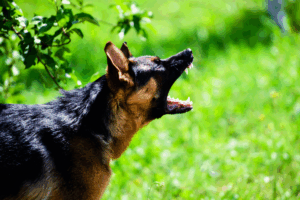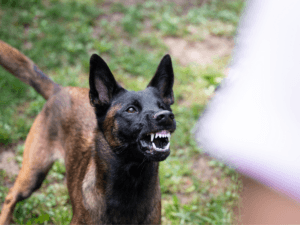


The dog was running loose, the owner broke the law, and you got hurt. It feels like the case should be over before it starts. A leash law violation is some of the strongest proof you can have in a Las Vegas dog bite claim, but it is not an automatic win. It answers the question of whether the owner was careless. Several other questions are still open, and the owner’s insurance company knows exactly which ones to fight over.
Here’s what a leash violation proves under Nevada law, what it leaves open, and what to do when the dog wasn’t technically off leash at all.
A Leash Law Violation Is Powerful Proof, Not an Automatic Win
Nevada has no dog bite statute. That means you can’t win just because a dog bit you. You have to show the owner (or whoever was handling the dog) was negligent, and a leash law violation is one of the cleanest ways to do that.
In Nevada, breaking a safety law can be used as negligence per se, meaning the violation itself can establish that the owner was careless. That can take the hardest fight in many dog bite cases off the table. But you still have to prove the loose dog caused your injury, show what the injury cost you, and get past the insurer’s arguments about your own conduct. An experienced Las Vegas dog bite attorney builds the case on all of those pieces, not the leash alone.
What Las Vegas Leash Laws Generally Require
Leash rules in Southern Nevada come from local codes, not one statewide law. The City of Las Vegas, unincorporated Clark County (which includes the Strip, Spring Valley, Paradise, and Enterprise), Henderson, and North Las Vegas each have their own animal control rules. The details differ, but the core idea is the same: once a dog leaves its owner’s property, it generally has to be on a leash or otherwise restrained.
That rule typically covers:
- Public sidewalks, streets, and parks
- Trails and walking paths
- Apartment complex and HOA common areas, like shared walkways, courtyards, and pool decks
The usual exceptions are a dog inside its owner’s home, car, or adequately fenced yard, and a dog inside a fenced, designated off-leash area of a dog park. Which code applies depends on exactly where the attack happened, so the first thing a lawyer checks is the location.
How a Leash Law Violation Proves Fault in Nevada
Nevada courts allow a violated safety ordinance, not just a state statute, to serve as negligence per se. To use a leash law that way, your claim generally has to line up with what the law was written to do.
The Three Things a Court Looks At
- The owner broke the rule. The dog was off leash or at large somewhere the law required restraint.
- You’re someone the rule protects. Leash laws exist to protect people in public and shared spaces, such as pedestrians, joggers, neighbors, kids, and other dog walkers.
- Your injury is the kind the rule is meant to prevent. Bites, knockdowns, and falls caused by a loose dog are the core harms leash laws target.
A judge decides the second and third points as questions of law. When all three line up, you may not need to prove separately that the owner acted unreasonably. The violation can carry that weight. For the full list of what a Nevada claim requires, see what you have to prove under Nevada dog bite law.
The “Excuse” Argument
Expect the owner to say something like “he slipped his collar” or “the leash snapped.” Under Nevada law, a person who broke a safety rule can sometimes argue the violation was excused because they acted as a reasonably careful person would. That argument is weak when the collar was loose, the leash was frayed, or the dog had gotten out before. That’s why the details of how the dog got loose matter so much.
What a Leash Violation Doesn’t Prove
This is where good claims get undervalued. A leash violation settles the question of carelessness. It doesn’t settle these four.
That the Loose Dog Caused Your Injury
You still have to connect the off-leash dog to your injury. That’s usually simple with a bite. It takes more work when a loose dog charged you, knocked you down, or chased you on a bike and you fell. Those claims are real, but your medical records and witness accounts need to tie the injury to the dog.
What Your Injuries Are Worth
The violation says nothing about value. Medical bills, scar treatment, lost work, and the fear that follows a serious bite all have to be documented. Here’s what determines what a personal injury case is worth.
Whether You Share Any Fault
Nevada uses modified comparative negligence. If the insurer can pin part of the blame on you, your recovery drops by your percentage. You recover nothing if your share is greater than the combined share of those you’re claiming against. If you did nothing wrong and more than one party is responsible, such as an owner and a dog walker, you can generally collect the full award from any one of them. More on how Nevada’s comparative negligence rule works.
Whose Insurance Pays
A strong liability case doesn’t pay out on its own. Most dog bite claims are paid by the owner’s homeowner’s or renter’s insurance, not the owner personally. If someone else had control of the dog, their coverage may be in play too. Some policies exclude certain dogs or have low limits, which changes the strategy. Sorting out who is liable for an animal attack and which policy responds is part of building the claim.
When the Leash Law Doesn’t Apply
Many bites don’t involve a leash violation at all. That doesn’t end your case. It just moves it to ordinary negligence.
- The dog was in its own yard. If you were lawfully on the property, such as a delivery driver, guest, or worker, the question becomes whether the owner took reasonable steps to control a dog they had reason to watch.
- The bite happened inside an off-leash dog park. Leash rules usually don’t apply inside a fenced off-leash area. The owner can still be responsible for bringing a dog they knew was aggressive, or for failing to step in.
- The dog was on a leash. A leash isn’t a free pass. A retractable leash let out 20 feet, a handler who can’t physically hold the dog, or an owner who lets a reactive dog lunge at passersby can all be negligent.
In each of these, proof usually comes from the owner’s choices that day or from warning signs the owner ignored. Here’s how that works when the dog never bit anyone before.
How to Prove the Dog Was Off Leash
A leash law violation is only as strong as your proof of it. The owner’s story often changes once an insurer is involved, so lock down the facts early.
- Report the bite to animal control. The report creates an official record of where it happened and how. If an officer cites the owner, that citation is strong evidence, though not the only way to prove a violation.
- Get the video before it’s gone. Doorbell cameras, HOA and apartment security systems, and business cameras often record over footage within days. Ask, then have a lawyer send a preservation letter.
- Write down witness names and numbers. A neighbor who saw the dog running loose is valuable, especially one who has seen it loose before.
- Write down what the owner said. Statements like “he got out again” or “I didn’t think I needed the leash” matter. Write them down the same day.
- Photograph the setup. Take photos of an open gate, a broken fence, a missing leash, or a loose collar left at the scene.
How the Owner’s Insurer Pushes Back on Leash Claims
Glen Howard spent years as an insurance defense attorney before representing injured people. He knows what adjusters do when the leash violation is obvious. They usually stop arguing about the leash and start working on you.
- “Your dog was off leash too.” If you were walking your own dog, they will look for any rule you broke to shift fault.
- “You reached for the dog.” Petting, grabbing a collar, or stepping in to separate dogs gets framed as provocation.
- “It’s just a few stitches.” An early, low offer arrives before scars have matured or you know whether you’ll need revision surgery.
- “Just a quick recorded statement.” That statement is used to lock in details that cut your claim down later.
You are not required to give the owner’s insurer a recorded statement. Nevada also gives you a limited window to file suit, generally two years from the attack, so waiting for the insurer to “come around” can cost you the claim.

Frequently Asked Questions
What is the leash law in Las Vegas?
Las Vegas doesn’t have a single leash law. The City of Las Vegas, unincorporated Clark County, Henderson, and North Las Vegas each have their own animal control codes. All of them generally require a dog to be leashed or otherwise restrained once it’s off the owner’s property, including on sidewalks, in parks, and in shared areas of apartment complexes and HOAs. Common exceptions include a dog inside its owner’s home or fenced yard, and a dog inside a fenced, designated off-leash dog park. Violations are typically handled as misdemeanors or citations by animal control. For an injury claim, the key question is which code covers the spot where the attack happened, so note the exact location and report the bite.
Can I sue if an off-leash dog bit me?
Usually, yes. In Nevada, an injured person can bring a claim when an owner’s negligence caused the injury, and a dog running loose in violation of a local leash law is strong evidence of negligence. In many cases the violation can be used as negligence per se, so the owner’s carelessness is established by the broken rule itself. You still have to show the dog caused your injury and prove your losses, and the insurer may argue you share some of the blame. In practice, most claims are paid by the owner’s homeowner’s or renter’s insurance, not the owner personally. Every case is different, so have an attorney review the facts before you talk to the insurer.
What if the dog was on a leash when it bit me?
You may still have a claim. A leash law only tells you the minimum the owner had to do. Being on a leash doesn’t mean the dog was under control. If the owner used a long retractable leash, couldn’t physically hold the dog, let it lunge at people walking by, or knew it was reactive and walked it into a crowded area anyway, that can be negligence. These cases rely on ordinary negligence instead of the leash violation, so evidence of what the owner did and knew carries more weight. Witness accounts, video, and the owner’s own statements at the scene are especially important.
Does the owner have to get a ticket for my claim to work?
No. A citation from animal control is helpful evidence, but your injury claim doesn’t depend on one. You can prove the dog was off leash with witnesses, video, photos, and the owner’s own statements, even if no officer ever issued a ticket. A citation also doesn’t automatically win your case. The owner can contest it, and it doesn’t answer questions about causation, damages, or your share of fault. What matters most is reporting the bite promptly so there is an official record, and preserving the other evidence before it disappears.

Off Leash and Still Getting a “No”? Have a Former Insurance Defense Attorney Look
If the owner broke the leash law and the insurer is still downplaying your injury or blaming you, that’s a familiar move, not a final answer. Attorney Glen Howard used to sit on the insurance company’s side of these claims. He knows how they build the “you share the blame” argument and how to take it apart.
Tell us where the attack happened, whether the dog was loose, and what the insurer has said so far. We’ll tell you whether you have a case and whose policy should pay. The review is free, and there’s no fee unless we win. Get your free case review with a Las Vegas dog bite lawyer who knows the other side’s playbook.