


If you’re hurt and wondering whether your situation is “serious enough” for legal help, here’s the short answer: personal injury lawyers handle a wide range of injuries — from whiplash and broken bones to traumatic brain injuries, spinal damage, and fatal accidents. So what types of injuries does a personal injury lawyer handle in Las Vegas? Nearly any injury caused by someone else’s negligence, whether it happened on I-15, inside a casino, or on the job.
Here’s what most people get wrong, though. Whether you have a case rarely comes down to how bad the injury looks. It comes down to how you were hurt — and who was responsible. That distinction is exactly what a Las Vegas personal injury lawyer sorts out for you.
The injuries a personal injury lawyer actually handles
Injuries fall on a spectrum, from ones that heal in weeks to ones that change your life permanently. A personal injury attorney handles all of them — because even a “minor” injury can mean real medical bills, missed paychecks, and lasting pain.
Traumatic brain injuries (TBIs)
A blow or violent jolt to the head can bruise the brain, and the effects — memory problems, headaches, mood changes, trouble concentrating — often outlast anything a scan shows. TBIs are among the most serious injuries we see, and they frequently qualify as catastrophic injuries that need long-term care.
Spinal cord and back injuries
Damage to the spine can range from herniated discs to partial or complete paralysis. These injuries are expensive to treat and can permanently affect your ability to work and move, which makes getting the full value of the claim critical.
Broken bones and orthopedic injuries
Fractures may sound straightforward, but they often require surgery, hardware, and months of physical therapy. Complicated breaks can leave you with permanent limitations long after the cast comes off.
Soft tissue injuries and whiplash
Sprains, strains, torn ligaments, and whiplash affect muscles and connective tissue. They’re painful and real — but because they rarely show up clearly on an X-ray, they’re also the injuries insurance companies fight hardest to dismiss. More on that below.
Burns, scarring, and disfigurement
Burns from fires, chemicals, or electricity can cause disfiguring, permanent damage — and the emotional toll of visible scarring is part of what the law lets you recover for.
Fatal injuries and wrongful death
When an injury is fatal, surviving family members can pursue a wrongful death claim for their losses. It’s never about the money alone; it’s about accountability and stability after an unthinkable loss.
It’s not the injury — it’s how you got hurt
A personal injury lawyer’s practice is organized less around the injury itself and more around the type of accident that caused it. If someone else’s carelessness put you in harm’s way, there’s likely a path to compensation. In Las Vegas and across Nevada, the most common sources of injury claims include:
- Car, truck, and motorcycle crashes — the largest category, covered under our motor vehicle accident practice, from a fender-bender on the 215 Beltway to a highway pileup on US-95.
- Slip, trip, and fall accidents — when a property owner lets a hazard go unfixed, that’s premises liability, whether it happens in a grocery store or on the casino floor.
- Medical malpractice — when a doctor, nurse, or hospital falls below the accepted standard of care and a patient is harmed. These medical malpractice cases are complex and require expert review.
- Dog bites and animal attacks — which can cause deep wounds, infection, and permanent scarring, handled under our dog and animal attack practice.
- Workplace and job-site injuries — some are covered by workers’ compensation, but when a third party contributed to the harm, a separate work injury claim may be possible too.
If your situation isn’t on this list, that doesn’t mean you don’t have a claim. It means you should ask.
Which injuries are hardest to prove — and why that matters
Some of the most painful injuries are the hardest to prove, because they don’t announce themselves on a scan. Soft tissue damage, mild traumatic brain injuries, and psychological harm like PTSD often leave no clear image an insurer can see — so adjusters treat them as if they aren’t real.
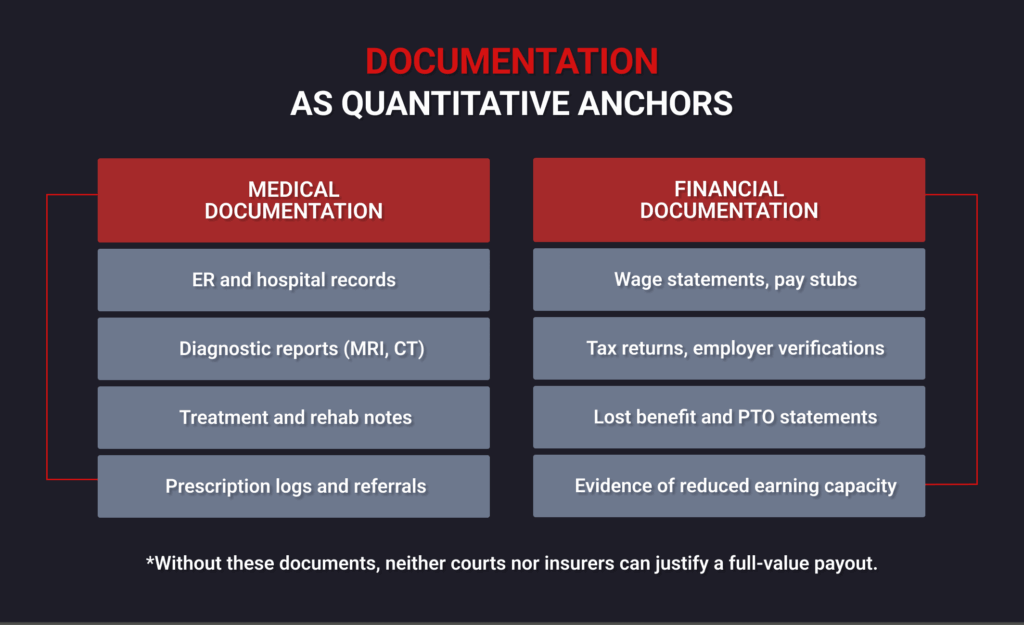
That’s where experience changes the outcome. Glen Howard built his career as an insurance-defense attorney before switching sides, so he knows exactly how carriers value these injuries and where they try to poke holes. Proving an “invisible” injury takes consistent medical records, treatment history, and often the right specialists — the kind of documentation that turns “we don’t see anything” into a claim the insurer has to take seriously.
“Do I qualify — and can I afford a lawyer?”
These are the two questions that stop most injured people from picking up the phone. Both have reassuring answers.
Qualifying isn’t about how dramatic your injury is. Under Nevada law, you generally have a claim when another party owed you a duty of care, breached it, and caused you real harm as a result. If you’re unsure where your situation lands, our guide to what qualifies as a personal injury case in Nevada breaks the elements down plainly.
Affording it is simpler than most people expect. Personal injury attorneys generally work on contingency — meaning no upfront cost and no fee unless they win. If you want the details, see how much a personal injury lawyer costs and exactly how a contingency fee works in Nevada. The short version: if money is already tight because of your injury, that’s a reason to call, not a reason to wait.
Frequently Asked Questions
Is it worth suing for a personal injury?
It depends on three things: how serious your injuries are, how clear the other side’s fault is, and whether the insurance company is treating you fairly. Many valid claims never become lawsuits at all — most settle. But the option to file matters, because it’s often the only leverage that moves an insurer off a lowball offer. If your medical bills, lost income, and pain add up to real losses someone else caused, it’s usually worth at least finding out what your claim is worth. Since most personal injury lawyers work on contingency, that first conversation costs you nothing.
What are the 7 types of personal injury cases?
Personal injury is a broad field, but most cases fall into these categories: motor vehicle accidents (cars, trucks, motorcycles); premises liability (slip and falls, unsafe properties); medical malpractice; product liability (defective or dangerous products); dog bites and animal attacks; workplace and third-party job injuries; and wrongful death. Each has its own rules, deadlines, and proof requirements under Nevada law. What ties them together is negligence — someone had a responsibility to keep you reasonably safe, failed to, and you were hurt because of it. A lawyer’s job is to match your situation to the right type of claim.
What should I not say to a personal injury lawyer?
This one gets flipped around a lot. With your own lawyer, you should say everything — including the parts you’re worried about. Prior injuries, gaps in treatment, an awkward detail from the accident: your attorney needs the full picture to protect you, and those conversations are confidential. The real caution is about what you say to insurance adjusters, where guessing, downplaying, or exaggerating your injuries can all be used against you. So don’t hold back with your attorney, and don’t give a recorded statement to the other side’s insurer before you’ve talked to one.
What if my injury didn’t show up right away?
Delayed symptoms are common and normal. Whiplash, concussions, and soft tissue injuries often surface hours or days after the adrenaline fades. The most important step is to see a doctor as soon as you notice something and keep going to your appointments — a consistent treatment record is what connects the injury to the accident. Delayed onset doesn’t ruin a claim, but long gaps in treatment give insurers an opening to argue you weren’t really hurt. Nevada also limits how long you have to file, so it’s worth getting advice early even if you’re still figuring out how badly you’re injured.

Talk to a Las Vegas injury lawyer who knows what your claim is worth
If you’ve read this far, something about your situation is nagging at you — and that instinct is usually worth listening to. You don’t need to have it all figured out before you call. You just need someone to tell you, honestly, whether you have a case and what it could be worth.
That’s what a free consultation with Howard Injury Law is for. Glen Howard spent years on the insurance-defense side before dedicating his practice to injury victims, so he knows how the other side builds its case — and how to take it apart. You can see our case results to get a sense of what that looks like in practice.
There’s no cost to find out where you stand, and no fee unless we win. Because Nevada limits how long you have to act, the smartest next step is the simplest one: request your free case review and let a Las Vegas personal injury attorney give you a straight answer.