


You were injured. You need a personal injury lawyer in Las Vegas. And you’re worried about the cost.
That’s one of the most common concerns we hear from people who call Howard Injury Law — and it’s completely understandable. Medical bills are already piling up. You may have missed work. The last thing you need is a large legal retainer sitting on top of everything else.
Here’s the good news: personal injury lawyers in Nevada don’t work that way. Almost every personal injury attorney — including Howard Injury Law — works on a contingency fee. That means you pay nothing upfront, and you only pay if your case wins.
This guide explains exactly how contingency fees work in Nevada, what they cover, what comes out of your settlement, and what questions to ask before signing any agreement.

What Is a Contingency Fee?
A contingency fee is a payment arrangement where your attorney’s fee is contingent — meaning dependent — on the outcome of your case. If your case doesn’t result in a settlement or verdict in your favor, you owe the attorney nothing.
If your case does resolve in your favor, the attorney collects a percentage of the total recovery. That percentage is agreed upon before any work begins and is written into your retainer agreement.
How Is the Percentage Calculated?
The exact percentage varies by firm and by how your case resolves — which is exactly why reviewing your retainer agreement before signing matters. Ask any attorney you consult with for the full fee schedule in writing.
Focus on the structure not the number Nevada personal injury attorneys typically structure their contingency fee on a sliding scale — the further your case goes before resolving, the higher the percentage. Cases that settle early cost less in attorney fees than cases that require filing a lawsuit or going to trial.
What Does “No Fee Unless We Win” Actually Mean?
It means exactly that. If Howard Injury Law takes your case and it doesn’t result in compensation for you, you don’t pay a legal fee. Your attorney absorbs the cost of working your case — the time, the research, the negotiations — without any payment from you.
This structure aligns your attorney’s financial interest with yours. The more your case recovers, the more your attorney earns. It’s an incentive structure designed to make sure your attorney is fighting for the highest possible outcome, not just the fastest one.
What Does a Contingency Fee Cover — and What Doesn’t It Cover?
This is where people get confused. The contingency fee covers your attorney’s time and legal work. It does not automatically cover all case costs.
Case Costs vs. Attorney Fees
Personal injury cases involve expenses beyond attorney time — filing fees, court costs, expert witness fees, medical record retrieval, accident reconstruction, and investigator fees. These are called case costs or litigation expenses, and they’re separate from the attorney’s contingency fee.
In most Nevada personal injury agreements, these costs are advanced by the firm and then reimbursed from your settlement at the end. So they don’t come out of your pocket upfront — but they do reduce your net recovery.
This is important to understand before you sign. Ask your attorney: are case costs reimbursed before or after the contingency fee is calculated? The difference can be significant on larger cases.
How Medical Liens Affect Your Settlement
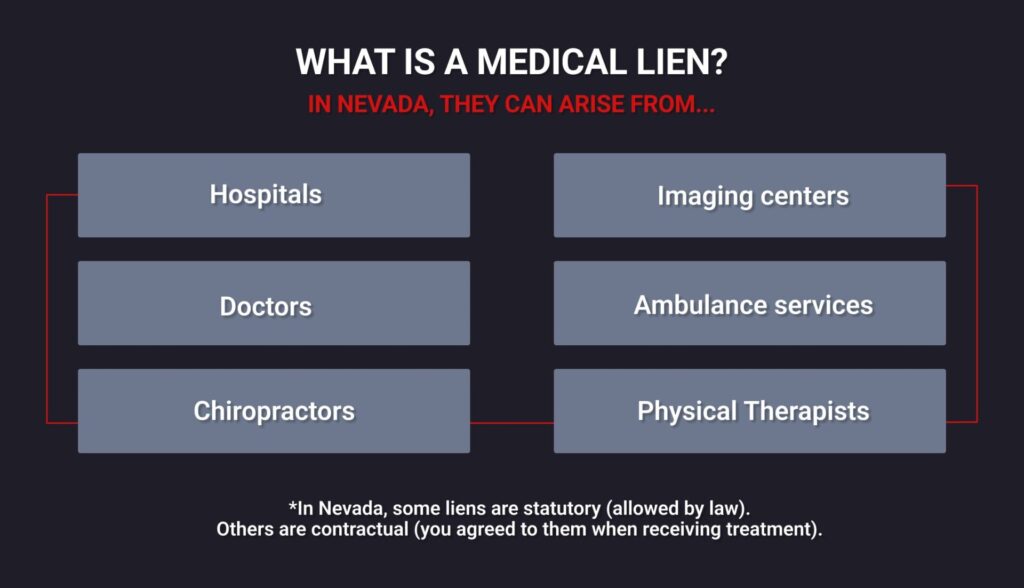
If you received treatment on a medical lien — meaning your provider agreed to be paid from your settlement — those lien amounts are also paid out of your recovery before you receive your net share. Medical liens in Nevada can be negotiated down by your attorney, which directly increases what you take home.
At Howard Injury Law, negotiating medical liens is a standard part of how we close every case. We don’t just collect the settlement check — we work to reduce what comes out of it.
What to Ask Before Signing a Contingency Fee Agreement
A contingency fee agreement is a legal contract. Read it before you sign it — and ask these specific questions if the answers aren’t clear in the document.
The Five Questions That Matter:
What is the contingency percentage — and does it change if the case goes to litigation or trial? Get the full fee schedule in writing, not just the initial percentage.
How are case costs handled? Are they advanced by the firm? When are they reimbursed — before or after the fee is calculated?
What happens if I decide to fire my attorney mid-case? In Nevada, attorneys may have a right to recover fees for work already performed even if the client terminates the relationship. Understand your exit terms before signing.
Who handles my case day-to-day? At some firms, the attorney you meet signs the agreement and then your case is passed to a paralegal or junior associate. At Howard Injury Law, you work directly with your attorney throughout. Ask the question explicitly and expect a direct answer.
Is there a written itemization of costs at settlement? You should receive a full closing statement showing every dollar — the gross recovery, the attorney fee, every cost deducted, every lien paid — before you sign the release.
Why Contingency Fees Exist — And Why They Benefit You
The contingency fee model was designed to give injured people access to legal representation regardless of their financial situation. Before contingency fees were common, only people who could afford to pay an attorney by the hour had access to legal help after an injury.
The contingency model changes that. Your Las Vegas personal injury lawyer carries the financial risk of the case. If the case loses, the attorney loses too. That’s a meaningful commitment — and it’s why reputable personal injury firms are selective about the cases they take.
What It Means When a Firm Takes Your Case
When Howard Injury Law agrees to represent you on a contingency basis, we’re making a business decision that your case has merit and value. We’ve reviewed the facts, assessed the liability picture, and determined that pursuing your claim is worthwhile. That evaluation itself has value — it means you’re not going in blind.
If a firm agrees to represent anyone regardless of facts, that’s a signal. Firms that take every case have no incentive to fight for full value on any of them.
Nevada-Specific Considerations for Contingency Fees
Nevada has specific rules governing attorney fees and client agreements under the Nevada Rules of Professional Conduct. Rule 1.5 requires that contingency fee agreements be in writing, signed by the client, and clearly state the method for determining the fee.
Nevada also follows a modified comparative negligence standard under NRS 41.141 — meaning if you’re found partially at fault, your recovery is reduced by your percentage of fault. This affects the total settlement amount, which in turn affects the total fee calculation. Your attorney should explain how comparative fault could affect your net recovery before you agree to representation.
For more on how Nevada’s fault rules affect personal injury claims, read our guide on Nevada’s statute of limitations for personal injury and the multiplier method used in Nevada injury claims.

FAQs About Contingency Fees in Nevada
Do I owe anything if my case loses?
No. Under a contingency fee arrangement, if your case doesn’t result in compensation, you owe no attorney fee. Case costs advanced by the firm are typically absorbed in that scenario — but review your specific agreement to confirm.
Can I negotiate the contingency percentage?
In some cases, yes — particularly on high-value or clear-liability cases where the firm’s risk is lower. It’s always appropriate to ask. A firm that refuses to discuss fee terms at all is worth being cautious about.
What percentage does Howard Injury Law charge?
We discuss our fee structure at the free consultation before you sign anything. There are no surprises in our closing statements — every dollar is accounted for.
Does the contingency fee change if I have a workers’ comp case?
Workers’ compensation cases in Nevada are governed by different fee rules than personal injury cases. If your case involves both a workers’ comp claim and a third-party personal injury claim, the fee structures apply differently to each. Our Las Vegas workers’ compensation lawyers can explain how the two interact.
Let’s Walk Through Your Case Carefully
A contingency fee means one thing: you can get experienced legal representation without paying a dollar upfront. If you don’t win, you don’t pay. If you do win, your attorney’s fee comes from the recovery — and a good attorney will work to make that recovery as large as possible.
Read your agreement carefully. Ask the questions above. And if you’d like to talk through your case before committing to anything, Howard Injury Law offers free consultations — no pressure, no obligation, just straight answers about where you stand.
Contact Howard Injury Law or call (702) 331-5722. Available 24/7.