


Most people who schedule a personal injury consultation have never done it before. You’ve been injured, you’re dealing with medical appointments and insurance calls, and now you’re walking into a meeting with a lawyer without knowing what to expect, what to bring, or what happens next.
That uncertainty is completely normal. And it’s exactly what this guide removes.
What to expect at a personal injury consultation in Las Vegas — from the moment you walk in to the moment you leave — is a straightforward process when you know what it covers. Here’s the full picture, including what the personal injury attorney needs from you, what you should ask them, and how to evaluate whether you’re talking to the right firm.
What a Personal Injury Consultation Actually Is
A personal injury consultation is not a commitment. It’s a two-way evaluation — the attorney assesses your case, and you assess the attorney. Nothing is signed, nothing is owed, and walking out without retaining anyone is completely acceptable.
At Howard Injury Law, consultations are free. There’s no charge for the meeting, no obligation to hire, and no fee of any kind if you decide not to move forward. The purpose is to give you real, specific information about your situation so you can make an informed decision.
What to expect at a personal injury consultation is a focused conversation — typically 30 to 60 minutes — covering four things: what happened, what injuries you sustained, what the law says about your situation, and an honest assessment of whether pursuing a claim makes sense.
What to Bring to Your Personal Injury Consultation
You don’t need to have everything perfectly organized. An attorney worth hiring will work with what exists and tell you what still needs to be gathered. That said, bringing what you have makes the consultation more productive and allows for a more specific assessment.
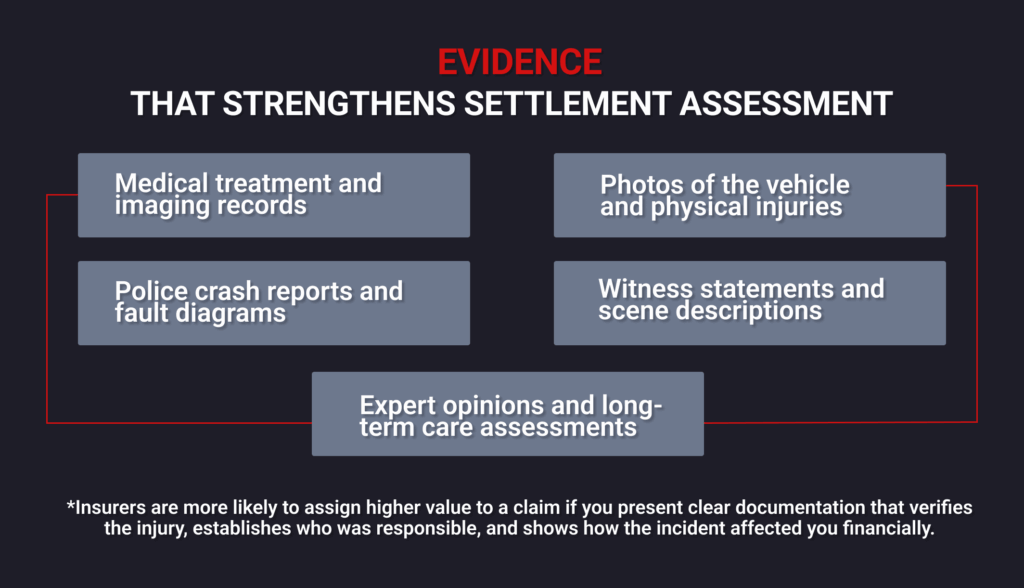
Documents That Strengthen Your Consultation:
The police report — if one was filed, this is the baseline document for most accident claims. It establishes the parties involved, the basic facts of the incident, and in many cases a preliminary fault determination.
Medical records and bills — anything you’ve received so far. An ER discharge summary, a primary care visit note, specialist referrals, imaging results. Even incomplete medical documentation gives the attorney a picture of your injury timeline.
Photos and video — from the accident scene, your injuries, and your vehicle damage. If you took photos on your phone at the scene, bring them. If you have dashcam footage, bring that too.
Insurance correspondence — any letters, emails, or settlement offers from any insurance company. Yours or anyone else’s. This tells the attorney immediately whether the claims process has already started and what position has been staked out.
The other driver’s information — name, insurance company, policy number, license plate, and anything else collected at the scene.
Your own notes — if you wrote down what happened shortly after the accident, bring those notes. Contemporaneous accounts have real evidentiary value.
What the Attorney Will Ask You
Knowing what questions are coming makes the consultation feel less like an interview and more like a conversation. Here’s what a personal injury attorney in Las Vegas needs to know to evaluate your claim.
About the Accident
The attorney will ask you to describe what happened — before, during, and immediately after. Where were you going? What road were you on in Las Vegas? What did you observe in the moments before impact? What happened after the crash? What did the other driver say?
Specific details matter. An accident at Flamingo and Koval involves traffic signal cameras that may have captured the crash. A crash in a casino driveway raises potential property liability questions beyond the other driver. A rideshare accident on Tropicana involves layered insurance questions. Local knowledge of Las Vegas crash environments directly affects how liability is evaluated.
About Your Injuries
The attorney will ask what injuries you sustained, when you first noticed symptoms, whether symptoms were immediate or delayed, what medical treatment you’ve received, and what your current condition is. Be thorough here — don’t minimize anything. Pain that seems minor to you may be legally significant.
They’ll also ask whether you’ve been able to work, how the injury has affected your daily activities, and whether any pre-existing conditions were present before the accident. Pre-existing conditions don’t disqualify your claim — Nevada’s eggshell plaintiff doctrine holds that a defendant takes their victim as they find them — but they need to be disclosed accurately.
About Insurance and the Claims Process
The attorney will ask whether you’ve given any recorded statements to any insurer, whether you’ve received any settlement offers, and whether you’ve signed anything. Each of these affects the legal picture significantly.
If the other driver’s insurer has already contacted you — or made an offer — the attorney needs to know exactly what was said and what was offered. Early offers are almost never full-value offers. They’re testing offers made before your complete injury picture develops.

How Your Case Gets Evaluated
This is the core of what to expect at a personal injury consultation — the attorney’s assessment of whether you have a viable claim and what it might be worth.
The Four Elements of Negligence in Nevada
To have a viable personal injury case in Nevada, four elements generally need to be present:
Duty — the other party owed you a duty of care. Drivers owe a duty to operate vehicles safely. Property owners owe a duty to maintain safe premises. Employers owe duties to employees and in some cases customers.
Breach — they failed to meet that duty. Running a red light on Sahara Avenue. Failing to fix a hazard they knew about. Driving distracted on US-95 during rush hour.
Causation — their breach directly caused your injury. This is where medical documentation matters most — the connection between what they did and what happened to your body needs to be clearly established.
Damages — you suffered actual, documentable losses. Medical expenses, lost wages, property damage, pain and suffering. Without damages, there’s no claim to pursue even if negligence is clear.
Most legitimate accident cases satisfy all four. The variables are in the strength of the evidence, the clarity of liability, and the extent of damages — which is exactly what the consultation is designed to assess.
The Hardest Injuries to Prove — and How Attorneys Handle Them
Some injuries are harder to establish than others — not because they aren’t real, but because they’re not visible on standard imaging. Soft tissue injuries, chronic pain, traumatic brain injuries, and psychological trauma from an accident all fall into this category.
Insurance adjusters exploit this. An injury that doesn’t show up on an X-ray gets labeled subjective. A TBI without obvious structural damage on a standard MRI gets minimized. A chronic pain condition gets attributed to pre-existing degeneration.
An experienced Nevada personal injury attorney anticipates these arguments before they’re raised. For soft tissue injuries, that means building a documentation picture that includes specialist reports, functional assessments, and treatment records that establish the clinical reality of the injury regardless of what the imaging shows. For TBIs, it may mean functional MRI and neuropsychological testing. The consultation is where the attorney tells you specifically what documentation your injury type requires — and what’s missing from what you currently have.
What Your Case Might Be Worth
No honest attorney gives you a precise settlement number at the consultation. The full picture of your damages isn’t known yet — your treatment may not be complete, your future medical costs aren’t fully established, and the liability picture may still be developing.
What the consultation does is identify what categories of loss are recoverable and what factors drive the number. Medical expenses past and projected. Lost wages and lost earning capacity if the injury affects your ability to work. Pain and suffering — which in Nevada is calculated using the multiplier method applied to your economic damages. Property damage.
Nevada doesn’t cap non-economic damages in most personal injury cases, which is meaningful in serious injury situations. The multiplier method used in Nevada personal injury claims determines how pain and suffering is calculated — and understanding it before you accept any offer is critical.
Attorney Fees — What You Actually Pay
This question makes many people uncomfortable to ask directly. It shouldn’t — it’s one of the most important things to understand before you leave the consultation.
Personal Injury Attorneys Work on Contingency
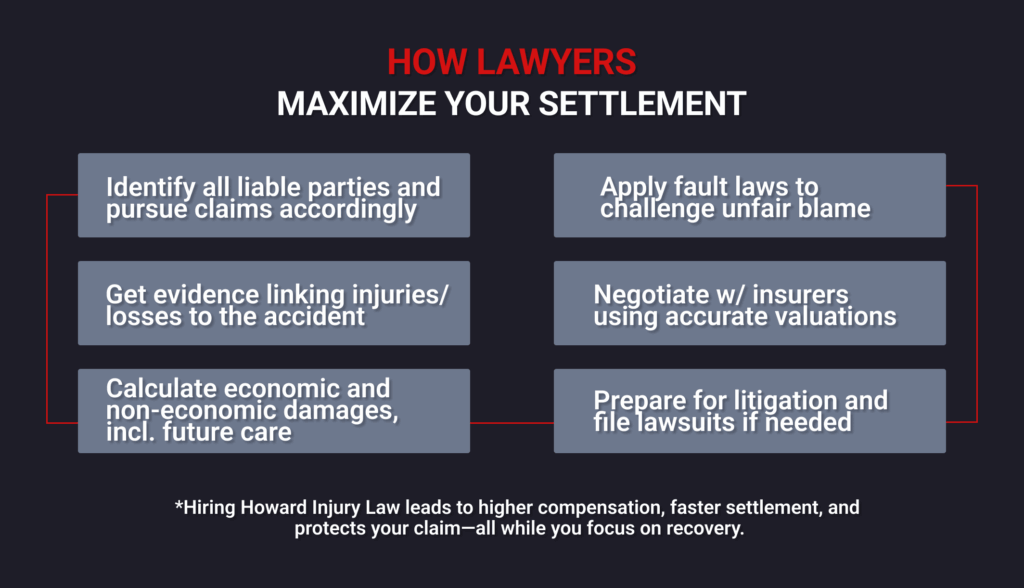
At Howard Injury Law, as at virtually every personal injury firm in Nevada, you pay nothing upfront. The fee structure is contingency-based — meaning our fee is a percentage of your recovery, paid at the end of your case from the settlement or verdict. If your case doesn’t result in compensation, you owe no attorney fee.
This structure exists specifically so that injured people can access legal representation regardless of their financial situation. You don’t need savings. You don’t need to pay by the hour. You don’t need to worry about a bill accumulating while you’re already managing medical costs.
For a complete breakdown of how contingency fees work in Nevada — including what case costs cover and what questions to ask before signing a retainer — read our guide on what a contingency fee is and how it works in Nevada.
Ask for the Fee Structure in Writing
Before leaving any consultation, ask for the contingency percentage in writing — and ask whether it changes if the case goes to litigation or trial. Ask how case costs are handled and when they’re reimbursed. These are standard questions every reputable attorney will answer directly. Vague answers are a signal.
How to Evaluate the Attorney During Your Consultation
What to expect at a personal injury consultation includes evaluating the firm as much as the firm evaluates your case. The consultation runs both ways — and what you observe tells you a great deal about how your case would actually be handled.
What Good Looks Like
The attorney asked more questions than they answered — at least in the first half of the conversation. They gave you an honest assessment that included challenges, not just strengths. They explained specifically how your case would be handled — not just how the firm operates generally. They answered your questions directly and without deflection.
Questions to Ask Before You Leave:
Who handles my case day-to-day? At volume firms, the attorney you meet signs the retainer and your case is passed to a paralegal. At Howard Injury Law, you work directly with your attorney throughout. Ask explicitly and expect a direct answer.
Have you handled cases like mine before? Ask about your specific case type — not general personal injury experience.
How do you communicate updates? You want a specific process — calls, emails, frequency. Not a vague commitment to keep you informed.
Do you have experience on the insurance defense side? This is a differentiator most people don’t know to ask about. Howard Injury Law’s attorneys have direct insurance defense experience — they know how adjusters evaluate cases, what arguments they run, and where their positions are weak. That inside knowledge shapes how your case gets built. For more on why that matters, read our guide on why Las Vegas injury victims choose Howard Injury Law.
Red Flags to Watch For:
Guaranteed outcomes — no attorney can ethically promise a specific result. Pressure to sign at the consultation — a reputable firm doesn’t rush you. Vague answers to direct questions about who handles your case. A consultation that sounds like a sales pitch rather than an assessment.
What Happens After the Consultation
If you decide to move forward, you sign a retainer agreement and work begins immediately. At Howard Injury Law, the first 24 to 48 hours after signing involve sending preservation letters to all surveillance sources near the accident, notifying the at-fault insurer of representation, and beginning the medical records and evidence compilation process.
If you need time to decide, take it. There’s no deadline on your decision — only on the evidence your case depends on. Surveillance footage disappears within 72 hours. Witnesses move. The sooner representation is in place, the more evidence can be preserved.
If you decide Howard Injury Law isn’t the right fit, that’s completely acceptable. The consultation gave you real information about your case — which has value regardless of what you decide next.

Frequently Asked Questions
How long does a personal injury consultation take?
A thorough personal injury consultation in Las Vegas typically runs 30 to 60 minutes. Cases involving multiple parties, disputed liability, or complex injury types may take longer. The goal is to cover everything needed for a genuine assessment — not to rush through a checklist.
Can I bring someone with me to the consultation?
Absolutely. Many clients bring a family member or trusted friend — someone who can take notes, ask questions, and help process the information afterward. Having a second set of ears in a consultation where a lot of information is shared is often helpful.
What if I’ve already spoken to another attorney?
A second opinion is always appropriate. If you’ve been told your case isn’t worth pursuing, or if you’re unhappy with how a current attorney is handling your claim, contact Howard Injury Law. We’ll give you an independent assessment based on the actual facts of your case.
How long does a personal injury case take after the consultation?
Timeline varies significantly by case complexity. Cases that settle before litigation typically resolve in three to twelve months. Cases requiring a lawsuit can take one to two years or longer. The primary factor is reaching maximum medical improvement — the point at which your treatment has stabilized and the full cost of your injury is known. For a full breakdown, read our guide on how long a personal injury case takes in Nevada.
What if I can’t afford treatment right now?
Treatment access isn’t dependent on having health insurance or money available. Nevada’s medical lien system allows providers to treat you now and receive payment from your settlement. Your attorney connects you with appropriate providers. Read our guide on how medical liens work in Nevada for the full explanation.
Walk In Prepared. Walk Out With Answers.
A personal injury consultation in Las Vegas is not intimidating when you know what to expect. It’s a focused, practical conversation about your situation — what happened, what you’re dealing with, and what your options are.
Come with what you have. Ask the questions that matter. Evaluate the attorney as carefully as they evaluate your case. And leave with a clear picture of where you stand — before you make any decisions.
Howard Injury Law offers free consultations 24 hours a day, seven days a week. Call (702) 331-5722. No fees unless we win. No pressure. Just answers.