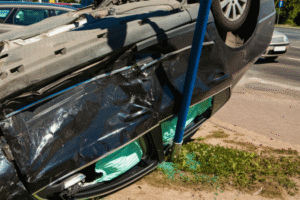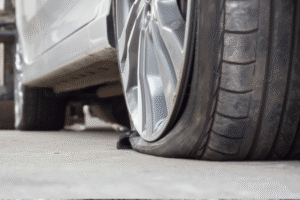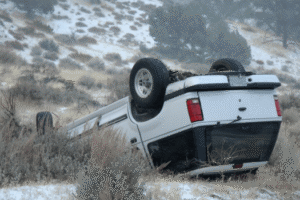


Your car flipped, no other vehicle was involved, and the insurance adjuster has already hinted that a single-vehicle rollover accident is your fault by default. That framing is convenient for the insurance company — and it’s often wrong. Roughly 95% of single-vehicle rollovers in the U.S. are “tripped,” meaning something outside the driver set the crash in motion: a road hazard, a tire failure, a vehicle that oversteered, or another driver who ran you off the road without ever touching your car.
So if you were hurt in a rollover on I-15, the 215 Beltway, or a surface street here in Las Vegas, “it was just my car” does not mean “I have no case.” It means the real cause hasn’t been established yet — and who establishes it matters a great deal to what you can recover.
Why a Single-Vehicle Rollover Isn’t Automatically Your Fault
Insurers lean hard on a simple story: one vehicle, one driver, one person to blame. It’s fast, it’s cheap for them, and it often ends with a denied or lowball claim before anyone looks at what actually happened.
The data tells a different story. Rollovers make up only about 3% of all crashes, yet they cause close to a third of vehicle-occupant deaths — and about 68% of them involve a single vehicle. Most of those single-vehicle rollovers are tripped, which means the car struck or slid against something — a curb, a soft desert shoulder, a guardrail, debris — that flipped it. A tripped rollover points outward, toward a condition or a party beyond the driver.
Nevada law also gives you more room than the adjuster admits. Nevada follows a modified comparative negligence rule, which means you can still recover as long as you aren’t found more responsible than the party or parties you’re claiming against — and even then, your compensation is reduced by your share of fault rather than erased. Being partly at fault is not the same as being barred from recovery. Every crash is different, so the only way to know where you stand is to have a Las Vegas rollover accident lawyer look at the specifics before you accept the insurer’s version.
If your rollover was a broader single-vehicle crash question — not rollover-specific — our overview of who is at fault in a single-vehicle accident walks through the general Nevada rules.
What Actually Causes Rollover Crashes — and Who It Points To
Understanding the cause is the whole ballgame, because the cause is what identifies who’s responsible. Rollovers generally trace back to a handful of triggers, and each one points somewhere.
- Tripping events — the tires dig into a soft shoulder or strike a curb, pothole, or object. On desert-edge roads and unfinished stretches around the valley, soft or drop-off shoulders are a real factor. A poorly maintained or badly designed road can shift responsibility toward a government entity.
- Speed and sudden maneuvers — a sharp swerve or overcorrection at highway speed, often to avoid something. If another driver forced that maneuver, that driver can be liable even if they never made contact.
- High center of gravity — SUVs, pickups, and vans tip far more easily than cars, which is why the vehicle’s design sometimes shares the blame. We cover that fully in our guide to SUV rollover accident claims.
- Tire failure and mechanical defects — a blowout or worn tire can throw a vehicle out of control in an instant, which can pull a tire manufacturer or a negligent repair shop into the picture.
That’s the short version, framed around liability. For the full breakdown of how these crashes happen, see our deeper look at the leading causes of rollover accidents in Las Vegas.
The pattern to notice: nearly every one of these causes has a party attached to it. That’s the opposite of “you flipped your own car, case closed.”
Who Can Be Held Liable When No Other Car Was Involved
A single-vehicle rollover can still have more than one responsible party — you just have to know where to look. The usual candidates:
- A vehicle or parts manufacturer. When a defect causes or worsens a rollover — a tire that fails, a roof that crushes toward the occupants, a stability-control system that doesn’t perform — the manufacturer can be held responsible under Nevada product liability law, regardless of how you were driving. Roof crush in particular is a leading source of head and spine injuries in these crashes.
- A government entity. If a dangerous road design, a missing guardrail, or unrepaired road damage contributed, a state or local agency may share fault. A claim against a government body follows a stricter, separate path — with its own notice requirement and a deadline that can be much shorter than the standard two years. This is not something to sit on.
- A phantom or no-contact driver. If another driver ran you off the road and kept going, they can be liable even without a collision — and your own uninsured-motorist coverage may come into play.
Sorting out which of these applies takes an investigation — pulling the vehicle, the road records, and any witness or camera footage before the evidence disappears. That’s exactly the work a rollover accident attorney does before the insurer’s “single-vehicle, driver’s fault” note becomes the official record.
How Serious Are Rollover Injuries?
Rollovers are violent in a way most crashes aren’t. The vehicle rotates, occupants are thrown against the interior or partially ejected, and the roof can collapse toward the head and spine. That combination is why these crashes are so disproportionately deadly relative to how rare they are.
The most common serious injuries include:
- Traumatic brain injury and concussion — from impact with the interior or roof crush. Our team handles these through our head injury and TBI claims work.
- Spinal cord damage — often tied to roof intrusion or ejection, and among the most life-altering outcomes. See our page on spinal cord injuries from car accidents.
- Internal injuries — organ and internal bleeding that may not show symptoms right away.
- Fractures — to the ribs, pelvis, arms, and legs from the forces of the roll.
Whether someone survives a rollover depends heavily on seat belt use, the roof’s integrity, whether anyone was ejected, and speed. If you’re reading this, you or someone you love made it through the crash itself. The priority now is getting complete medical care and making sure the injuries are fully documented — because a claim is only as strong as the record behind it.
What to Do After a Single-Vehicle Rollover in Las Vegas
The steps you take in the first days shape whether you can prove what really happened.
- Get medical care and keep going to it. Rollover injuries — especially head, neck, and internal ones — can surface days later. Gaps in treatment give the insurer an argument.
- Don’t let the insurer scrap your vehicle. This one matters most. Your car is the single best piece of evidence in a defect claim. Once it’s totaled and sold for salvage, that proof is gone. Do not authorize disposal until it’s been examined.
- Photograph everything — the vehicle, the road, the shoulder, skid marks, any debris or hazard that may have tripped the roll.
- Get the police report and note any witnesses or nearby businesses with cameras.
- Be careful with the adjuster. You are not required to give a recorded statement, and you should never guess at or admit fault. A single “I think I was going a little fast” can define your whole claim.
Frequently Asked Questions
What is the most common cause of a rollover accident?
Most rollovers come down to a loss of control — a sharp turn, an overcorrection, or a swerve at speed that shifts the vehicle’s weight past its tipping point. Vehicles with a high center of gravity, like SUVs, pickups, and vans, reach that point far more easily than cars. In single-vehicle rollovers specifically, the large majority are “tripped,” meaning the tires strike or dig into something — a curb, a soft shoulder, a guardrail — that flips the vehicle. Tire failures and road hazards are frequent triggers too. Because the cause often points to a defect, a road condition, or another driver, it’s worth having the crash reviewed rather than assuming driver error. Our leading causes of rollover accidents guide breaks each one down.
Can I get compensation if no other vehicle was involved?
Often, yes. A single-vehicle rollover doesn’t automatically mean no one else is responsible. A tire or vehicle manufacturer may be liable for a defect, a government agency may share fault for a dangerous road, and a driver who ran you off the road can be responsible even without contact. Your own insurance coverage — including uninsured-motorist and collision — may also apply. The key is establishing the real cause before the insurer locks in a “driver’s fault” conclusion. Because every situation turns on its own facts, a free case review is the fastest way to learn whether you have a viable claim and who might owe you compensation.
Is a single-vehicle rollover always the driver’s fault in Nevada?
No. Nevada uses a modified comparative negligence rule, so fault can be shared across several parties, and you can still recover as long as you aren’t found more responsible than the parties you’re claiming against. Your compensation is reduced by your percentage of fault rather than eliminated. A manufacturer, a government road authority, or a no-contact driver may carry part or all of the blame. Passengers injured in a single-vehicle rollover almost always have a claim, since they had no control over the vehicle. The insurer’s default assumption isn’t the legal answer — the facts of the crash are.
What are the most common injuries in a rollover crash?
Rollover crashes tend to produce severe injuries because of the rotation, ejection risk, and roof crush involved. The most common are traumatic brain injuries and concussions, spinal cord damage, internal injuries and bleeding, and fractures to the ribs, pelvis, and limbs. Head and spine injuries are especially common when the roof collapses inward. Some of these — internal bleeding and brain injuries in particular — may not show obvious symptoms for hours or days, which is why prompt and continued medical care matters so much. Thorough documentation of every injury also protects your ability to recover the full cost of treatment and long-term care.
How long do I have to file a rollover accident claim in Nevada?
For most personal injury claims, Nevada gives you two years from the date of the crash to file a lawsuit under NRS 11.190. Miss it, and you generally lose the right to recover, no matter how strong the claim. But some situations have shorter or different deadlines — claims involving a government entity, for example, require earlier notice and can have a much tighter window. Because a rollover can involve a manufacturer or a public agency, you may be working against more than one clock. The safest move is to have the deadlines confirmed early rather than assume you have the full two years.

Talk to a Las Vegas Rollover Lawyer Before You Accept Blame
Here’s the part the insurance company won’t tell you: the “single-vehicle, driver’s fault” file gets built fast, and once it’s set, it’s hard to undo. Attorney Glen Howard spent years on the insurance defense side before founding Howard Injury Law — he knows exactly how that file is assembled, because he used to assemble it. That’s the perspective now working for you instead of against you.
Before you let the adjuster’s version become the record — or authorize anyone to scrap the vehicle that could prove a defect — let us look at what actually caused your rollover. The consultation is free, and you pay no fee unless we win.
Call (702) 331-5722 or request a free case review today. If you’re not sure whether you have a case, that’s exactly the question we’ll answer — at no cost and with no pressure. You can also see the full scope of how we handle these claims on our rollover accident page, and explore what a case like yours may be worth in our breakdown of the average rollover accident settlement in Las Vegas.