


Call anyway.
That’s not a sales pitch. It’s the practical answer — because uncertainty about whether you have a strong enough case is not a reason to stay silent. It’s the reason the free consultation exists.
Most people who contact Howard Injury Law aren’t sure they have a case. They felt hesitant before calling. They worried they were wasting someone’s time, or that their situation wasn’t serious enough, or that they’d be turned away. Almost none of them regret making the call. Many of them wish they’d made it sooner.
If you’re asking what if I’m not sure I have a strong enough case to call a Las Vegas personal injury attorney — the honest answer is that you don’t need certainty to start. You need about ten minutes and whatever facts you currently have.
Here’s why that’s true, what happens when you’re not sure, and what the call actually involves.
Uncertainty Is the Most Common Starting Point
Most People Don’t Know What a Strong Case Looks Like
Personal injury law has a specific definition of a viable claim. Four elements need to be present: liability, damages, causation, and collectibility. Most people searching “do I have a case” have never heard those terms — let alone know how to evaluate them for their own situation.
That’s not a character flaw. It’s just reality. Legal standards aren’t common knowledge, and the fact that you can’t personally assess whether your situation meets them doesn’t mean it doesn’t. An attorney applies those standards to your facts. Your job is to share the facts — not pre-judge them.
Doubt about case strength is the standard starting point, not the exception. Glen Howard hears some version of “I wasn’t sure I should call” in the majority of consultations. What people discover during that conversation — that their situation is more viable than they assumed — is exactly why the call is worth making before drawing conclusions.
The Situations That Seem Too Minor Often Aren’t
Two categories of cases get dismissed too quickly before legal advice is sought.
The first is injuries that initially seem minor. Soft tissue injuries, whiplash, neck and back strain — these are routinely described as “nothing serious” in the days after an accident. Six weeks later, the same person is in physical therapy three times a week, unable to work full shifts, and still waiting on imaging results. What felt minor at the scene turned into months of treatment and real financial impact.
The second is accidents where partial fault feels obvious. “I should have been paying more attention.” “I probably could have braked faster.” “Part of it was my fault.” Nevada’s comparative negligence law allows recovery as long as you’re less than 51% at fault. Being partly responsible doesn’t end a claim — it adjusts the recovery. Many people never call because they assume partial fault means no case. That assumption costs them real compensation.
What “Not Strong Enough” Usually Actually Means
You Don’t Have All Your Evidence Yet
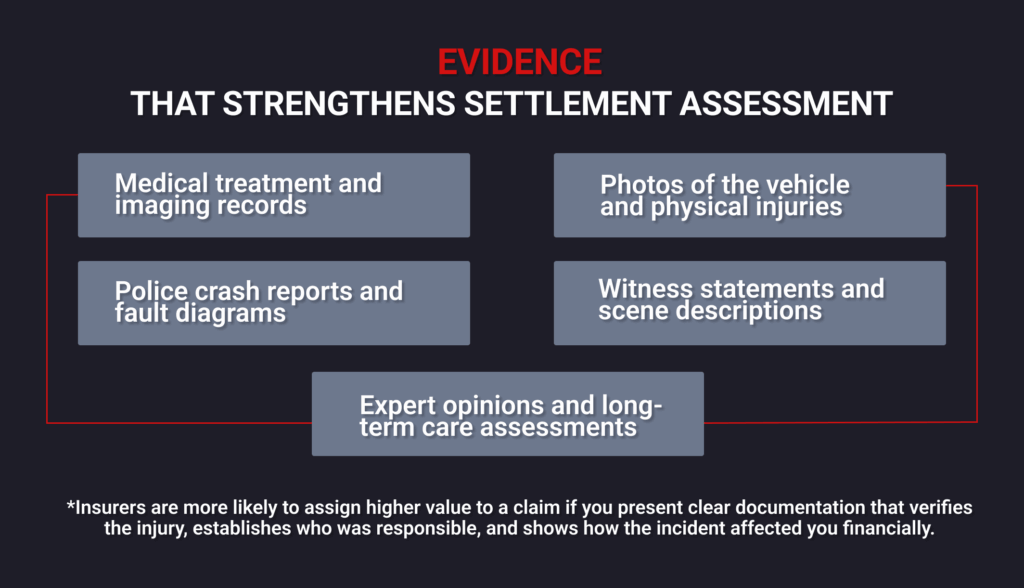
Not having a complete evidence file is almost universal at the point of the first call. The police report hasn’t arrived. Medical records are still being generated. You haven’t tracked down witness information. Photos from the scene are on your phone but not organized.
None of that means your case isn’t strong. It means you’re at the beginning of the process — which is exactly where you should be when you first call an attorney. Evidence gathering is what happens after you retain representation, not before. Your attorney sends preservation letters, requests records, contacts witnesses, and builds the evidentiary foundation of your claim.
Waiting until you have everything together delays the process at exactly the stage when evidence is most time-sensitive. Our post on what information should I have ready before calling an injury lawyer covers exactly what matters before the call — and what genuinely doesn’t.
You’re Not Sure Who Was at Fault
Fault is frequently unclear in the immediate aftermath of an accident. Multiple parties may share responsibility. The other driver disputes what happened. There were no witnesses. The police report is ambiguous.
Unclear fault is a case evaluation question — not a disqualifying condition. Attorneys investigate liability through accident reconstruction, traffic data, surveillance footage, and witness interviews. The uncertainty you feel about fault before any of that investigation occurs is not the same as the legal picture after it does.
If fault turns out to be genuinely unresolvable, an attorney will tell you that honestly. But that determination happens after investigation — not before you’ve ever made a call.
You Think Your Injuries Aren’t Serious Enough
There’s no legal minimum injury threshold for a personal injury claim in Nevada. The question isn’t whether your injury is serious by some abstract standard. It’s whether another party’s negligence caused measurable harm — medical costs, lost wages, pain and suffering, impact on daily function.
A broken arm is obviously serious. So is a herniated disc that requires months of treatment and limits your ability to work. So is soft tissue damage that causes chronic pain affecting your quality of life. “Serious enough” is defined by your actual documented impact — not by how it sounds when you describe it to yourself.
The only way to know whether your injuries cross the threshold worth pursuing is to have someone with legal expertise assess them against the specific facts of your situation. That’s what the consultation is for.
What Actually Happens When You Call Without Certainty
Glen Howard Asks Questions — You Don’t Have to Have Answers Ready
The consultation is a conversation, not a test. Glen asks about what happened, when, where, what your injuries are, what treatment you’ve received, and what contact you’ve had with the insurance company. You answer with whatever you know. You note where you’re uncertain.
There’s no wrong way to describe your situation. Saying “I’m not sure exactly what happened” or “I don’t know if this counts as serious” is fine. That uncertainty gets addressed through questions, context, and legal knowledge — not by expecting you to arrive pre-qualified.
What Glen is assessing is whether the facts you share suggest the four elements of a viable claim are present. Some situations clearly are viable. Some clearly aren’t. Many fall somewhere in the middle and require more information before a full assessment is possible. All three of those outcomes are useful — and none of them require you to have pre-determined the answer before calling.
You Will Not Be Pressured to Hire Anyone
A consultation at Howard Injury Law is a free evaluation with no obligation attached. Submitting a case review or having a phone conversation does not create an attorney-client relationship. You are not committing to hiring anyone by asking questions.
If you decide after the call that you want time to think, that’s completely fine. If you decide the case isn’t something you want to pursue, that’s your choice. If Glen determines the case isn’t viable, he’ll tell you directly rather than string you along.
The goal of the consultation is to give you accurate information. What you do with that information is entirely up to you. Our post on what happens after you submit a free case review walks through the full process — who reviews it, what they’re looking for, and what the possible outcomes are.
If Your Case Isn’t Viable, You’ll Know That Too
An honest “this isn’t a strong case” is more valuable than a vague non-answer. If the facts don’t support a viable personal injury claim, Glen says so — and in some situations can point you toward other resources better suited to your circumstances.
Knowing your situation isn’t viable is useful information. It lets you stop wondering, stop worrying, and move on without the ongoing uncertainty of never having asked. That clarity has value even when the answer isn’t what you hoped for.
The Risk of Not Calling
Evidence Disappears on a Timeline You Can’t Control
Surveillance footage from the intersection gets overwritten. Skid marks fade. The vehicles get repaired. Witnesses become harder to locate. Every day between the accident and legal representation is a day that evidence ages — and some of it disappears permanently.
If your case turns out to be viable, the cost of waiting to find out is measured in lost evidence and weakened documentation. Starting the conversation early preserves options. Waiting forecloses them.
Nevada’s Statute of Limitations Is Running
Most personal injury claims in Nevada have a two-year statute of limitations from the date of the accident. That deadline runs regardless of how long you spend uncertain about whether to call. Missing it ends your legal options permanently — no matter how strong your case might have been.
Two years feels like a long time. For people who spend months weighing whether to reach out, it shortens fast. An attorney can clarify exactly where the deadline stands for your specific situation and whether any shorter timelines apply — like government entity notice requirements, which can be as short as six months.
The Insurance Company Isn’t Waiting
While you’re deciding whether your case is strong enough to pursue, the insurance company is building their file. Adjusters are gathering information, establishing their liability position, and potentially preparing a lowball offer timed to arrive before you’ve consulted an attorney.
Understanding what that process looks like from the inside is covered in our post on what insurance companies don’t want you to know after an accident. The short version: they move fast on purpose, and their timing benefits them — not you.

Frequently Asked Questions
What if I call and my case turns out to be too weak to pursue?
You’ll get a straight answer and some clarity. Nothing is lost by making the call — and the certainty of knowing where you stand is more useful than ongoing uncertainty. In some situations, Glen can point you toward other resources if a personal injury claim isn’t the right avenue for your circumstances.
Do I have to have evidence before calling?
No. Evidence gathering happens after you retain representation. What you need before calling is a basic account of what happened and whatever information you currently have — even if that’s very little. Our post on what information should I have ready before calling an injury lawyer gives you a practical breakdown of what actually helps versus what you don’t need to worry about yet.
Will calling affect my ability to handle the claim myself if I decide not to hire anyone?
No. A consultation is just a conversation. Nothing about it obligates you to retain representation or changes your legal position. You can speak with an attorney, receive an assessment, and decide not to move forward — with no consequences. The information you gain from that call is yours to use however you choose.
What if I was partially at fault for the accident?
Partial fault doesn’t automatically disqualify your claim in Nevada. Under the state’s comparative negligence law, your recovery is reduced by your percentage of fault — but recovery is still possible as long as you’re less than 51% responsible. Whether the facts support a viable claim despite shared fault is exactly the kind of question the consultation addresses. Our post on how to know if your injury case is worth pursuing covers the four factors that determine case viability in detail.
The Call You’ve Been Talking Yourself Out of Is the One Worth Making
The pattern is consistent. People wait. They convince themselves the injury isn’t serious enough, the fault isn’t clear enough, the evidence isn’t complete enough. They spend weeks or months in that holding pattern while evidence disappears and deadlines approach.
Then they call. They spend ten minutes describing what happened. Glen asks a few questions and gives them a straight answer. Many of them find out their case was stronger than they assumed. Almost all of them wish they’d called sooner.
You don’t need certainty. You need ten minutes and whatever facts you currently have. That’s enough to start.
Request your free case review at Howard Injury Law right now. Glen Howard is available 24/7 — no upfront cost, no pressure, no obligation. If your case is worth pursuing, you’ll know. If it isn’t, you’ll know that too. Either way, you stop wondering.
Before the call, our post on do I really need a lawyer or can I handle this myself gives you an honest breakdown of when legal representation genuinely makes a difference — and when it might not be necessary.