


You hit submit. Or you made the call. Either way, it’s done — and now you’re wondering what comes next.
That gap between reaching out and hearing back is where most people’s anxiety lives. Did it go through? Who’s looking at it? What are they deciding? Will they even take the case? What happens if they don’t?
What happens after you submit a free case review at Howard Injury Law is straightforward — and understanding each step makes the waiting easier and the conversation more productive when it happens. Here’s exactly what the process looks like from the moment your information arrives to the point where you know where you stand.
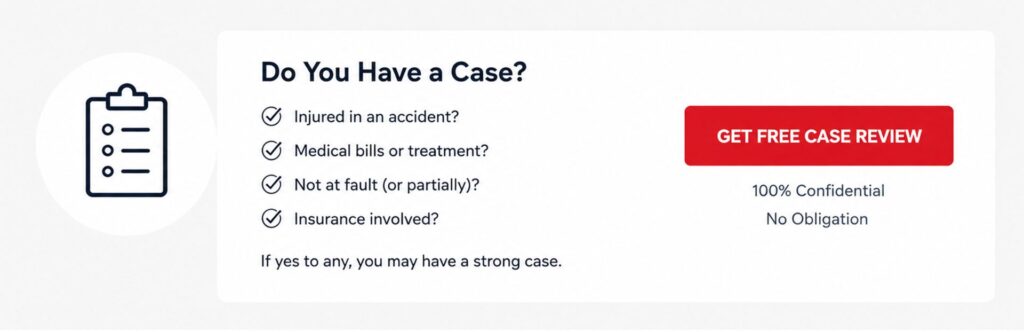
Who Reviews Your Case — and How Fast
Glen Howard Reviews It Personally
Your case review doesn’t go into a queue managed by an intake coordinator or get triaged by a paralegal before an attorney eventually sees it. At Howard Injury Law, Glen Howard reviews incoming case information directly. That matters because the person evaluating your situation is the same attorney who would represent you — not someone filtering cases for someone else to decide on later.
Large volume firms often separate intake from representation entirely. You speak with a screener, your information gets summarized for a junior associate, and the named attorney may never be involved until much later — if at all. That’s not how this works. The assessment you receive reflects Glen’s direct legal judgment about your situation.
Response Happens Within Hours — Not Days
Howard Injury Law is available 24/7. That’s not marketing language — it reflects how personal injury cases actually work. Accidents don’t happen during business hours, and the questions that follow don’t wait until Monday morning. When you submit a case review or call directly, response comes fast. For most inquiries, that means within hours, not the 24-to-72-hour window you’ll see quoted by firms running higher volume operations.
If you call directly, the conversation happens in real time. If you submit through the website after hours, expect a prompt follow-up — not a form acknowledgment and a wait.
What Gets Evaluated During the Review
The Four Things Every Case Review Examines
Glen’s evaluation of your case focuses on four core questions. Every viable personal injury claim has to clear each of them, and understanding what’s being assessed helps you provide the most useful information upfront.
The first is liability. Was there another party whose negligence caused your injury? Clear liability — a driver who ran a red light, a property owner who ignored a known hazard, a product that malfunctioned — is the foundation everything else rests on. Disputed liability doesn’t automatically sink a case, but it affects how the claim is built and what evidence becomes critical.
The second is damages. Are there measurable costs that resulted from your injury? Medical bills, lost wages, future treatment needs, property damage, and the non-economic impact of pain and suffering all factor in. A case with clear liability but minimal documented damages has a different profile than one where both elements are strong.
The third is causation. Can your injuries be directly connected to the incident? Insurance companies push hard on causation — particularly if there’s any prior medical history involving the same area of the body. Your medical records and treatment timeline are the primary tools for establishing this connection.
The fourth is collectibility. Is there a source of compensation that can actually pay — an insurance policy, a commercial liability carrier, your own uninsured motorist coverage? A strong case against an uninsured defendant with no assets creates a practical problem that affects whether pursuing the claim is financially viable.
Our post on how to know if your injury case is worth pursuing covers each of these factors in detail if you want a fuller picture of how case viability is assessed before that conversation happens.
What Information Makes the Evaluation More Accurate
The more detail you provide, the more specific and useful Glen’s assessment will be. The most valuable information includes a description of what happened and how, the nature and extent of your injuries, what medical treatment you’ve received so far, whether a police report was filed, and what contact — if any — you’ve already had with the insurance company.
You don’t need a complete file. Glen works with what you have and identifies what still needs to be gathered. But if you’ve already spoken with an adjuster, given a recorded statement, or received a settlement offer, that context matters and should be shared upfront. Our post on can I still file a claim if I already talked to the insurance company addresses the most common concern people have about early insurance contact and what it actually means for their options.

The Possible Outcomes of Your Case Review
Outcome One: Your Case Is Viable and Howard Injury Law Can Help
If the four pillars — liability, damages, causation, collectibility — are present, Glen will tell you directly that your case is worth pursuing and explain what the path forward looks like. That includes what the investigation phase involves, what a realistic timeline looks like given your specific situation, and what the contingency fee arrangement covers.
From that point, if you decide to move forward, a representation agreement is reviewed with you — clearly, not buried in fine print. The agreement explains the contingency percentage, how case expenses are handled, and what the disbursement process looks like when the case resolves. You sign when you’re ready. There’s no pressure to decide during the call.
Once you retain Howard Injury Law, all communication with the insurance company transfers immediately to Glen’s office. You stop dealing with adjusters directly. Evidence preservation begins. The legal process starts working in your favor instead of against it.
Outcome Two: The Case Needs More Information Before a Decision
Some situations require additional documentation before a full assessment is possible. If liability is disputed, if medical records haven’t been obtained yet, or if key facts are still unclear, Glen may identify specific information that would allow for a more complete evaluation.
This isn’t a stall or a soft decline. It’s an honest acknowledgment that the picture isn’t complete yet and that a premature assessment wouldn’t serve you well. You’ll know exactly what’s needed and why, and the follow-up conversation happens once that information is available.
Outcome Three: The Case Isn’t the Right Fit
Not every case results in representation — and a firm that takes every case regardless of merit isn’t doing you any favors. If the honest assessment is that your case lacks the elements needed to pursue successfully, Glen will tell you that directly rather than stringing you along.
In that situation, you may receive a referral to another resource better suited to your circumstances. Either way, you leave the conversation with clarity — which is more valuable than a vague non-answer from a firm that wasn’t willing to be straight with you.
Does Submitting a Case Review Mean You Hired a Lawyer?
No — There Is No Attorney-Client Relationship Until You Sign a Representation Agreement
Submitting a case review form or having a consultation call does not create an attorney-client relationship. You are not obligated to hire Howard Injury Law because you reached out, and Howard Injury Law is not obligated to represent you based on the initial inquiry alone.
The attorney-client relationship begins when both parties sign a representation agreement. Until that happens, you are free to speak with other attorneys, take time to decide, or choose not to pursue the claim at all. Nothing about the case review locks you into anything.
This distinction matters because some people hesitate to reach out thinking that a consultation somehow commits them. It doesn’t. The case review is information — for both of you.
What Happens Immediately After You Decide to Move Forward
The Insurance Company Hears From Your Attorney — Not From You
The first practical change after you retain representation is that all contact with the insurance company routes through Glen’s office. A representation letter goes out to the relevant insurers notifying them that Howard Injury Law is now handling your claim. From that point forward, adjusters are required to communicate with your attorney — not with you directly.
That change matters more than most people realize before they experience it. Adjusters are trained to gather information that helps minimize payouts. Every direct conversation with an unrepresented claimant is an opportunity to build their case at your expense. Understanding the full scope of what they’re doing during those calls is covered in our post on what the insurance adjuster actually does with your claim.
Evidence Preservation Starts Immediately
Time-sensitive evidence gets addressed right away. Preservation letters go to businesses and agencies that may have surveillance footage of your accident. Medical records are requested. The police report is obtained if you don’t have it. Witnesses listed in available documentation are contacted before memories fade or contact information goes stale.
Every day between the accident and legal representation is a day that evidence ages. Starting that preservation process early is one of the most concrete ways that prompt action protects a claim’s value. For a full picture of what the process looks like from this point through resolution, our post on what happens when you pursue a claim covers every stage in sequence.
How the Contingency Fee Works — The Honest Version
You Pay Nothing Unless There’s a Recovery
Howard Injury Law’s fee is a percentage of what’s recovered — no upfront costs, no hourly fees, no consultation charges. If your case doesn’t result in a settlement or verdict in your favor, you owe nothing for the legal work performed.
The percentage is discussed clearly during the case review conversation and documented in the representation agreement before you sign. There are no hidden fees that appear at disbursement. Medical liens — amounts owed to healthcare providers out of the settlement — are also explained and managed through the resolution process so you understand the full picture of what you’ll receive.
The contingency model means your attorney’s outcome is tied directly to yours. A better result for you is a better result for the firm. That alignment is built into the structure of the arrangement.

Frequently Asked Questions
Will Howard Injury Law keep my information confidential?
Yes. Information shared during a case review is treated as confidential. Even without a formal attorney-client relationship in place, ethical rules govern how attorneys handle information received during consultations. Your details are not shared, sold, or disclosed.
What if I’m not sure my injuries are serious enough to mention?
Mention everything. What feels minor in the first days after an accident frequently develops into a more significant condition as time passes. Soft tissue injuries, neurological symptoms, and chronic pain often don’t surface fully until weeks after the incident. Sharing the complete picture of your symptoms — even ones that seem small — gives Glen the most accurate basis for evaluation.
Can I submit a case review for someone else — a family member or spouse?
Yes. If you’re reaching out on behalf of an injured family member who is unable to make the call themselves, that information can be shared during the review. The representation agreement, if you move forward, would involve the injured party directly.
What if I already received a settlement offer before submitting the review?
Share it during the conversation. An offer that’s already on the table is important context for the evaluation. Whether that offer reflects the actual value of the claim — and whether accepting it is in your best interest — is exactly the kind of question a case review is designed to answer. Our post on should I accept the first settlement offer from insurance in Las Vegas explains what that number typically does and doesn’t include.
You Already Did the Hardest Part
Reaching out was the step most people put off the longest. The process from here is straightforward — a direct conversation, an honest assessment, and a clear picture of what your options are.
No obligation, no upfront cost, and no pressure. Just the information you need to make a decision that actually serves your interests.
Submit your free case review at Howard Injury Law right now. Glen Howard reviews it personally and responds fast — 24/7, any day of the week. One conversation is all it takes to know where you stand.