


Yes. Talking to an insurance company after an accident does not forfeit your right to file a claim or hire an attorney.
That’s the short answer — and it’s the one most people need to hear first. If you called the adjuster, answered their questions, or gave them information before understanding your rights, you haven’t automatically damaged your case. What you said matters, but a conversation alone rarely ends a claim.
At Howard Injury Law, we’ll help you understand what actually determines where you stand, and what to do if you’re worried the damage is already done.
What “Talking to Insurance” Actually Means Legally
A Phone Call Is Not a Settlement
Many people confuse communicating with an insurance company with formally resolving their claim. Those are two very different things. Calling to report an accident, asking about your coverage, or speaking with an adjuster about what happened does not constitute a legal settlement — and it does not waive your rights.
Your claim is only closed when you sign a release of liability. That document is a binding legal agreement. Until your signature is on that form, your claim is still open. No phone call, email, or casual conversation changes that.
Reporting an Accident Is Not the Same as Filing a Formal Claim
Under most Nevada auto policies, you’re required to report accidents to your own insurer within a reasonable time. That notification is not a claim — it’s a contractual obligation. Filing a formal claim involves a separate process, and speaking with an adjuster in the early stages is simply part of how that process begins.
If you’ve only talked, you haven’t settled. If you haven’t signed a release, you haven’t closed anything.
What a Recorded Statement Can Do to Your Claim
This Is Where Early Conversations Create Real Risk
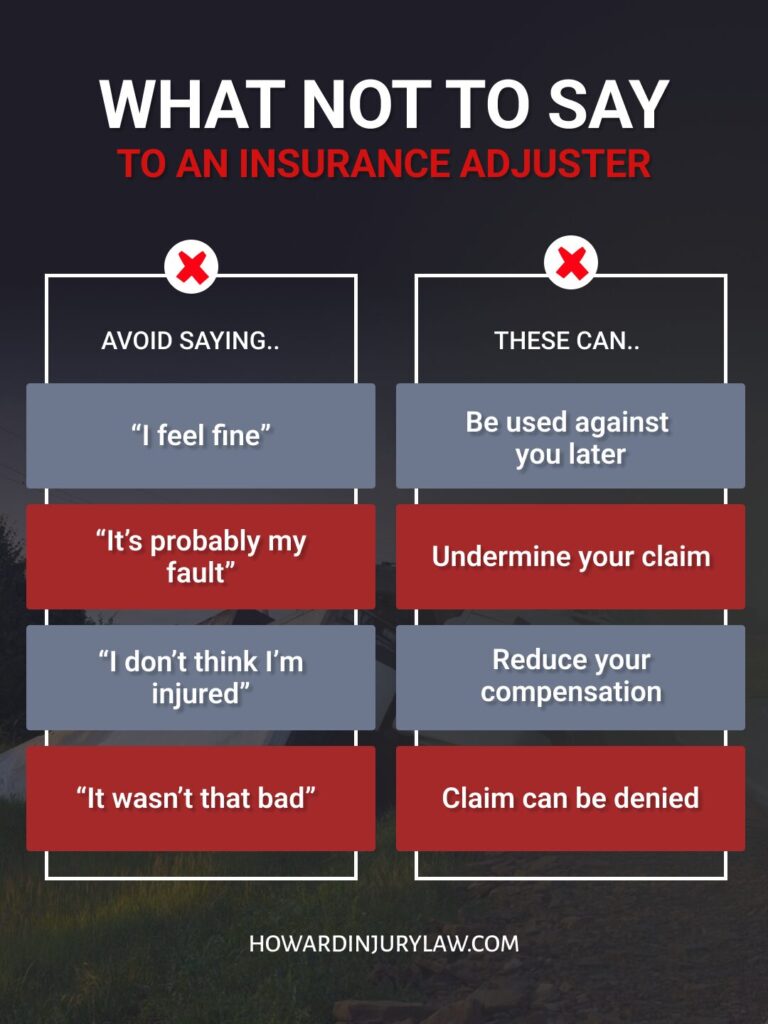
The part of talking to insurance that actually creates legal exposure isn’t the call itself — it’s what you said during it. Adjusters are trained to gather information that helps them minimize payouts. A recorded statement taken in the days right after an accident can create problems if your account contains inconsistencies, if you understated your injuries, or if you said something that sounds like an admission of fault.
Common examples: saying “I didn’t see them coming” can be framed as inattention. Saying “I think I’m okay” can be used to argue your injuries were minor or appeared after the fact. Neither statement reflects fault in any meaningful way, but both can complicate the claim.
You Were Not Required to Give That Statement
Nevada law does not require you to give a recorded statement to the at-fault driver’s insurance company. Your own insurer may have different requirements depending on your policy, but the opposing insurer has no legal authority to compel your cooperation. Many people don’t know this until after the fact.
If you already gave a recorded statement, an attorney can review it, assess the exposure, and advise on how to address any problematic language going forward. It isn’t necessarily fatal — but it’s something that needs to be handled carefully.
For more on how adjusters use these conversations, read our post on what the insurance adjuster actually does with your claim.
How Long You Actually Have to File in Nevada
The Statute of Limitations Is Two Years — But Don’t Confuse That With Your Policy Deadline
Nevada’s statute of limitations for personal injury claims is generally two years from the date of the accident. Missing that deadline almost always bars you from filing a lawsuit, regardless of how strong your case is.
Your insurance policy may have its own, shorter reporting requirements. These are separate from the legal deadline and vary by carrier. Reading your policy carefully — or having an attorney review it — clarifies which deadlines apply to your specific situation.
The Clock Doesn’t Pause Because You’re Negotiating
One mistake injured people make is assuming that while they’re talking to an insurance company, the legal clock is paused. It isn’t. You can spend eighteen months in back-and-forth conversations with an adjuster and still face a hard two-year cutoff for filing a lawsuit if negotiations fall apart.
An attorney tracks these deadlines, protects your legal options, and ensures you’re never in a position where the statute of limitations runs out while you’re still negotiating informally.
What Happens If You Already Signed Something
A Release Is Different From Everything Else
If what you signed was a release of liability — sometimes called a full and final release — that is a different situation from a phone call or a recorded statement. A signed release is generally binding and permanent. Nevada courts have consistently upheld them, and reopening a claim after a release has been signed is extremely difficult.
There are narrow exceptions. If you can demonstrate fraud, misrepresentation, or that the release was signed under duress, an attorney may be able to challenge it. These are not easy arguments to make, but they’re not impossible either — particularly if the insurer misrepresented what you were signing or failed to disclose important information.
If You Signed a Medical Authorization, That’s a Separate Issue
Some people confuse a broad medical authorization with a settlement release. They’re not the same thing. A medical authorization gives the insurer access to your records. A release ends your claim. Signing one does not mean you’ve signed the other — but both require careful attention before your pen touches the paper.
If you’ve signed a broad medical authorization, an attorney can assess the scope of what was disclosed and advise on whether limiting future disclosures is still possible.
Can a Closed Claim Be Reopened?
It Depends on What “Closed” Actually Means
“Closed” means different things in different contexts. If the insurance company closed your file administratively — because there was a period of inactivity, or because they decided not to pay — that is not the same as a final legal settlement. An administratively closed file can generally be reopened or pursued through other means, including litigation.
If you settled and signed a release, that’s final in most cases. The critical question is always: did you sign a release, and if so, what did it say?
Newly Discovered Injuries Are Worth a Conversation
Some people contact us after discovering that injuries from their accident are more serious than they initially appeared. Soft tissue injuries, neurological symptoms, and chronic pain conditions sometimes don’t surface until weeks after the crash. If you haven’t signed a release, those developments can and should factor into your settlement.
If you have signed a release, the window is much narrower — but the conversation is still worth having. A Las Vegas personal injury attorney can review what you signed and give you an honest assessment of your options.
What to Do Right Now If You’ve Already Been Talking to Insurance
Stop Communicating Directly With the Adjuster
From this point forward, let an attorney handle the communication. Every conversation you have with the opposing insurer is an opportunity for them to gather information that serves their interests. Once you have legal representation, all contact goes through your attorney — and the dynamic of the negotiation changes entirely.
Get a Free Case Review Before Your Next Move
You don’t need to commit to hiring an attorney to understand where you stand. Howard Injury Law offers free case evaluations — no upfront costs, no obligation, no pressure. Glen Howard will review what’s happened so far, identify any exposure from early conversations, and give you a clear picture of your options.
The conversation is worth having before you respond to another call, sign another document, or accept another offer. Start at Howard Injury Law’s Free Case Review page.
Document Everything From Here Forward
Write down what you remember from every conversation you’ve had with the insurance company so far — dates, names, what was said, what was asked, what you agreed to. Memory fades and details matter. Your attorney will want this record when assessing your situation.
Frequently Asked Questions
Does asking a question count as filing an insurance claim?
No. Calling your insurer to ask about your coverage or inquire about a deductible does not constitute a filed claim. A claim involves a formal request for payment or coverage. A casual inquiry does not. Some insurers may log the contact, but it does not trigger the same consequences as an actual claim filing.
I told the adjuster I was feeling okay. Did I ruin my case?
Not necessarily. Statements made in the immediate aftermath of an accident — before adrenaline has worn off and before injuries are fully apparent — are common and understandable. Adjusters will try to use them, but an experienced attorney knows how to contextualize early statements against your subsequent medical records and treatment history. The statement creates a hurdle, not a wall.
What if I missed my insurance company’s reporting deadline?
Late reporting can complicate a claim, but it doesn’t automatically end it. Insurers generally have to show that the late report actually prejudiced their ability to investigate before they can deny coverage on that basis alone. Whether a late report is fatal to your claim depends on your policy language, how late the report was, and the specific circumstances of the accident. An attorney can assess this for your situation.
Can I hire a lawyer after already talking to the insurance company?
Yes — and in most cases, you should. There is no rule that requires you to negotiate your own claim. Hiring an attorney after early conversations with an insurer is common. Your attorney takes over all communication, reviews what’s already been said, and handles the claim from that point forward. The fact that you’ve already spoken with the adjuster doesn’t limit your right to representation.
You Haven’t Lost Your Shot — But the Next Step Matters
Talking to an insurance company before hiring a lawyer is one of the most common situations personal injury attorneys in Las Vegas deal with. Most people don’t know their rights before an accident happens. Adjusters count on that.
What you do next carries more weight than what’s already been said. Stopping direct communication, getting legal guidance, and understanding exactly what you’ve signed — or haven’t signed — are the moves that protect your claim going forward.
A client we worked with came to Howard Injury Law after several weeks of conversations with an adjuster on her own. She’d given a recorded statement, wasn’t sure what she’d signed, and had already received a lowball offer she was considering accepting. After reviewing everything, we identified what was still intact, handled all communication going forward, and negotiated a result that was substantially better than where she’d started. The early conversations created complications — they didn’t end the case.
If you’re in a similar position, request a free case review at Howard Injury Law. Glen Howard is available 24/7 and will give you a straight answer about where your claim stands. No pressure, no obligation — just clarity.
Before your next conversation with an adjuster, read our post on why you shouldn’t talk to the insurance company without a lawyer. And if you’ve received an offer you’re unsure about, our blog on whether to accept the first settlement offer from insurance explains exactly what that number does — and doesn’t — represent.