


In Nevada, fault in a motor vehicle accident is not decided by a single person or a single document. It’s built from evidence, interpreted through state law, filtered through insurance company processes, and sometimes disputed all the way to a courtroom. Understanding how that process works puts you in a far better position than walking into it blind — especially when the other side has experienced adjusters evaluating your claim from day one.
Howard Injury Law handles motor vehicle accident cases throughout Las Vegas and Nevada. Glen Howard spent years on the insurance defense side before representing injured people. He knows how fault is evaluated, where adjusters look to shift blame, and how to push back effectively. Available 24/7. No fees unless we win.
Nevada’s Fault Framework: Why It Matters Before Anything Else
Before getting into evidence and investigation, the legal framework matters. Nevada is an at-fault state. That means the driver who caused the crash — or their insurance carrier — is responsible for the resulting damages. You don’t file with your own insurance and move on. You establish that the other driver was negligent, and you pursue their coverage.
Nevada also follows a modified comparative negligence rule. Under this standard, fault can be divided between multiple parties, and your compensation is reduced by your percentage of responsibility. If you are found 30 percent at fault for a crash, you recover 70 percent of your total damages. If you are found more than 50 percent at fault, you recover nothing.
That 50 percent threshold is exactly why fault determination is so consequential in Nevada. Insurance adjusters know the rule. They will look for any evidence that assigns you a meaningful share of blame — not necessarily because it reflects the facts, but because every percentage point they push onto you reduces what they owe. Understanding how comparative negligence works in Nevada before you interact with any adjuster is not optional. It’s essential.
The Police Report: Important — But Not Final
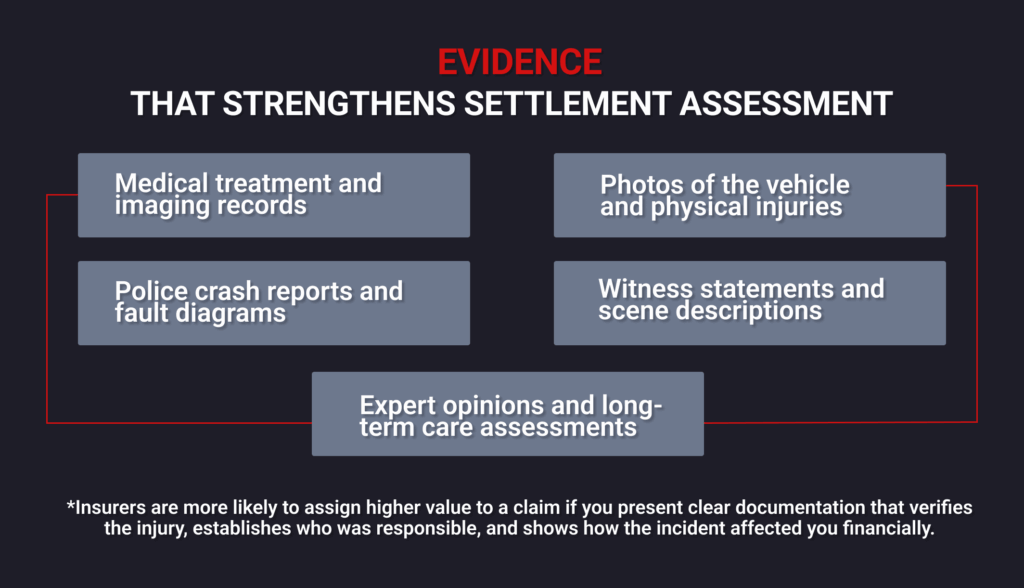
The police report is the first official document in the fault determination process, and it carries real weight. The responding officer documents the scene, notes observable evidence, records statements from both drivers and any witnesses, identifies any traffic violations, and in many cases offers a preliminary assessment of who caused the crash.
A citation issued at the scene — for running a red light, for speeding, for failure to yield — is meaningful supporting evidence. It shows that a trained law enforcement officer observed or concluded that a violation occurred. Insurance companies take citations seriously.
What the police report is not is a final legal determination of civil liability. Officers assess the scene under time pressure with limited information. They don’t always have access to camera footage or mechanical analysis. Their conclusions can be and frequently are challenged by attorneys, adjusters, and accident reconstruction experts.
If you believe the police report inaccurately reflects what happened, that is worth discussing with an attorney. Reports can be supplemented, contested, and reframed through additional evidence. A report that initially appears unfavorable to you is not the end of the story.
If you weren’t able to get a report filed at all, read whether you can file a personal injury claim without a police report in Las Vegas — the answer matters more than most people expect.
Physical Evidence: What the Crash Scene Actually Shows
Physical evidence is often the most reliable indicator of how a crash happened because it doesn’t change its story. It reflects the laws of physics, not anyone’s memory or account.
Vehicle Damage Location
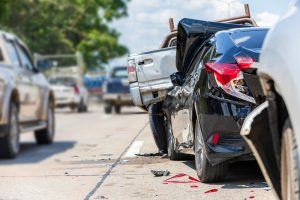
Where the damage appears on each vehicle tells a story about the direction of impact and the position of each car at the moment of collision. Rear-end damage on your vehicle almost always indicates the other driver struck you from behind — which in Nevada creates a strong presumption of fault against that driver, since following distance and attention are their responsibility.
T-bone damage — a perpendicular impact on the driver or passenger door — indicates one vehicle entered an intersection while the other had right of way. The geometry of the damage, combined with the position of traffic signals and any skid marks, can reconstruct which driver had the green light and which one ran it.
Sideswipe damage along the length of a vehicle indicates a lane-change collision. The location of the damage relative to each vehicle’s front and rear can clarify which driver initiated the contact.
Skid Marks, Debris Fields, and Road Evidence
Skid marks show where and when a driver applied their brakes, how long they had to react, and at what speed the vehicle was likely traveling. A driver who had no skid marks at all before impact was either not paying attention or had no warning — both of which are relevant to fault. Long skid marks indicate speed. Their absence at an intersection where a stop was required indicates failure to brake.
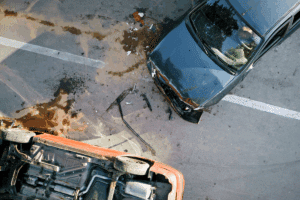
Debris fields — broken glass, vehicle parts, fluid spills — mark the point of initial impact. Combined with vehicle damage and road geometry, they allow investigators and attorneys to reconstruct the sequence of events with significant precision.
Surveillance and Dashcam Footage
Video evidence has transformed fault determination in the last decade. Traffic cameras at Las Vegas intersections, surveillance cameras on nearby businesses, dashcams on one or both vehicles — all of these can capture exactly what happened in a way no witness account can match.
The challenge is time. Traffic camera footage is frequently overwritten within 24 to 72 hours unless a formal preservation request is made. Business surveillance footage may be retained longer but is not automatically preserved for accident claimants. An attorney can send a spoliation letter — a legal preservation demand — immediately after a crash to prevent this evidence from disappearing. Waiting even a few days can mean that footage is gone forever.
Witness Statements: Valuable but Imperfect
Witnesses who saw the crash can provide accounts that support or contradict both drivers’ versions of events. A bystander who saw the other driver run a red light, a pedestrian who observed a driver on their phone immediately before impact, a passenger in another vehicle who watched the collision unfold — all of these perspectives carry weight with insurance adjusters and juries alike.
Witness memory degrades quickly. Contact information collected at the scene is invaluable. If you were injured in a crash and were able to speak with witnesses, preserving their information — even just a name and phone number — can meaningfully strengthen your claim. If you couldn’t gather that information yourself, an attorney may be able to locate witnesses through the police report or through canvassing businesses near the crash site.
How Insurance Adjusters Evaluate Fault
Once a claim is filed, the insurance adjuster on the other side begins their own investigation. They review the police report, contact both drivers for statements, analyze the vehicle damage photographs, and assess whatever evidence has been preserved. Their goal is not to determine the truth with perfect accuracy. Their goal is to evaluate the claim in a way that minimizes their company’s exposure.
That means looking for reasons to assign you a share of fault. Were you traveling at the speed limit or slightly above? Were you in the correct lane? Did your vehicle have any mechanical issues? Did you say anything in your initial statement that could be interpreted as admitting partial responsibility?
Recorded statements are particularly risky in this context. Adjusters are skilled at asking questions that seem straightforward but can produce answers that support a fault attribution. “Were you watching the road the whole time?” sounds simple. Your answer to it may not work in your favor. Understanding what the insurance adjuster actually does with your claim before you speak with one is one of the most protective steps you can take.
This is also why you shouldn’t talk to the insurance company alone after an accident. It’s not about being uncooperative. It’s about not handing the other side evidence they’ll use against you.
When Fault Is Disputed
Fault isn’t always agreed upon. Both drivers may tell different stories. The physical evidence may be ambiguous. The police report may favor one party while other evidence suggests a different conclusion. When fault is genuinely contested, several additional tools come into play.
Accident reconstruction experts analyze the physical evidence, apply engineering principles, and produce formal opinions about how the crash occurred and what caused it. These experts are regularly retained in serious injury cases and their testimony carries significant weight in litigation.
Depositions allow attorneys to question both drivers and witnesses under oath, creating a sworn record that can be compared against earlier statements and physical evidence. Inconsistencies in a driver’s account — between what they told the responding officer, what they told their insurance company, and what they say under oath — are powerful impeachment material.
Mediation and arbitration offer structured settings for resolving disputed fault determinations without a full trial. Many Nevada motor vehicle accident cases resolve in these settings when liability is contested but the parties want to avoid the time and cost of litigation.
Fault Determination in Specific Crash Types
Some crash types carry strong presumptions about fault that shift where the burden of proof sits.
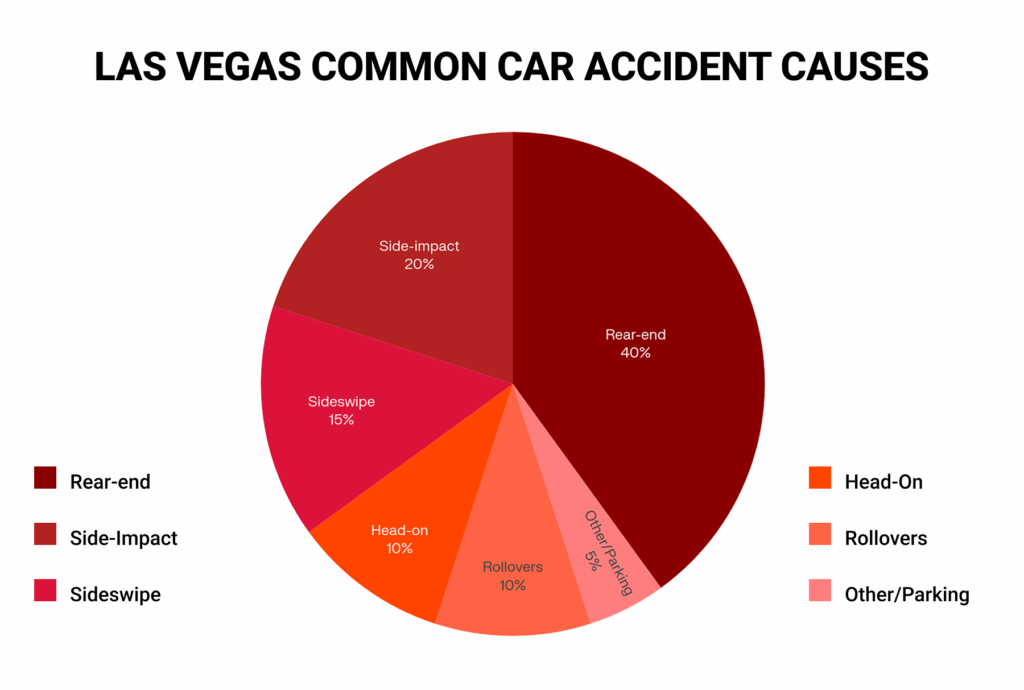
Rear-end collisions: The following driver is presumed at fault in Nevada. That presumption can be rebutted — a sudden and unexpected stop by the lead vehicle can shift some responsibility — but the burden falls on the rear driver to overcome it.
Left-turn crashes: A driver making a left turn is generally required to yield to oncoming traffic. When a left-turn collision occurs, fault typically falls on the turning driver unless the oncoming vehicle was clearly speeding or ran a red light.
Intersection crashes: Fault turns on which driver had the right of way. Traffic signal evidence, witness accounts, and the physical damage pattern all contribute to establishing that determination.
Single-vehicle crashes: Even when only one vehicle is involved, fault may extend beyond the driver. A defective tire, a road hazard that wasn’t properly marked, a design flaw in the vehicle — these can all introduce additional liable parties. Read more about what causes most motor vehicle accidents in Nevada and how those causes shape liability.
Frequently Asked Questions
Does a traffic ticket automatically mean the other driver is at fault?
A citation is strong supporting evidence but not a final legal determination of civil fault. It shows that a law enforcement officer concluded a traffic law was violated — which is meaningful — but civil liability requires showing negligence caused your specific damages. An attorney uses the citation as part of a broader evidentiary case.
What if the other driver denies it was their fault?
Their denial doesn’t change what the evidence shows. Physical damage patterns, footage, witness accounts, and expert analysis all speak independently of what either driver claims. Most fault disputes are resolved through the evidence, not through competing assertions.
Can I dispute the insurance company’s fault determination?
Yes. Insurance company fault determinations are not final and can be challenged. An attorney can present additional evidence, retain experts, and if necessary file a lawsuit that puts the fault question before a neutral decision-maker — a mediator, arbitrator, or jury.
What if I was partly at fault for the crash?
You can still recover in Nevada as long as your fault doesn’t exceed 50 percent. Your compensation is reduced by your percentage of fault. An attorney’s job includes making sure your fault percentage accurately reflects the evidence — not an inflated number the insurer assigns to reduce their payout.
How long do I have to pursue a fault-based claim in Nevada?
Two years from the date of the crash under Nevada’s personal injury statute of limitations. Acting quickly matters — evidence fades, witnesses become unavailable, and footage is overwritten. The sooner an attorney gets involved, the stronger your evidentiary position.
Fault Doesn’t Determine Itself — Build the Case That Does
How fault is determined in a motor vehicle accident is not a passive process that happens around you. It’s an active investigation where the other side is working from day one to protect their interests. The evidence you preserve, the statements you give, and the timeline you act within all affect the outcome.
Howard Injury Law represents injured people throughout Las Vegas and Nevada. We move quickly to preserve evidence, investigate liability thoroughly, and build cases that hold up under pressure. Glen Howard and our team are available 24 hours a day. Start with a free case review — no obligation, no fees unless we recover for you.