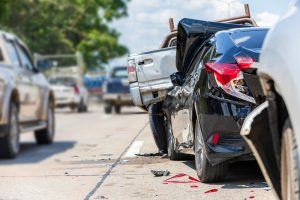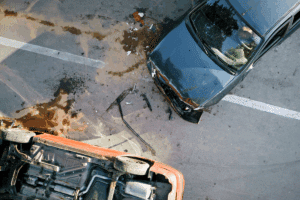


Nevada has a crash problem. The causes of most motor vehicle accidents doesn’t just happen in Las Vegas, though Clark County accounts for more vehicle accidents than the rest of the state combined. The causes are well-documented, repeatable, and in almost every serious case, traceable to a decision someone made behind the wheel.
If you were hurt in a Nevada crash, understanding what caused it matters more than you might think. It shapes how liability is established, how the insurance company will try to frame the other driver’s conduct, and ultimately how much your case is worth. This isn’t just educational background. It’s the foundation of your claim.
Howard Injury Law represents people injured in motor vehicle accidents throughout Las Vegas and Nevada. Glen Howard spent years on the insurance defense side before switching to represent injured people — which means he knows exactly how insurers evaluate these cases and where they look to cut value. Available 24/7. No fees unless we win.

Clark County Is the Epicenter
Before getting into causes, the geography matters. Clark County — the metro area that includes Las Vegas, Henderson, North Las Vegas, and the surrounding valley — generates more crashes, more injuries, and more fatalities than every other Nevada county put together. That’s not just a function of population density. It’s a function of road design, tourism volume, nightlife culture, and the specific behaviors those conditions produce.
When people search for what causes motor vehicle accidents in Nevada, they are almost always asking about Las Vegas. The Strip corridor, the interstate exchanges, the wide arterial grid — these are where Nevada’s crash problem is most concentrated and most severe.
Distracted Driving: The Leading Cause Nobody Takes Seriously Enough
Phones, Apps, and a City Full of Distractions
Distracted driving is the leading cause of motor vehicle accidents in Nevada and across the country. In Las Vegas, it operates on two levels that don’t exist elsewhere in the same combination.
The first is the standard distraction problem: drivers texting, checking notifications, adjusting music, or navigating GPS while traveling at speed. A driver glancing at their phone for five seconds at 55 mph covers the length of a football field without watching the road. At Las Vegas arterial speeds, that gap closes fast.
The second is environmental distraction unique to this city. The Sphere. The casino marquees. The elaborate resort signage along the Strip and downtown. Las Vegas was designed to capture visual attention, and it does — even from drivers who should be watching the road. Tourists are especially susceptible, but locals aren’t immune.
Rideshare drivers add another layer. Las Vegas has an exceptionally high concentration of Uber and Lyft drivers managing app notifications, accepting rides, and navigating unfamiliar pickup locations in real time. Sudden stops in traffic lanes, unexpected U-turns, and lane changes without adequate signaling are routine behaviors in the rideshare corridor around the Strip.
Proving Distraction in a Nevada Crash
Distracted driving is one of the harder causes to prove without legal help. There’s rarely a citation at the scene. But phone records, witness statements, traffic camera footage, and the physical evidence of the crash itself — where the point of impact was, whether brakes were applied — can establish that a driver wasn’t paying attention. An experienced Nevada motor vehicle accident attorney knows how to build that case.
Impaired Driving: A 24-Hour Problem in a 24-Hour City
Most states treat impaired driving as a nighttime weekend issue. In Nevada, it runs around the clock. Las Vegas casinos serve alcohol continuously. Open container zones exist in parts of the city. The entertainment economy is built on an environment where drinking is normalized at every hour of the day.
A crash at 8 a.m. on a Monday in Las Vegas can absolutely involve a driver who has been awake and drinking since the previous afternoon. That’s not hypothetical — it’s a documented pattern in Clark County crash data. Drowsy driving after extended wakefulness also impairs judgment and reaction time in ways clinically similar to alcohol, and Las Vegas’s hospitality workforce — the dealers, servers, and hotel staff working graveyard shifts — adds a significant volume of fatigued drivers to the morning commute.
Nevada’s legal BAC limit is 0.08 for standard drivers and 0.04 for commercial drivers. But impairment begins well below those thresholds. A driver at 0.06 BAC has meaningfully compromised reaction time and decision-making. And drug impairment — including legal cannabis, prescription medications, and illegal substances — doesn’t show up in a standard breathalyzer at all.
If the driver who hit you was impaired, their criminal case runs separately from your civil claim. You don’t need a DUI conviction to recover compensation. What you need is an attorney who knows how to document and present that evidence in a civil context.
Speeding: Normalized and Dangerous
Nevada’s wide multi-lane roads encourage speed. The mile-long stretches between signals on major Las Vegas arterials, the long straight runs on I-15 and US-95, the general driving culture in a city where aggressive behavior behind the wheel is common — all of it creates conditions where speeding isn’t the exception. It’s the norm.
Speeding is a direct cause of severe injuries for a straightforward physical reason: impact force increases exponentially with speed. A crash at 50 mph doesn’t produce injuries twice as severe as a crash at 25 mph. It produces injuries roughly four times as severe because kinetic energy scales with the square of velocity. When you see serious spinal injuries, traumatic brain injuries, or fatalities in Nevada crash reports, speed is almost always a contributing factor.
On the I-15 resort corridor and US-95, drivers regularly travel 15 to 20 mph above posted limits. These aren’t back roads. They’re high-volume, high-complexity corridors where merge zones are tight and reaction windows are short. When something goes wrong at those speeds, the consequences are immediate and serious.
Failure to Yield: The Underreported Cause of T-Bone Crashes
Failure to yield violations have increased significantly across the Las Vegas valley. At busy intersections, drivers routinely fail to yield to cross-traffic, fail to yield to pedestrians in marked crosswalks, and run protected turn signals. These violations produce some of the most severe crash types — broadside and T-bone collisions where one vehicle strikes the other at a perpendicular angle, often at full speed.
T-bone crashes are particularly dangerous because the side of a vehicle offers significantly less protection than the front or rear. The door panel, glass, and a relatively thin structural frame are the only barriers between the occupant and direct impact. Serious injuries to the head, neck, chest, and pelvis are common outcomes.
Failure to yield is harder to document than speeding or impairment, but it’s not impossible. Intersection camera footage, witness statements, and the physical evidence of where the vehicles were struck can establish which driver had the right of way and which one ignored it.
Reckless Driving: Tailgating, Weaving, and Aggressive Behavior
Reckless driving is a legal category in Nevada, but it’s also a description of a pattern. Tailgating on congested arterials. Weaving aggressively through heavy traffic on the 215 Beltway. Running red lights not because of a yellow-light misjudgment but as a deliberate choice. These behaviors are common on Las Vegas roads and they produce predictable outcomes.
Rear-end crashes from tailgating are among the most frequent collision types in Clark County. They often appear minor from the outside — a damaged bumper, a cracked tail light — while producing significant soft tissue injuries, disc injuries, and concussions in the occupants. Insurance companies frequently try to minimize these claims by pointing to the apparent lack of vehicle damage. That argument is factually wrong and legally contestable.
If reckless driving caused your crash, the documentation of that conduct — through police reports, traffic citations, witness accounts, and dashcam footage — strengthens your claim significantly. Learn more about what the insurance adjuster actually does with your claim and why their initial assessment is rarely the final word.

Tourism and Unfamiliar Drivers
Nevada draws tens of millions of visitors annually, and a substantial portion of them rent cars. They navigate unfamiliar roads by GPS, often making real-time decisions — sudden braking, late lane changes, wrong-way turns — that local drivers don’t anticipate and can’t always avoid.
The risk isn’t that tourists are bad drivers. The risk is that unfamiliar drivers in high-complexity environments make unpredictable decisions. A driver from a smaller city who has never navigated a six-lane arterial grid doesn’t have the spatial awareness to execute a lane merge safely at 45 mph while also watching for a GPS-directed turn coming up in 200 feet.
Out-of-state drivers who cause crashes carry insurance from their home state, which sometimes creates complications in how claims are handled. Nevada law governs the accident itself, but dealing with an out-of-state insurer requires experience navigating those relationships. The motor vehicle accident attorneys at Howard Injury Law handle these cases regularly.
Desert Weather: Underestimated and Genuinely Dangerous
Nevada’s desert climate creates weather conditions that catch drivers off guard, particularly visitors. Flash flooding during monsoon season — typically July through September — produces standing water on roads that drain poorly and where drivers have no experience reading flood conditions. Vehicles stall in flooded underpasses. Drivers misjudge water depth. Crashes and entrapments follow.
High winds create visibility problems and lateral instability, particularly for high-profile vehicles like trucks and SUVs. And while snow is rare in Las Vegas itself, the mountain corridors connecting Nevada to California can produce ice and snowpack that visitors from warmer climates are completely unprepared to navigate.
When adverse weather contributes to a crash, questions about road maintenance, signage adequacy, and drainage infrastructure may become relevant alongside driver conduct. An attorney can assess whether any of those factors apply to your situation.
What the Cause of Your Crash Means for Your Case
Every crash cause carries a different evidentiary footprint. Impairment requires different documentation than distraction. Speeding leaves different physical evidence than failure to yield. Knowing what caused your crash is the starting point for building a case that holds up.
Nevada follows a modified comparative negligence standard, meaning your compensation can be reduced if you’re found partially at fault — and eliminated entirely if you’re more than 50 percent responsible. Insurance companies know this, and they will look for ways to assign you a share of fault regardless of what the facts show. Understanding how comparative negligence works in Nevada before you speak with any adjuster protects your position.
Knowing how much your personal injury case may be worth is equally important. The initial offer from an insurance company is rarely reflective of the full value of your claim. Medical costs, lost wages, future treatment needs, and non-economic damages all factor into what a fair recovery looks like.

Frequently Asked Questions
What is the most common cause of motor vehicle accidents in Nevada?
Distracted driving is the leading cause of crashes statewide, followed closely by impaired driving and speeding. In Clark County specifically, the combination of heavy tourist traffic, a 24-hour alcohol culture, and wide high-speed roads creates conditions where all three causes overlap regularly. Most serious crashes involve more than one contributing factor.
Does it matter which driver caused the crash when I file a claim?
Yes — significantly. Nevada is a fault state, meaning the driver who caused the crash is responsible for resulting damages. The cause of the crash directly affects how liability is established and how much compensation you can recover. If multiple factors contributed — for example, a speeding driver who was also impaired — each element strengthens your claim.
How do I prove the other driver was distracted or impaired?
You generally can’t do this alone. Phone records require a legal request to obtain. Toxicology results may require access to official reports. Traffic camera footage is often overwritten within days if not preserved. An attorney can move quickly after a crash to request and preserve this evidence before it’s gone. The sooner you contact a motor vehicle accident lawyer in Las Vegas, the stronger your evidentiary position.
What should I do right after a crash in Nevada?
Call 911 and ensure a police report is filed. Get medical attention immediately — even if you feel okay. Photograph everything at the scene: vehicle positions, road markings, damage, and any visible injuries. Collect witness contact information. Do not give a recorded statement to any insurance company before speaking with an attorney. Understanding why you shouldn’t talk to the insurance company alone after an accident can protect the value of your claim from the very first day.
How long do I have to file a personal injury claim in Nevada?
Nevada’s statute of limitations for personal injury is generally two years from the date of the accident. That deadline is firm, and missing it forfeits your right to recover. Review the Nevada statute of limitations for personal injury for details on how the clock runs and when exceptions may apply.
The Cause Was Someone Else’s Choice — Make Them Accountable
What causes most motor vehicle accidents in Nevada isn’t mystery or bad luck. It’s distraction. Impairment. Speed. Recklessness. Choices made by a driver who was not paying attention, not in control, or not following the law. When those choices hurt you, Nevada law gives you a path to hold that driver accountable and recover what you’ve lost.
Howard Injury Law handles motor vehicle accident cases throughout Las Vegas and Nevada. We work on contingency — you pay nothing unless we recover for you. Glen Howard and our team are available 24 hours a day. If you’re ready to find out whether your crash warrants a claim, start with a free case review and let’s talk through what happened.