


If you’re waiting on a settlement, one worry tends to sit in the back of your mind: how much of this will the government take? For most injured people in Nevada, the answer is a relief. The large majority of a personal injury settlement is not taxable — and the state of Nevada takes nothing at all.
Whether personal injury settlements are taxable in Nevada comes down almost entirely to federal law, because Nevada has no state income tax. That said, a few specific slices of a settlement can be taxed, and how your agreement is written can change what you owe. Here’s how it actually works, in plain terms.

Most Nevada injury settlements aren’t taxed
Two things work in your favor as an injured Las Vegas resident.
First, Nevada has no state income tax. It’s written into the state constitution, and changing it would take a statewide vote. So no matter how your settlement is broken down, Nevada itself will not tax a dollar of it.
Second, federal law protects the core of a personal injury recovery. Under Section 104 of the federal tax code, money you receive because of a physical injury or physical sickness is excluded from your income. That covers the bulk of a typical case. The idea behind the rule is simple: this money exists to make you whole after harm, not to give you a windfall — so the IRS generally leaves it alone.
The word doing the heavy lifting is physical. As long as your compensation traces back to a physical injury, most of it stays tax-free. The exceptions kick in for a handful of specific categories below.
Which parts of your settlement are tax-free
In a standard Nevada personal injury case built on a physical injury, these portions are generally not taxed at the federal level — and never at the state level:
- Medical expenses. Payment for your ER visit, surgery, hospital stay, imaging, therapy, medication, and future care.
- Pain and suffering. Compensation for the physical pain and the emotional distress that flow directly from your physical injury. Because the distress is tied to a bodily injury, it rides along tax-free with the rest.
- Property damage. Money to repair or replace your vehicle or other belongings. Reimbursing what you already owned isn’t income.
- Lost wages and lost earning capacity. This one surprises people, and it’s worth getting right: when your lost income results from your physical injury, that portion is generally tax-free too. It’s treated as part of your injury recovery, not as ordinary wages. (Lost wages are only taxable in non-injury cases — think wrongful termination or discrimination — where there’s no physical injury behind them.)
That last point trips up a lot of online summaries, which flatly call lost wages “taxable.” For a physical injury claim in Nevada, that’s usually wrong, and getting it wrong can cost you real money.
Which parts can be taxed
A few categories are treated as taxable income on your federal return, even in an injury case:
- Punitive damages. These are meant to punish the at-fault party, not to reimburse your losses — so they’re always taxable. They’re also rare and awarded only in egregious cases.
- Interest. Any pre-judgment or post-judgment interest added on top of your award is taxable.
- Previously deducted medical costs. If you itemized and wrote off injury-related medical bills on a past tax return and got a tax benefit, the portion of your settlement that reimburses those specific costs can be taxable when you recover it.
- Emotional distress with no physical injury behind it. If a claim is built purely on emotional distress — with no physical injury or sickness anchoring it — that compensation is taxable. In most Las Vegas accident cases, this isn’t a factor, because there’s a real physical injury at the center.
How your settlement’s structure changes your tax bill
Here’s what most people don’t realize: the same total dollar amount can carry a very different tax bill depending on how the settlement agreement labels it. Money assigned to your physical injuries stays tax-free. Money labeled as punitive damages or interest is taxable. The allocation written into the paperwork matters.
This is one of the quieter ways an experienced attorney protects your money. Insurance carriers know how these categories work, and a poorly drafted agreement can push more of your recovery into taxable buckets than it should. Glen Howard spent the early part of his career on the insurance defense side before switching to represent injured people — he knows how the other side evaluates and structures offers, and he uses that to build agreements that hold up and protect what you keep.
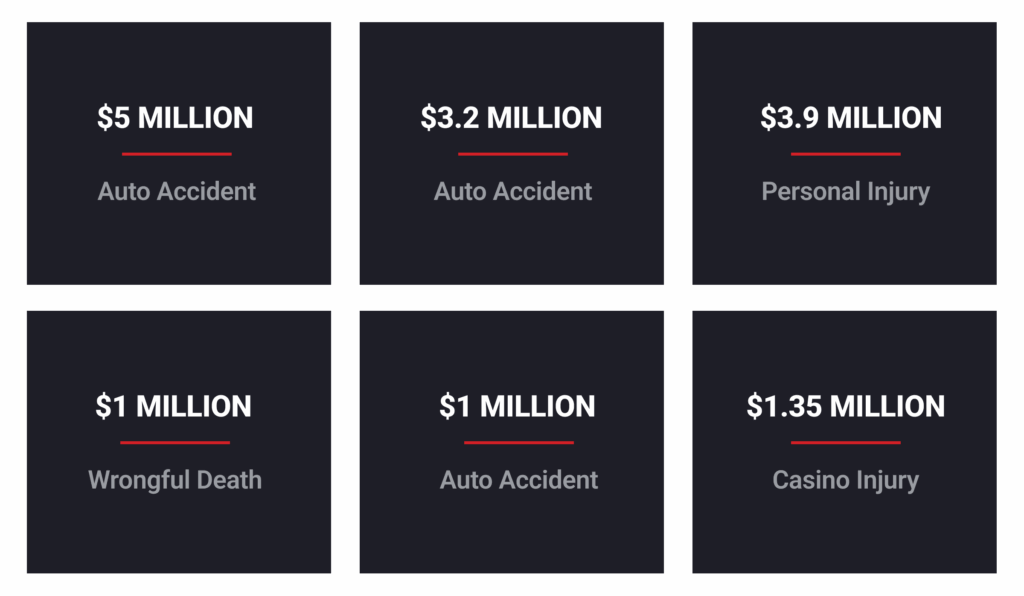
If you’re still trying to figure out the size of your claim in the first place, that’s a separate question worth understanding — start with how much your personal injury case may be worth and the results our firm has secured for injured Nevadans.
One honest caveat: we’re personal injury attorneys, not tax preparers. This is general information about how Nevada and federal rules usually work — not tax advice for your specific return. Before you file, confirm the details with a CPA or tax professional, since every case is different.
Do you get a 1099 — and do you have to report it?
For the tax-free part of a physical injury settlement, you usually won’t receive a 1099, and that portion generally isn’t reported as income. Where the taxable slices come in — punitive damages or interest — the paying party may issue a Form 1099-MISC or 1099-NEC, and those amounts do need to be reported on your federal return.
Because the IRS pays attention to large deposits and to any 1099s it receives, the safe move is to keep your settlement breakdown and hand it to your tax professional at filing time. If your case is a clean physical injury claim with no punitive damages or interest, there’s often little or nothing to report — but confirm that with a CPA rather than guessing.

Frequently Asked Questions
Do I have to report a personal injury settlement to the IRS?
It depends on what the money compensates. In a physical injury case, the core of your settlement — medical bills, pain and suffering, and lost wages tied to the injury — is excluded from income under federal law and generally isn’t reported. The parts that are taxable, mainly punitive damages and interest, must be reported, and you’ll often receive a 1099 for them. Nevada takes nothing either way, since the state has no income tax. The cleanest approach is to keep your settlement’s breakdown and review it with a CPA at tax time so the taxable slices, if any, are reported correctly.
Do you get a 1099 for a personal injury settlement?
Usually not for the tax-free portion. Compensation for your physical injuries — medical care, pain and suffering, injury-related lost wages — typically isn’t reported on a 1099. Where you may receive a Form 1099-MISC or 1099-NEC is for taxable pieces like punitive damages or interest added to your award. If your case is a straightforward physical injury claim with no punitive damages, you may not receive one at all. Because rules vary with how a settlement is structured, confirm what you received — and what needs reporting — with a tax professional before you file.
What kind of lawsuit settlements are not taxable?
Settlements rooted in a physical injury or physical sickness are the main category that isn’t taxable federally — car accidents, slip-and-falls, dog bites, and similar injury claims. The tax-free treatment covers the compensatory damages that flow from that physical harm. By contrast, settlements built on non-physical claims — employment disputes, discrimination, defamation, or standalone emotional distress with no physical injury — are generally taxable. Punitive damages and interest are taxable in any case. Since Nevada has no state income tax, the only question for a Las Vegas resident is the federal one.
How much of a $25,000 settlement will I actually keep?
There’s no single number, because your take-home depends on more than taxes. In a physical injury case, taxes usually aren’t the big subtraction at all — the larger factors are attorney fees, any medical bills or liens paid back out of the settlement, and case costs. Taxes typically only enter the picture if part of the award is punitive damages or interest. To understand your realistic net, it helps to look at what a personal injury lawyer actually costs and how a contingency fee works in Nevada, then have an attorney walk through your specific numbers.
Talk to a Las Vegas injury lawyer before you settle
If you’re weighing whether to pursue a claim, or you’ve got an offer in front of you and you’re doing the math on what actually lands in your pocket, that’s exactly the moment to get a second set of eyes on it. Taxes are rarely the biggest factor that reduces a Nevada injury settlement — how the case is valued, negotiated, and structured usually matters far more to your take-home number.
At Howard Injury Law, the consultation is free, and there’s no fee unless we win your case. You’ll talk through your situation with a Las Vegas personal injury attorney who knows how insurers think, and you’ll walk away understanding what your claim may be worth and how to protect it. Contact us for a free case review — bring your questions, including the ones about what you’ll actually keep. If you were injured and you’re not sure whether you even have a case, that’s the first thing our Las Vegas personal injury team will help you find out.