


If you were hurt in an accident and someone called you “the plaintiff,” here’s the plain version: a plaintiff is the injured person who brings a personal injury claim to recover compensation. In a Las Vegas personal injury case, that’s you — the person seeking to be made whole after someone else’s carelessness caused you harm.
The word sounds formal, and being handed a legal label while you’re still in pain and sorting out medical bills can feel like you’ve been dropped into a system you didn’t sign up for. So let’s take the mystery out of it. This is what a plaintiff is, what you’re actually responsible for, and what you — or more accurately, your Las Vegas personal injury lawyer — have to prove.

What “Plaintiff” Actually Means
A plaintiff is the party who starts a legal claim. In an injury case, the plaintiff is usually the injured person. It can also be a family member or a legal representative — for example, a parent filing on behalf of an injured child, or the representative of someone’s estate in a wrongful death case.
The plaintiff is one side of the case. The other side is the defendant — the person, company, or driver whose negligence caused the harm. In practice, you’re rarely fighting that person directly. You’re dealing with their insurance company, which is where most of the friction in a Nevada injury claim actually comes from.
So if you’ve been labeled the plaintiff, it simply means you’re the one asking to be compensated for what happened to you. It is not a judgment about your case, and it does not mean the whole burden falls on your shoulders alone.
What the Plaintiff Is Actually Responsible For
Here’s the part that surprises most injured people in Nevada: your day-to-day job as a plaintiff is smaller and more human than the legal language suggests. Your responsibilities come down to a few things:
- Get medical care and follow through. Treat consistently until your condition stabilizes. Gaps in treatment are the first thing an adjuster uses to argue you weren’t really hurt.
- Be honest and consistent. What you say to doctors, to the insurance company, and on social media all has to line up. It usually does — as long as you’re not guessing or exaggerating.
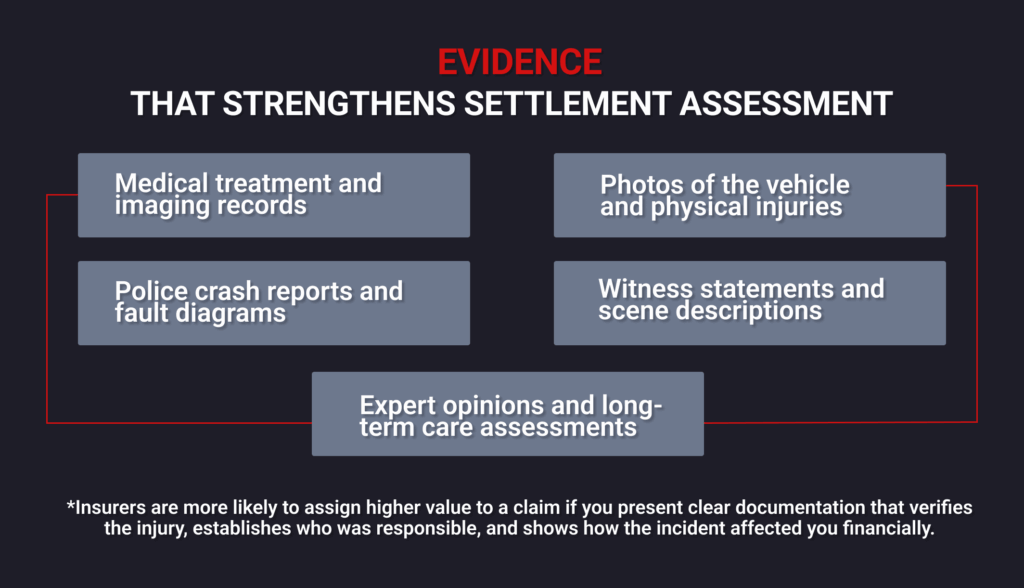
- Preserve evidence. Keep photos, the crash report, bills, and names of witnesses. Your attorney builds on what exists.
- Don’t let the deadline pass. Nevada gives you a limited window to file, and it’s shorter than most people assume.
Notice what’s not on that list: personally proving the legal case. Assembling the police report, pulling medical records, calculating damages, and arguing the four legal elements below — that’s your attorney’s job, not yours. A good injury lawyer carries the legal weight so you can focus on healing.
The Four Things a Plaintiff Must Prove
To recover compensation, a plaintiff has to establish four elements of negligence under Nevada law. This is the core of every injury case, and it’s the answer to a question people search constantly: what are the four things a plaintiff must prove?
- Duty. The other party owed you a duty of care. Every driver in Las Vegas, for instance, has a legal duty to drive safely and obey traffic laws.
- Breach. They broke that duty — ran the red light at Sahara and Decatur, texted while driving, ignored a spill on a store floor.
- Causation. That breach is what actually caused your injuries. This is where insurers push hardest, especially if you had any prior condition.
- Damages. You suffered real, measurable harm — medical bills, lost wages, pain and suffering, and other losses.
All four have to be present. A clear breach means nothing if your attorney can’t connect it to your specific injuries. That’s exactly why cases get evaluated carefully before anyone promises you an outcome.
What “Preponderance of the Evidence” Means
You do not have to prove your case beyond a reasonable doubt. That’s the criminal standard, and it’s far higher than what applies to you.
As a plaintiff in a civil injury case, your standard is preponderance of the evidence — meaning it’s more likely than not that the defendant caused your harm. Think of it as tipping the scale just past the halfway point. It’s a real bar, but a much more reachable one, and it’s part of why strong evidence and an experienced attorney matter so much.
What Happens After You Become a Plaintiff
Being a plaintiff is a process, not a single event. In most Nevada injury cases it moves through the same general stages:
- Medical treatment until you reach maximum improvement, so the true extent of your injuries is known.
- Evidence gathering — the crash report, medical records, bills, witness statements, and photos.
- The demand and negotiation — your attorney presents the claim to the insurance company and negotiates.
- Settlement or trial — most cases resolve through negotiation, but the ones that don’t proceed toward court.
The large majority of personal injury claims settle without a full jury trial. That doesn’t mean you settle for less — it means a well-documented claim, backed by a firm willing to go to trial, often gets resolved fairly without one. If you want the deeper picture, we cover what to expect during the claim process and the real chances of winning a personal injury lawsuit in separate guides.
The Two-Year Clock Is Already Running
One responsibility deserves its own warning. Under Nevada law (NRS 11.190), you generally have two years from the date of the injury to file a personal injury lawsuit. Miss it, and the court will almost certainly refuse to hear your case, no matter how strong it is.
A few situations change the timing — the “discovery rule” for injuries that surface later, and different rules for medical malpractice — so don’t assume the deadline based on a headline. We break the details down in our guide to Nevada’s statute of limitations.
And being partly at fault doesn’t automatically end your claim. Nevada uses a modified comparative negligence rule, so you can still recover as long as you’re not found more at fault than the other side — your compensation is simply reduced by your share. Whether you have a claim at all is a fact-specific question, which is why every case is different and worth a conversation with an attorney.
Frequently Asked Questions
What is a plaintiff in simple terms?
A plaintiff is the person who brings a legal claim. In a personal injury case, that’s the injured party seeking compensation from whoever caused the harm. It can also be a family member or legal representative filing on someone’s behalf — for example, a parent for an injured child, or an estate’s representative in a wrongful death case. The other side is the defendant, usually backed by an insurance company. Being called the plaintiff doesn’t mean the whole legal burden is on you personally; it just identifies you as the one asking to be made whole.
What are the four things a plaintiff must prove?
A plaintiff must prove four elements of negligence: duty (the other party owed you a duty of care), breach (they broke that duty), causation (the breach caused your injuries), and damages (you suffered real, measurable losses). All four must be present — a clear breach doesn’t help if it can’t be tied to your injuries. And you don’t have to prove them beyond a reasonable doubt. The civil standard is preponderance of the evidence, meaning more likely than not. In practice, your attorney assembles the evidence and makes these arguments for you.
How hard is it to win a personal injury lawsuit?
It depends far more on evidence and preparation than on luck. Clear liability, consistent medical treatment, and thorough documentation make a claim much stronger, while gaps in treatment or prior injuries give insurers room to push back. Most claims never reach a jury — they resolve through negotiation once the evidence is solid. The honest answer is that “hard” varies case by case, which is why an early case review matters. We go deeper into success factors and realistic odds in our guide on the chances of winning a personal injury lawsuit.
How much is a good settlement for pain and suffering?
There’s no honest flat number, and anyone who quotes one before reviewing your case isn’t being straight with you. Pain and suffering compensation depends on the severity of your injuries, how long recovery takes, whether the effects are permanent, how your daily life and work are affected, and the strength of your evidence. Two people in similar crashes can end up with very different figures. Rather than a made-up average, look at what drives value in your specific situation — we walk through that in our breakdown of how much your case may be worth.
Do I have to go to court as the plaintiff?
Usually not. Most Nevada personal injury claims settle through negotiation with the insurance company and never reach a courtroom. Filing a lawsuit — or preparing for trial — is often a strategic step that pushes an insurer toward a fair offer, not a sign you’ll end up in front of a jury. When a case does go to trial, it’s typically because the insurance company refused to offer what the claim is genuinely worth. Working with a firm that’s willing and able to try your case tends to produce better settlements, precisely because the other side knows the threat is real.
You Don’t Have to Prove Your Case Alone
Here’s what should take the pressure off: proving those four elements is your lawyer’s job, not yours. And it helps to have someone who has stood on the other side of the table.
Attorney Glen Howard built Howard Injury Law after years as an insurance defense attorney — the exact role that once involved finding holes in claims like yours. He knows how adjusters attack duty, dispute causation, and shrink damages, because that used to be the assignment. Now that experience works for injured Nevadans instead of against them.
That background is also why the “burden of proof” shouldn’t scare you off. The right Las Vegas injury attorney anticipates each move before it’s made — and at Howard Injury Law, you pay nothing unless we win your case.
Whether your accident happened on the Strip, on I-15, or on a quiet street in Henderson, the same question is worth answering early: do I actually have a case? You can find out in a free, no-pressure consultation. Call (702) 331-5722 or reach out to our Las Vegas team — even if you only want to understand where you stand before deciding anything. The two-year clock won’t wait, and the earlier you ask, the more your attorney can do.