


Most people don’t lose settlement value in one dramatic mistake. They lose it in small, quiet ways — a gap between doctor visits, a Facebook post, an offhand “I’m so sorry” at the scene — and they don’t find out until the offer comes in low. The good news: if you know what reduces your personal injury settlement, most of these factors are still within your control right now.
Below is what actually shrinks a payout in Nevada, why insurance companies lean on each one, and what you can do about it before it costs you.

The short answer: what actually shrinks a settlement
A few categories do most of the damage:
- Shared fault — your share of the blame gets subtracted from your recovery
- Gaps or delays in medical treatment — silence in your records reads as “not really hurt”
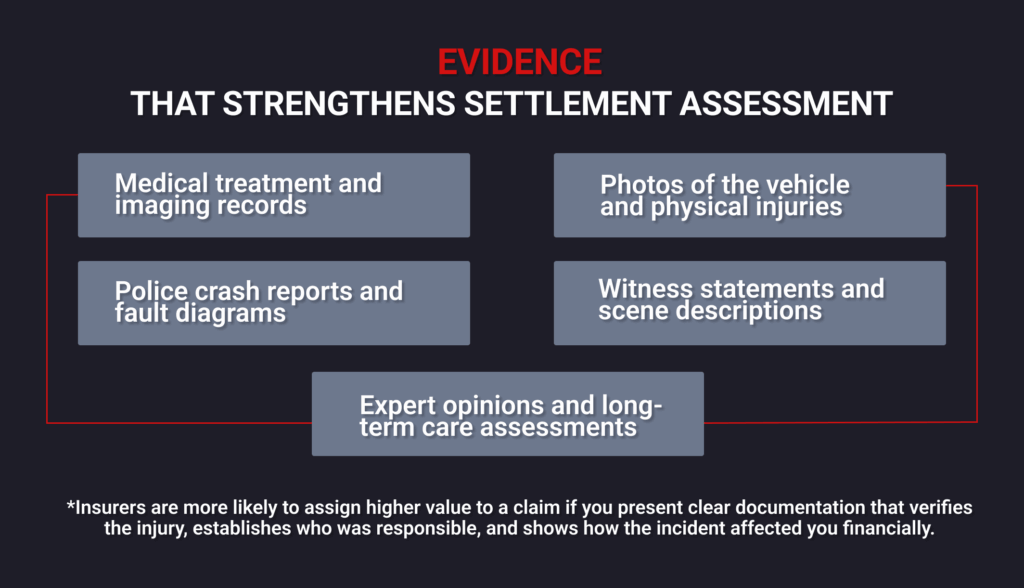
- Weak evidence and documentation — no proof means no leverage
- Pre-existing conditions to the same body part — makes causation harder to show
- Avoidable mistakes — recorded statements, admitting fault, social media
- Deductions and liens — fees, costs, and unpaid medical bills come out of the gross
Some of these are fixed by the facts of your crash. Many are not. Knowing which is which is where a Las Vegas personal injury lawyer earns their keep.
Shared fault: how Nevada’s comparative negligence rule cuts your payout
Nevada follows a modified comparative negligence rule under NRS 41.141. In plain terms: if you’re partly to blame for the accident, your recovery is reduced by your percentage of fault. If a jury values your case at $100,000 and finds you 20% responsible, you recover $80,000.
There’s a hard cutoff, though. If you’re found 51% or more at fault, you recover nothing. At 50% or below, you can still recover — just reduced.
This is exactly why insurance adjusters work so hard to pin fault on you. Every percentage point they shift onto you shrinks what they owe, and pushing you past that 51% line erases the claim entirely. Fault is rarely as obvious as it feels in the moment, and how it’s argued matters. Every case turns on its own facts, so if fault is in dispute, that’s a conversation to have with an attorney before you accept anyone’s version of what happened.
Gaps and delays in medical treatment
Your medical records are the backbone of your claim. When there are holes in them, insurers fill those holes with the story that costs them the least.
- Delayed treatment. Waiting days or weeks to see a doctor hands the adjuster an argument: if you were really hurt, you’d have gone sooner — so maybe the injury came from somewhere else. Get evaluated promptly, even after a “minor” crash on I-15 or a fender bender in a casino parking garage.
- Inconsistent care. Skipping appointments or stopping treatment early signals you’ve recovered, whether you have or not. Follow your provider’s plan and let them note it.
- Fast healing. Injuries that resolve quickly genuinely need less care, which tends to mean lower offers. That’s not a reason to over-treat — it’s a reason to document accurately while you’re symptomatic.
A related milestone matters here: settlement talks usually wait until you reach maximum medical improvement, the point where your condition has stabilized. Settling before then risks locking in a number that doesn’t account for care you still need.
Weak evidence and documentation
Two claims with identical injuries can settle for very different amounts based purely on what’s provable.
Missing records are the most common leak. Without clear bills, receipts, and diagnosis notes, you’re asking an insurer to take your word for your losses — and they won’t. Thorough medical documentation is what turns “I’m in pain” into a number they have to answer for.
Pre-existing conditions to the same body part make causation harder — not impossible. If you had a prior back injury and now your back is worse, the insurer will argue the crash changed nothing. Nevada law still lets you recover for an injury the accident aggravated; the burden is showing the before-and-after, which is another reason complete records matter.
Soft-tissue injuries like sprains and strains generally settle for less than objective injuries such as fractures, simply because they’re harder to see on a scan. They’re still real and still compensable — they just need more careful documentation to hold their value.
Mistakes that quietly lower your own settlement
These are the factors you control completely, and the ones people regret most.
Admitting fault. A reflexive apology or a casual “I didn’t see you” at the scene gets treated as an admission. Be honest with police, but don’t editorialize about blame.
Recorded statements. The adjuster’s call sounds routine and friendly. It isn’t — it’s evidence, and it’s designed to get you on record saying something usable. You’re not required to give one before speaking with an attorney. If you want to understand how these conversations actually work, here’s how to handle dealing with the insurance adjuster.
Social media. Insurers monitor claimants’ accounts. A photo of you hiking Red Rock, a check-in at a Strip show, or a friend tagging you at a party gets screenshotted and offered as proof your injuries are exaggerated — even if you were in pain the whole time. Go dark on social media from the day of the crash until your case resolves.
Why your “gross” settlement isn’t what you take home
Even a strong settlement gets reduced before it reaches you. Understanding this upfront keeps you from panicking when the net figure looks smaller than the headline number.
Three things come out of a gross settlement: attorney fees (in Nevada, personal injury cases run on a contingency fee — a percentage, with no fee unless you win), case expenses (filing costs, records, experts), and medical liens — unpaid bills your providers are owed directly from the proceeds. If those liens aren’t negotiated down, they can take a serious bite. Here’s how medical liens work and why they’re worth fighting over.
Here’s the part insurers don’t advertise: a skilled negotiator often raises the gross settlement — and negotiates the liens down — by enough that you net more than you would have handling it alone, even after fees. If you’re wondering what your case is actually worth, the answer depends heavily on how these numbers are built and defended. It helps to understand how settlement value is calculated before you accept anything.
The good news: most of these are fixable — and an insider knows the playbook
Notice how many of the factors above are about strategy, not the crash itself. Fault gets argued. Documentation gets built. Liens get negotiated. Mistakes get contained. That’s the work.
Howard Injury Law was founded by attorney Glen Howard, who spent years as an insurance-defense attorney before switching sides. He knows exactly how carriers assign fault, time their lowball offers, and use your own records and social media against you — because he used to build those arguments. Now he uses that playbook to protect Nevada clients from it. Working with a Las Vegas personal injury lawyer who’s seen both sides is one of the most reliable ways to keep your settlement from quietly bleeding value.

Frequently Asked Questions
Does being partly at fault mean I get nothing in Nevada?
Not usually. Nevada uses modified comparative negligence under NRS 41.141, so you can still recover as long as you’re 50% or less at fault — your award is simply reduced by your percentage of blame. If you’re found 30% responsible, you keep 70%. The one hard limit: at 51% or more at fault, you’re barred from recovering anything. Because insurers push fault onto you to shrink or eliminate your claim, how fault gets argued can change your outcome significantly. Every accident is different, so if fault is disputed, it’s worth reviewing the facts with an attorney before accepting any percentage.
Can social media really lower my settlement?
Yes, and it’s one of the easiest ways to hurt your own case. Insurance companies monitor claimants’ public profiles looking for anything that contradicts your injuries. A photo of you smiling at a Summerlin barbecue, a check-in at a casino, or a tagged post showing you active gets presented as evidence you’re exaggerating — even when you were hurting the entire time and pushed through it. Privacy settings don’t fully protect you, and deleting posts after a claim starts can create its own problems. The safest approach is to stop posting entirely from the day of the accident until your case is fully resolved.
Do pre-existing conditions ruin my injury claim?
No, but they make it more complicated. If you had a prior injury to the same body part, the insurer will argue the accident didn’t cause your current pain. Nevada law still allows you to recover when a crash aggravates or worsens a pre-existing condition — you’re entitled to compensation for the additional harm. The key is documentation that shows your baseline before the accident and the change afterward. Complete medical records and, often, a doctor’s opinion connecting the crash to your worsened condition are what keep a pre-existing injury from being used to zero out your claim.
How much of my settlement goes to medical bills and attorney fees?
Your final take-home is the gross settlement minus three things: attorney fees (a contingency percentage, with no fee unless you win), case expenses, and any medical liens owed to your providers. The exact split varies by case. What surprises people is that a good attorney frequently increases the gross settlement and negotiates the liens down enough that you net more than you would have on your own — even after fees come out. The gross number on the check isn’t the number that matters; the net after skilled negotiation is.
Is it too late to protect my settlement if I already made a mistake?
Often, no. A single social media post, a recorded statement, or a gap in treatment doesn’t automatically sink a claim — it’s a problem to manage, not a death sentence. The sooner an attorney gets involved, the more they can contain the damage, correct course on your documentation, and keep the insurer from building their whole case on one slip. The real risk is waiting: Nevada has deadlines to file, and evidence gets harder to preserve over time. If you’re worried you’ve already hurt your case, that’s a reason to call sooner, not to give up.
Protect what your case is worth
If any of this sounds like your situation — a lowball offer on the table, a post you’re second-guessing, a stack of medical bills you don’t understand — the value you have left is worth protecting now, while it can still be protected. Howard Injury Law offers a free, no-pressure consultation to review where your case stands and what’s dragging it down. You’ll talk through your options with a team that knows the insurance side from the inside, and you pay nothing unless we win.
Call (702) 331-5722 or start your free case review today. It costs nothing to find out what your case is really worth — and what it would take to defend it.