


A drunk driver who crossed the center line and hit you head-on didn’t make an ordinary mistake — they made a choice, and Nevada law has a specific way to punish it. Punitive damages are money a court can order that driver to pay on top of your medical bills and lost income, for the sole purpose of punishing that choice and deterring the next person from making it. After a drunk-driving head-on in Las Vegas, punitive damages are often the difference between a payout that covers your losses and one that actually holds the driver accountable.
Here’s how they work in Nevada, how hard they are to prove, and what it realistically means for the value of your claim.
What Punitive Damages Actually Are
Most car accident money comes in the form of compensatory damages — payment meant to make you whole. That covers medical treatment, future care, lost wages, reduced earning capacity, and pain and suffering. Compensatory damages look backward at what the crash cost you.
Punitive damages do something different. They look at the driver’s conduct and punish it. A jury awards them not to reimburse you, but to send a message: this behavior is unacceptable, and Nevada will make it expensive. They stack on top of your compensatory award — they don’t replace it.
In an ordinary fender-bender, punitive damages are rare and hard to get. A driver who was simply careless usually hasn’t crossed the line the law reserves for punishment. A drunk driver who chose to get behind the wheel and caused severe injuries in a head-on crash is a different story entirely.
Why a Drunk-Driving Head-On Is a Strong Punitive Damages Case in Nevada
Nevada singles out impaired driving for punitive treatment. The state has a statute written specifically for injuries caused by drunk or drugged drivers — separate from the general punitive damages rule — because lawmakers decided that choosing to drink and then drive shows a conscious disregard for everyone else on the road.
Head-on collisions make that disregard impossible to ignore. When a wrong-way driver comes at you on I-15, US-95, or the 215 Beltway — or crosses the center line on a two-lane road out toward the valley’s edges — the closing speed is brutal, and the injuries are usually catastrophic. Traumatic brain injuries, spinal damage, multiple fractures, and internal injuries are common in these wrecks, and the severe injuries at stake are exactly why the punitive damages after a head-on collision question comes up so often for these clients.
The combination — a driver who willfully got drunk, plus a crash type that maims — is one of the strongest fact patterns for punitive damages that Nevada personal injury law recognizes. Establishing that the drunk driver was at fault is usually the straightforward part; if you’re unsure how blame gets assigned, here’s how fault is determined in a Nevada crash.
The Nevada DUI Exception: No Cap on Punitive Damages
This is where drunk-driving cases stand apart, and it’s worth understanding clearly.
In a normal Nevada injury case, punitive damages are capped under NRS 42.005. You have to prove by clear and convincing evidence that the defendant acted with oppression, fraud, or malice — a high bar — and even then, the award generally can’t exceed three times your compensatory damages (or $300,000 if your compensatory damages are under $100,000).
Drunk-driving cases fall under a different statute, NRS 42.010, and that statute says the NRS 42.005 rules do not apply. In plain terms: when a driver caused your injuries while violating Nevada’s DUI laws after willfully consuming alcohol or drugs, the cap comes off. There’s no statutory ceiling on what a jury can award to punish that driver, and you don’t have to clear the same clear-and-convincing malice hurdle that an ordinary case requires.
Nevada strengthened this in 2023. The older version of the law required proving the driver knew they would later drive. As of July 1, 2023, that element is gone — you now only have to show the driver willfully drank or used a substance and then caused injury behind the wheel. The law got easier for victims, not harder.
Every case turns on its own facts, and a court still reviews very large awards for reasonableness — so no lawyer can promise a specific number. But the removal of the cap is a real and significant advantage, and it’s a big reason a Las Vegas drunk-driving accident lawyer pushes hard to put punitive damages on the table in these cases.
How Hard Is It to Prove Punitive Damages Against a Drunk Driver?
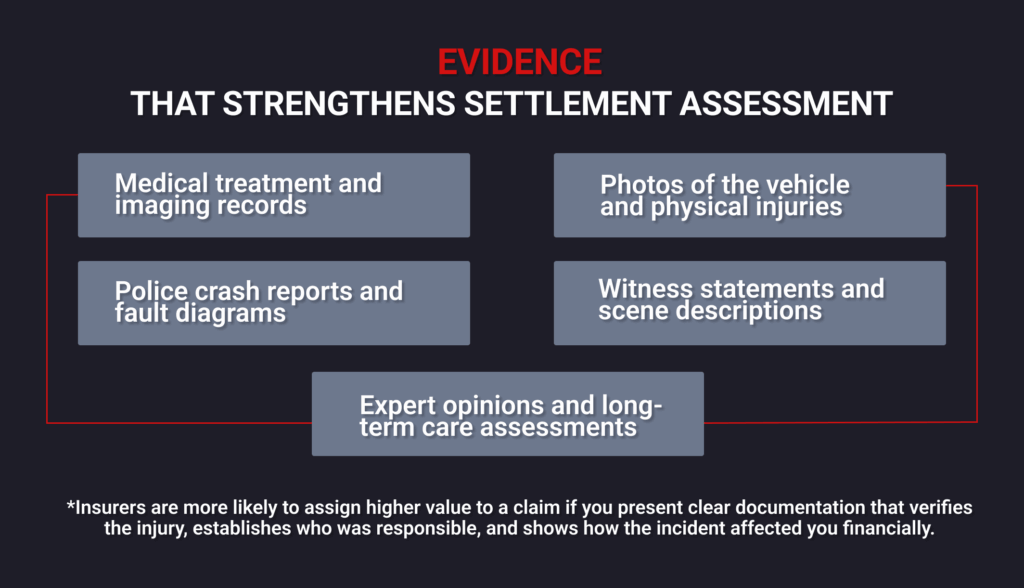
Easier than most people fear — because a drunk-driving head-on usually generates its own evidence. Where a normal case forces you to argue about a driver’s state of mind, a DUI crash tends to come with a paper trail:
- The police report and DUI arrest documenting impairment at the scene
- Breath or blood test results showing blood alcohol concentration
- The criminal DUI charge or conviction, which the driver can’t simply wish away in the civil case
- Event data recorder (“black box”) data showing speed and braking
- Dashcam or nearby surveillance footage, common along the Strip and major corridors
- Witness statements from other drivers who saw the wrong-way or center-line driving
The catch is timing. This evidence has a shelf life — footage gets overwritten, vehicles get scrapped, and memories fade. The sooner an attorney starts preserving it, the stronger the punitive case. Glen Howard spent years as an insurance defense attorney before switching sides, so he knows exactly how the other side tries to downplay a driver’s conduct and shrink a punitive claim — and how to build the record that stops them.
How Much Can You Sue a Drunk Driver For?
There’s no fixed dollar figure, and anyone who quotes you an “average” is guessing. What a drunk-driving lawsuit pays comes down to two layers.
The first layer is your compensatory damages — the full cost of the crash. Because head-on collisions cause such severe injuries, this base tends to be high: emergency and surgical care, long-term rehabilitation, future medical needs, lost income, lost earning capacity, and pain and suffering. That number alone can be substantial, and it’s worth understanding what a head-on collision case is worth before you talk to any insurance adjuster.
The second layer is punitive damages, which stack on top — and in a DUI case, without a cap. A jury sizes them to the reprehensibility of the driver’s conduct and the harm caused, so the more egregious the drunk driving and the more serious your injuries, the more room there is.
One honest caution: winning an award and collecting it are two different things. Many drunk drivers carry only Nevada’s minimum liability coverage, and insurance policies typically exclude punitive damages from what they’ll pay. That’s why your own UM/UIM coverage often matters as much as the judgment itself — and why an experienced head-on collision attorney in Las Vegas looks at every possible source of recovery, not just the driver’s policy.
Frequently Asked Questions
How do punitive damages work in Nevada DUI cases?
Nevada uses a separate statute, NRS 42.010, for injuries caused by drunk or drugged drivers. It removes the standard cap on punitive damages that applies to ordinary cases and doesn’t force you through the same clear-and-convincing malice standard. Practically, that means if a driver willfully drank or used a substance and then caused your crash while violating Nevada’s DUI laws, you can pursue punitive damages with no statutory ceiling. These damages are separate from your compensatory award — they punish the driver’s conduct rather than reimburse your losses. A jury decides the amount based on how reckless the behavior was and how badly you were hurt.
How much money does a drunk driving lawsuit pay?
There’s no set amount and no reliable “average,” because every case is different. Your payout has two parts: compensatory damages that cover your medical bills, future care, lost income, and pain and suffering, plus punitive damages that punish the drunk driver on top of that. Head-on crashes usually produce serious injuries, which pushes the compensatory base higher, and Nevada’s DUI rule lets punitive damages be uncapped. That said, actually collecting depends on the driver’s assets and available insurance coverage. A Nevada attorney can review your medical picture and the insurance situation to give you a grounded estimate rather than a number pulled from thin air.
How hard is it to prove punitive damages?
In a drunk-driving case, often less difficult than people expect. The crash typically generates its own evidence — a DUI arrest, breath or blood alcohol results, a police report, and sometimes a criminal conviction — that documents the driver’s impairment directly. That’s very different from an ordinary case, where you’d have to argue about a careless driver’s mindset. The main challenge is preserving evidence before it disappears: surveillance footage gets overwritten, vehicle data gets lost, and witnesses move on. Acting quickly and getting a lawyer involved early is what keeps a strong punitive claim intact.
What is a reasonable amount for punitive damages?
Nevada doesn’t set a “reasonable” figure by formula. In ordinary cases the law caps punitive damages, but in DUI cases that cap is removed, so the amount is left to the jury. Jurors weigh how reprehensible the conduct was and how serious the harm — a drunk-driving head-on that leaves someone permanently injured sits at the severe end. Courts do still review extremely large awards to make sure they bear a reasonable relationship to the actual harm. Because there’s no fixed number, the value of your specific claim depends on the facts, which is exactly what a consultation is for.
Can I still get punitive damages if the drunk driver died in the crash?
Possibly, but it changes the strategy. If the at-fault drunk driver died, a claim generally proceeds against their estate and any available insurance rather than the person directly, and punitive damages can be harder to collect from an estate with limited assets. The analysis gets more complex, and it often shifts focus toward other sources of recovery. We walk through this scenario in detail in our guide on what happens if the wrong-way driver died in the crash.

Talk to a Las Vegas Drunk-Driving Accident Lawyer
Your anger about this crash isn’t just emotion — Nevada law treats a drunk driver’s choice as something worth punishing, and punitive damages are how it does that. But the window to build the strongest case is now, while the DUI evidence, the black-box data, and the footage still exist.
At Howard Injury Law, Glen Howard uses his years as a former insurance defense attorney to anticipate exactly how the other side will try to minimize the driver’s conduct — and to build the record that makes punitive damages stick. There’s no fee unless we win your case.
If a drunk driver hit you head-on in Las Vegas, call (702) 331-5722 or request a free consultation to find out whether punitive damages are on the table for you. Bring what you have — the police report, the DUI details, anything from the scene — and we’ll tell you honestly where your case stands.