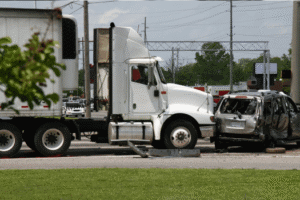


If the driver who hit you head-on didn’t survive the crash, you’re probably wondering whether your own claim died along with them. It didn’t. In Nevada, the fact that the at-fault driver died in the crash does not erase your right to recover for your injuries — it changes who you deal with, not whether you have a case.
Head-on and wrong-way collisions are among the most violent crashes on Las Vegas roads, and they’re also the ones most likely to be fatal for the driver who caused them. That leaves injured survivors carrying severe injuries and mounting bills, unsure whether it’s even possible — or right — to pursue a claim. Here’s how Nevada law actually handles it.
Can You Still Get Compensation If the Driver Who Hit You Died?
Yes. Under Nevada’s survival statute, NRS 41.100, a personal injury claim does not disappear when the person responsible dies. The law says plainly that no cause of action is lost by reason of death — it can still be pursued against the deceased person’s estate through their court-appointed representative.
In practical terms, your case moves forward much as it would if the other driver were alive. You still have to prove they were at fault, and Nevada’s comparative negligence rule (NRS 41.141) still applies — if the other side pins more than 50% of the blame on you, you recover nothing. What’s different is that you’re no longer negotiating with a living defendant. You’re dealing with their insurance company and, when needed, their estate.
Who Actually Pays When the At-Fault Driver Is Dead?
This is the question that keeps injured people up at night, and the answer is more reassuring than most expect. There are usually three sources of recovery, and a good attorney pursues every one that applies.
The deceased driver’s auto insurance
This is almost always the first and largest source. An auto liability policy covers the crash based on when it happened — while the policy was active — not on whether the policyholder is still alive. The insurance company’s obligation to evaluate and pay a valid claim doesn’t end because their customer died. You file against that policy the same way you would in any other collision.
The driver’s estate
When the at-fault driver’s insurance isn’t enough to cover severe head-on injuries, Nevada law lets you pursue their estate. When someone dies, their assets pass through a court process called probate, and an injured claimant can step in as a creditor of that estate. This is where things get procedural — and where deadlines get short — which is exactly the part a lawyer handles for you.
Your own uninsured/underinsured motorist coverage
Head-on crashes routinely cause damages that blow past Nevada’s minimum insurance limits. If the deceased driver was uninsured, or their policy simply can’t cover your medical care and lost income, your own UM/UIM coverage may fill the gap. Many people don’t realize they carry this protection or that it applies here. Reviewing your policy is one of the first things we do, because it’s often the difference between a partial recovery and a full one. If you’re weighing what happens when the other driver’s coverage falls short, it’s the same core problem we break down in is it worth suing an uninsured driver in Nevada.
You’re Not Suing the Grieving Family
Many injured survivors hesitate to act because they feel they’d be attacking a family that just lost someone. That’s not how this works, and it’s important to understand why.
Your claim runs against the estate and the insurance company — not against the deceased driver’s spouse, children, or parents personally. Their relatives don’t pay out of their own pockets simply because they were related to the person who caused the crash. Pursuing what you’re owed doesn’t take money from a mourning family; in the vast majority of cases, it’s the insurance company writing the check.
There is one narrow exception worth knowing. If a family member owned the vehicle and let the deceased driver use it under circumstances they shouldn’t have, that owner may share some liability under a doctrine called negligent entrustment. Whether that applies is a fact-specific question — every case is different, and it’s one to walk through with an attorney rather than assume either way.
The Drunk-Driver Twist: Why Punitive Damages Usually Disappear
Head-on and wrong-way crashes are often caused by impaired drivers, and if that driver had lived, Nevada law might allow punitive damages — extra money meant to punish especially reckless conduct. This is a point worth being straight about: when the at-fault driver dies, that punitive piece usually goes away.
Under NRS 41.100, damages awarded against a deceased person’s estate generally cannot include punitive or exemplary damages. The logic is that punitive damages exist to punish the wrongdoer — and the law won’t punish a person who has died by taking it from their heirs. It’s the one category of compensation that tends to drop off in these cases.
Here’s the reassuring part: your compensatory damages don’t drop off. You can still pursue full recovery for medical bills, future care, lost income, and pain and suffering. Because the rules shift depending on whether the impaired driver lived or died, this is exactly the kind of situation where mapping every available source of recovery matters — and where general information is no substitute for advice on your specific case.
Why a Fatal-Driver Head-On Moves Faster Than You’d Expect
It’s natural to assume a case this complicated can wait until you’ve healed. It usually can’t. Two clocks are running at once.
The first is Nevada’s deadline to file an injury claim — generally two years from the date of the crash under NRS 11.190. The second is the probate process. Once an estate is opened, it can carry its own, much shorter window for creditors to make a claim — often far tighter than the two-year injury deadline. Miss that window and a valid claim can be lost even though the injury deadline hasn’t passed.
On top of the deadlines, the evidence in a head-on case — vehicle data, skid marks, roadway measurements, witness memory — fades quickly. Acting early is how you keep both the evidence and the estate options open. If the other side tries to shift blame onto you to shrink what they owe, that fault fight is one we know well; it’s the heart of how we handle disputed liability car accident claims in Las Vegas.
How Howard Injury Law Handles a Head-On When the Other Driver Died
These cases stack legal complications on top of an already traumatic crash: an insurer to negotiate, an estate to open, probate deadlines to track, and often a family in mourning to work around with care. You shouldn’t have to manage any of that while you’re trying to recover.
That’s our job. Founding attorney Glen Howard spent years as an insurance defense attorney — he built these claims from the other side, so he knows exactly how carriers try to delay, minimize, or deny when they think a claimant is overwhelmed. As a head-on collision lawyer in Las Vegas, he uses that insider knowledge to identify every source of recovery — insurance, estate, and your own coverage — and to prove fault before the evidence disappears.
We work on contingency, which means no fee unless we win your case, and the consultation costs nothing. If your loved one was the one killed in the crash rather than the at-fault driver, that’s a different claim entirely, and our fatal crash team can walk you through it. Either way, you get a clear picture of where you stand before you decide anything.
Frequently Asked Questions
Can I still sue if the driver who caused my crash died?
Yes. Nevada’s survival statute (NRS 41.100) keeps your personal injury claim alive after the at-fault driver dies. The claim shifts from the person to their estate and insurance company, and it proceeds much like any other car accident case — you still have to prove the other driver was at fault. What changes is the process, not your underlying right to recover for your injuries. Because these cases involve an estate and its deadlines, they move differently than a standard collision claim, so it’s worth talking to a Nevada attorney early rather than waiting.
Do I have to take money from the dead driver’s family?
No. In almost every case, compensation comes from the deceased driver’s auto insurance policy, not from their relatives’ personal finances. Family members are not automatically responsible for a driver’s negligence just because they were related. The one exception is negligent entrustment — for example, if a relative who owned the car let the driver use it when they clearly shouldn’t have. Whether that applies depends on the specific facts, but pursuing your claim generally means dealing with an insurance company, not a grieving household.
Can I get punitive damages if the drunk driver died in the wreck?
Usually not. Under NRS 41.100, punitive damages generally can’t be recovered from a deceased person’s estate, because their purpose is to punish the wrongdoer directly. If the impaired driver had survived, punitive damages might have been available — but when they die, that category typically falls away. The good news is that your compensatory damages remain fully in play: medical bills, future treatment, lost wages, and pain and suffering. An attorney can tell you which sources of recovery apply to your specific situation.
What if the deceased driver didn’t have enough insurance?
Severe head-on injuries often cost more than a basic Nevada policy will cover. When that happens, you have options beyond the driver’s insurance. You may be able to make a claim against their estate through probate, and you may be able to turn to your own uninsured/underinsured motorist coverage, which many drivers carry without realizing it. Reviewing every available policy is one of the first steps we take, because catastrophic crashes frequently require stacking more than one source to reach full compensation.
How long do I have to file a claim against the estate in Nevada?
Two clocks apply. Nevada generally gives you two years from the crash to file an injury claim under NRS 11.190. Separately, once the driver’s estate is opened in probate, there can be a much shorter deadline to bring a claim as a creditor of that estate. That probate window is easy to miss, and missing it can cost you a valid claim even before the two-year deadline runs. This is a big reason to contact a Las Vegas attorney quickly after a fatal-driver crash rather than waiting until you feel ready.

Talk to Someone Who Knows How the Other Side Thinks
Losing your health in a crash where the other driver also died is a uniquely disorienting situation — and the insurance company is counting on that confusion. You don’t have to figure out probate deadlines, coverage layers, and fault evidence on your own while you’re hurting.
Call Howard Injury Law at (702) 331-5722 for a free, no-pressure case review, or reach us through our contact page. We’ll tell you honestly whether you have a case, who’s likely to pay, and exactly what to do next. No fee unless we win — so the only thing it costs you to find out where you stand is a phone call.
This article provides general information about Nevada law and is not legal advice. Every case is different; speak with a licensed Nevada attorney about your specific situation.