


Yes — if more than one driver shares blame for a Las Vegas pileup, you can name and sue every one of them. In a chain-reaction crash you usually should, because of a Nevada rule that quietly decides how much money actually reaches you: each at-fault driver typically pays only their own share, so missing even one can cost you part of your recovery.
That rule is why a multi-car crash is not just a bigger version of a two-car wreck. Who you sue — and who you forget to sue — often matters as much as how badly you were hurt.
Nevada lets you sue every driver who shares fault
There’s no limit of one defendant. If a pileup on I-15 or the Spaghetti Bowl involved five drivers and three of them were careless, you can bring all three into the case. Nevada’s comparative negligence law (NRS 41.141) is written for exactly this — it tells a jury to assign a percentage of fault to each responsible party.
The practical reason to name everyone isn’t to punish more people. It’s money. The way Nevada divides responsibility means each defendant is usually only on the hook for their own slice — so if you leave a careless driver out, their slice may simply go unpaid.
The rule that decides how much you collect: several liability
Nevada follows what’s called several liability as its default. In plain terms: when several drivers are at fault, each one is generally responsible only for the percentage of the damage they caused — not the whole bill.
Here’s what that looks like. Say a three-car chain reaction leaves you hurt, and fault comes out to 60% on the driver who started it, 30% on a second driver, and 10% on a third. Under several liability, each driver’s insurer is generally responsible only for that driver’s percentage of your damages. No single one is automatically forced to cover the entire amount.
That’s the opposite of how many people assume it works. Most expect to point at the worst driver and collect everything from them. In Nevada, you usually can’t — which is why identifying and pursuing every at-fault party is the difference between a full recovery and a partial one. If the 60% driver turns out to be uninsured and you never named the others, most of your claim can evaporate. (How your own percentage of fault, if any, reduces your recovery is a separate question — we cover the plaintiff side in Nevada’s comparative negligence rule in multi-vehicle crashes.)
The at-fault parties you might not think to name
The obvious defendant is the driver who hit you. In a pileup, the ones who matter most are often the ones you never saw:
- The driver several cars back who actually triggered the chain — the person who rear-ended the car that rear-ended you.
- A driver who fled the scene before anyone got their information.
- An employer, when an at-fault driver was working — making a delivery, driving for a company — which can open a separate, better-funded source of recovery.
- A vehicle or parts manufacturer, if a defect (failed brakes, a tire blowout) contributed to the crash.
- A government entity, in the narrow cases where a road hazard or a malfunctioning signal played a role — these carry short, strict notice deadlines, so they can’t wait.
A driver in the middle of the chaos has no way to know all of this at the scene. Sorting out every party who shares responsibility is a core part of building a multi-vehicle accident claim — and it’s easy to under-name defendants without help.
When one defendant can be on the hook for everything
Several liability is the general rule, but Nevada law keeps a handful of exceptions where a single defendant can be held responsible for the full amount — what’s called joint and several liability. Under NRS 41.141, that can apply in specific situations such as strict-liability and defective-product claims, intentional acts rather than ordinary carelessness, and parties who acted “in concert.”
In a pileup, that can matter if, for example, a defective vehicle component contributed to the crash (a product claim), or if a driver did something intentional rather than merely negligent — think road rage or a deliberate ramming — or if two drivers were racing together. Whether any exception fits is a fact-specific legal call, and the analysis is genuinely complicated. Don’t assume one applies or doesn’t based on a blog — it’s one of the first things an attorney will evaluate on your specific facts.
What if an at-fault driver is uninsured or never identified?
This is where several liability bites hardest. If one at-fault driver has no insurance, fled and was never found, or carried far too little coverage, their share of the fault doesn’t automatically shift onto the others. That portion can go uncollected — unless you have another route to it.
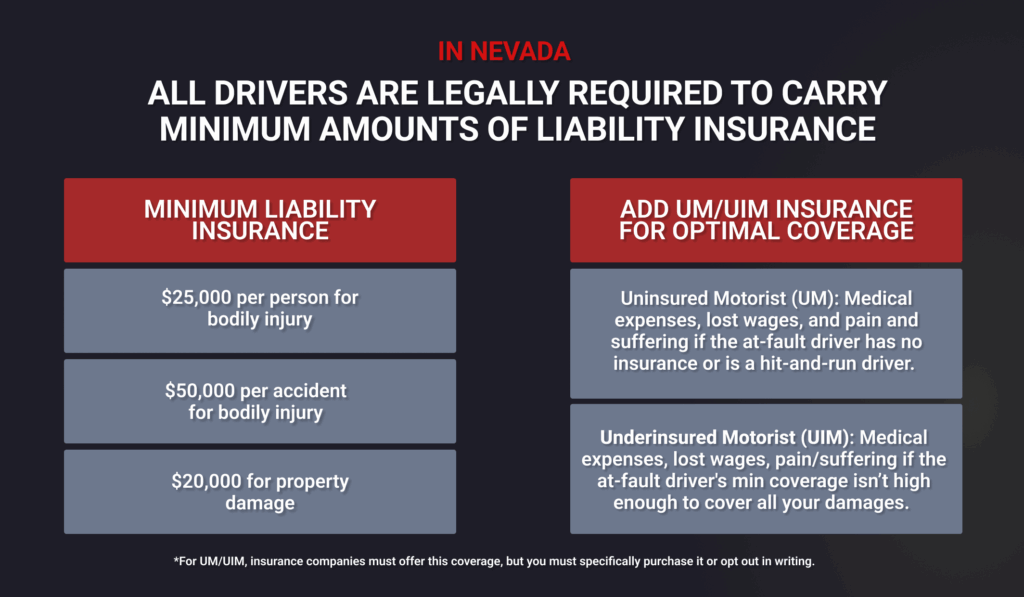
That route is often your own uninsured/underinsured motorist coverage, plus a careful strategy for pursuing every remaining defendant and every available policy. What happens when the money runs short across multiple parties is its own detailed topic, covered in what happens when one policy can’t cover everyone injured. The takeaway here: an unidentified or uninsured driver is a reason to move fast and name everyone else, not a reason to give up.
How fault percentages get assigned to each driver
Since each defendant pays according to their percentage, the fight in a pileup is almost always about those numbers. Insurers for each driver will try to push fault onto the others — and onto you — because every point they shed is money they don’t pay.
The evidence that settles it comes from the police report, scene photos, vehicle damage patterns, black-box data, and witness accounts. We walk through that process in how fault is determined in a multi-car pileup. For now, understand that “who pays what” is not fixed at the scene — it’s argued, and good evidence moves those percentages in your favor.
Frequently Asked Questions
Can you sue more than one driver after a car accident in Nevada?
Yes. Nevada law lets you name every driver who shares fault for a crash, and in a multi-car pileup you generally should. Under NRS 41.141, a jury assigns each responsible party a percentage of fault, and each is typically responsible for paying only their own share. That’s why suing just the driver who hit you can leave money on the table — the driver who actually started the chain, several cars back, may carry most of the blame and most of the payment. Identifying and pursuing all of them is how you protect your full recovery. Every crash is different, so an attorney should review who belongs in your specific case.
What is several liability in a Nevada accident?
Several liability means that when multiple parties are at fault, each one is generally responsible only for the percentage of harm they caused — not the entire amount. If three drivers are found 60%, 30%, and 10% at fault, each driver’s insurer is generally responsible for that slice of your damages. Nevada uses several liability as its default rule under NRS 41.141, with limited exceptions where a single defendant can owe the whole amount. The practical effect is significant: to recover fully, you usually have to pursue every at-fault party, because one driver’s share does not automatically shift to the others if that driver can’t pay.
What if the driver who caused the pileup can’t be identified?
If the driver who triggered the chain reaction fled and was never found, their share of the fault can go uncollected under several liability — it doesn’t automatically transfer to the other drivers. Your own uninsured/underinsured motorist coverage is often the way to recover that missing portion, which is one reason to report the crash to your insurer promptly and preserve every piece of evidence. It’s also why naming every other at-fault party matters even more when one driver is a phantom. Move quickly: witnesses scatter and vehicles get repaired, and the evidence that could still identify a fleeing driver disappears fast.
Can one driver be forced to pay for the entire pileup?
Usually not, because several liability makes each at-fault driver responsible only for their own percentage. Nevada does keep narrow exceptions — under NRS 41.141, situations involving defective products, intentional conduct, or parties acting in concert can make a single defendant responsible for the full amount. Whether any of those fit your crash is a fact-specific legal question, not something to assume from a general article. In most ordinary multi-car negligence cases, though, the realistic path to full recovery is pursuing every responsible party and every applicable insurance policy rather than counting on one driver to cover everything.
Do I have to file a lawsuit, or can this settle?
Most Nevada multi-vehicle claims settle without a trial. Naming multiple at-fault drivers doesn’t mean you’re headed to court — it means each of their insurers is put on notice and pulled into negotiations, which often improves your leverage. The order in which you resolve those claims matters, because settling with one driver too early can affect what you recover from the others. That’s a strategy question worth handling with a lawyer. Filing suit is sometimes necessary to force a fair number, but for many pileup victims, a well-built claim against every responsible party resolves at the negotiating table.

Why you want a lawyer naming the defendants
In a several-liability state, the lawyer’s job in a pileup is specific and high-stakes: identify every responsible party, pin an accurate fault percentage on each, find every policy that applies, and sequence settlements so one early deal doesn’t sink the rest of the claim.
Glen Howard spent years as an insurance defense attorney before founding Howard Injury Law, so he knows how carriers in a multi-car crash quietly steer fault toward the person least able to fight back. There’s no fee unless we win. If you’re still reconstructing what happened, start with our step-by-step guide on what to do after a multi-car pileup, or see how these crashes unfold on our worst corridors in freeway pileups on I-15 and the Spaghetti Bowl.