


You walked away from the crash on Tropicana thinking you got lucky. Weeks later, the headaches won’t quit, your lower back seizes up every morning, or two fingers keep going numb for no reason. Long-term injuries from car accidents in Las Vegas often start exactly like that — quiet at first, then impossible to ignore.
If that’s where you are right now, you’re not imagining it, and you’re not too late to do something about it. Here’s what these injuries actually are, why they surface long after the tow truck leaves, and how they change what your claim is worth in Nevada.

Can a Car Accident Affect You Years Later?
Yes. A crash can leave marks on your body that don’t fully show up for months or even years. Part of it is chemistry: in the minutes and hours after impact, adrenaline masks pain, so a serious injury can feel like soreness. Part of it is biology: some injuries are progressive. A small disc tear, a hairline joint injury, or a concussion can quietly worsen long after the broader motor vehicle accident that caused it.
That delay is real, it’s medically documented, and it doesn’t make your injury any less connected to the crash. It does, however, make it harder to prove and easier for an insurer to dismiss — which is exactly why understanding these injuries matters.
Common Long-Term Injuries After a Las Vegas Car Accident
Not every crash injury becomes permanent. But a specific set of them tends to turn chronic, and those are the ones people underestimate. (For the full picture of what typically happens in a wreck, see our breakdown of the most common crash injuries we see in Vegas.)
Traumatic Brain Injury and Post-Concussion Syndrome
You don’t have to hit your head on anything for your brain to be injured. A hard enough jolt — common in a rear-end hit on the 215 Beltway — can cause the brain to move inside the skull. Weeks later, some people are still dealing with headaches, memory gaps, trouble concentrating, light sensitivity, or mood changes. When those symptoms linger, doctors often call it post-concussion syndrome, and it can last months. More serious traumatic brain injuries can affect someone permanently.
Spinal Cord, Disc, and Chronic Back or Neck Injuries
The spine takes a beating in almost any collision. Herniated and bulging discs, nerve compression, and facet joint damage can produce pain that radiates into the arms or legs and never fully settles. Whiplash that feels minor in week one can become chronic neck and back pain that limits how you sit, sleep, and work. At the most severe end, spinal cord damage can mean lasting loss of function.
Nerve Damage and Chronic Pain
Pinched or torn nerves cause numbness, tingling, burning, and weakness that can persist for years. Some people develop chronic pain conditions where the nervous system keeps sending pain signals long after the tissue has healed. These injuries are invisible on the outside, which makes documenting them with a doctor especially important.
Post-Traumatic Arthritis and Joint Damage
An injured knee, shoulder, hip, or wrist can seem to recover, then develop arthritis years down the road. Trauma accelerates joint wear. Someone in their 30s who took a hard side-impact can face joint pain and stiffness that normally shows up decades later.
Psychological Injuries
Long-term harm isn’t only physical. Post-traumatic stress, anxiety, driving phobia, and depression are recognized medical conditions that a crash can trigger, and they’re treated by mental health professionals like any other diagnosis. If a collision left you unable to get behind the wheel or sleep through the night, that’s a real injury worth discussing with a doctor — not something to tough out alone.
Why Long-Term Injuries Get Missed or Show Up Late
Emergency care after a crash focuses on what can kill you — bleeding, fractures, head trauma. Slower-developing problems like nerve damage, disc injuries, and soft-tissue tears often aren’t obvious on that first visit, especially when adrenaline is still masking pain.
Then life resumes. You go back to work in Spring Valley or Summerlin, you push through the stiffness, and the injury quietly gets worse. By the time it’s undeniable, weeks or months have passed. That gap is normal — but it’s also where insurers argue your injury “isn’t related to the crash.” Seeing a doctor promptly and following up on new symptoms protects both your health and your claim. Our guide to the symptoms to watch after a crash covers what shouldn’t be ignored.
How Long-Term Injuries Change What Your Claim Is Worth
A short-term injury has a ceiling: a few appointments, some time off, and you’re done. A long-term injury doesn’t work that way, and neither should your claim. When an injury is permanent or ongoing, its value has to account for care and losses that stretch well into the future, including:
- Future medical care — surgeries, injections, physical therapy, pain management, and follow-ups you haven’t had yet.
- Lost earning capacity — not just wages missed so far, but what the injury will cost you long-term if you can’t return to the same work or hours.
- Ongoing pain and reduced quality of life — the daily limits a chronic injury puts on you.
This is why settling too early is one of the most expensive mistakes an injured person can make. Insurers often push a fast, modest offer before the full extent of a delayed or “soft” injury is clear. Once you sign, you can’t reopen the claim if the injury turns out to be permanent. Most attorneys advise waiting until you’ve reached maximum medical improvement — the point where doctors can say what your long-term prognosis really is — before agreeing to any number.
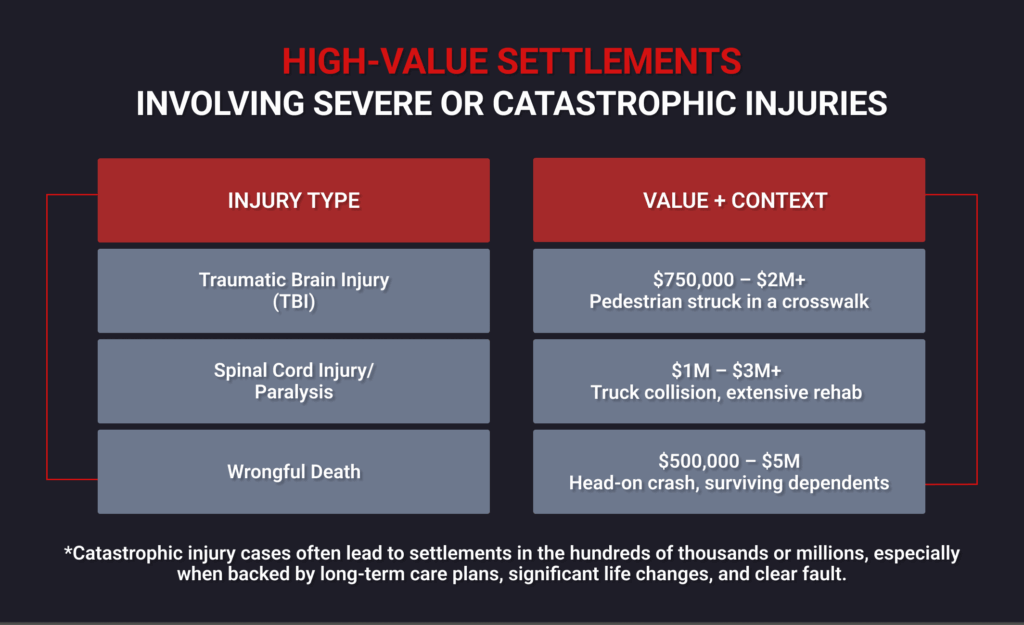
For the most severe, life-altering injuries, the difference between an early offer and a fully valued claim can be enormous. Every case is different, so the right way to understand yours is to have someone review the specifics with you. Getting a clear read on the full scope of your injuries is central to how we approach fighting for full compensation after a Las Vegas car accident.
Nevada’s Deadline Applies Even If Your Injury Shows Up Later
Here’s the part that surprises people. In Nevada, you generally have two years from the date of the accident to file a personal injury lawsuit under NRS 11.190 — not two years from when the injury became obvious. For most car accident cases, the clock starts on the day of the crash, because the law treats you as knowing you have a claim from that point.
That matters enormously for long-term injuries. Waiting months to “see if it heals” can burn through your window before you realize how serious things are. There are narrow exceptions — for minors or certain other situations — but you shouldn’t count on one. If your injury has been dragging on, it’s worth confirming how long you have to file in Nevada sooner rather than later.
Frequently Asked Questions
What is the average settlement for a severe car accident injury in Nevada?
There’s no honest single number, and be skeptical of anyone who gives you one. A severe or long-term injury claim depends on your total medical costs, the cost of future care, how much the injury affects your ability to work, the severity and permanence of the injury, available insurance limits, and questions of fault. Two people with the same diagnosis can end up with very different results. The useful question isn’t “what’s the average” but “what is my specific case worth” — which starts with understanding what your case may be worth based on your own facts.
What are 90% of car accidents caused by?
Human error. The National Highway Traffic Safety Administration has long cited driver-related mistakes as the leading factor in roughly 90% or more of crashes — things like distracted driving, speeding, impairment, and failure to yield. That statistic has been debated by safety researchers, but the core point holds: most crashes trace back to a choice someone made behind the wheel. If another driver’s mistake hurt you, that’s the foundation of a claim.
Where does Las Vegas rank for car accidents?
Las Vegas and Clark County account for a large share of Nevada’s crashes and traffic deaths — well out of proportion to the rest of the state. Heavy tourist traffic, a 24-hour driving culture, and busy corridors like I-15, US-95, and the Spaghetti Bowl all play a role. The practical takeaway is simple: the odds of a serious crash here are real, and so is the value of knowing your rights before one happens.
How long can car accident injuries take to appear?
Anywhere from a few hours to several months. Whiplash and concussion symptoms often surface within days. Disc injuries, nerve damage, and post-traumatic arthritis can take weeks, months, or longer to become obvious. That’s why seeing a doctor after any crash — even one you walked away from — matters. Early documentation links a later-emerging injury back to the collision that caused it.

Still Hurting Weeks or Months After Your Crash? Let’s Talk.
If the pain hasn’t gone away — or something new just started — don’t assume it’s minor and don’t assume it’s too late. A long-term injury that gets brushed off today can cost you far more down the road, both physically and financially.
Howard Injury Law offers a free, no-pressure consultation to review what you’re dealing with and tell you honestly whether you have a case. Founder Glen Howard spent years as an insurance defense attorney, so he knows exactly how the other side works to minimize delayed and “soft” injuries — and how to counter it. You pay nothing unless we win.
Call (702) 331-5722 or reach out through our contact page to get a straight answer about your injury and your options.