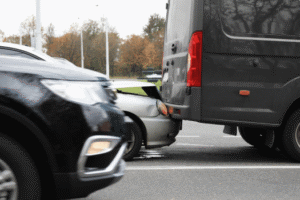


You rear-ended a car in Las Vegas and only afterward realized its brake lights never came on — or you got hit from behind, and now the other driver’s insurer is blaming your dark brake lights to shrink your check. Either way, someone has probably already told you the rear driver is automatically at fault. In Nevada, that’s not how faulty brake lights and rear-end fault actually work.
Broken brake lights are a real, provable factor that can shift blame off the driver behind and onto the car in front. The catch is that “automatically at fault” and “actually at fault after the evidence comes in” are two different things — and the gap between them is worth money to whoever fights for it.
Is It Your Fault If You Rear-End a Car With No Brake Lights?
Usually, the driver who hits the car ahead starts out presumed at fault. Nevada expects every driver to leave enough room to stop, so rear-ending someone looks, on its face, like a following-distance failure. But that presumption can be rebutted, and a car traveling at night or in heavy traffic with no working brake lights is one of the clearest ways to do it.
If the car in front gave you no warning it was slowing or stopping — because the one signal drivers rely on was dark — a share of the fault can move to that driver. It rarely erases your responsibility entirely, but it can cut it down, and in Nevada that reduction directly changes what a claim is worth. This is exactly the kind of dispute a Las Vegas rear-end accident lawyer is built to win, because insurers assign blame by default and only back off when someone makes them prove it.
Every crash turns on its own facts, so treat what follows as general Nevada law, not advice about your specific case.
What Nevada Law Requires for Brake Lights
Nevada doesn’t treat working brake lights as optional. State law requires every vehicle to be equipped with functioning stop lamps — at least two, mounted on the rear, bright enough to be seen from 300 feet, and set to light up the moment the driver hits the brakes. That signal is the entire early-warning system between two cars in traffic.
When those lights are burned out, broken, or wired wrong, the driver behind loses the split second they need to react. That failure is why a dark brake light can flip a “simple” rear-end crash into a genuine fault dispute.
Can You Drive With a Broken Brake Light in Nevada?
No. Driving with a non-working brake light is an equipment violation in Nevada, and it’s the kind of thing that can earn you a fix-it citation if an officer spots it. More importantly for a crash, it’s evidence. A driver who was operating a vehicle with a known dead brake light was breaking a safety rule at the moment of impact — and that breach is precisely what shifts a portion of the blame onto them.
How Fault Gets Shared When the Brake Lights Were Out
Nevada uses a modified comparative negligence rule, and it’s the reason brake lights matter so much. Fault gets divided into percentages, and each driver’s recovery drops by their share of the blame. If a driver is found 51 percent or more at fault, they recover nothing at all.
Picture a nighttime crash on a signal-heavy stretch near the Strip. The lead car brakes hard, but its brake lights are dead. An adjuster might start by calling the rear driver 100 percent at fault for following too closely — a violation of Nevada’s rules against following too closely. Once the dark brake lights come to light, that split can move — say to 60/40, or further, depending on speed, distance, lighting, and what the evidence shows. Every point of fault that moves off the injured driver is real compensation restored.
That negotiation over percentages is where these cases are won or lost. It is also where an injured person, dealing with the insurer alone, tends to give up ground they didn’t have to.
Two Sides of the Same Crash — Which Driver Are You?
Searchers land on this scenario from two very different seats, and both have a real claim to protect.
If you’re the driver who rear-ended a car with no brake lights, you’re likely afraid you’re stuck with all the blame — and possibly hurt yourself. You’re not automatically out of options. The other driver’s equipment failure is part of the story, and if you were injured, your own claim doesn’t vanish just because you were the one in back.
If you’re the driver who got rear-ended and the other insurer is now pointing at your brake lights to cut your payout, that’s the mirror image — a comparative-fault argument aimed at your money. Sometimes the lights genuinely were working and the insurer is guessing. Sometimes a bulb was out but had nothing to do with a crash the tailgating driver would have caused anyway. Either way, you don’t have to accept a fault percentage an adjuster assigned to reduce your check.
Proving the Brake Lights Were Out
Fault-shifting arguments live or die on evidence, and “the brake lights were out” is easy to claim and hard to prove after the fact. That’s why the proof matters more than the story.
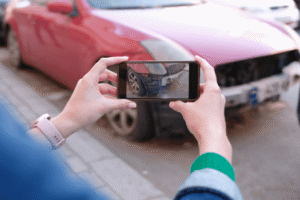
The strongest evidence includes dashcam footage from either car, nearby traffic or business security cameras, and witness accounts from other drivers who saw whether the lights lit up. The vehicle itself can tell the tale — a post-crash inspection of the bulb filaments can often show whether a lamp was lit at the moment of impact, and repair or maintenance records can establish a known problem. The police report and the steps you take right after being rear-ended — photos, the report number, witness contacts — lock down facts before they disappear.
This is where Howard Injury Law’s background changes the math. Founder Glen Howard spent years as an insurance defense attorney — the person on the other side who built these exact comparative-fault arguments. He knows how an adjuster manufactures a brake-light theory to shave a claim, and how to take it apart with evidence before it hardens into a number.
What About the Cost to Fix the Car?
People searching this topic often also want to know what a rear-end collision costs to repair. The honest answer: it depends on the damage, and your property-damage repair is a separate track from your injury claim. Who ultimately pays for the repair turns on that same fault percentage — so the brake-light dispute affects your car and your body at the same time.
Don’t let the size of the dent set your expectations, either. What a rear-end case is actually worth comes down to your injuries, not your bumper. For the full picture, see what a rear-end claim is worth in Nevada.
Injured in a Rear-End Crash in Las Vegas?
Rear-end collisions concentrate their force where your body is least protected — the neck and spine. Whiplash, neck and back strains, and herniated discs are the routine result, and many of them don’t fully surface until a day or two after the traffic accident, once the adrenaline fades. Feeling “fine” at the scene is not the same as being uninjured.
Las Vegas practically manufactures these crashes. Stop-and-go traffic on I-15, the tangle of the Spaghetti Bowl, and the signal-heavy corridors feeding the Strip all set up the sudden stops that end in rear-end impacts — and in a city this full of out-of-town drivers, dark brake lights and inattention find each other fast. If you were hurt, see a doctor early, keep treating, and get your side documented before you talk numbers with anyone.

Frequently Asked Questions
Is it my fault if I rear-end someone who had no brake lights?
Not necessarily all of it. In Nevada, the driver in back usually starts out presumed at fault for following too closely, but that presumption can be rebutted. A lead car with no working brake lights gave you no warning it was stopping, and Nevada law requires those lights to function. Under the state’s comparative negligence rule, fault gets divided by percentage, so a share can move onto the driver whose lights were out. How much depends on the facts — speed, distance, lighting, and the evidence. If you were injured in the crash, you may still have a claim of your own worth pursuing.
Can you drive with a faulty brake light in Nevada?
No. Nevada law requires every vehicle to have working stop lamps that activate when the driver brakes, and driving with a dead or broken brake light is an equipment violation. Beyond the risk of a fix-it citation, a non-working brake light becomes evidence if a crash follows. A driver operating with a known dark brake light was breaking a safety rule at the moment of impact, and that breach is what can shift part of the fault onto them in a rear-end claim.
Who is usually at fault in a rear-end collision?
Most of the time, the driver in the rear — Nevada expects every driver to leave enough room to stop, so following too closely is treated as the default cause. But “usually” isn’t “always.” When the front driver did something unsafe, such as driving with broken brake lights, part or all of the fault can move to them. A lawyer’s job is to make sure the evidence, not the insurer’s assumption, decides the percentages.
How do you prove the other car’s brake lights weren’t working?
Through evidence gathered before it disappears. Dashcam video, nearby traffic or security cameras, and witnesses who saw whether the lights came on are the strongest proof. A post-crash inspection of the bulb filaments can sometimes show whether a lamp was lit at impact, and the vehicle’s repair or maintenance records can establish a pre-existing problem. Photos and the police report from the scene help lock it down. Because this proof is technical and time-sensitive, an attorney who moves quickly makes a real difference.
Does a broken brake light make the front driver automatically at fault?
No — it’s a factor, not an automatic verdict. A dark brake light can shift a share of fault onto the lead driver, but Nevada still looks at the whole picture: how closely the rear driver was following, the speed, the road and lighting, and whether the missing signal actually contributed to the crash. The result is a fact-specific percentage split, which is exactly why these cases turn on evidence and negotiation rather than a simple rule.

Talk to a Las Vegas Rear-End Accident Lawyer Before You Accept a Fault Percentage
If you’ve been told the crash is on you because you were the one in back — or an adjuster is blaming your brake lights to cut your payout — that’s an opinion designed to save the insurance company money, not a final answer. You’re hurting, you’re being pushed toward a number, and you deserve to know where you actually stand before you sign anything.
A free case review does exactly that. Howard Injury Law will look at the facts, the evidence, and the fault the insurer is trying to assign, and tell you straight whether they’re overreaching. Glen Howard worked the defense side for years, so he knows how these brake-light arguments get built — and how to break them. You pay nothing unless we win. Get your free case review and let’s find out what your rear-end accident claim is really worth.
This article is general information about Nevada law, not legal advice. Every case is different — talk to a licensed Nevada attorney about your situation.