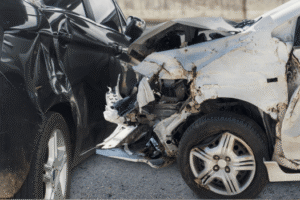


After a T-bone crash, more than one clock starts ticking — and the deadline most people worry about isn’t the one that actually costs them their case. The T-bone accident filing deadline in Nevada is two years for your injuries, but that single number hides a stack of shorter deadlines: property damage, insurance notice, and the evidence that proves who had the right of way. If a driver ran a red on Sahara Avenue, cut an illegal left across your path, or a government vehicle hit you, the picture shifts again. Here’s every clock running against a Las Vegas T-bone claim — and the one you should actually plan around.
How Long Is the T-Bone Accident Filing Deadline in Nevada?
Two years. Under Nevada law, you have two years from the date of the crash to file a personal injury lawsuit after a T-bone accident. Miss that window and a court can dismiss your case no matter how clearly the other driver was at fault.
That two-year rule is the same one that applies to most Las Vegas car accident claims, and we cover the full statute-of-limitations picture — including the narrow exceptions that can pause the clock — in our guide on how long after a car accident you can sue in Nevada. For a T-bone crash, the date the clock starts is almost always simple: the day of the collision.
So if that were the only deadline, you’d have plenty of room. It isn’t. The rest of this page is about the clocks nobody warns you about — the ones a Las Vegas T-bone accident attorney watches from day one.
The Deadlines Most T-Bone Victims Don’t Know About
“You have two years” is true for your injuries. It’s not true for everything else in your claim, and treating it as one single deadline is how people lose leverage — or lose the claim entirely.
Property damage runs on a longer clock: three years
Your wrecked vehicle is on a different timeline than your body. Nevada gives you three years to file for property damage — the caved-in door, the totaled car, the diminished value — a full year longer than the deadline for your injuries. In practice, you rarely want to split them: filing the injury and property claims together keeps your case consistent and avoids leaving money on the table. But knowing the property clock runs longer matters if your injury claim wraps up while you’re still fighting over the car.
Insurance notice: days, not years
Your own insurance policy is a contract, and almost every one requires you to report the crash “promptly” — usually within a few days. This isn’t a Nevada statute; it’s a term buried in your policy. Miss it and the insurer can argue you breached the contract and try to deny coverage you paid for. The fix is simple: report the T-bone to your carrier right away, stick to the facts, and don’t give a recorded statement about who was at fault before you’ve talked to a lawyer.
Evidence: the deadline with no calendar
The clock that runs out fastest has no legal deadline at all. T-bone cases turn on who had the right of way, and the proof of that starts disappearing within days. Intersection camera footage gets overwritten. Traffic-signal timing records get purged. The other vehicle’s event data recorder gets wiped when the car is repaired or scrapped. Witnesses forget which light was green. Two years to file means nothing if the evidence that wins your case is gone in two weeks — which is exactly why acting fast matters more than the calendar deadline.
T-Boned by a Government Vehicle? The Deadline Myth vs. Nevada Law
Here’s where a lot of bad information circulates. You may have read that if a city bus, a county truck, or another government vehicle hit you, you have “just a few months” to file. That’s the rule in some states — it is not Nevada law.
In Nevada, a claim against the State or a local government still carries a two-year deadline. That includes an RTC transit bus, a City of Las Vegas vehicle, a Clark County fleet vehicle, or a crash caused by a malfunctioning traffic signal a government agency was supposed to maintain. What changes isn’t the calendar. It’s the process and the payout:
- You file with a different party. A claim against a state agency goes to the Nevada Attorney General; a claim against a political subdivision — a city, the county, the RTC — goes to that entity’s governing body. Send it to the wrong place and you can jeopardize the claim. A lawyer makes sure it lands where it legally has to.
- Damages are capped. Nevada caps recovery against a government entity at $200,000 per claimant, and punitive damages aren’t available against the government at all. That cap can shape your entire strategy — including whether another at-fault party, like a negligent private driver who failed to yield, should be in the case too.
None of this makes a government T-bone case hopeless — far from it. It means the case is built differently from day one, and the sooner an attorney is involved, the stronger your position. Because these claims turn on specific facts, treat this as general information, not advice about your particular crash.
Why “Two Years” Is the Wrong Deadline to Plan Around
Two things get confused constantly, and the difference is money.
The deadline to file is the last day you can start a claim — two years for injuries. The timeline to settle is how long the case takes to resolve once it’s moving, which can run from months to well over a year depending on treatment, liability disputes, and how hard the insurer fights. They’re not the same thing; we break down the resolution side in how long a car accident settlement takes in Nevada. Waiting until month 23 to file doesn’t give you a head start — it hands the insurer a case with cold evidence and a client who looks like they weren’t hurt badly enough to act sooner.
Liability drives value here too. A T-bone usually comes down to a clear right-of-way question — whether the other driver ran a red or made an illegal left turn across your path — and what your claim is worth depends far more on your injuries and that fault picture than on any deadline. We cover that in T-bone accident injuries and settlement value in Nevada. And if a child was riding in your vehicle, their deadline generally pauses until they turn 18 — but yours keeps running, so don’t let a child’s longer clock lull you into waiting on your own.
The practical takeaway: the useful deadline isn’t two years from now. It’s today — while the intersection footage still exists and the story is still fresh.
Frequently Asked Questions
How long do I have to file a T-bone accident claim in Las Vegas?
Two years from the date of the crash to file a lawsuit for your injuries, under Nevada’s statute of limitations. Property damage to your vehicle runs on a separate three-year clock. Those are the outer legal limits — not a schedule to follow. The evidence that proves the other driver ran the light or failed to yield can vanish in days, and your own insurer may require notice within about a week. If you’re near the two-year mark, don’t assume you’re out of time — a Las Vegas car accident attorney can confirm exactly when your clock started and whether anything paused it.
What’s the deadline if a government vehicle caused my T-bone crash?
Still two years in most cases — not the “few months” you may have read about, which is the rule in other states, not Nevada. If an RTC bus, a City of Las Vegas vehicle, a Clark County vehicle, or a poorly maintained government traffic signal caused your crash, Nevada gives you two years to file a tort claim. But it must go to the correct government body, recovery is capped at $200,000 per claimant, and no punitive damages are available. Those rules change how the case is built, not how long you have. Because government claims are technical, talk to an attorney early so nothing gets filed in the wrong place.
How long after a T-bone accident can I still make a claim?
If you’re within two years of the crash, you can generally still pursue an injury claim in Nevada — even if weeks or months have passed, and even if you already spoke with an insurance adjuster. What you can’t get back is lost evidence or the leverage that comes from acting early. The longer you wait, the more the insurer leans on gaps — a delay in treatment, a repaired vehicle, a fuzzy witness memory — to discount your claim. If you’re unsure whether your window is still open, our overview of how long you have to sue after a Nevada car accident explains the timing, and a free consultation settles it in one call.
How long do T-bone accident settlements take?
Filing on time and settling quickly are two different things. Once a claim is moving, resolution can take anywhere from a few months to more than a year, driven mostly by how long you’re treating, whether liability is disputed, and how aggressively the insurer negotiates. A clean liability picture — say, clear footage of the other driver running a red at Tropicana and Eastern — tends to move faster than a contested one. We walk through what shapes the timeline in how long a car accident settlement takes in Nevada. The key point for deadlines: never let a slow settlement push you past the two-year filing window.
What’s a reasonable settlement offer for a T-bone crash?
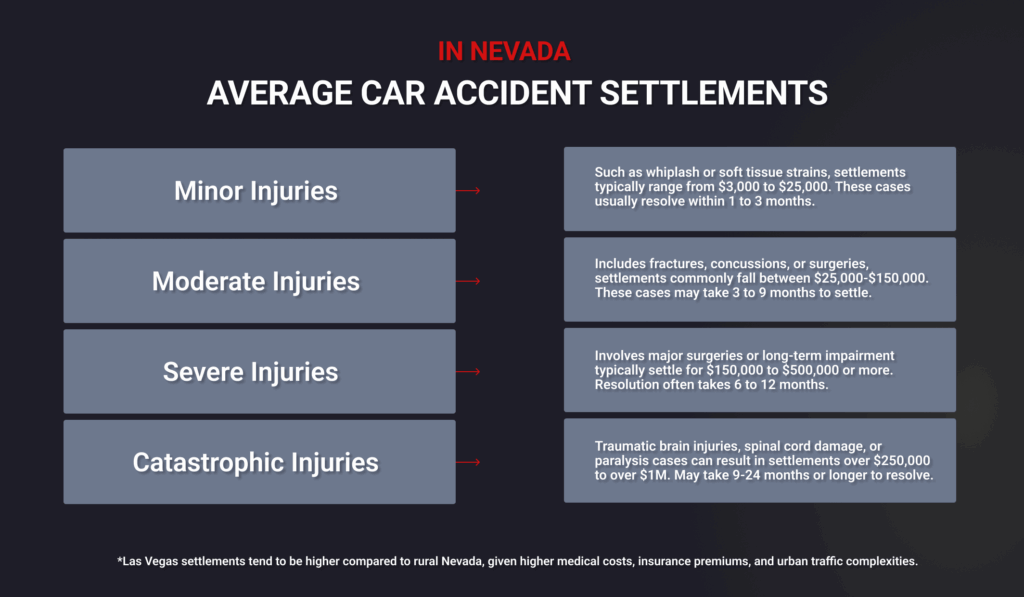
There’s no flat number — it depends on how serious your injuries are, your medical costs, lost income, and how clearly the other driver was at fault. Side-impact collisions often cause serious injuries because the door offers far less protection than the front or rear of a vehicle, which can push value higher than a minor fender-bender. A first offer from the insurer is almost never their best, especially before you’ve finished treating. We cover how these cases are valued in T-bone accident injuries and settlement value in Nevada, and it’s smart to have a lawyer review any offer before you accept.

Find Out Which Clocks Are Running on Your Case
The worst position after a T-bone crash isn’t being close to a deadline — it’s not knowing which deadlines apply to you while the evidence quietly disappears. One free call fixes that.
At Howard Injury Law, we’ll tell you exactly which clocks are running on your crash: injury, property, insurance notice, and — if a government vehicle was involved — the extra steps that come with it. Attorney Glen Howard spent years defending insurance companies before he switched sides, so he knows precisely how the other side counts on you to wait and second-guess. You pay nothing unless we win, and the consultation is free either way.
If you were T-boned anywhere in the valley — the Strip, Spring Valley, Henderson, or North Las Vegas — start your T-bone accident claim with one question: which deadlines apply to my crash? Getting the answer takes minutes. Guessing wrong can cost you the case.