


Catastrophic bicycle injuries don’t heal on a normal timeline. A brain injury, a damaged spinal cord, or a crushed pelvis can mean weeks in the hospital, years of rehab, and a life that looks different from the one you had the morning of the crash. If you or someone you love was hit while riding in Las Vegas, this guide explains what these injuries are, what recovery really involves, and what needs to happen now to protect a claim that can actually cover it.
A catastrophic injury claim has to be built around the rest of your life, not the next few months of bills. That affects how the evidence is gathered, how the damages are calculated, and how early you should talk to a lawyer.
What Makes a Bicycle Injury “Catastrophic”?
A catastrophic injury causes permanent or long-lasting harm. It changes how you live, work, or care for yourself. There’s no single legal checklist, but these injuries usually share a few traits:
- Permanent loss of physical or cognitive function
- Surgery, followed by months or years of rehabilitation
- Ongoing care, medical equipment, or home modifications
- An inability to return to your job, or to work at all
Cyclists suffer these injuries more often than drivers for a simple reason: nothing stands between the rider and the vehicle. There’s no steel frame, no airbag, and no crumple zone. The rider’s body takes the impact twice, first from the vehicle and then from the pavement.
Major Types of Catastrophic Bicycle Trauma
Traumatic Brain Injury (TBI)
Head and neck injuries dominate serious cycling trauma. In a 16-year trauma-center study of severely injured cyclists, they made up about two-thirds of all severe injuries, and brain injuries were among the leading causes of death.
A severe TBI can affect memory, speech, personality, balance, and the ability to live independently. Even a brain injury labeled “mild” or “moderate” in the ER can leave lasting problems with concentration, headaches, sleep, and mood. Those problems often don’t show up on an initial scan, so they’re easy for an insurer to dismiss.
Spinal Cord Injury and Paralysis
When a rider is thrown onto a hood, a windshield, or the road, the spine can take a direct blow. A spinal cord injury may be incomplete, leaving some feeling or movement, or complete, meaning total loss of function below the injury.
Paraplegia and tetraplegia bring lifetime needs: wheelchairs, accessible housing, attendant care, and treatment for complications like pressure sores, infections, and chronic pain.
Pelvic, Crush, and Multiple Fractures
Being hit by a car is different from falling off a bike. The same trauma study found that cyclists hit by a moving vehicle suffered significantly more serious injuries to the pelvis and limbs than riders in solo crashes.
A shattered pelvis, a crushed leg, or several fractures at once often require multiple surgeries, plates and rods, and long stretches without bearing weight. Many riders are left with a permanent limp, early arthritis, or the inability to do physical work again.
Amputation
Some limbs are lost at the scene. Others are amputated later, after a crush injury, severe infection, or failed reconstruction. An amputation brings a lifetime of prosthetic costs, fittings, replacements, and therapy, plus changes to how a person works, drives, and moves through their home.
Internal Organ Damage
A handlebar to the abdomen or blunt force from a bumper can injure the spleen, liver, or kidneys and cause internal bleeding. These injuries aren’t always obvious at the scene. That’s one reason every cyclist hit by a vehicle should be evaluated at a hospital, even if they feel “okay.”
When a Bike Crash Is Fatal
Seventeen cyclists died on Nevada roads in 2025, and 12 of those deaths were in Clark County. When a crash takes a rider’s life, Nevada law allows certain family members and the estate to bring a claim for their losses. If your family is facing that, our wrongful death lawyers in Las Vegas can explain who has the right to file and what the deadlines are.
Why Bike Crashes in Las Vegas Turn Catastrophic
Vehicle Size and Speed
Physics is unforgiving here. A car traveling 40 mph carries four times the energy of the same car at 20 mph, and a cyclist absorbs almost all of it. Las Vegas has miles of wide, multi-lane arterials like Flamingo Road, Charleston Boulevard, and Boulder Highway, all built for heavy, fast-moving traffic. A crash there is far more likely to be life-altering than a tip-over on a neighborhood street.
The research backs this up. In the trauma study above, cyclists hit by a moving vehicle died in the hospital at about twice the rate of riders injured in solo crashes (11.9% vs. 5.7%).
E-Bike Speeds
Many e-bikes provide motor assist up to 20 mph, and some up to 28 mph. Higher travel speed means more force in a crash, even without a car involved. It also means drivers turning left or pulling out of a driveway are more likely to misjudge how fast the rider is approaching.
Riding After Dark
Nationally, about half of cyclist deaths happen in dark conditions. Limited visibility gives drivers less time to react and makes a full-speed, no-braking impact more likely.
Helmet Use
Helmets make a measurable difference. A large research review found that helmeted cyclists had about half the odds of a head injury, roughly 69% lower odds of a serious head injury, and about 65% lower odds of a fatal head injury.
But helmets only protect the head. They do nothing for the spine, pelvis, limbs, or internal organs. Nevada doesn’t require adult cyclists to wear one either; our guide to Nevada helmet laws covers the rules.
Recovery After a Catastrophic Bicycle Injury
Recovery happens in stages, and each stage creates costs the claim has to account for:
- Trauma care. Many severely injured cyclists in Southern Nevada are taken to UMC Trauma on West Charleston, Nevada’s only Level I trauma center. This stage brings emergency surgery, ICU care, and stabilization.
- Inpatient rehabilitation. Weeks of intensive physical, occupational, and speech therapy follow.
- Outpatient and long-term care. This means ongoing therapy, follow-up surgeries, pain management, and for some riders, lifelong attendant care.
For catastrophic injuries, two documents often decide whether a settlement is fair or falls far short:
- A life care plan. A medical expert projects every future need, including surgeries, medication, therapy, equipment, home and vehicle modifications, and in-home care, and puts a price on each one.
- A lost earning capacity analysis. This goes beyond missed paychecks. It measures what the injured person would have earned over a career they can no longer have.
Families carry this too. Spouses become caregivers, and household routines change. Those losses can matter in the claim as well.
Why Standard Insurance Rarely Covers a Catastrophic Bike Injury
Nevada only requires drivers to carry $25,000 in bodily injury coverage per person. A catastrophic injury can burn through that in days. That’s why the first job of a Las Vegas bicycle accident attorney on a serious case is finding every possible source of recovery, not just the obvious one:
- The at-fault driver’s full liability policy. Many drivers carry more than the minimum.
- Your own uninsured/underinsured motorist (UM/UIM) coverage. In many cases your own auto policy can apply even though you were on a bike, and sometimes a household member’s policy can as well.
- Medical payments (MedPay) coverage, if you carry it.
- Commercial policies, if the driver was working at the time. Delivery drivers, contractors, and company vehicles often carry much higher limits.
- Other responsible parties, such as a defective bike component or a dangerous road condition. Claims against a government entity are possible but difficult. Nevada caps them at $200,000 per claimant, and they come with their own procedural hurdles.
Catastrophic cases need a lawyer who handles this level of injury. Our catastrophic injury attorneys in Las Vegas build these claims around lifetime costs, not the first round of hospital bills. We also work alongside the full Las Vegas motor vehicle accident team when a case involves commercial vehicles or multiple drivers.
How Insurers Try to Shrink Catastrophic Bike Claims
Attorney Glen Howard spent years working as an insurance defense attorney, on the side that evaluates and pushes back on injury claims. He knows the playbook because he used to run it. With catastrophic bicycle injuries, it usually looks like this:
- An early offer before the prognosis is clear. A check arrives while you’re still in rehab. Once you sign a release, the claim is over, even if you later need another surgery.
- The “no helmet” argument. Insurers may argue that not wearing a helmet made a head injury worse. That doesn’t bar your claim, and whether the argument carries any weight depends on the injuries and the evidence.
- Shifting blame to the rider. Under Nevada’s comparative fault rule, you can recover as long as you’re not more at fault than the other side, though your award is reduced by your share. Adjusters know this, so they push hard to inflate the cyclist’s percentage. Learn how fault really works in a car-vs-bicycle crash.
- Pointing to gaps in treatment or old injuries to argue the crash didn’t cause the damage.
Protecting a Catastrophic Bicycle Injury Claim Right Now
If you’re in the hospital, or caring for someone who is, these steps protect the case while you focus on recovery:
- Keep the bike, helmet, and clothing as they are. Damage patterns show how and where the impact happened.
- Save ride data. Strava, Garmin, bike computers, and helmet cameras can show speed, route, and timing.
- Request the police report from LVMPD, Nevada Highway Patrol, or the agency that responded.
- Photograph injuries throughout recovery, not just on day one.
- Don’t give a recorded statement to the driver’s insurance company.
- Don’t sign releases or accept a settlement until your doctors understand your long-term prognosis.
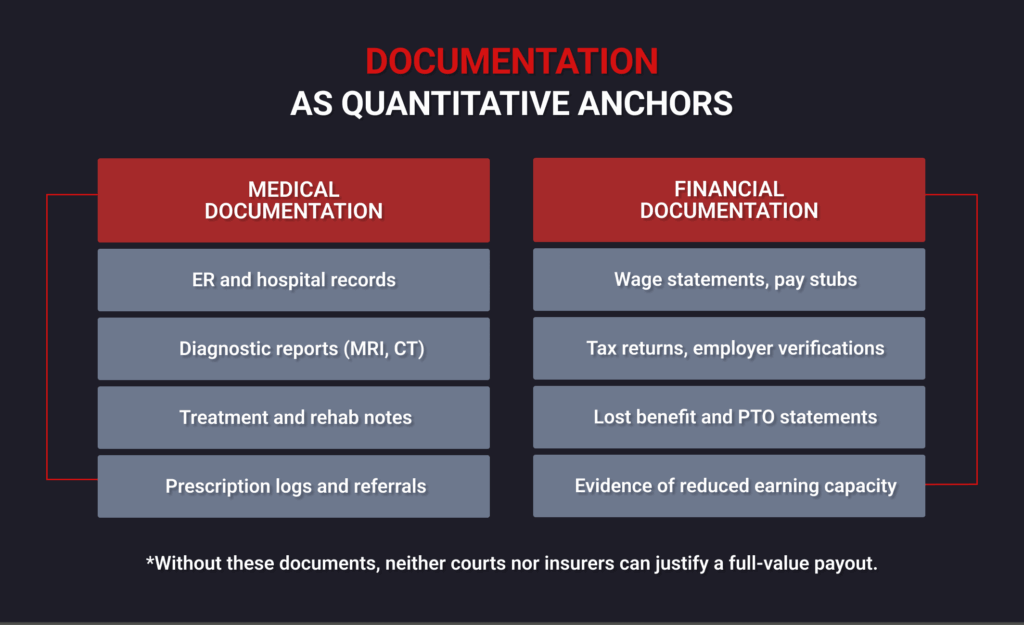
- Track everything: medical bills, missed work, mileage to appointments, and hours of family caregiving.
- Watch the deadline. Nevada generally allows two years from the date of injury to file a personal injury lawsuit. Some situations, like claims involving a government entity, add requirements that can arrive sooner. And surveillance video from nearby businesses can be erased within days.
Frequently Asked Questions
What is the most common serious injury in a bicycle accident?
Head injuries are the most common serious injury in bicycle crashes. Head and neck trauma make up a large share of severe cycling injuries, and brain injuries are a leading cause of cyclist deaths. Fractures to the arms, collarbone, pelvis, and legs are also extremely common, especially when a car is involved, because the rider is thrown onto the hood or the road. Serious injuries aren’t always obvious right away. A concussion, internal bleeding, or a spinal injury can take hours or days to show symptoms, so any cyclist hit by a vehicle should get medical care that day. Prompt treatment protects your health, and it also creates the medical record that ties your injuries to the crash.
Where do most fatal bicycle accidents occur?
Most cyclist deaths happen in urban areas: about 81% nationally in recent federal data. In cities, more fatal crashes occur away from intersections than at them, often when a driver overtakes or drifts into a rider on a fast, multi-lane road. Many also happen after dark. Las Vegas fits that pattern closely, with wide arterials, high speeds, and heavy nighttime traffic. For a detailed breakdown of the times and places Las Vegas cyclists are most at risk, see our guide on when and where bike crashes happen most.
What are the most common causes of cyclist deaths?
Most fatal bicycle crashes involve a motor vehicle, and driver behavior is usually at the center of them. That includes speeding, distraction, failing to yield when turning, unsafe passing, and impaired driving. Speed matters most for survival, because a small increase in vehicle speed greatly increases the force a rider absorbs. Poor lighting and road design add to the risk on many Las Vegas corridors. Our breakdown of the most common causes of bicycle accidents in Las Vegas walks through each cause and the evidence that proves it.
Can I still recover if I wasn’t wearing a helmet in Nevada?
Yes. Nevada doesn’t require adult cyclists to wear helmets, and not wearing one doesn’t prevent you from bringing a claim against the driver who hit you. The insurance company may still argue that a helmet would have reduced a head injury and try to lower the value of the claim. That argument has nothing to do with a spinal injury, a broken pelvis, or internal injuries, and even for head injuries it depends on medical evidence. Every case is different, so talk with an attorney before accepting an insurer’s position on how your helmet use affects your claim.
How long do I have to file a bicycle injury claim in Nevada?
In most cases, Nevada gives you two years from the date of the crash to file a personal injury lawsuit. For a fatal crash, the family’s wrongful death deadline generally runs two years from the date of death. Certain situations can change the timeline or add earlier steps, including claims involving a government agency or an injured minor. Waiting until the deadline is close is risky with catastrophic injuries: evidence like surveillance footage and witness memories fades quickly, and building a life care plan takes time. Speaking with a lawyer early keeps every option open.

Facing a Life-Changing Bike Injury? Talk to an Attorney Who Knows How Insurers Value It
A catastrophic injury isn’t a claim you get a second chance at. The number you settle for has to cover surgeries that haven’t been scheduled yet, care that will be needed years from now, and income that’s gone for good.
Glen Howard spent years on the insurance side of these cases. Now he uses that experience for injured Las Vegas cyclists and their families. We can talk by phone, by video, or at the hospital bedside, and you pay nothing unless we win.
Not sure you have a case? That’s what the free consultation is for. Tell us what happened and we’ll tell you honestly where you stand. Schedule your free consultation or get help from a bike injury lawyer who will start protecting your claim today.