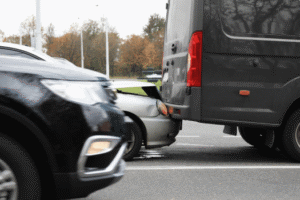


You stopped for a reason — a pedestrian stepped off the curb, brake lights flared ahead, something rolled into your lane — and the driver behind you hit you anyway. Now they’re calling it a brake check, the adjuster is nodding along, and you’re the one being blamed for a crash you didn’t cause.
Here’s what that accusation leaves out. In a brake-checking accident, Nevada law doesn’t hand the front driver an automatic loss or the rear driver an automatic win. Who pays comes down to intent, evidence, and how fault gets divided — and the “you slammed on your brakes” story is one insurers lean on precisely because it’s hard to disprove without help. This is how rear-end fault actually works in Las Vegas, and what it takes to keep the blame where it belongs.
The Rear Driver Usually Gets Blamed First — but “Usually” Isn’t “Always”
Nevada drivers are required to keep a safe gap — you can’t follow another vehicle more closely than is reasonable and prudent for the speed and traffic around you. So when one car rear-ends another, investigators and insurers start from a simple assumption: the trailing driver was too close, distracted, or not leaving enough room to stop. That’s why the rear driver is usually presumed at fault, and it’s why a Las Vegas rear-end accident attorney spends so much time on the exceptions.
But “presumed” is not “proven.” The presumption is a starting point, not a verdict. If the front driver did something they shouldn’t have — like deliberately slamming the brakes to punish a tailgater — fault can shift, or split between both drivers.
Brake-Checking vs. a Legitimate Sudden Stop
The whole dispute usually turns on one question: was the stop a punishment or a reaction?
A brake check is deliberate. The front driver hits the brakes to scare, punish, or “teach a lesson” to the person behind them — usually out of road rage, with no real hazard ahead. A legitimate sudden stop is a reaction to something real: a jaywalker near the Strip, a car cutting across three lanes on I-15, debris in the road, or a light changing at Sahara and Decatur. Drivers stop hard for genuine reasons every day, and that is not illegal.
Nevada law actually draws a line here. A driver isn’t allowed to stop or suddenly slow down without first signaling the driver immediately behind them. A real emergency stop is defensible. A spiteful brake-check — no warning, no reason, just a message — is the opposite, and it can hand fault right back to the person who did it.
When Fault Shifts to the Front Driver in Nevada
If the evidence shows the front driver brake-checked on purpose and without cause, they broke their own duty behind the wheel — and a share of the blame, sometimes most of it, can move to them.
This matters because Nevada uses modified comparative negligence, which means a rear-end crash is rarely all-or-nothing. Both drivers can be partly at fault at the same time: the rear driver for following a little too closely, the front driver for the brake check. Fault gets split into percentages, and you can still recover as long as your share isn’t greater than the other side’s — an even 50/50 split still recovers. Your payout is reduced by your percentage, and if you’re pushed past the halfway line to 51% or more, you recover nothing.
That’s why the fault percentage is the real fight. It also gets more tangled when more than two cars are involved, like a chain-reaction rear-end crash where you’re pushed into the car ahead. Every crash is different, and this is general information — not legal advice about your specific case.
Is Brake-Checking Hard to Prove?
Honestly, yes. Without evidence, it comes down to your word against theirs — and because the rear-driver presumption is already working against the person who did the hitting, a tie usually breaks the wrong way. Proof is what turns “they claim I stopped short” into “the record shows they brake-checked me.”
Here’s what actually moves the needle:
- Dashcam footage — front or rear facing, the single strongest piece of evidence in these cases
- Following distance and closing speed — reconstructed from damage and vehicle data
- Damage and skid patterns — consistent with a normal stop or an abrupt one
- Independent witnesses — other drivers who saw the brake lights and the stop
- The front car’s signals — were the brake lights working, and did they warn before stopping
- Road-rage context — honking, gestures, a pattern of tapping the brakes before the crash
Stop-and-go traffic on I-15 and US-95, and the crowded corridors around the Strip, mean legitimate hard stops happen constantly here — which cuts both ways and makes the evidence, not the story, decisive.
How the Insurance Company Builds the “Sudden Stop” Defense
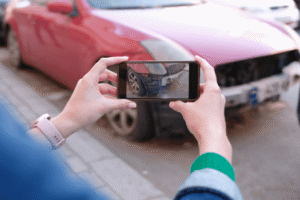
Glen Howard represented insurance companies before he started fighting for injured people, so he knows how the sudden-stop defense gets built — the leading questions in a recorded statement, the way a low-speed impact gets spun into “you must have slammed on your brakes.” Knowing that playbook is how you counter it. Preserve your dashcam, get the vehicle damage photographed before repairs, and be careful about giving an unprepared recorded statement. The steps you take right after a rear-end crash often decide the case months later.
Can You Get in Trouble for Brake-Checking?
Yes. Intentionally brake-checking someone isn’t just aggressive driving — in Nevada it can rise to reckless driving, which the law defines as operating a vehicle in willful or wanton disregard for the safety of people or property. It also collides with the rule requiring a signal before stopping. Like any traffic accident, the citation is only half the story: on the civil side, a proven brake-check can flip fault onto the driver who did it and make them responsible for the injuries they caused. The person who thinks a brake-check will “teach a lesson” can end up the defendant.
Minor-Looking Crash, Real Neck and Back Injuries
Don’t let a “you barely tapped me” or “you stopped short” argument talk you out of getting checked. A rear impact whips the head and spine forward and back, and neck and back injuries — whiplash, strained ligaments, disc problems — are common even at low speeds. Symptoms often don’t show up until a day or two later.
Those injuries are exactly what the sudden-stop defense is aimed at: minimize the crash, minimize the payout. Getting evaluated early protects both your health and your claim.

Frequently Asked Questions
Is brake-checking illegal in Nevada?
In effect, yes. There’s no statute titled “brake-checking,” but the conduct breaks existing rules of the road. Nevada requires a driver to signal before stopping or suddenly slowing for the vehicle behind them, and doing it deliberately to intimidate can qualify as reckless driving — willful or wanton disregard for safety. That can mean a citation and, if it causes a crash, civil liability for the injuries. A genuine emergency stop is different: reacting to a real hazard is lawful. The dividing line is whether there was an actual reason to stop or just an intent to send a message.
What can cause a sudden brake failure — and does it change fault?
Sudden brake failure is a mechanical problem — worn pads, a leaking brake line, ABS or master-cylinder failure, or a manufacturing defect — and it’s a different situation from an intentional brake-check. If the car ahead actually lost its brakes and stopped or lurched unexpectedly, fault may point to a poorly maintained or defective vehicle rather than a driver’s spite. Either way, document it: the other vehicle’s condition, any recall history, and repair records can matter. If you suspect a brake defect played a role, tell your Las Vegas car accident attorney early, so the vehicle can be inspected before it’s repaired or scrapped.
Can being rear-ended cause brake problems in my car?
It can. A hard rear impact can damage brake lines, the parking brake, sensors, or the rear brake assembly, and it can knock your car’s electronics or alignment out of spec. That’s a vehicle-damage and repair issue, not a question of who caused the crash — but it still matters to your claim. Have a mechanic inspect the braking system after any rear-end collision, keep the repair estimate, and make sure hidden damage is documented. Undiscovered damage can also support a diminished-value claim, since a car with a crash on its record is worth less even after it’s fixed.
Who pays if we’re both partly at fault?
A rear-end crash is rarely all-or-nothing in Nevada. If you were following a little too closely but the other driver brake-checked you, a jury or adjuster can assign each of you a percentage of the blame. You can still recover as long as your share of fault isn’t greater than the other side’s — but your payout drops by your percentage, and if you’re found more than half at fault, you recover nothing. That single-point line is why insurers push to inflate your share, and why fault disputes are usually the real battleground in these claims.

Blamed for a Brake-Check Crash in Las Vegas? Talk to Glen Howard.
The “you stopped short” accusation is a strategy, not a verdict — and it’s beatable with the right evidence and someone who knows how the other side builds it. Glen Howard spent years on the insurance-defense side before he started representing injured people across Las Vegas and Nevada, so he reads the sudden-stop defense from the inside.
A free case review will tell you where you actually stand — whether fault can shift, what evidence to protect right now, and what your claim may be worth. You pay nothing unless we win. If you were hurt in a rear-end or brake-checking crash, talk to our Las Vegas rear-end accident team before you give the insurer a recorded statement. The sooner you reach out, the more of the evidence we can still preserve — and Las Vegas car accident lawyers who know this fight can keep your share of the blame where it belongs.