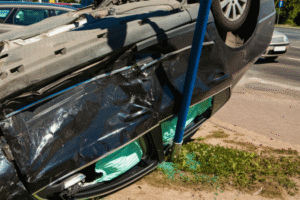


“The Crash Was Weeks Ago But My Back Still Hurts.” If you were rear-ended in Las Vegas and the pain isn’t fading — or it’s getting worse — you’re not imagining it, and you’re not overreacting. A rear-end accident can cause a long-term spine injury that outlasts the bruises, the body shop estimate, and the “you’ll be fine in a week” you heard in the ER. Some spinal damage from a rear-end collision takes days or weeks to fully surface, and some of it becomes permanent.
That gap between “I feel okay” and “something is really wrong” is exactly where a lot of Nevada crash victims get hurt twice — once by the impact, and again by an insurance company that treats lingering neck and back injuries as if they don’t exist. Here’s what’s actually happening to your spine, why the symptoms show up late, and what it means for your health and any claim you may have.

What Happens to Your Spine in a Rear-End Collision
When another vehicle hits you from behind, your car lurches forward and your seatbelt catches your torso — but your head snaps back, then whips forward, faster than your muscles can brace. The whole motion happens in a fraction of a second. That’s too fast for the muscles that normally protect your neck to react, so the force lands on the passive structures instead: the ligaments, the facet joints, and the discs that cushion your vertebrae.
The result is a chain of micro-damage. Ligament fibers tear on a small scale, joint capsules get compressed, and discs absorb pressure they were never built to take. None of that shows up as a dramatic injury in the moment. There’s often no broken bone, no obvious wound — which is exactly why so many people walk away from a Las Vegas fender-bender believing they got lucky, then feel the consequences later.
The amount of damage to your car is not a reliable measure of the damage to your spine. Modern bumpers are designed to absorb or resist impact, which can send the crash energy straight into the people inside rather than the vehicle. A low-speed crash on Sahara Avenue can still injure your neck and back.
Long-Term Spinal Conditions a Rear-End Crash Can Cause
Not every rear-end injury heals in a few weeks. These are the conditions most likely to become chronic.
Chronic Whiplash
Whiplash gets dismissed as minor, but for a meaningful share of people the muscles and ligaments in the neck stay stretched, strained, or partially torn long after the crash. When that happens, it’s often called a whiplash-associated disorder, and it can bring lasting neck pain, stiffness, headaches, dizziness, and reduced range of motion that lingers for months or years. Left untreated, it can also accelerate wear on the spine over time. If your case centers on neck strain, our deeper breakdown of whiplash and back pain after a Las Vegas car accident walks through what recovery usually looks like.
Bulging or Herniated Discs
The discs between your vertebrae act as shock absorbers. A rear-end impact can shove one out of position — bulging it, or rupturing its outer wall so the softer center pushes out. When that displaced disc presses on a nearby nerve, you get the classic symptoms: sharp or burning pain, numbness, or tingling that radiates down an arm or leg. A disc can shift immediately on impact, but the swelling and nerve irritation that make it hurt sometimes build gradually, which is why the pain can arrive later. Disc injuries are also where claims get complicated fast; if that’s your situation, see our page on rear-end collision disk herniation claims.
Spinal Stenosis
Stenosis is a narrowing of the spaces inside your spine that house the spinal cord and nerves. Trauma from a crash — or a herniated disc caused by one — can trigger or worsen that narrowing, squeezing the nerves and producing numbness, weakness, and pain that tends to get worse over time rather than better. Because it develops slowly, stenosis is one of those injuries that can quietly turn a “minor” rear-end accident into an ongoing medical problem.
Aggravated Arthritis and Pre-Existing Degeneration
If you already had some age-related wear in your spine before the crash — and most adults do — a rear-end collision can light it up. The impact can inflame joints that were previously silent and speed up degeneration that might otherwise have stayed manageable for years. Under Nevada law, an at-fault driver generally takes their victim as they find them, so a pre-existing condition doesn’t erase your right to recover for the way the crash made it worse. It does, however, give insurers an opening to argue your pain was “already there,” which is why documentation matters so much.
Why Symptoms Don’t Show Up Right Away
One of the most dangerous things about rear-end spine injuries is the delay. Understanding why it happens can keep you from making a costly assumption.
Delayed Onset
In a crash, your body floods with adrenaline. That stress response masks pain for hours, sometimes days, so you genuinely feel fine at the scene. As the adrenaline fades and inflammation builds, the real symptoms surface. This is textbook, not unusual — and it’s why “I felt okay that day” is never proof you weren’t hurt.
Compensating Posture
When one part of your spine hurts, your body quietly changes how you sit, stand, and move to avoid the pain. Over weeks, that compensating posture overloads other muscles and joints, spreading strain to areas that were never directly injured. A neck problem becomes a mid-back problem; a lower-back problem becomes a hip problem.
Damage Standard ER Scans Miss
The X-rays and CT scans done in a busy emergency room are excellent at spotting fractures — but they can miss the soft-tissue damage that drives long-term pain. Torn ligaments, damaged discs, and injured joint capsules often only show clearly on an MRI, which most crash victims don’t get on day one. A clean ER scan does not mean a clean spine. If you’re tracking new or worsening symptoms, our guide to symptoms to watch after a car accident covers the red flags worth a second medical opinion.
Can a Rear-End Accident Cause Permanent Back Pain?
Yes. For many people, back and neck pain from a rear-end crash resolves within weeks or a few months of treatment. For others, it doesn’t. When ligaments heal loose, when a disc keeps pressing on a nerve, or when stenosis or aggravated arthritis sets in, the pain can become a permanent feature of daily life — affecting sleep, work, and the things you used to do without thinking.
What separates a temporary injury from a lasting one usually comes down to the severity of the initial damage, whether it was diagnosed and treated early, and how your body responds. That’s also why skipping care to “wait and see” is risky: early, consistent treatment gives you the best shot at recovery and creates the medical record that proves what the crash actually did to you. These rear-end spine injuries are part of a broader pattern of long-term injuries from car accidents that Las Vegas victims are often told to shrug off.
What Lingering Spine Injuries Mean for Your Nevada Claim
Here’s the part insurance companies count on you not knowing. A rear-end crash is one of the clearest liability situations on the road — the driver behind is usually responsible for stopping in time. That should make these claims simple. They often aren’t, because the fight shifts from who caused it to how badly you were really hurt.
Adjusters routinely downplay neck and back injuries as “soft tissue” and push a fast, low settlement before the full extent of your spinal damage is known. If you accept that check and your herniated disc or stenosis surfaces months later, you’ve usually given up the right to more. That’s the trap.
Howard Injury Law is built to see it coming. Founder Glen Howard spent years as an insurance defense attorney — the lawyer on the other side of the table — so he knows exactly how carriers value, delay, and discount rear-end injury claims. That perspective is the difference between a settlement that reflects your medical reality and one that reflects the insurer’s convenience. If you want to understand how these cases are proven, the rear-end accident team at Howard Injury Law handles the medical documentation and negotiation so you can focus on healing.
Two Nevada realities worth knowing generally: you typically have two years from the date of the crash to file a personal injury lawsuit, and Nevada uses a modified comparative negligence rule — you can still recover as long as you’re not more than 50% at fault, though your award is reduced by your share of blame. Every case turns on its own facts, so treat this as background, not advice for your specific situation, and talk to a lawyer about the details.

Frequently Asked Questions
Can a car accident cause permanent back pain?
It can. Many people fully recover from a rear-end crash within weeks or months, but some develop lasting pain when ligaments heal loose, a disc keeps compressing a nerve, or the trauma triggers spinal stenosis or aggravates existing arthritis. Whether pain becomes permanent depends largely on the severity of the injury and how quickly it was diagnosed and treated. That’s why early medical care matters — both for your recovery and for documenting the full extent of the damage. If your pain has lasted longer than expected or is getting worse, that’s a signal to get imaging like an MRI and speak with a Las Vegas attorney before settling.
What happens to your body in a rear-end collision?
When you’re struck from behind, your torso is held by the seatbelt while your head snaps backward and then forward in a whip-like motion — all in a fraction of a second, faster than your muscles can brace. That force lands on the ligaments, facet joints, and discs of your spine, causing micro-tears, joint compression, and disc displacement. Common results include whiplash, bulging or herniated discs, nerve irritation, and sometimes concussion from the brain moving inside the skull. Because your car may look barely damaged, these internal injuries are easy to underestimate, especially at lower speeds.
How long does it take to recover from being rear-ended?
It varies widely. Mild whiplash and muscle strain often improve within a few weeks to a couple of months with rest, physical therapy, or chiropractic care. More serious injuries — herniated discs, nerve compression, or stenosis — can take much longer and sometimes require injections, pain management, or surgery. Some people never fully return to baseline. Recovery also depends on getting an accurate diagnosis early; damage that goes untreated tends to worsen and can lead to chronic pain. If you’re weeks out and not improving, don’t assume it’s normal — have it re-evaluated.

Still Hurting? Find Out What Your Spine Injury Is Really Worth
If it’s been weeks since your Las Vegas rear-end accident and your back or neck still isn’t right, don’t let an adjuster decide your injury is minor before a doctor has had the full picture. Lingering spine damage is real, it’s often permanent, and it’s worth far more than a quick first offer.
Talk to Howard Injury Law in a free consultation — we’ll tell you honestly whether you have a case and what your rear-end injury claim may be worth. You pay nothing unless we win, and you’ll be working with a firm led by a former insurance defense attorney who knows how the other side thinks. Call (702) 331-5722 or reach out through our contact page to get started.