

A car hits you on Tropicana, and the driver speeds off. Las Vegas has cameras on nearly every corner, so it’s natural to assume someone already has the whole thing on video. Sometimes they do. More often, the hit-and-run surveillance footage in Las Vegas that could identify the driver is sitting on a hard drive that will record over itself within days.
Some cameras are never recording in the first place. This guide covers which cameras actually capture fleeing drivers, how long that footage lasts, who can get it, and what you can do before it disappears.

The Four Camera Networks That Can Catch a Fleeing Driver in Las Vegas
Four separate camera networks cover the Las Vegas Valley. They have different owners, different rules and different deadlines. Knowing which one probably saw your crash tells you where to look first.
Police License Plate Readers (Flock and Others)
The Las Vegas Metropolitan Police Department uses automated license plate reader (ALPR) cameras. That includes roughly 200 Flock Safety cameras mounted on city and county infrastructure. These cameras don’t record ordinary video. They photograph every passing vehicle and log the plate, the time and the location.
Flock also captures a “vehicle fingerprint”: make, body type, color and details like a roof rack or a paper temporary plate. That lets a detective search for “a dark SUV with front-end damage near Flamingo and Eastern between 10:40 and 11:00 p.m.” even without a full plate number. A search like that narrows the list. It doesn’t solve the case by itself, and a detective still has to follow up.
Casino and Resort Surveillance on the Strip
Casinos run some of the most sophisticated surveillance systems in the world, and many people assume that means long-term archives. It doesn’t. Nevada’s gaming surveillance standards require casinos to keep required recordings for a minimum of only seven days, rising to 15 days in April 2027. Those rules focus on gaming areas, cages and count rooms. They don’t cover the valet entrance, the parking garage exit or the street outside.
Many resorts do film their driveways and garages, but how long they keep that footage is up to each property. Most release it only to law enforcement or in response to a formal legal request.
Business, Apartment and Doorbell Cameras
Gas stations, convenience stores, strip-mall tenants, apartment complexes and homes with video doorbells often capture a fleeing car’s path. That includes the moments after the crash, when the driver turns onto a side street or pulls into a parking lot to check the damage.
This is often the most useful footage in the case. It’s also the most fragile, because most of these systems overwrite themselves automatically, sometimes within 24 to 72 hours.
Dashcams and Cameras Built Into Other Cars
The driver behind you, the rideshare car in the next lane, or a parked Tesla in Sentry Mode may have recorded the whole crash. Nobody keeps these recordings centrally, so they’re found through witnesses, social media posts and canvassing. They’re also some of the clearest footage you can get, because they often show the plate head-on.
Do Las Vegas Traffic Cameras Record? The Myth That Costs Victims Days
This misunderstanding costs people the most time. The cameras on poles at major intersections, like Sahara and Decatur or Charleston and Rainbow, belong to the Regional Transportation Commission’s FAST traffic management system. The network has more than 1,100 cameras across the valley.
The RTC states that its traffic management center does not record that footage. The cameras exist to manage signal timing and watch traffic flow in real time. Nevada has also banned automated ticket cameras since 1999. Under NRS 484A.600, government agencies can’t use camera equipment to gather evidence for traffic citations unless the camera is worn or held by an officer, mounted in a police vehicle or facility, or privately owned. In 2025, the Legislature carved out one narrow exception for school-bus stop-arm cameras. Nevada still has no red-light cameras and no speed cameras.
So there’s no government archive of intersection video waiting to be pulled. At least one private company has recorded public traffic-camera feeds and sold access to insurers and attorneys. That’s one reason an experienced lawyer checks more than the obvious sources.
If you’ve been waiting for “the traffic camera” to identify the driver, that time is better spent chasing the cameras that actually record. Several of them are already overwriting.
How Long Hit-and-Run Surveillance Footage Lasts in Las Vegas
Hit-and-run cases have a clock, and each camera type runs on its own schedule.
| Camera type | Who owns it | How long footage typically lasts | Who can usually get it |
|---|---|---|---|
| RTC intersection cameras | Regional Transportation Commission | Not recorded by the RTC | No government archive exists |
| Flock / ALPR readers | Police agency (via vendor) | Up to 30 days by default | Law enforcement |
| Casino gaming-floor surveillance | Resort | Minimum 7 days (15 days after April 2027) | Police or formal legal request |
| Casino exterior, valet, garage cameras | Resort | Set by each property | Police or formal legal request |
| Business and apartment cameras | Owner or manager | Often 1–30 days, frequently less than a week | Owner’s choice, police or legal request |
| Doorbell cameras | Homeowner | Depends on subscription; can be hours to weeks | Homeowner’s choice |
| Dashcams and built-in car cameras | Driver or vehicle owner | Loops over unless the clip is saved | Owner’s choice |
Two points stand out. Almost nothing lasts past a month, and most of the useful video is gone within a week. And you personally can get very little of it. Many businesses won’t hand footage to a stranger. Flock data isn’t something a private citizen can search.
That’s where a written preservation letter from an attorney matters. It formally puts the camera owner on notice to save specific footage before it’s overwritten. Once a lawsuit is filed, a subpoena can compel production. Neither works if the footage is already gone.
How Police Use ALPR and Surveillance to Track a Fleeing Driver
When a hit-and-run gets investigative attention, detectives typically combine several tools:
- Time-and-location searches: pulling every vehicle a license plate reader logged near the scene around the time of the crash.
- Vehicle-description searches: filtering by make, color and damage when nobody caught the plate.
- Alert lists: flagging a suspect plate so officers are notified when that vehicle passes a reader.
- Retracing the route: stitching together private camera footage to follow the car’s path from the scene.
A 2024 Metro case near the Strip shows how the pieces connect. After a fatal pedestrian crash on Paradise Road, detectives matched a foam bumper fragment from the scene to a specific Nissan model range. Surveillance footage then showed a white Nissan with front-end damage heading south on Paradise. Officers found the damaged car parked near Maryland Parkway and Tropicana, and a neighbor’s camera placed the suspect with the vehicle.
Not every case gets that level of effort. Police prioritize crashes with serious injuries or deaths, and many property-damage hit-and-runs never get a detective. For a full picture of how the process works, and where it stalls, see how Metro investigates and finds fleeing drivers. The first step is always the same: reporting the crash to Metro or NHP, because police can only pull camera data for a case that exists on paper.
What an Identified Driver Changes for Your Injury Claim
Finding the driver matters beyond the criminal case, because leaving the scene is a crime in Nevada. It also changes where your compensation comes from.
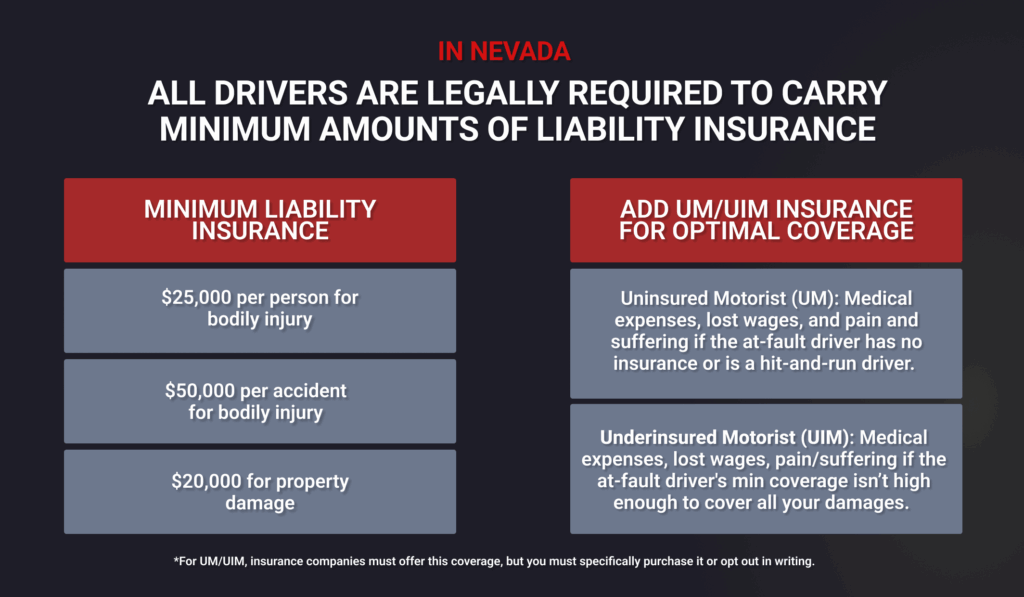
If the driver is identified and insured, you can pursue a claim against their liability policy. If their coverage is too small for your injuries, your own underinsured motorist coverage may pay the difference. If the driver is never found, your own uninsured motorist coverage usually becomes the main source of recovery. Here’s how UM/UIM coverage pays after a hit-and-run, including the requirements your insurer will hold you to.
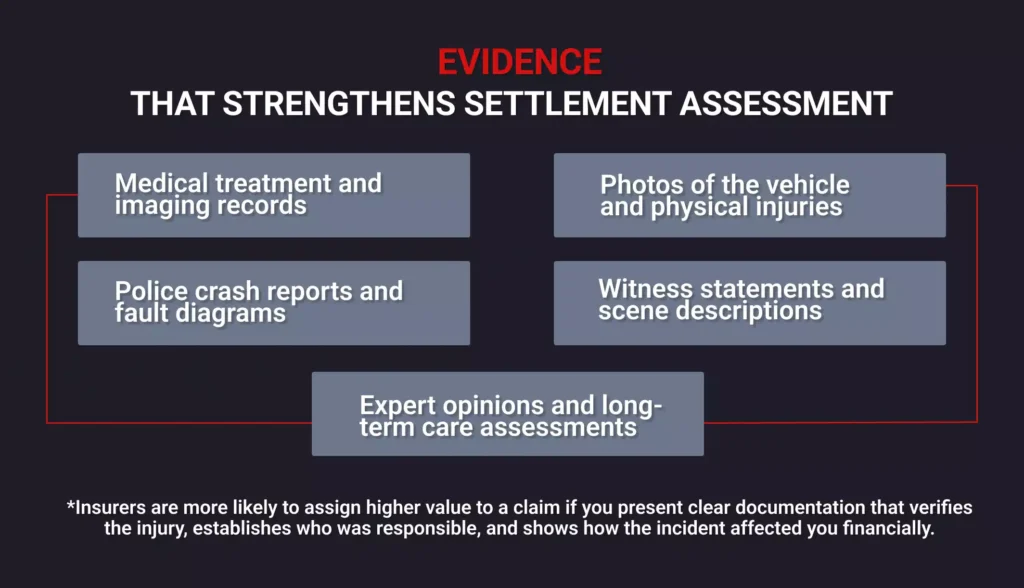
Either way, video helps. Glen Howard spent years as an insurance defense attorney before representing injured people, and he knows how adjusters pick apart camera evidence. They’ll argue a grainy clip doesn’t prove who was driving. They’ll question whether the car in the video is the car that hit you, or suggest you share part of the blame. Clear footage, preserved early and tied to other evidence, shuts those arguments down. That’s why an experienced Las Vegas hit-and-run lawyer goes after the video first.
Every case is different. How footage affects your claim depends on what it shows, what else supports it, and which policies are in play.
Why Every Las Vegas Driver Should Run a Dashcam
You can’t control whether a business saves its footage, but you can control whether your own car records. Las Vegas traffic has tourists in rental cars, late-night Strip traffic and high-speed stretches of I-15 and the 215 Beltway. A dashcam is one of the cheapest protections a Nevada driver can buy.
What to Look For in a Dashcam
- Front and rear cameras: most hit-and-runs involve a car you didn’t see coming, including rear-end impacts.
- High enough resolution to read plates: a car that clearly speeds away is no help if the plate is a blur.
- Parking mode: it records impacts while your car is parked, which covers the garage and parking-lot hit-and-runs that are common across Las Vegas.
- Cloud upload or automatic event saving: it protects the clip if the camera is damaged or the memory card fills up.
Cars With Cameras Built In
Many newer vehicles, including Teslas and a growing number of other models, have factory camera systems. They record continuously but often overwrite unless you save the clip. After any crash, save and back up the footage right away, before the loop records over it.
Is a Dashcam Legal in Nevada?
Yes. Nevada doesn’t ban dashcams. State law restricts material on the windshield that blocks the driver’s view. Mount a small camera behind the rearview mirror or low on the passenger side so it doesn’t obstruct your line of sight, and it won’t create a problem.
The Privacy Fight Over Flock Cameras in Nevada
License plate readers are one of the most debated technologies in Nevada right now. As of 2026, the state has no law regulating how long ALPR data is kept, who can search it, or why. Much of Las Vegas’ Flock network was paid for by private donations. That meant it went in without the public hearings a taxpayer-funded purchase would require.
Supporters say the cameras help solve violent crimes and hit-and-runs quickly. Reno police have credited plate readers with helping close hit-and-run cases. Critics, including the ACLU of Nevada, argue the cameras enable mass tracking and potential misuse. Attorney General Aaron Ford has called for strict safeguards. The Clark County School District police paused their access. Some lawmakers plan to push for limits, or an outright ban, in the 2027 legislative session.
For a crash victim, the practical point is this: the tools available today may look different in a year, and the data they hold is already short-lived. Act on what exists now.

Frequently Asked Questions
Can Flock cameras track people?
Flock cameras track vehicles, not people directly. Each camera photographs passing cars and logs the plate, time, location and features like make and color. Because a car’s movements can be followed from one camera to the next, police can reconstruct where a specific vehicle traveled. Flock says its cameras don’t use facial recognition. In Las Vegas, access to Flock data is limited to law enforcement, and records are kept for up to 30 days by default. For hit-and-run victims, that tracking ability is exactly what can connect a fleeing car to its registered owner. It only helps if police search the data before it expires.
Can a Flock camera read your phone?
No. Flock cameras are license plate reader cameras. They photograph vehicles and can’t access, scan or read the contents of a smartphone. The confusion comes from a different technology: some cities use Bluetooth or Wi-Fi sensors that detect a device’s anonymous hardware ID to measure traffic flow. Those sensors are separate from Flock’s plate cameras and can’t open your phone’s data either. If you’re trying to identify a hit-and-run driver, a plate reader’s value is the vehicle record it creates, not anything tied to a phone.
Why is there a police surveillance camera on the side of the road?
In Las Vegas, a pole-mounted camera by the road is usually one of two things. It may be an RTC traffic camera that streams live video to manage signals and congestion but doesn’t record. Or it may be a license plate reader, such as a Flock camera, that photographs passing vehicles for police investigations. Plate readers are often smaller, angled at bumper height, and paired with a small solar panel. Neither type issues tickets, because Nevada law bars automated traffic-citation cameras. After a hit-and-run, a plate reader near the scene is worth mentioning to police, because it may have logged the fleeing car.
Do Las Vegas traffic cameras record accidents?
Generally, no. The Regional Transportation Commission operates more than 1,100 intersection and freeway cameras across the valley and states that it doesn’t record the footage. The cameras are used for live traffic management. That’s why waiting on “the traffic camera” wastes valuable time after a hit-and-run. The recordings that usually matter come from casinos, businesses, apartment complexes, doorbells, dashcams and police license plate readers. A lawyer can also check private sources that may have captured the public feed, but that has to happen quickly.
How long do businesses keep surveillance footage after a crash?
Often less than a week. Many business and apartment systems overwrite automatically every few days, and some keep only 24 to 72 hours. Nevada’s casino surveillance rules require a minimum of only seven days for required gaming-area coverage, rising to 15 days in April 2027. Exterior and parking cameras are set by each property. Many businesses won’t release footage to the public but will preserve it after receiving a formal written request. If you were hit and the driver fled, ask nearby businesses right away. Then have an attorney send preservation letters so the footage is legally protected.

The Cameras Are Deleting. Your Claim Shouldn’t Wait.
If a driver hit you and fled, the video that could identify them is disappearing on its own schedule. Some of it may already be gone. You shouldn’t have to track down store managers, casino security departments and police detectives while you’re also dealing with an injury.
Howard Injury Law handles that part. We move quickly to identify and preserve footage, work with the investigation, and build your claim whether or not the driver is ever found. Glen Howard’s years on the insurance defense side mean we know how insurers will try to discount your case, and we prepare for it from day one. You pay nothing unless we win.
Not sure you have a case? Tell us what happened in a free consultation. We’ll let you know what footage may still exist, which coverage applies, and what to do next. Learn more about building a hit-and-run injury claim in Nevada with a motor vehicle accident attorney in Las Vegas who knows where the cameras are and how fast they erase.