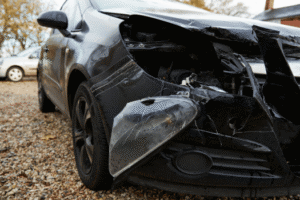


Under Nevada hit-and-run laws, a driver who leaves a crash that damaged only a vehicle or property commits a misdemeanor. A driver who leaves a crash that hurt or killed someone commits a Category B felony, punishable by up to 20 years in prison. If you were the one left behind on the roadside, the law treats what happened to you as a serious crime, and your right to compensation doesn’t depend on police ever finding the driver.
We’ll explain what Nevada law requires of every driver after a crash, what happens to drivers who flee, whether police actually investigate, and what all of it means for your injury claim.
Is a Hit-and-Run a Crime in Nevada?
Yes. Leaving the scene of a crash is a crime in Nevada. If the crash caused only property damage, it’s a misdemeanor under NRS 484E.020. If anyone was injured or killed, it’s a Category B felony under NRS 484E.010, carrying 2 to 20 years in prison and a fine of $2,000 to $5,000. The driver can’t get probation.
That felony line matters. Nevada doesn’t require a catastrophic injury. Any bodily injury to another person turns a fleeing driver’s misdemeanor into a felony.
The Legal Duties Every Nevada Driver Has After a Crash
Nevada spells out exactly what a driver must do the moment a crash happens. These duties apply on public roads and on “premises to which the public has access,” which includes parking lots, casino parking garages and shopping center lots across Las Vegas.
The Duty to Stop (NRS 484E.010 and 484E.020)
Under NRS 484E.010, a driver in a crash that injures or kills someone must immediately stop at the scene or as close to it as possible. They must return if they drove past, and stay until they have met every duty under NRS 484E.030.
NRS 484E.020 imposes the same duty to stop when a crash damages only a vehicle or property that someone was driving or attending. If the vehicle is blocking traffic and can be moved safely, the driver should move it to a safe spot nearby. That means pulling onto a shoulder of I-15, not leaving.
The Duty to Give Information and Render Aid (NRS 484E.030)
Stopping isn’t enough. Under NRS 484E.030, the driver must:
- Give their name, address and vehicle registration number to the other driver or any injured person
- Show their driver’s license if asked
- Provide the same information to any police officer at the scene or investigating the crash
- Give reasonable help to anyone injured, including arranging a ride to a doctor or hospital when treatment is clearly needed or the injured person asks for it
If no officer is at the scene of a crash involving injury or death, the driver must also report it to police. Violating NRS 484E.030 is a misdemeanor. But a driver who leaves an injury crash without meeting these duties has also violated NRS 484E.010, and that’s the felony.
Parked Cars and Unattended Property
Hitting a parked car or roadside property creates its own duties. The driver must find and notify the owner, or leave a secure written note with their contact information (NRS 484E.040). They must also notify police when they damage fixtures or property next to the road (NRS 484E.050). Skipping either step is a misdemeanor.
Failing to Stop Is Not the Same as Failing to Report
These two offenses get confused constantly. The duty to stop and exchange information happens at the scene. Nevada’s separate written crash report is paperwork filed with the DMV afterward. A late or missing report is a much smaller problem than driving away. If you’re trying to sort out the paperwork side, here’s what happens if you don’t report a motor vehicle accident in Nevada.
What Counts as a Hit-and-Run in Nevada?
A hit-and-run happens any time a driver involved in a crash leaves before meeting their legal duties. Common Las Vegas situations include:
- A driver rear-ends you at Tropicana and I-15 and speeds off before you can get a plate
- A driver clips a pedestrian in a Strip crosswalk and never stops
- Someone backs into your parked car in a casino garage and drives away without leaving a note
- A driver stops, sees you’re hurt, and leaves without giving their name or calling for help
Two points surprise people. First, the driver doesn’t have to be at fault for the crash. Even a driver who did nothing wrong must stop, exchange information and help. Second, Nevada treats each injured or killed person as a separate felony count. A driver who flees a crash that injures three people faces three felony charges.
Coming back hours later or turning themselves in the next day doesn’t erase a driver’s failure to stop. It may affect how prosecutors handle the case, but the offense already happened.
Penalties for Hit-and-Run in Nevada
| Situation | Statute | Classification | Penalty |
|---|---|---|---|
| Leaving a crash with only vehicle or property damage | NRS 484E.020 | Misdemeanor | Misdemeanor penalties |
| Hitting an unattended vehicle or property without notifying the owner or police | NRS 484E.040 / 484E.050 | Misdemeanor | Misdemeanor penalties |
| Failing to give information or render aid | NRS 484E.030 | Misdemeanor | Misdemeanor penalties |
| Leaving a crash that injured or killed someone | NRS 484E.010 | Category B felony | 2–20 years in prison, $2,000–$5,000 fine, no probation, separate count per victim |
Nevada also requires a one-year license revocation for any driver convicted of failing to stop and render aid after a crash that injured or killed someone (NRS 483.460).
What Is Worse, a DUI or a Hit-and-Run?
It depends on the facts, but fleeing often turns a bad situation into a far worse one.
A first-offense DUI with no serious injury is usually a misdemeanor in Nevada. A DUI becomes a Category B felony, with the same 2-to-20-year range, only when the impaired driver causes death or substantial bodily harm (NRS 484C.430). A hit-and-run becomes a felony when the fleeing driver leaves any crash involving bodily injury, even a less severe one.
That’s why an impaired driver who flees to “sober up” or avoid a breath test can end up facing a felony that a misdemeanor DUI never would have triggered. If the driver was impaired and the crash caused serious injury, they can face both felonies. For people hurt by impaired drivers, here’s what changes if the drunk driver was uninsured or fled the scene.
Do Police Actually Investigate Hit-and-Runs in Las Vegas?
Yes, especially when someone is hurt. An injury or fatal hit-and-run is a felony investigation. Depending on where it happened, that falls to the Las Vegas Metropolitan Police Department, the Nevada Highway Patrol (for crashes on I-15, US-95 and the 215 Beltway), or the Henderson or North Las Vegas police.
Property-only hit-and-runs often get fewer resources. That doesn’t make them hopeless, but your own actions matter more:
- Report it right away. Your report starts the criminal case, and it also protects your insurance claim.
- Write down everything. Record the partial plate, the vehicle’s make, color and damage, the direction it went and the time.
- Look for cameras. Las Vegas is full of casino, business, rideshare and doorbell cameras, but much of that footage gets overwritten within days.
For a step-by-step walkthrough, see this guide to hit-and-run reporting in Las Vegas. If you’re still in the first hours or days, start with what to do after a hit-and-run accident.
What the Criminal Case Means for Your Injury Claim
This is where many victims get stuck. They wait for an arrest, assuming the criminal case will take care of them. It won’t.
The criminal case is the State of Nevada holding the driver accountable. Its goal is punishment, not your compensation. A judge can order restitution, but it’s usually limited to out-of-pocket losses. It depends on the driver’s ability to pay and doesn’t cover pain and suffering.
Your civil claim is separate, and a few points shape it:
- You don’t need an arrest to make a claim. Nevada insurance law treats an unidentified hit-and-run driver as an uninsured motorist, which can open your own coverage.
- A conviction for fleeing doesn’t automatically prove who caused the crash. It proves the driver left. Fault for the collision is still shown through evidence such as photos, video, witnesses and vehicle damage.
- Flight still hurts the driver. If they’re found, leaving the scene looks like consciousness of guilt to insurers and juries.
- Your deadline keeps running. Nevada generally gives you two years from the crash to file a personal injury lawsuit (NRS 11.190(4)(e)), whether or not anyone is ever charged.
Who Pays for Your Injuries and Car Damage After a Hit-and-Run?
Who pays depends on whether the driver is found and what coverage is on your own policy.
If the driver is identified, their liability insurance pays first. Nevada’s minimums are $25,000 per person for injuries and $20,000 for property damage, and serious injuries often exceed those limits.
If the driver is never found, your uninsured motorist (UM) coverage can pay for your injuries, medical bills, lost wages and pain and suffering. Nevada attaches two conditions to unknown-driver UM claims (NRS 690B.020):
- The hit-and-run vehicle generally must have made physical contact with you or the vehicle you were in.
- The crash must be reported to police within the time Nevada law requires.
A “miss-and-run,” where a driver forces you off the road without touching your car, can be much harder to claim under UM. That’s one reason fast reporting and a detailed record matter so much. Here’s a plain-language breakdown of how UM/UIM coverage works in Nevada, and what to expect if you’re hit by an uninsured driver.
For your car, collision coverage typically pays for repairs minus your deductible. UM coverage for injuries generally doesn’t fix your vehicle. For medical bills, MedPay coverage, if you carry it, pays quickly regardless of fault.
Every policy and every crash is different. How these coverages stack up in your case is worth reviewing with someone who knows recovering compensation after a hit-and-run inside and out.
Why a Former Insurance Defense Attorney Matters in a Hit-and-Run Claim
Here’s what most hit-and-run victims don’t expect: when the driver disappears, the insurance company you end up fighting is often your own. A UM claim is a claim against your insurer, and it will evaluate, question and discount your injuries the same way any other carrier would.
Howard Injury Law was founded by Glen Howard, a Nevada attorney who spent years on the insurance defense side before representing injured people. He knows how UM adjusters handle unknown-driver claims:
- They check first whether the physical-contact and reporting requirements were met.
- They look for gaps in treatment.
- They use recorded statements to minimize injuries.
We use that knowledge to build your claim before the insurer builds its defense. Our team works with police reports, surveillance footage and witness accounts. If the driver is found, we pursue them and their insurer too.
As a Las Vegas hit-and-run accident lawyer team handling motor vehicle accident claims across Las Vegas, we work on a contingency fee. You pay nothing unless we win.

Frequently Asked Questions
Is leaving the scene of an accident a felony in Nevada?
It depends on who was hurt. Leaving a crash that caused only vehicle or property damage is a misdemeanor under NRS 484E.020. Leaving a crash that caused bodily injury or death is a Category B felony under NRS 484E.010. That carries 2 to 20 years in prison and a $2,000 to $5,000 fine, and probation isn’t allowed. Each injured or killed person counts as a separate offense. The driver also faces a mandatory one-year license revocation. The injury doesn’t have to be catastrophic; any bodily injury to another person meets the felony threshold.
Can I sue a hit-and-run driver in Nevada?
Yes, if the driver is identified. A civil injury claim is separate from the criminal case, so you don’t have to wait for charges or a conviction to pursue it. You generally have two years from the crash to file an injury lawsuit in Nevada. If the driver is never found, you usually can’t sue them directly, but your own uninsured motorist coverage may pay what their insurance would have. An attorney can pursue both paths at once, so your claim doesn’t stall while police search.
Is it a hit-and-run if it happened in a parking lot?
Yes. Nevada’s hit-and-run statutes cover crashes on highways and on premises open to the public, which includes parking lots, casino garages and shopping center lots. A driver who hits your parked car must find you or leave a secure note with their name and address. Leaving without doing so is a misdemeanor. If someone was hurt in the lot, for example a pedestrian struck while walking to their car, leaving is a felony, exactly as it would be on Las Vegas Boulevard.
Who pays for car damage in a hit-and-run?
If the driver is found, their property damage liability coverage pays. Nevada requires at least $20,000. If they’re never found, your collision coverage usually pays for repairs, minus your deductible. Nevada uninsured motorist coverage is built around bodily injury and typically won’t cover your vehicle. Without collision coverage, you may have to pay out of pocket unless the driver is identified later. Nevada generally allows three years to bring a property damage claim, but report the crash and notify your insurer right away.
What happens if the driver comes back or turns themselves in later?
Returning or surrendering later doesn’t undo the offense. The law requires the driver to stop immediately and stay until they’ve exchanged information and helped anyone injured. A driver who comes forward may get some consideration from prosecutors, but that’s a criminal-case issue. For you, it’s good news: an identified driver means their liability insurer can be held responsible for your injuries and damage. Keep your own records and medical treatment consistent either way.

The Driver Ran. The Law Didn’t.
Being left in the road by a stranger is disorienting. But Nevada law takes it seriously, and your path to compensation is already open, whether or not police make an arrest.
If you were hurt in a hit-and-run anywhere in Las Vegas or elsewhere in Nevada, the question isn’t whether the driver will be caught. It’s whether your own claim is protected right now, before reporting windows, camera footage and deadlines slip away. Talk with a Las Vegas hit-and-run lawyer who knows how insurers evaluate these claims from the inside. Find out if you have a case with a free consultation or call (702) 331-5722. No fee unless we win.
This article provides general information about Nevada law, not legal advice. Every case is different — talk with an attorney about your specific situation.