Whiplash and Neck Strain
Whiplash is the most common rear-end injury — soft-tissue damage to the muscles and ligaments of the neck. It can leave you with stiffness, headaches, and limited motion for weeks or months, even after a low-speed crash.

Las Vegas Personal Injury Lawyer
Nevada law puts fault on the tailgating driver — but their insurer will still fight your neck and back injuries. We've beaten that playbook — free case review before you accept anything.









The insurance adjuster is not on your side
Their job is to protect their bottom line, not yours. Every question is designed to reduce your payout.
Early calls are part of their strategy
What you say can be used to reduce or deny your claim. Don't speak to them without us present.
Quick settlements cost you more
They offer fast payouts knowing you're desperate. Once you sign, you can never go back for more.
We step in immediately and take over.
$0M+
Recoveredfor Nevada injury victims
0+
Yearshandling Nevada car accident cases
0+
Clientsrepresented across Las Vegas
$0
No Fee Unless We Winzero upfront cost to you
Rear-end crashes are everywhere in Las Vegas — and it's no accident. On stop-and-go stretches of I-15, through the Spaghetti Bowl interchange, and along the signal-heavy corridors near the Strip, traffic stops without warning and the following driver slams into the car ahead. That high volume is exactly why insurance adjusters move fast to settle rear-end claims cheap.
The good news for you: fault in these crashes is rarely in doubt. Nevada law (NRS 484B.127) requires every driver to leave enough room to stop safely behind the car ahead. A driver who tailgates and can't stop in time has broken that law — and because following too closely is a traffic violation, it counts as negligence per se in your injury claim.
That's a real advantage. You don't have to fight over who caused the crash the way you would after a side-impact or intersection wreck — the rear driver's own conduct establishes fault. A Las Vegas rear-end accident lawyer locks that down early so the insurer can't muddy it later, because once fault is settled the real fight becomes how little they can pay you.
Even when the other driver plainly hit you from behind, their insurer may still try to shift part of the blame onto you. Under Nevada's modified comparative negligence rule (NRS 41.141), every percentage of fault they pin on you cuts your compensation by that much — and if they push your share past 50 percent, you recover nothing. That's the whole reason an adjuster hunts for a way to make the crash partly your fault.
The arguments are predictable: you stopped short, you reversed, you "brake-checked," or your brake lights were out. You don't have to accept any of it. The way you protect yourself is built in the first hours after the crash — photograph the scene and both vehicles, get the police report and report number, collect witness contacts, and route every one of the insurer's questions through your attorney instead of answering them yourself.
A percentage of fault you don't deserve is one of the most expensive things that can happen to a rear-end claim. A Las Vegas rear-end accident lawyer makes the insurer prove their version instead of letting them assign blame by default.
In almost every rear-end crash in Nevada, the driver who hit you from behind is at fault. State law (NRS 484B.127) requires every driver to keep a safe, reasonable distance from the car ahead, so a driver who tailgates and can't stop in time is presumed negligent. Following too closely is a traffic violation, and that violation counts as negligence per se in your injury claim, which makes proving fault far more straightforward than in most crash cases.
Sometimes the other driver's insurer will try, but it rarely holds up. They may argue you stopped suddenly for no reason, reversed, or drove with a broken brake light. Under Nevada's comparative fault rule (NRS 41.141), even a small share of blame shifted onto you lowers your payout, and if they push you past 50%, you recover nothing. That's exactly why an adjuster hunts for a reason to assign you fault, and why it helps to have a lawyer protect your side.
If you were injured, yes, even when fault is obvious. In a rear-end crash, liability is usually the easy part; the fight is over your injuries. The other driver's insurer will admit they hit you and then argue your neck or back injury isn't serious, isn't real, or existed before the crash. An experienced car accident lawyer makes them prove it and holds them to the full value of your injury.
The most common rear-end injuries are whiplash and other neck strains, back and spine injuries including herniated discs, and concussions. Because the crash throws your head and spine forward and back in a fraction of a second, soft-tissue and disc injuries happen even at lower speeds, and many don't fully surface until a day or two later.
Yes. How badly your car is damaged tells you almost nothing about how badly you're hurt. "Minor impact, minor injury" is an insurance-company talking point, not a medical fact, and the force of a low-speed rear-end crash still transfers to your neck and spine. Insurers point to a barely dented bumper to argue you can't be injured; don't let a photo of your car decide the value of your health.
Whiplash and other soft-tissue injuries often don't appear on X-rays or scans, so normal imaging doesn't mean you're not hurt. The proof comes from consistent medical treatment, a documented physical exam, and a clear record of your symptoms over time. Gaps in treatment are the first thing an adjuster uses to dispute a whiplash claim, so see a doctor early and keep going until you're released.
Delayed neck and back pain is normal after a rear-end crash. Adrenaline right after the collision masks pain, and whiplash and disc injuries often don't show up until 24 to 72 hours later. Feeling "fine" at the scene doesn't mean you weren't injured, so see a doctor promptly. A delay in treatment can hurt your recovery and give the insurer an excuse to minimize your claim.
In Nevada you generally have two years from the date of your injury to file a rear-end accident lawsuit (NRS 11.190(4)(e)). Negotiating with the insurance company does not pause that clock, only filing in court does. Waiting also lets evidence disappear and gives the adjuster more room to dispute your injuries, so it's best to act well before the deadline.
Have a different question? Browse our full Q&A library →
“Many people don’t realize they should contact a personal injury law firm immediately after an injury or significant property damage claim. Relying on insurance adjusters can be a costly mistake.
Despite appearing impartial, adjusters work for the insurance company and aim to minimize payouts or deny claims.”
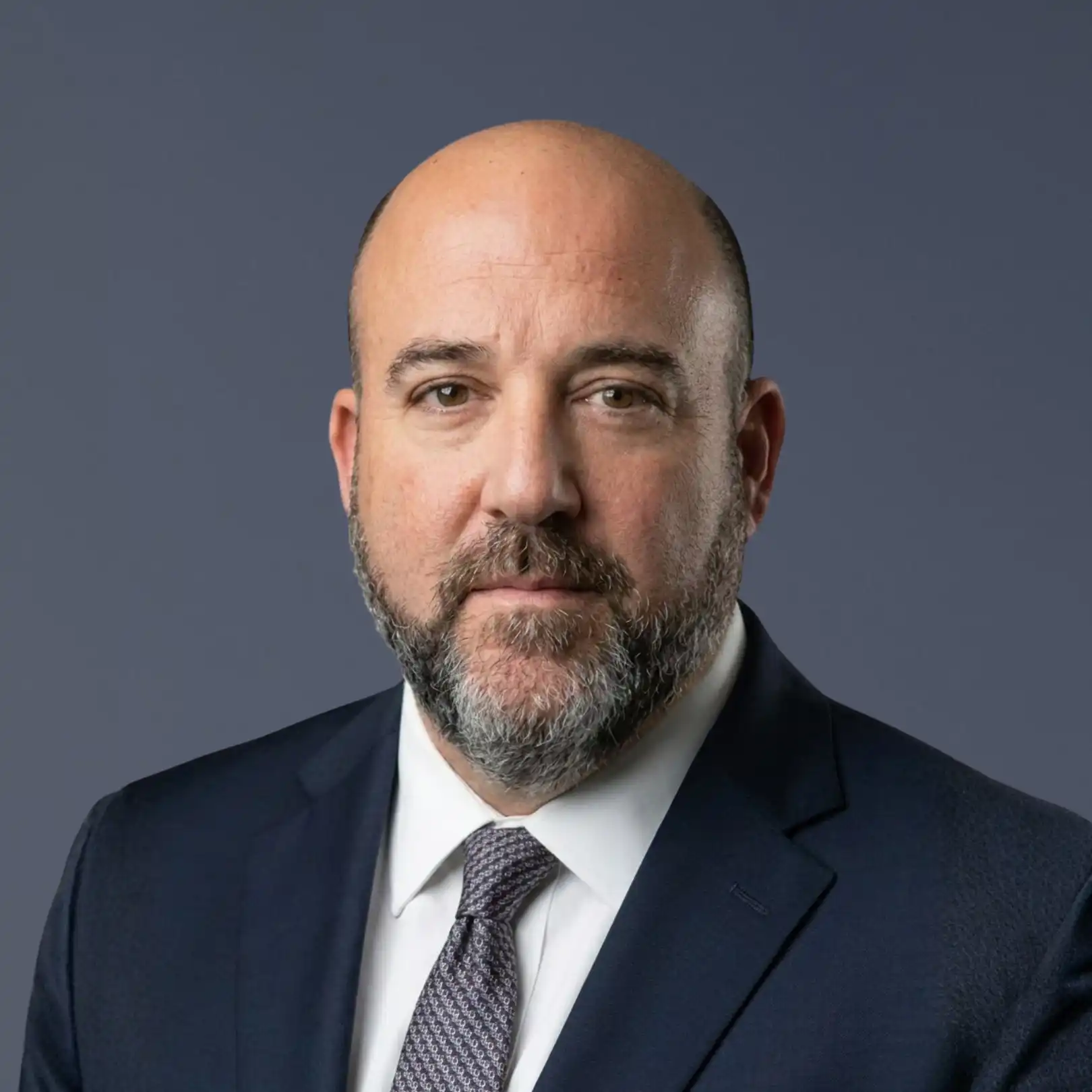
Remember, the insurance company is not on your side, but a dedicated personal injury lawyer is! We fight for you!
Rear-end collisions concentrate their force exactly where your body is least protected: the neck and spine. And the injuries they cause are often deceptive — many don't fully surface until a day or two after the crash, once the adrenaline wears off.
Whiplash is the most common rear-end injury — soft-tissue damage to the muscles and ligaments of the neck. It can leave you with stiffness, headaches, and limited motion for weeks or months, even after a low-speed crash.
The force of the impact can push cervical or lumbar discs out of place, pressing on nerves and causing pain, numbness, or weakness that radiates into the arms or legs.
You don't have to hit your head to get a concussion. The sudden motion alone can injure the brain, leaving you with headaches, dizziness, trouble concentrating, or memory problems.
The same forces strain the lower back, causing muscle damage, sprains, and in serious cases spinal injuries that affect how you sit, stand, and work long after the crash.
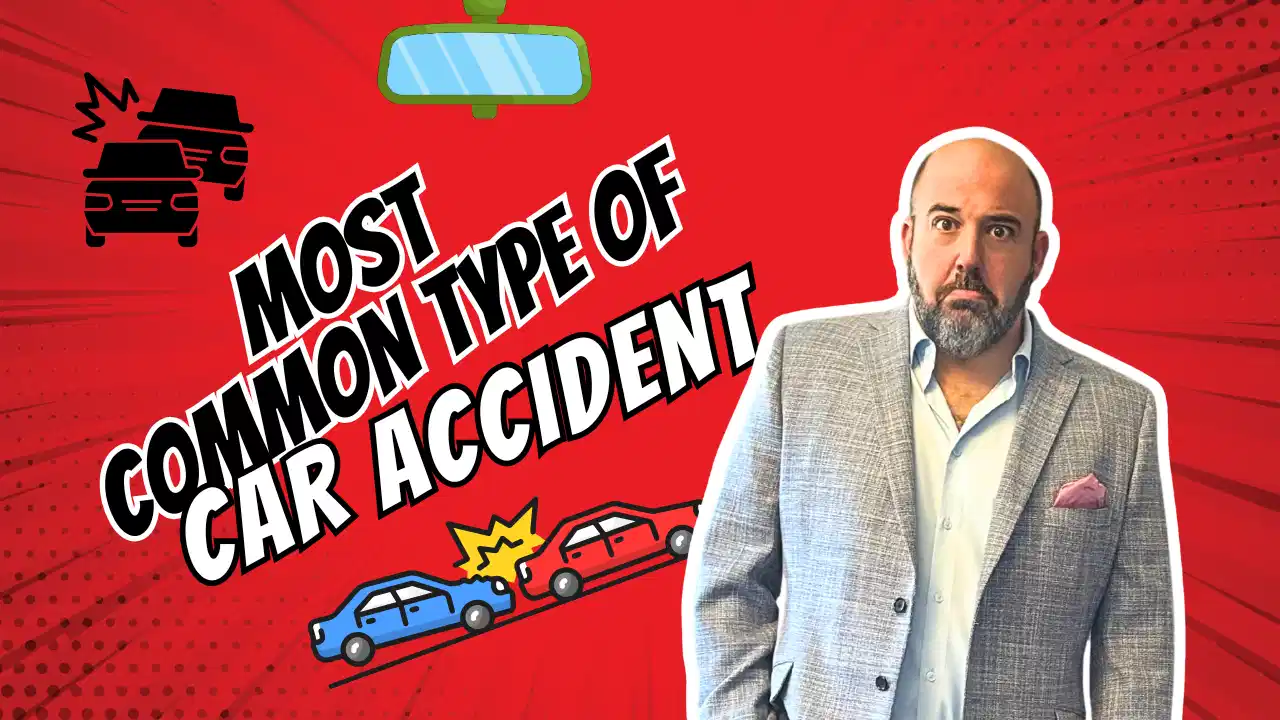
A dented bumper tells you almost nothing about how badly you're hurt. Insurers lean hard on the "minor impact, minor injury" argument — pointing at a barely damaged car to claim you couldn't have been seriously injured. It's a talking point, not a medical finding.
Even at low speeds, the energy of a rear-end collision transfers straight into your neck and spine. Your body absorbs that force whether or not the metal shows it — which is why whiplash and disc injuries are so common in crashes that left both cars looking fine.
This is where a rear-end claim is really won or lost: not over who caused it, but over how much your injury is worth. Don't let a photo of your bumper set the value of your health. For the full picture of what a rear-end case can be worth in Nevada, see our Las Vegas car accident guide — then let a rear-end accident lawyer hold the insurer to the real number.
I had a great experience with Howard Injury Law. Anytime I had questions, they were always there with an answer ready to help. They were super attentive towards me. I'm very grateful I went to them after my car accident.
Car AccidentWas rear-ended November 2024. Never been in an accident before, let alone one where my car was totaled and I was injured. Howard Injury Law was amazing! The team walked me through everything, what to do and what to expect ... read more
Rear-End CollisionHighly recommend. I worked with James and Vanessa. They both are very nice and patient if or when you have a million and one questions. They make sure you are updated and not wondering where you stand.
Personal InjuryI can't say enough great things about Howard Injury Law. From start to finish, Glenn Howard and his amazing team James and Natalie were there every step of the way. They made a stressful situation feel manageable ... read more
Injury CaseI had a really bad accident in March 2023 and was referred to this amazing team. This being a new experience, Howard Injury Law walked me through every single step. They truly fought for me and got me more than I expected.
Car AccidentThis team was amazing. They took care of everything I needed with my personal injury and made it so easy for me. I never felt alone during the process. I would highly recommend Howard Injury Law to anyone.
Personal InjuryI would like to thank Glen Howard and James for taking such great care of me during my case. They're knowledgeable, professional, and genuinely caring. My family and I are truly grateful for the outcome they achieved.
Injury CaseWhat you do in the first three days after a rear-end crash can decide both your recovery and your claim. Move through this list before you talk to any adjuster.
See a doctor now, even if you feel fine. Delayed symptoms are normal, and a medical record from day one ties your injuries directly to the crash.
Document everything. Photograph both vehicles, the scene, and any visible injuries, and get the police report number.
Collect information. Get the other driver's license, insurance, and contact details, plus the names and numbers of any witnesses.
Don't give the other insurer a recorded statement. You're not required to, and it will be used to minimize your claim.
Keep treating consistently. Gaps in care are the number one thing insurers use to devalue a rear-end injury.
Then call a rear-end accident lawyer before you accept anything. The earlier we're involved, the harder it is for the insurer to pick your claim apart.
Almost every rear-end crash in Las Vegas comes down to the same thing: the driver behind wasn't paying enough attention, or driving safely enough, to stop in time. Each of these causes points back to the same person — the driver who hit you from behind.
Tailgating is the number-one cause. Nevada law requires a safe following distance, so a driver riding your bumper has no room to stop when traffic slows.
Texting, GPS, and drivers gawking at the Strip take eyes off the road for the exact seconds it takes to rear-end the car ahead.
Stop-and-go traffic on I-15 and the 215 is constant here — but a safe driver expects it. Getting caught off guard is still their failure.
The faster a driver goes, the longer they need to stop. Speeding and lane-weaving turn a routine slowdown into a rear-end crash.
Late-night casino traffic means impaired and exhausted drivers on the road, with the slow reaction times that cause rear-end collisions.
Harsh desert glare and low sun blind drivers on east-west roads — but Nevada still expects them to slow down and drive for the conditions.
Whatever the cause, the pattern is the same: the driver behind you failed a duty they owed you. A Las Vegas rear-end accident lawyer turns that failure into provable fault.
Rear-end fault gets more complicated when more than two cars are involved. In a chain-reaction pileup, the driver at the back who started it usually carries most of the blame — but Nevada's comparative negligence rule can spread liability across several drivers, each with their own insurance company.
The most common version: you're stopped in traffic, a driver rear-ends you, and the force pushes you into the car ahead. You're generally not responsible for hitting the car in front — you were shoved into it. But the driver behind you and their insurer will often try to blame you for that second impact, and untangling it takes evidence: the police report, damage patterns, and witness accounts that show who hit whom first.
With multiple drivers and multiple policies in play, insurers point fingers at each other to pay as little as possible — and the injured victim in the middle is the one who gets squeezed.
If you were caught in a multi-car rear-end crash in Las Vegas, don't let the insurers decide your share of the blame. A rear-end accident lawyer investigates the chain, pins fault where it belongs, and pursues every policy that owes you money.
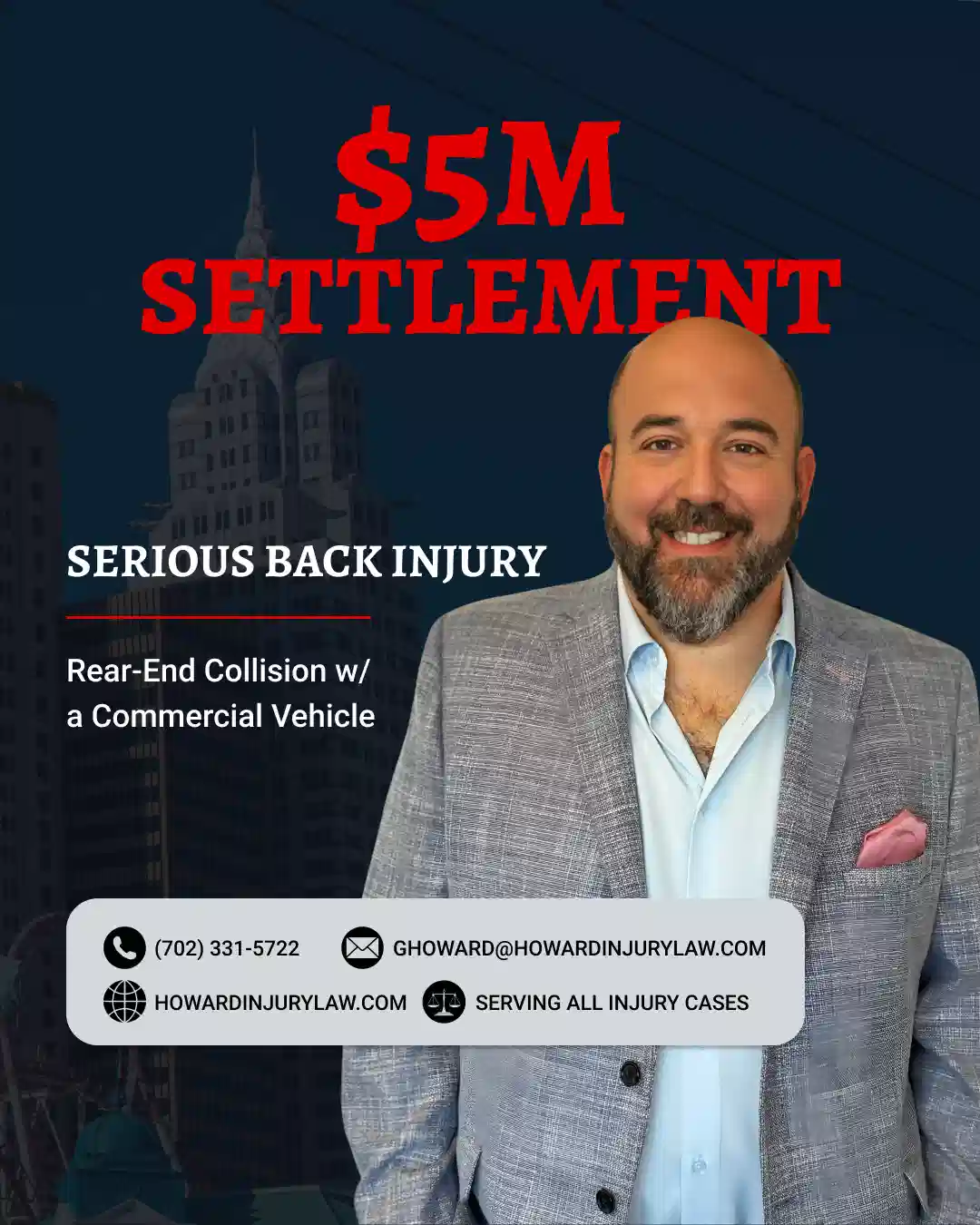
$5 Million
Auto Accident
$3.2 Million
Auto Accident
$3.9 Million
Personal Injury
$1 Million
Wrongful Death
$1 Million
Auto Accident
$1.35 Million
Casino Injury
Insurance companies know which law firms fight and which ones fold.
That reputation affects every negotiation. When adjusters know your attorney doesn't settle cheap, they open differently. First offers are higher. Timelines move faster. Cases resolve better.
Glen Howard is an experienced Las Vegas rear-end accident attorney trusted by local families across Clark County. He and his team handle every file personally. You'll speak directly with your attorney — not be passed to a paralegal who has to look up your case number to know your name. That's a commitment the largest Las Vegas PI firms simply can't make.
And the financial risk to you is zero. Howard Injury Law works on contingency: you pay nothing unless we recover for you. No hourly fees. No upfront costs. No surprises.
Get a free no-obligation case review
Founding attorney Glen Howard built his practice after watching his own family navigate a serious motor vehicle crash — an experience that shaped how he fights for clients today. He's recovered more than $80 million for injured clients, and you'll work directly with him and a dedicated case manager on every file, not a rotating cast of paralegals.
Read Glen's full storyIf you're unsure what to do after an accident — or want to help prevent one — HIL Helps is our free 24/7 community resource, open to everyone, not just clients.
#HILHelps — A Free Vegas Community Resource
You didn't ask for this. You're not supposed to know how to fight an insurance company, preserve evidence, or navigate Nevada personal injury law while you're in pain and trying to put your life back together.
That's what we do.
Howard Injury Law is available 24/7. The consultation is free. You pay nothing unless we win. And the sooner you call, the stronger position your case is in. However you found us — searching for a car accident lawyer in Las Vegas, or referred by someone who trusted us with their case — we're ready when you are. The free consultation will tell you exactly where you stand.
Howard Injury Law
6330 Spring Mountain Rd Ste D, Las Vegas, NV 89146