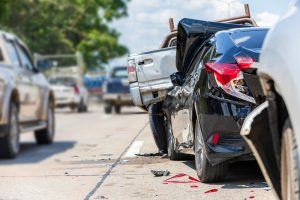



Single vehicle accidents involve one vehicle, but that doesn’t mean one responsible party. When only one car is involved in a crash, the instinct — from insurance companies, from law enforcement, sometimes even from the driver themselves — is to assume the driver caused it. They ran off the road, hit the median, or they overcorrected. End of story.
That assumption is wrong more often than most people realize.
In Nevada, fault in a single vehicle crash can fall on a third driver who forced you off the road, a manufacturer whose defective tire failed at highway speed, a municipality whose unaddressed pothole sent you into a guardrail, or a combination of factors that had nothing to do with driver error. The driver who ends up in the ditch isn’t always the person who caused the crash — and Nevada law provides real pathways to compensation when they’re not.
If you were in a single vehicle accident in Las Vegas and you’re not sure whether you have a claim, that uncertainty is exactly why this is worth understanding before you talk to any insurance company.
Howard Injury Law handles motor vehicle accident cases throughout Las Vegas and Nevada. Attorney Glen Howard spent years on the insurance defense side before representing injured people. He knows how single vehicle accident claims are evaluated — and where they’re undervalued. Available 24/7. No fees unless we win.
What Counts as a Single Vehicle Accident
A single vehicle accident is any collision or crash event involving only one vehicle. That definition covers a broader range of scenarios than most people initially think.
Common single vehicle accident types include: running off the road and striking a barrier, guardrail, tree, or utility pole; rollover accidents caused by overcorrection or road conditions; hitting a fixed object such as a median, curb, or parked vehicle; tire blowouts that cause loss of control; swerving to avoid an animal or obstacle and losing control; and hydroplaning or skidding on wet or compromised road surfaces.
What all of these have in common is that the final event — the impact — involved only the driver’s vehicle. What they don’t have in common is the cause. And the cause is where fault actually lives.
The Driver Isn’t Always at Fault — Here’s When Someone Else Is
A Third Driver Forced You Off the Road
This is more common on Las Vegas roads than most people expect. A driver cuts into your lane without signaling. Another vehicle runs a red light and you swerve to avoid it. Someone drifts toward you on I-15 and your only option is to move sharply right. Your vehicle leaves the road, strikes something, and the other car keeps going.
From the outside, it looks like a single vehicle accident. From a legal liability standpoint, it may be entirely the other driver’s fault. The challenge is documentation. A driver who caused you to crash and left the scene creates an evidentiary problem — but not an insurmountable one. Traffic camera footage, witness accounts from other drivers, and the physical evidence of where and how your vehicle left the road can establish that your actions were a reasonable response to another driver’s negligence.
If an unidentified driver caused your crash and left the scene, your own uninsured motorist coverage may be your primary recovery path. Nevada UM coverage can apply in hit-and-run and phantom vehicle scenarios where a third party caused the crash but cannot be identified or located. Learn more about how uninsured motorist coverage works in Nevada and how it applies in single vehicle scenarios.
Defective Vehicle Parts
A tire that fails without warning. Brakes that don’t respond when applied. A steering component that gives out mid-turn. These aren’t driver errors — they are product failures, and the parties who manufactured, distributed, or negligently serviced the defective component may bear legal responsibility for the resulting crash.
Product liability claims in Nevada can be brought against vehicle manufacturers, parts manufacturers, dealerships, and mechanics or service shops whose negligent work contributed to the failure. These claims require expert analysis to establish that the defect existed, that it caused the crash, and that the responsible party knew or should have known about the danger.
Evidence preservation is critical in defective vehicle cases. The vehicle itself — particularly the failed component — needs to be preserved and examined by an expert before it is repaired, scrapped, or returned to a rental company. If you believe a mechanical failure caused your crash, contact an attorney before you authorize any vehicle disposal or repair.
Dangerous Road Conditions
Nevada roads, including Las Vegas metro streets and state highways, have an obligation to be reasonably safe for drivers. When they’re not — when a pothole goes unaddressed, when signage is missing or misleading, when drainage fails and standing water accumulates, when construction zone barriers are improperly placed — the entity responsible for that road may share liability for crashes caused by those conditions.
In Las Vegas, road maintenance responsibility is divided among the City of Las Vegas, Clark County, the Nevada Department of Transportation, and private contractors depending on the road and the nature of the work. Claims against government entities follow different procedures and significantly shorter notice deadlines than standard personal injury claims — in some cases as short as 90 days to file a notice of tort claim.
If road conditions contributed to your single vehicle accident, the timeline for protecting your claim is compressed. An attorney needs to be involved quickly to identify the responsible entity and file the required notice before the window closes.
Boulder Highway, sections of the 215 during construction periods, and various arterial roads across Clark County have documented histories of maintenance issues. If your crash happened in a location with known road problems, that history is part of your case. Understanding what causes most motor vehicle accidents in Nevada includes the infrastructure failures that contribute to crashes beyond driver behavior.
Animals on the Road
Hitting an animal — a dog, a coyote, a stray horse on rural Nevada roads — is treated differently by insurance than hitting a fixed object. Collision with an animal is typically covered under comprehensive coverage rather than collision coverage. The distinction matters because comprehensive and collision carry different deductibles and affect premiums differently.
Whether a third party bears any responsibility depends on the circumstances. A domesticated animal that escaped due to a negligent owner’s failure to contain it may create a liability claim against that owner. An animal that wandered from public land generally doesn’t create the same pathway. An attorney can assess whether the specific circumstances create a third-party claim alongside the insurance coverage question.

Insurance Coverage in Single Vehicle Accidents
Understanding which coverage applies in a single vehicle accident requires knowing what type of crash occurred and what policies the driver carries.
Collision coverage pays for damage to your vehicle when it strikes another object — a guardrail, a tree, a median barrier — regardless of fault. It’s subject to your deductible and can affect your rates.
Comprehensive coverage pays for vehicle damage from events outside a collision — animal strikes, falling objects, weather events, vandalism. If you hit a coyote on a Nevada highway, that’s a comprehensive claim, not collision.
Medical payments coverage (MedPay) covers medical expenses for the driver and passengers regardless of fault. If you carry MedPay and you’re injured in a single vehicle accident, that coverage is available immediately without a fault determination. Learn more about what MedPay covers and how it works.
Uninsured motorist coverage applies in single vehicle scenarios where a third party caused the crash but cannot be identified — hit-and-run, phantom vehicle, or a driver who fled the scene.
What you don’t have in a single vehicle accident where only your own conduct is involved is a third-party liability claim. The at-fault system that governs Nevada crashes requires another negligent party to make that claim work. When the driver was genuinely the sole cause, their own coverage is the primary source of compensation for vehicle damage and medical costs.
Passengers in Single Vehicle Accidents
Passengers injured in a single vehicle accident occupy a different legal position than the driver. A passenger who did nothing to cause the crash has a direct claim against any negligent party — which can include the driver of the vehicle they were in.
Passengers can pursue the driver’s liability coverage for their injuries if the driver’s negligence caused the crash. They can pursue third-party liability if another driver, manufacturer, or road condition was responsible. And they can access MedPay coverage on the vehicle’s policy for initial medical expenses regardless of fault.
Passengers should never assume their recovery options are limited simply because only one vehicle was involved. The liability analysis applies fully to their claim regardless of the single-vehicle designation. Consulting an attorney helps passengers understand every available recovery path.
Nevada’s Comparative Negligence in Single Vehicle Claims
Single vehicle accidents don’t eliminate the application of Nevada’s modified comparative negligence framework — they just change who the parties are. When road defects, a third driver, or a defective component contributed to the crash alongside any driver error, fault can be allocated across multiple parties.
A driver who was traveling slightly over the speed limit when a tire failed is not necessarily barred from recovery. Their speed may contribute a percentage of fault — reducing their recovery proportionally — while the tire manufacturer bears the larger share of responsibility. A driver who hit a hidden pothole while driving on a road with no warning signs may share minimal fault compared to the municipality’s failure to maintain the road.
Understanding how comparative negligence works in Nevada and how it applies to multi-factor single vehicle crashes is essential to knowing what recovery looks like in your specific situation. Your percentage of fault matters, but it doesn’t tell the whole story.
How Fault Is Investigated in Single Vehicle Cases
Insurance adjusters approach single vehicle claims with a strong initial presumption of driver fault. Overcoming that presumption requires evidence — the same kind of physical, documentary, and testimonial evidence that matters in any crash investigation.
The vehicle’s event data recorder — sometimes called a black box — captures speed, braking, steering input, and other data in the seconds before impact. This data can establish whether the driver’s actions were consistent with a reasonable response to an external event rather than negligence. Most modern vehicles have this capability, and the data is retrievable if the vehicle is preserved.
Traffic camera footage, dashcam recordings, and witness accounts from other drivers can establish the presence of a third vehicle or dangerous condition. Photographs of the road surface, tire marks, and debris patterns document the physical evidence before it’s altered. Expert analysis of a failed component can establish manufacturing defect or improper service.
An attorney handling a single vehicle accident claim initiates evidence preservation immediately — before the vehicle is repaired, before footage is overwritten, before witnesses become unavailable. The investigation window in these cases is narrow. Understanding how fault is determined in a motor vehicle accident applies fully here, with the added complexity that the investigation must affirmatively establish a cause beyond driver error.

Frequently Asked Questions
Can I file a personal injury claim if I was the only driver in the accident?
Yes — if another party’s negligence contributed to the crash. A third driver who forced you off the road, a manufacturer whose defective part failed, or a government entity responsible for dangerous road conditions can all be liable in a single vehicle accident. The single-vehicle classification describes the crash, not the responsible parties.
What if I hit a pothole and lost control in Las Vegas?
You may have a claim against the entity responsible for that road — the City of Las Vegas, Clark County, or NDOT depending on jurisdiction. These claims require prompt action because the notice deadline for government tort claims in Nevada is short. Document the pothole with photographs immediately, file a police report, and contact an attorney before the notice window closes.
Does my insurance cover me if I was at fault in a single vehicle accident?
Collision coverage covers vehicle damage when you strike a fixed object, subject to your deductible. MedPay covers medical expenses for you and passengers regardless of fault. Your liability coverage protects passengers who file claims against you. What’s not available is a third-party liability claim if no other negligent party was involved.
What happens to passengers injured in my single vehicle accident?
Injured passengers can pursue your liability coverage for their damages if your negligence caused the crash. They can also pursue any third-party responsible for the crash and access MedPay coverage on your policy. Passengers in single vehicle accidents often have stronger recovery positions than drivers because they bear no fault for the crash.
How is liability proven if the other driver left the scene?
Traffic cameras, witness accounts, and the physical evidence of how your vehicle left the road can establish that your response was caused by another driver’s conduct. Your own UM coverage may apply where a third party caused the crash but cannot be identified. An attorney can pursue both the evidentiary investigation and the insurance coverage simultaneously.
One Vehicle Doesn’t Mean One Answer
What is a single vehicle accident and who is at fault? The answer is rarely as simple as it first appears. One vehicle in a crash doesn’t mean one responsible party. It means the investigation needs to look past the obvious and ask what actually caused the driver to end up where they did.
The motor vehicle accident attorneys at Howard Injury Law handle single vehicle accident cases throughout Las Vegas and Nevada — including the complex liability questions that arise when road conditions, defective parts, or third drivers are involved. Glen Howard and our team are available 24 hours a day. Start with a free case review — no obligation, no fees unless we recover for you.
The full picture of what happened matters. Let’s find it.