

You’re hurt, you’re in a stranger’s car, and traffic is still moving around you on Las Vegas Boulevard. Knowing what to do if your Uber or Lyft crashes matters most in the first fifteen minutes — because the evidence that proves your claim disappears fast, and the question of whose insurance pays often gets decided by what you do at the scene. This guide walks you through it step by step, and explains why three different insurers may point at each other while you wait for someone to help.
What to Do First If Your Uber or Lyft Crashes
Your health comes before your claim, always. If you or anyone else is hurt, call 911 and ask for medical help right away. Even if you feel “okay,” adrenaline hides injuries — whiplash, concussions, and soft-tissue damage often show up hours later.
Ask the responding officer for a formal crash report and write down the event or case number before you leave. In Las Vegas, police don’t always respond to every minor collision, but on the Strip and its major intersections they usually do. That official report becomes an early, neutral record of what happened — one an insurance adjuster can’t quietly rewrite later.
Screenshot the App Before the Screen Changes
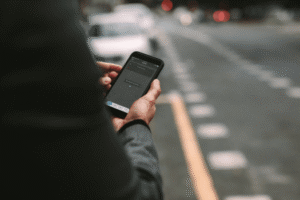
This is the single most important piece of evidence, and most people miss it. Open the Uber or Lyft app immediately and screenshot your active trip: the driver’s name, the vehicle and license plate, the route, and — critically — the trip status and timestamp.
Why it matters so much: in Nevada, which insurance policy covers your injuries depends on exactly what the driver was doing the moment you crashed. Was the app off? On but waiting for a request? En route to a rider? Each answer triggers a different policy. The app screen is proof of that status, and it can change the instant the trip is marked complete. Capture it now, before it updates.
Document the Scene — the Strip Doesn’t Wait
Casino corridors clear quickly. Cars get moved, crowds scatter, and out-of-town witnesses fly home by morning. Get what you can while it’s in front of you:
- Photograph every vehicle — wide shots of the whole scene, then close-ups of the damage, the plates, and the rideshare windshield sticker.
- Capture the surroundings — nearby casino landmarks, street signs, lane markings, skid marks, and broken glass. These fix exactly where and how the crash happened.
- Collect contact and insurance info from every driver involved, plus names and phone numbers for any witnesses. On the Strip, a tourist witness you don’t reach today may be unreachable tomorrow.
If you’re too injured to do this, don’t push through it — your recovery comes first, and a lawyer can reconstruct the scene from other sources.
Why Three Insurers Point at Each Other
Nevada is an at-fault state, so the party who caused the crash is responsible for the damages. The hard part in a rideshare case is rarely who was careless — it’s which policy has to pay. And that’s where injured riders get stuck hearing the same thing: “This isn’t ours.”
Here’s who’s usually in the ring:
- The driver’s personal auto insurer. Most personal policies exclude driving for money, so the moment the app was on, the insurer often denies the claim outright.
- The rideshare company’s insurer. Uber and Lyft carry substantial coverage — up to $1 million during an active trip — but their insurer will argue the driver was in a different period, where far less coverage applies.
- The other at-fault driver’s insurer, or your own coverage. If a third car caused the wreck, its insurer is on the hook — and if that driver is uninsured, your own underinsured/uninsured motorist coverage may step in.
Each carrier has a financial reason to shove your claim into a period or onto a party where it doesn’t have to pay. That’s the trap behind “no one will pay me.” It isn’t proof you have no case — it’s proof the coverage question is being fought, and it’s exactly why the app status and scene evidence you saved become the deciding facts. Every situation is different, so a short conversation with a Las Vegas attorney is the fastest way to learn how Nevada rideshare insurance coverage actually works for your specific ride.
The Period 1 Gap: App On, No Ride Yet
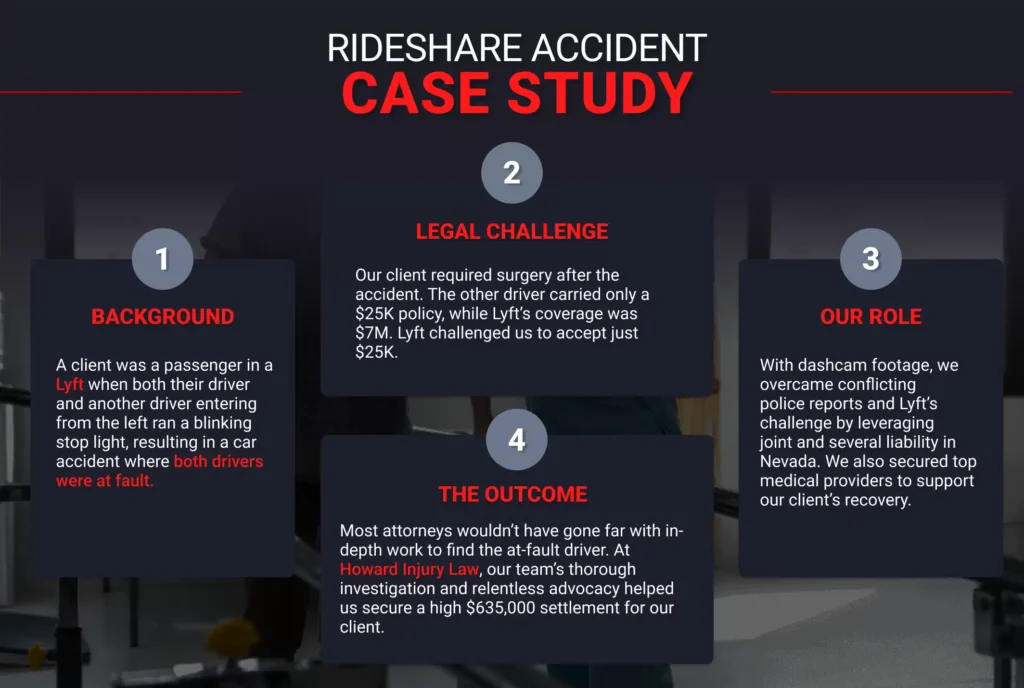
The most-denied scenario is the in-between one. When a driver has the app on but hasn’t accepted a ride, their personal insurer usually won’t cover a commercial crash, and the rideshare company only provides limited contingent coverage — roughly $50,000 per person and $100,000 per accident for injuries. That gap is deliberate, and it’s precisely where carriers try to strand injured people. Proving which period was active — using the trip log — is often what unlocks the right policy.
Report It the Right Way — and Guard What You Say
File a crash report inside the app, through the Uber Safety Center or the Lyft app. This creates a record on the company’s side and starts the clock on their commercial coverage. Keep the police case number with it.
Then be careful with the phone calls that follow. Adjusters may ask for a recorded statement or float a quick settlement within days. You are generally not required to give the other side’s insurer a recorded statement, and early offers are almost always low — made before anyone knows the true cost of your injuries. A recorded statement is often used to lock in a version of events (or a coverage period) that reduces what they owe. Get advice before you talk. For a fuller picture of how these claims unfold, see our overview of rideshare accidents in Las Vegas.
How the Right Lawyer Turns “No One Will Pay” Into a Claim
The advantage in a coverage fight goes to the side that knows how the carriers think. Howard Injury Law was founded by attorney Glen Howard, who spent years as an insurance defense attorney before he began representing injured people in Las Vegas. He knows how adjusters decide which period to deny under, how they build a “wrong policy” argument, and which records they hope you never request. That inside knowledge is the difference between accepting a denial and forcing the correct insurer to pay.
A Nevada Las Vegas rideshare and taxi accident lawyer can identify every policy in play, prove the active coverage period, and deal with all three insurers so you don’t have to. And because the firm works on contingency, there’s no fee unless your case wins — you don’t pay out of pocket to find out where you stand. If your crash involved any kind of motor vehicle in Las Vegas, the same team can help.
Frequently Asked Questions
Whose insurance pays if my Uber crashes in Las Vegas?
It depends on what the driver was doing the moment of the crash. If the app was off, the driver’s personal auto policy applies. If the app was on but no ride was accepted, the rideshare company provides limited contingent coverage and the personal policy usually won’t. If the driver was on the way to a rider or had a passenger aboard, the company’s larger commercial policy — up to $1 million per incident — generally applies. The driver’s trip log is the key proof of which period was active. Because carriers dispute this constantly, and every case is different, it’s worth having a Nevada attorney confirm which policy covers you.
The Uber driver’s insurance denied my claim — what now?
A denial is common and rarely the end of the story. Most personal auto policies exclude driving for a rideshare company, so the driver’s own insurer often refuses a crash that happened while the app was on. That doesn’t mean you’re uncovered — it usually means the wrong policy was approached first. Depending on the driver’s app status, the rideshare company’s commercial coverage may apply instead, along with the at-fault driver’s insurance or your own uninsured/underinsured motorist coverage. Don’t accept a denial as final. A lawyer can identify the policy that should actually pay and challenge the one that ducked.
Do I have to give the rideshare adjuster a recorded statement?
Generally, no. You are not required to give a recorded statement to the other driver’s insurer or the rideshare company’s adjuster, and doing so early can hurt you. Adjusters use recorded statements to lock in a version of events — or a coverage period — that lowers what they owe. Even an honest, offhand comment can be twisted into an admission or used to argue the driver was in a lower-coverage period. It’s reasonable to decline politely, cooperate only with your own insurer as your policy requires, and speak with a Las Vegas attorney before giving any detailed statement.
What if a robotaxi like Waymo or Zoox hits me instead of an Uber?
Autonomous vehicles are increasingly common on Las Vegas roads, and a crash involving one follows a different path than a standard Uber or Lyft claim. There’s no human driver to look to, so liability may fall on the company that owns and operates the fleet, or on the maker of a sensor or software component that failed. These cases are more complex and often involve large technology companies. If a driverless vehicle injured you, our self-driving car accident lawyer page explains how those claims work and who can be held responsible.

Protect Your Claim Before the Trail Goes Cold
The app status, the scene photos, the witness who was standing outside the casino — these are what win a rideshare coverage fight, and they fade a little more every day you wait. If three insurers are pointing at each other and no one will pay you, that’s not a sign you’re out of options. It’s a sign the claim needs someone who knows how to force the right policy to the table.
Find out where you stand at no cost. Request a free consultation and get straight answers about who owes you, what your claim is worth, and what to do next — with no fee unless your case wins.